

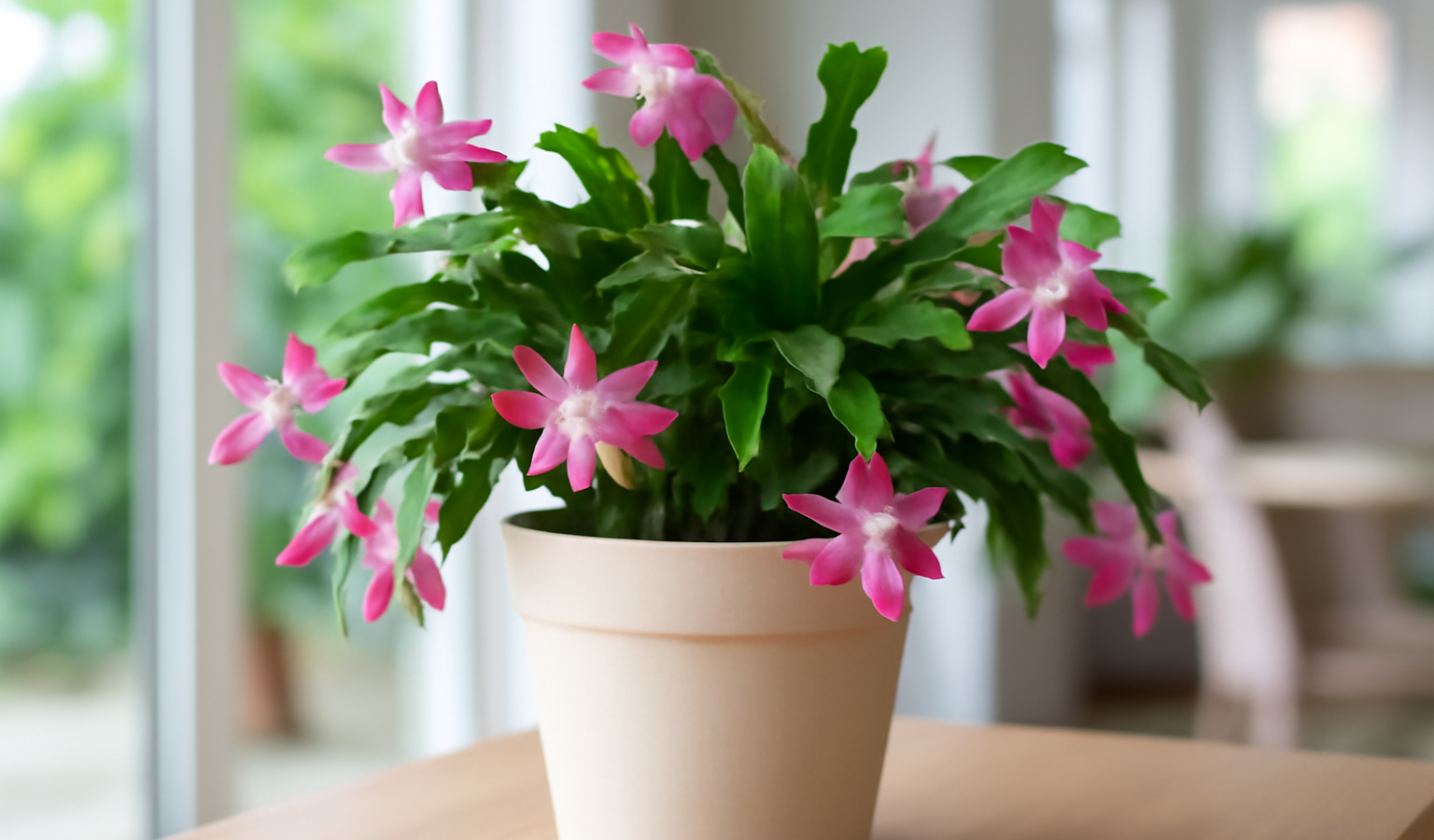
The Thanksgiving cactus (Schlumbergera truncata) is the holiday plant that throws out a cascade of vivid, tubular flowers right as the calendar turns toward the holidays. Despite the name, it’s nothing like a desert cactus—it’s a tropical, jungle-dwelling epiphyte from the cloud forests of Brazil, where it grows in the crooks of trees in dappled shade and humid air. That origin explains why it wants more water and humidity than a typical cactus, and why its blooming is triggered by the lengthening nights of autumn. You can tell it apart from its Christmas cactus cousin by its leaf segments: Thanksgiving cactus has pointed, claw-like “teeth” along the edges of each pad, while Christmas cactus segments are smoothly scalloped.
Part of our Houseplants & Container Gardening guide →
In this guide
Key Takeaways
- Light: Bright, indirect light. No harsh direct sun, which scorches and reddens the segments.
- Water: Keep lightly moist while growing—water when the top inch dries. It’s not a drought cactus, but it still rots if soggy.
- Soil: Light, airy, fast-draining mix (add orchid bark or perlite).
- Bloom trigger: 6+ weeks of long, uninterrupted nights (~13–14 hrs dark) plus cool temps around 50–60°F in fall.
- Propagation: Dead easy from segment cuttings.
- Pet-safe: Non-toxic to cats and dogs (ASPCA).
Light
Give your Thanksgiving cactus bright, indirect light—an east- or north-facing window is ideal, or a spot near a brighter window where direct rays are filtered. As a forest understory plant, it’s adapted to dappled light, not full sun. Too much direct sun, especially in summer, scorches the segments and turns them a stressed reddish or purplish color. Too little light, on the other hand, results in weak growth and few or no flowers.
During the warm months you can move it outdoors into bright shade, which it loves. Just bring it back inside before nighttime temperatures drop too low—and as you’ll see below, that cooling-off period is actually part of what triggers blooming. Light also plays the starring role in flower formation, so pay close attention to the day-length section.
Watering
Forget everything you know about watering desert cacti. As a tropical epiphyte, the Thanksgiving cactus likes its soil lightly and evenly moist during active growth—not bone dry, but never soggy either. Water thoroughly when the top inch of soil feels dry, let it drain completely, and empty the saucer. In a typical home that’s often every week or so, adjusting for your conditions.
Two timing notes matter. First, in fall during the bloom-triggering period, water a little more sparingly (along with cooler temps, mild dryness encourages budding). Second, once buds form, keep moisture steady—a sudden dry-out or a big swing in conditions is the classic cause of bud drop, where the flower buds fall off before opening. Overwatering, as always, leads to root rot and limp, mushy segments, so balance is everything.
Soil and potting
Because it grows on trees in the wild, this plant wants a light, airy, well-draining medium—not dense potting soil and not gritty desert-cactus mix either. A good blend is regular potting soil lightened with orchid bark, perlite and a little peat or coco coir, which mimics the loose, organic-rich pockets it grows in naturally. The pot needs drainage holes.
Thanksgiving cacti actually bloom best when slightly root-bound, so resist the urge to over-pot. Repot only every few years, ideally in spring after flowering has finished, and move up just one pot size. A snug root system and the right light cues are a winning combination for heavy blooming.
Temperature and humidity
Average room temperatures of 65–75°F (18–24°C) suit it during most of the year. But cooler temperatures in fall—down around 50–60°F (10–16°C)—are an important part of triggering bloom. Keep it away from hot or cold drafts, heating vents and fireplaces, all of which dry it out and cause bud drop.
Coming from humid forests, it appreciates moderate humidity (around 50%)—higher than many homes provide in winter. A pebble tray of water beneath the pot or a nearby humidifier keeps the segments plump and helps prevent bud drop during the dry heating season. It’s far more humidity-loving than its “cactus” name suggests.
How to trigger blooms (the important part)
This is why most people grow a Thanksgiving cactus, and getting it to flower reliably comes down to giving it the right autumn cues. It’s a short-day plant, meaning flower buds form in response to long nights. To set buds, start the routine in fall, about 6–8 weeks before you want blooms (typically beginning in late September/October):
- Long, uninterrupted darkness: Give the plant about 13–14 hours of complete darkness every night for at least 6 weeks. Even brief light at night—a lamp, a passing car’s headlights, a TV—can interrupt the cycle and prevent budding. Move it to an unused room or cover it with a box or dark cloth each evening, then return it to bright light by day.
- Cool temperatures: Pair the long nights with cool temps around 50–60°F. Cool nights alone (around 50–55°F) can trigger buds even without strict darkness control, which is why plants kept in a cool room often bloom on their own.
- Slightly drier soil: Ease back on watering a bit during this period to nudge the plant toward flowering.
Once you see tiny buds forming, stop the dark treatment and return the plant to its normal bright spot—but now keep conditions stable. Don’t move it, don’t let the soil dry out completely, and avoid temperature swings or drafts, all of which cause buds to drop before opening. With steady care, you’ll get a flush of flowers right around the holidays. Many plants will also rebloom in late winter if you repeat a cooler, shorter-day period. For more seasonal indoor plant projects, see our Plants & Flowers guides.
Feeding
Feed from spring through early fall, during active growth, with a balanced houseplant fertilizer diluted to half strength every 2–4 weeks. A formula with extra potassium and magnesium supports flowering. Stop fertilizing in fall as you begin the bloom-triggering routine, and don’t feed during the bud-set and flowering period. Resume light feeding after the plant finishes blooming and starts pushing new growth again.
Propagation
Thanksgiving cactus is one of the easiest houseplants to propagate, and spring (after flowering) is the best time. Pinching the plant back to take cuttings also encourages bushier growth and more bloom sites.
- Twist or snip off a Y-shaped section of 2–3 connected segments at a natural joint.
- Let the cutting callus for a day or two in a dry spot so the cut end dries slightly—this prevents rot.
- Insert the bottom segment about an inch deep into lightly moist, airy potting mix (or root it in water, changing it every few days).
- Keep it in bright, indirect light and lightly moist—not soggy—while it roots.
- Roots typically form within 2–4 weeks; once you see new segment growth, it has rooted and can be cared for normally.
Plant several rooted cuttings together for a fuller plant faster. For more propagation walkthroughs, see our urban gardening guides.
Common problems
Bud drop
The most common frustration—buds form, then fall before opening. Causes are nearly always sudden changes: moving the plant, letting the soil dry out, temperature swings, drafts, or low humidity. Once buds set, keep everything steady and the soil evenly moist.
Won’t bloom
No flowers means the plant didn’t get its bloom cues. Provide long, uninterrupted nights and cool fall temperatures as described above, and make sure no stray light interrupts the dark period. Too little light overall the rest of the year, or over-potting, can also suppress blooming.
Limp, mushy or yellow segments
Usually overwatering and root rot. Let the soil dry more between waterings, check drainage, and remove any rotted roots. Limp segments paired with dry soil, on the other hand, just mean it needs water.
Reddish or purple segments
Often stress from too much direct sun; move it to gentler, indirect light. (A slight blush can also come from cool temperatures and isn’t harmful.)
Is the Thanksgiving cactus pet-safe?
Yes—the Thanksgiving cactus (and its Christmas cactus relative) is listed as non-toxic to cats and dogs by the ASPCA, making it a safe choice for the holidays in a pet household. The main caution is mechanical: a pet that eats a lot of the fibrous segments could get an upset stomach or mild digestive irritation, so it’s still best to keep it out of reach of enthusiastic chewers. For more confirmed pet-safe blooming plants, see our Plants & Flowers collection.
Treat the Thanksgiving cactus as the tropical it is—bright indirect light, evenly moist soil, decent humidity—and give it the cool, dark autumn nights it needs to set buds, and it will reward you with years of reliable holiday color. These plants are famously long-lived, often passed down for decades. Browse more blooming and indoor plant guides in our Plants & Flowers collection.
Frequently Asked Questions
How do I get my Thanksgiving cactus to bloom?
Start in fall, about 6–8 weeks before you want flowers. Give it about 13–14 hours of complete, uninterrupted darkness each night for at least 6 weeks, paired with cool temperatures around 50–60°F and slightly drier soil. Once buds appear, return it to normal bright light and keep conditions stable.
Why are my Thanksgiving cactus buds falling off?
Bud drop is caused by sudden changes—moving the plant, letting the soil dry out, temperature swings, cold or hot drafts, or low humidity. Once buds set, keep the plant in one spot with steady moisture, stable temperatures and moderate humidity.
How often should I water a Thanksgiving cactus?
Keep the soil lightly and evenly moist—water when the top inch dries, often about weekly. Unlike desert cacti, it shouldn’t dry out completely, but it also rots if left soggy. Water a bit more sparingly during the fall bloom-triggering period.
How do you propagate a Thanksgiving cactus?
Twist off a section of 2–3 connected segments, let it callus for a day or two, then plant the bottom segment about an inch deep in lightly moist, airy mix (or root it in water). Keep it in bright, indirect light; roots form in 2–4 weeks.
Is a Thanksgiving cactus toxic to cats and dogs?
No. The ASPCA lists it as non-toxic to both cats and dogs, making it a safe holiday plant for pet homes. Eating large amounts of the segments could still cause mild stomach upset, so keep it out of reach of determined chewers.