

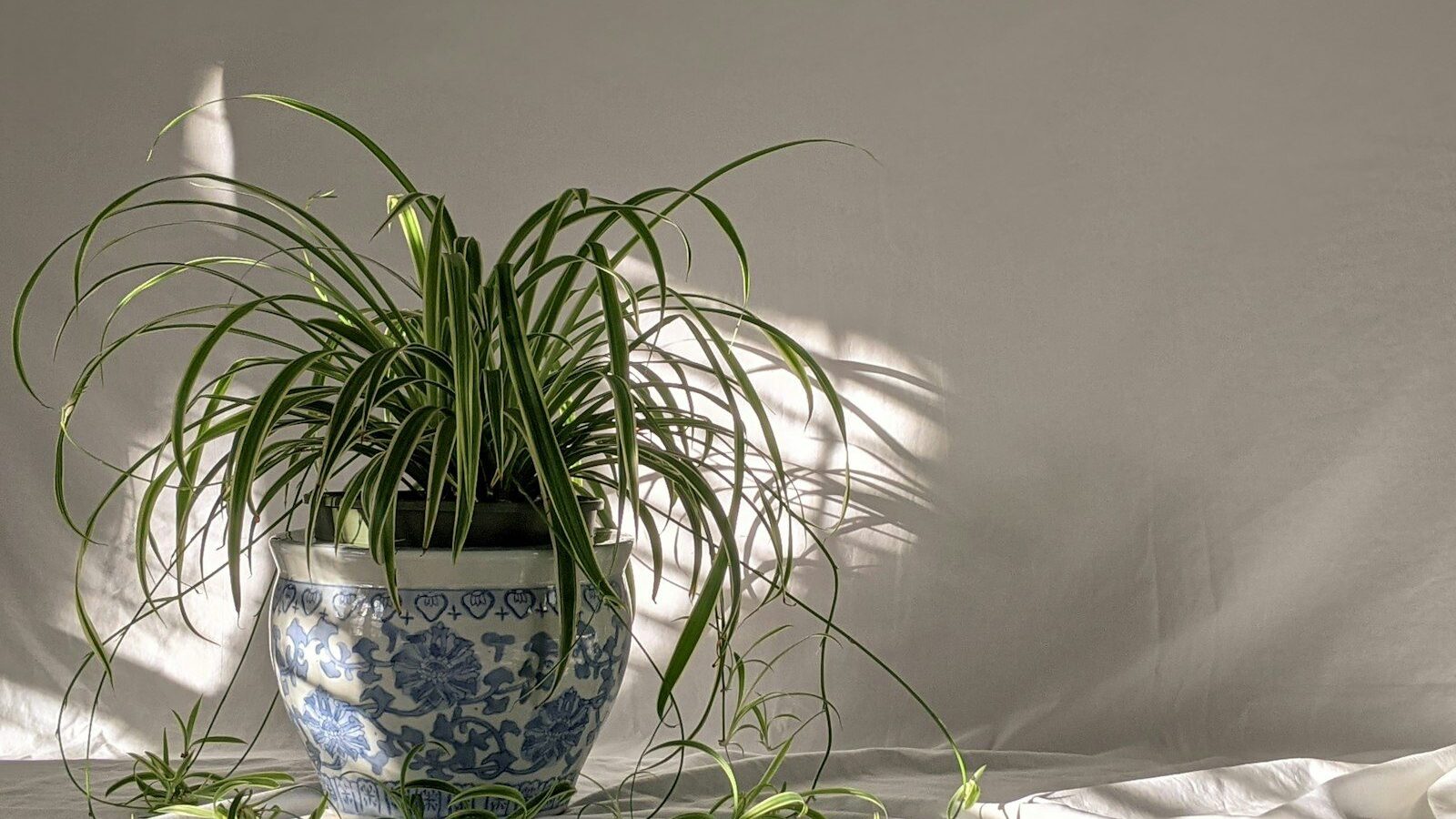
The spider plant (Chlorophytum comosum) earns its place on the easy-houseplant shortlist for two reasons: it’s nearly impossible to kill, and it’s pet-safe, which makes it one of the few trailing plants you can hang in a home with cats and dogs without worry. Give it bright indirect light, keep the soil lightly moist but never soggy, and a mature plant will throw out long arching stems tipped with miniature “spiderettes” — baby plants you can snip off and root for free. This guide walks through exactly how much light and water it wants, the soil and humidity it prefers, repotting, the famously simple propagation, and why those leaf tips go brown.
Key Takeaways
- Light: Bright, indirect light keeps variegation crisp; tolerates medium light. No harsh direct sun.
- Water: Keep evenly moist in summer (water when the top inch dries); let it dry more in winter. Don’t let it sit wet.
- Soil: Standard well-draining potting mix with extra perlite, in a pot with drainage holes.
- Brown tips: Usually fluoride/chlorine or salts in tap water — switch to filtered or rainwater.
- Propagation: Root the plantlets (“spiderettes”) in water or soil — the easiest propagation of any houseplant.
- Pet safety: Non-toxic to cats and dogs — genuinely pet-safe.
Light: bright indirect for the best variegation
Spider plants do best in bright, indirect light — a spot near an east or north window, or a few feet back from a brighter south or west window. In good light the variegated stripes on cultivars like ‘Vittatum’ (central white stripe) and ‘Variegatum’ (white margins) stay bold and the plant produces more of those flowering stems that turn into babies. The all-green and ‘Bonnie’ curly forms are a touch more forgiving in lower light.
They tolerate medium and even somewhat low light, which is part of why they end up in offices and bathrooms, but in dim conditions the variegation washes out and the plant produces fewer spiderettes. Keep them out of direct midday sun, which scorches and bleaches the strappy leaves. If your plant looks pale and isn’t pushing out babies, give it more light. Hung in a basket, a spider plant displays its cascading babies beautifully, and the elevated position also keeps it well lit.
Watering: evenly moist, not waterlogged
Spider plants like their soil to stay lightly and evenly moist during the growing season, but they store water in thick, tuberous roots, so they cope with occasional neglect better than most. Water when the top inch of soil feels dry — usually about once a week in spring and summer in a warm room. In winter, let the soil dry out a bit more between waterings and water less often, since growth slows and the plant uses less.
Soak until water runs from the drainage holes, then let it drain fully and empty the saucer. Don’t leave the pot standing in water — those fleshy roots will rot in chronically soggy soil, showing up as yellowing, mushy bases. Underwatered plants, by contrast, develop pale, limp foliage and more brown tips, and the fleshy roots may push the plant up out of the pot as they swell. The white tuberous roots you’ll see when you slide it out are normal water-storage organs, not a problem.
Soil, potting, and feeding
A standard, good-quality houseplant potting mix amended with a handful of perlite for drainage is all a spider plant needs. The mix should hold some moisture but drain freely so the roots never sit in water. The pot must have drainage holes; spider plants are vigorous root-fillers, so a slightly snug pot is fine and even encourages flowering and babies.
Feed lightly during spring and summer with a balanced liquid houseplant fertilizer diluted to half strength, about once a month. Spider plants are sensitive to over-fertilizing — too much feed actually worsens the brown-tip problem because of salt buildup, so go easy. Skip feeding entirely in fall and winter. If you see a white crust on the soil or pot, flush the pot thoroughly with plain water to clear accumulated salts.
Humidity and temperature
Spider plants are comfortable in normal household conditions: 40 to 60 percent humidity and temperatures between 60 and 80°F. They’re not humidity divas, though they appreciate a slightly more humid spot like a bright bathroom, and a little extra moisture in dry winter air helps reduce brown tips. Keep them above 50°F and away from cold drafts and hot heating vents. They can summer outdoors in shade once nighttime temperatures stay reliably above 50°F, then come back in before fall frost.
Repotting
Spider plants grow fast and become root-bound quickly. Plan to repot every one to two years, or sooner if you see roots pushing up out of the soil, cracking the pot, or escaping the drainage holes, and if the plant dries out within a day of watering. Spring is ideal. Step up one pot size, use fresh mix, set the plant at the same depth, and water it in. This is also a natural moment to divide an overgrown plant: pull the root mass apart into two or three clumps, each with leaves and roots, and pot them separately for instant new plants.
Propagation: rooting the spiderettes
This is the fun part. A mature, slightly root-bound spider plant in good light sends out long stems with small white flowers, and those stems develop plantlets — the spiderettes, or “spider babies.” Each one is a ready-made new plant. There are three reliable ways to root them.
Root while still attached
The most foolproof method. Set a small pot of moist soil next to the parent and nestle a spiderette onto the surface, pinning it down so its base contacts the soil while it stays attached to the mother plant. It draws on the parent while it roots, then you snip the connecting stem once it’s established in a week or two.
Water rooting
Snip a spiderette that already shows little nub roots at its base and set it in a glass of water with the base submerged. Roots lengthen within one to two weeks; pot it up once they’re an inch or two long.
Direct to soil
Cut a spiderette and plant it straight into moist potting mix, keeping it lightly damp. It roots in place and skips the transplant step. Any of the three works; rooting while attached has the highest success rate for stubborn babies.
Common problems
Brown leaf tips
The signature spider-plant complaint. Most often it’s a buildup of fluoride, chlorine, or salts from tap water and fertilizer, which the plant is sensitive to. Switch to filtered water, rainwater, or tap water left out overnight to off-gas chlorine; flush the soil periodically; and ease off fertilizer. Very dry air and inconsistent watering also contribute. Trim brown tips off at an angle with clean scissors for appearance — it’s cosmetic and harmless.
Yellowing or mushy leaves
Overwatering and soggy roots. Let the soil dry, confirm drainage, and cut back.
No babies
Usually a young plant, too little light, or a too-large pot. Spider plants tend to flower and produce spiderettes once they’re mature and slightly root-bound in bright light — patience and a snug pot help.
Pests
Generally trouble-free, but spider mites and aphids appear occasionally, especially in dry conditions. Rinse the plant, treat with insecticidal soap or neem, and repeat weekly until clear.
Are spider plants safe for pets?
Yes — and this is a big selling point. Spider plants are non-toxic to cats and dogs, listed as pet-safe by the ASPCA, which makes them one of the best trailing plants for homes with animals. The catch is that cats are oddly drawn to the dangling leaves and babies and may bat at or nibble them, which can cause mild stomach upset simply from eating any plant material, and the chewing makes a mess of your foliage. It’s not dangerous, but hanging the plant up keeps both the leaves and your cat happier. If you’ve been avoiding trailing plants because of pets, the spider plant is the answer.
With its tolerance for imperfect care, easy propagation, and pet-safe credentials, the spider plant is a genuine beginner’s win that also looks great cascading from a basket. To round out a low-fuss collection, see our guides on caring for a pothos and caring for an aloe vera plant, or browse all of our Plants & Flowers guides.
Frequently Asked Questions
Why does my spider plant have brown tips?
Most often a buildup of fluoride, chlorine, and salts from tap water and fertilizer, which spider plants are unusually sensitive to. Switch to filtered or rainwater (or tap left out overnight), flush the soil periodically, and ease off feeding. Dry air and uneven watering also contribute. Trimming the tips is purely cosmetic.
How often should I water a spider plant?
Keep the soil evenly moist in spring and summer, watering when the top inch dries out — roughly weekly. In winter let it dry more between waterings. Always soak until it drains and never let the pot sit in standing water.
How do I propagate spider plant babies?
Root the plantlets (spiderettes) by pinning them onto moist soil while still attached to the parent, by setting a cut spiderette in water until roots lengthen, or by planting one directly into damp soil. All three work; rooting while still attached is the most reliable.
Why isn’t my spider plant making babies?
Usually because it’s too young, getting too little light, or sitting in an oversized pot. Spider plants flower and produce spiderettes once they’re mature and slightly root-bound in bright indirect light, so be patient and keep the pot snug.
Are spider plants toxic to cats and dogs?
No — they’re non-toxic and considered pet-safe. Cats may still chew the dangling leaves and get a mild upset stomach from eating plant material, so hanging the plant up protects both the foliage and your pet.