

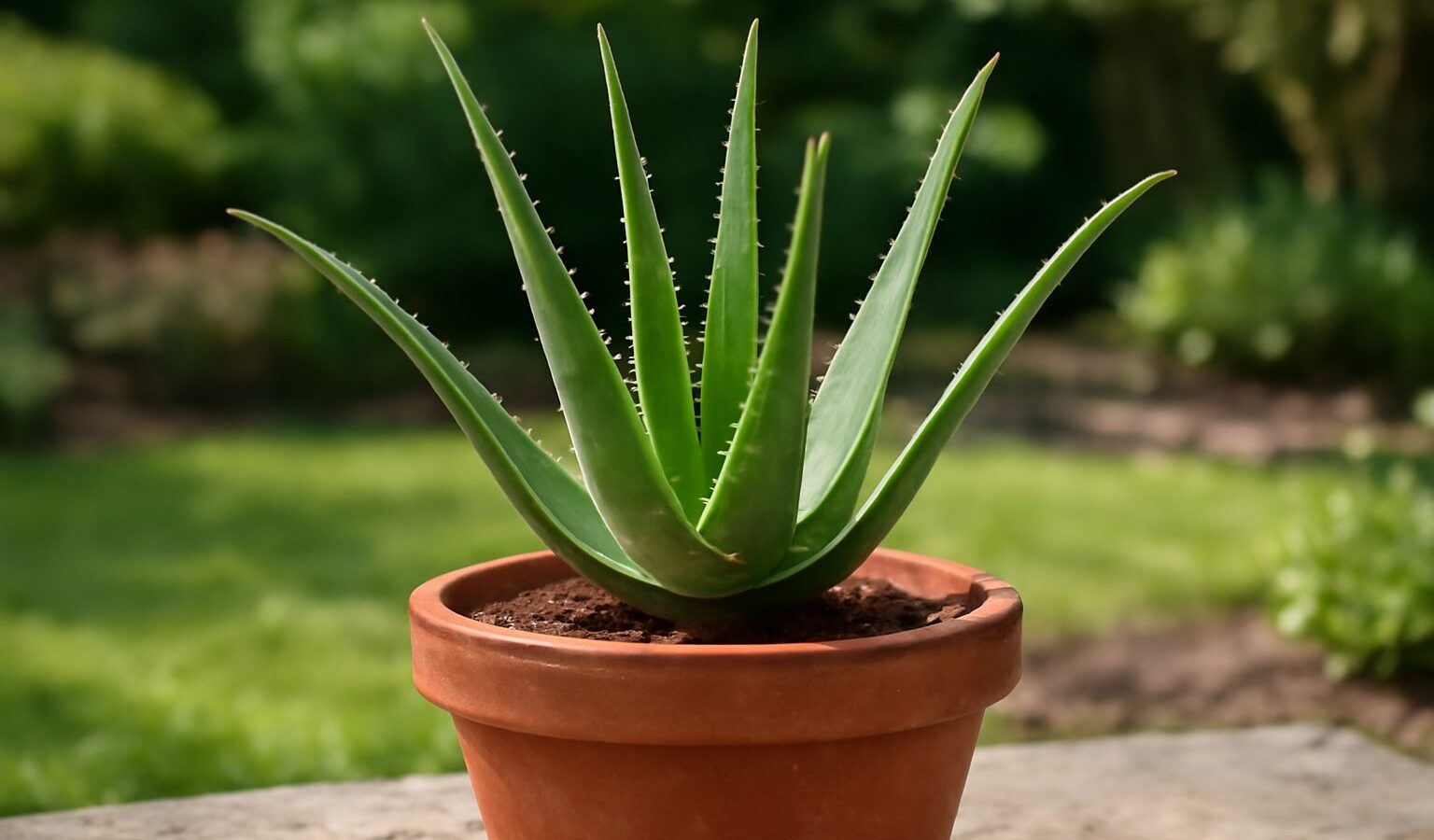
Aloe vera is the houseplant that wants you to leave it alone. As a succulent from arid regions, it stores water in those thick, fleshy leaves and is built for drought, not for doting — which means the single biggest mistake people make is watering it like a tropical plant and rotting the roots. Give it the brightest spot you have, a fast-draining gritty soil, and a deep drink only when the soil has fully dried, and an aloe will thrive for years, producing pups you can pot up into a whole windowsill of new plants. This guide covers exactly how much light and water it needs, the right soil and pot, repotting, propagation from offsets, and the troubleshooting that keeps it firm and upright.
Key Takeaways
- Light: Bright light, including some direct sun — a south or west window. Acclimate slowly to avoid sunburn.
- Water: Deep but infrequent — only when the soil is bone dry, roughly every 2–3 weeks in summer, monthly or less in winter.
- Soil: Gritty, fast-draining cactus/succulent mix; a terracotta pot with drainage holes is ideal.
- Temp: 55–80°F. Not frost-hardy — bring it in before temperatures drop below ~50°F.
- Propagation: Separate and pot the “pups” (offsets) that grow around the base.
- Pet safety: Toxic to cats and dogs (saponins and anthraquinones) — keep out of reach.
Light: as bright as you can give it
Aloe vera is a sun lover. Indoors, it wants the brightest window in the house — a south- or west-facing sill where it gets several hours of direct light is ideal. In strong light the plant grows compact, with plump leaves held firmly upright and a healthy grey-green color, sometimes blushing pink or bronze at the tips under intense sun, which is normal.
Too little light is the most common cause of a sad-looking aloe: the leaves grow thin, flatten out, and flop or sprawl outward as the plant stretches toward the light, and the color pales. If yours is splaying open and leaning, it needs more sun. One caution — aloe can sunburn if moved abruptly from a dim spot into blazing direct sun, especially outdoors. Acclimate it over a week or two, increasing exposure gradually, and brown or white scorched patches on the leaves won’t appear. If you summer it outside, give it a sheltered spot with morning sun and protection from the harshest afternoon rays at first.
Watering: the part everyone gets wrong
Aloe vera holds a reservoir of water in its leaves, so it needs far less watering than people expect. The rule is deep but infrequent: water thoroughly so the entire root ball is soaked and excess runs from the drainage holes, then do not water again until the soil is completely, bone dry all the way through. Stick your finger deep into the pot or lift it to feel the weight — a dry pot is noticeably light. In a warm, bright room that cycle usually lands around every two to three weeks in summer, and stretches to monthly or even less in winter when the plant is semi-dormant.
Overwatering is the number-one killer of aloe. Soggy soil rots the roots and then the base of the plant, which shows up as leaves turning soft, mushy, yellow, or translucent and the whole plant going limp and falling over. If you see that, stop watering immediately, pull the plant out, and check for rot. By contrast, an underwatered aloe simply puckers — the leaves thin, curl inward, and wrinkle, and they plump right back up after a deep drink. When in doubt, wait. This plant tolerates thirst far better than wet feet. Always water the soil, not the rosette, and never let the pot sit in a saucer of water.
Soil and pot
Drainage is everything for aloe. Use a commercial cactus and succulent mix, or make your own by cutting regular potting soil with plenty of coarse sand, perlite, or pumice — aim for at least a third grit so water rushes through and the mix never stays heavy and wet. Plain potting soil holds too much moisture and is a recipe for rot.
Terracotta is the ideal pot material: it’s porous, wicks excess moisture out of the soil, and dries the root zone faster, which is exactly what a succulent wants. A heavy terracotta pot also counterbalances a top-heavy aloe that might otherwise tip over. Whatever you choose, it must have drainage holes — no exceptions. Skip the layer of gravel at the bottom; it doesn’t improve drainage and just raises the waterlogged zone closer to the roots.
Temperature, humidity, and feeding
Aloe vera is comfortable in normal household temperatures of 55 to 80°F and actually prefers the dry air most homes provide, so humidity is a non-issue — no misting needed. It is not frost-hardy: bring it indoors before temperatures drop below about 50°F in fall, as a hard freeze turns the leaves to mush. Feeding is minimal. Aloe gets by on almost nothing, but you can give it a half-strength dose of cactus or succulent fertilizer once in spring and again in midsummer. Don’t feed in fall or winter, and don’t overdo it — too much fertilizer does more harm than good for a plant adapted to lean soils.
Repotting
Aloe is slow-growing and content to be a little crowded, so it only needs repotting every two to three years, or when the rosette outgrows its pot, the plant becomes top-heavy and unstable, or pups crowd the surface. Repot in spring or summer using fresh gritty mix. Let the soil dry first so it crumbles away cleanly, slide the plant out, brush off old soil, and check the roots — trim away any brown, mushy, rotten sections with clean scissors. Replant at the same depth (don’t bury the lower leaves) in a pot just one size up, and here’s the key succulent rule: wait several days to a week before watering. This lets any disturbed or trimmed roots callus over so they don’t rot when they hit moist soil.
Propagation: potting up the pups
A healthy, happy aloe produces offsets — small clones called “pups” that sprout from the base around the mother plant. These are the easy, reliable way to make new aloes (growing from seed is slow and uncommon at home). Wait until a pup is a few inches tall and has formed its own little roots and at least four or five leaves of its own. Then ease the whole plant out of the pot, gently work the soil away, and separate the pup from the parent — many detach with a gentle pull, while others need a clean cut where they join the mother. Make sure each pup keeps some of its own roots.
Set the separated pups aside in a dry, shaded spot for a day or two to let the cut surfaces callus over — this is the most important step for preventing rot. Then pot each one into its own small container of gritty cactus mix, and again, wait about a week before the first watering. Give the new plants bright light and treat them like adults from there. A single mature aloe can supply you with pups season after season.
Common problems
Soft, mushy, yellowing leaves
Overwatering and root rot — the most serious and common issue. Stop watering, unpot the plant, cut away any rotten roots and base tissue, let it callus, and replant in dry gritty mix. Catch it early and you can often save the plant; if the base is gone, salvage healthy pups or a firm top cutting.
Thin, curling, wrinkled leaves
Underwatering. Give it a deep soak and the leaves should plump back up within a day or two.
Flat, floppy, pale leaves
Not enough light. Move it to your brightest window and it will firm up and stand upright again.
Brown or white patches
Sunburn from too-sudden intense sun. Acclimate gradually; the marks are permanent but harmless.
Pests
Mealybugs and scale occasionally hide in the leaf crevices. Dab them with a cotton swab dipped in rubbing alcohol and treat with insecticidal soap if they persist.
Is aloe vera toxic to pets?
Yes. Although aloe gel is widely used on human skin, the plant is toxic to cats and dogs if eaten. It contains saponins and anthraquinones — compounds concentrated in the latex just under the leaf skin — that cause vomiting, diarrhea, lethargy, and loss of appetite in pets. Keep your aloe on a high, sunny shelf out of reach of curious animals, and call your vet if your pet chews on a leaf. If you want a pet-safe succulent-style plant, a haworthia or a spider plant is a safer choice for a household with animals.
Treat aloe vera as the desert plant it is — bright sun, gritty soil, and water only when bone dry — and it’s one of the most carefree plants you can own, multiplying itself with pups along the way. For more easy, light-loving plants, see our guides on caring for a spider plant and caring for a pothos, or browse all of our Plants & Flowers guides.
Frequently Asked Questions
How often should I water an aloe vera plant?
Water deeply but only when the soil is completely dry — roughly every two to three weeks in summer and monthly or less in winter. Soak until water drains out, then wait until the pot feels light and dry before watering again. When in doubt, wait; aloe handles drought far better than soggy soil.
Why are my aloe leaves turning soft and mushy?
That’s classic overwatering and root rot. Stop watering, unpot the plant, cut away any rotten roots and soft base tissue, let the cuts callus for a day or two, and replant in dry, gritty cactus mix. Caught early, the plant can recover; otherwise root any healthy pups.
Why is my aloe flat and floppy instead of upright?
Too little light. Aloe needs bright light with some direct sun to stay compact and firm. In dim conditions the leaves thin out, flatten, and sprawl. Move it to your brightest south or west window and it will firm up.
How do I propagate aloe vera?
Separate the pups (offsets) that grow around the base once they have their own roots and a few leaves. Detach them with their roots, let the cut surfaces callus for a day or two, pot them in gritty mix, and wait about a week before the first watering.
Is aloe vera poisonous to cats and dogs?
Yes. Despite its use on human skin, the plant is toxic to pets — it contains saponins and anthraquinones that cause vomiting, diarrhea, and lethargy if eaten. Keep it out of reach and contact your vet if your pet chews on it.