

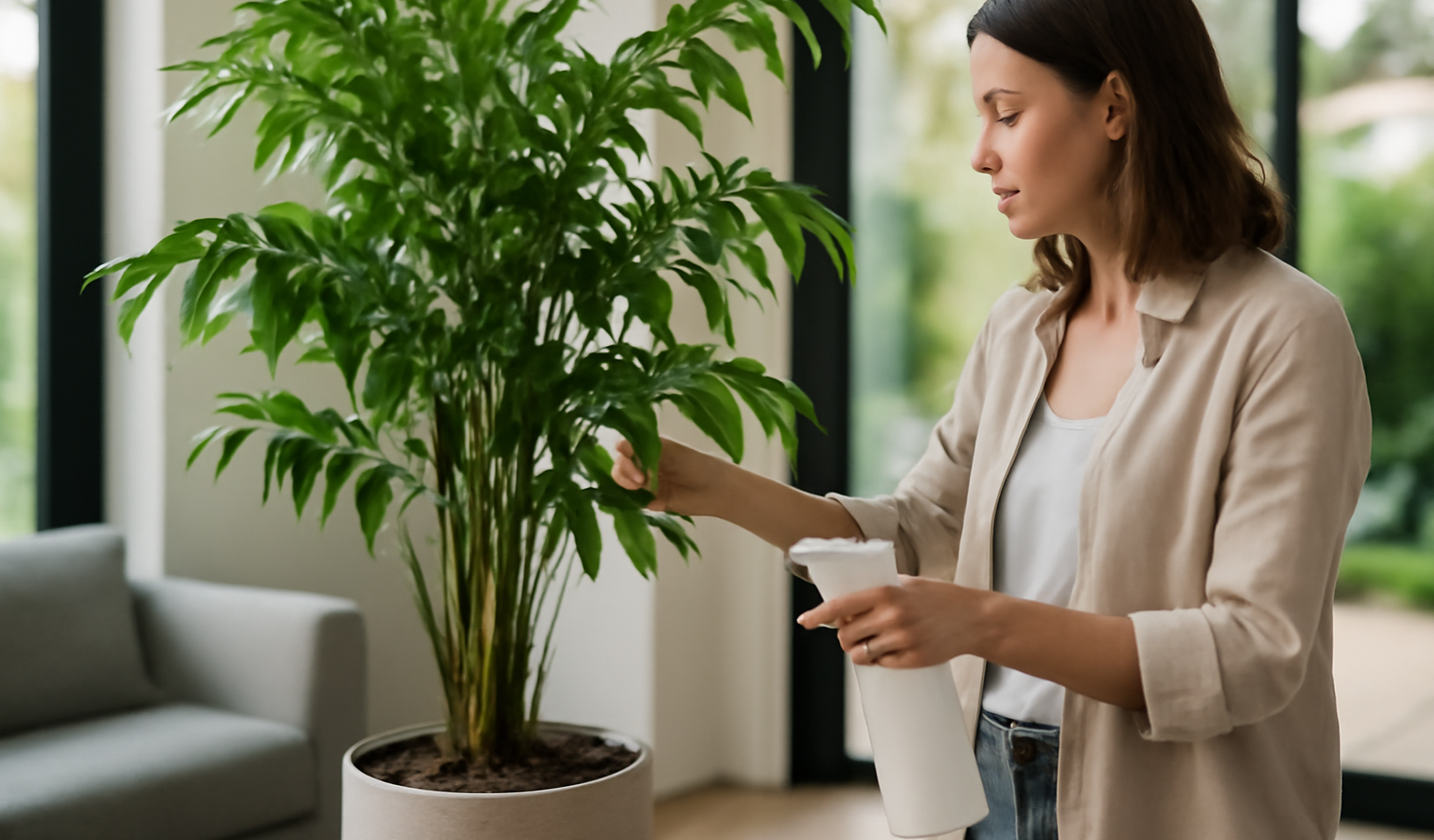
The fishtail palm (Caryota mitis and its relatives) earns its name from the ragged, jagged-edged leaflets that look exactly like a fish’s tail fin. It is one of the few palms with bipinnate fronds, which gives it a softer, more textured silhouette than the stiff fans of a kentia or the feathery arches of an areca. Indoors it reads as a lush, tropical statement plant, and outdoors in USDA zones 10–11 it can rocket to 20 feet or more. The catch is that it is thirstier and fussier about humidity than the average houseplant, and it is prone to spider mites in dry winter air. Get the light, water, and humidity dialed in, though, and a fishtail palm is a long-lived, forgiving roommate that shrugs off the occasional missed watering.
Key Takeaways
- Light: bright, indirect light near an east or filtered south window; no harsh midday sun.
- Water: keep the top inch barely moist; water when the surface dries, never let it fully dry out.
- Soil: rich, fast-draining mix — quality potting soil cut with perlite and a little bark.
- Humidity: 50%+ is ideal; below 40% invites brown tips and spider mites.
- Temperature: 65–85°F; protect from drafts and anything below 50°F.
- Pet safety: the berries and sap contain oxalate crystals that irritate skin and mouths — keep away from pets and kids.
Light: bright but filtered
Fishtail palms want a lot of light without a lot of direct sun. The sweet spot is bright, indirect light: an east-facing window where the plant catches a couple of hours of gentle morning sun, or a south or west window where a sheer curtain diffuses the afternoon blast. In their native Southeast Asian forests they grow as understory and forest-edge plants, so they are adapted to dappled light rather than open exposure. A few hours of soft direct sun is fine and actually encourages fuller fronds, but the intense, unfiltered light of a bare south window in summer will scorch the leaflets, leaving bleached tan patches that do not recover.
Too little light is the more common problem indoors. In a dim corner the palm survives but stretches, producing pale, widely spaced fronds and slowing to a crawl. If new growth comes in weak and leggy or the plant leans hard toward the window, move it closer to the glass or add a grow light. Rotate the pot a quarter turn every week or two so all sides develop evenly — palms grow toward light and will lopside fast if you never turn them. In a windowless office or a north room, a basic full-spectrum LED grow light on a timer for 10–12 hours a day will keep the plant healthy.
Watering: consistently moist, never soggy
This is the make-or-break factor. Fishtail palms like their soil consistently and evenly moist — more so than most houseplants — but they will not tolerate sitting in a saucer of water. Water thoroughly when the top inch of soil feels dry to the touch, letting water run all the way through the drainage holes until it flows out the bottom, then empty the saucer within 15–20 minutes. In a warm, bright spot during the growing season that usually means watering every 4–7 days; in winter, when growth slows and evaporation drops, stretch it to every 10–14 days and let a bit more of the surface dry first.
Use your finger, not a calendar, as the real guide — pot size, light, and indoor heating all shift the schedule. The two failure modes pull in opposite directions: let the rootball dry out completely and you get crispy brown frond tips and dropped leaflets; keep it waterlogged in dense soil and the roots rot, the lower fronds yellow, and the base may smell sour. Fishtail palms are also sensitive to fluoride and salts in tap water, which can brown the tips over time. If your tap water is heavily treated, use rainwater, distilled water, or tap that has sat out overnight, and flush the pot with plain water every couple of months to wash out accumulated mineral salts.
Soil and potting
Aim for a mix that holds moisture but drains freely so the roots get both water and air. A good recipe is two parts quality indoor potting soil, one part perlite or pumice for drainage, and one part fine orchid bark or coco coir for structure and water retention. The result should feel rich and spongy but never compacted. Always use a pot with drainage holes — a fishtail palm in a sealed cachepot is a root-rot risk no matter how careful you are. Terracotta breathes and helps wick excess moisture if you tend to overwater; plastic or glazed ceramic holds moisture longer if you are forgetful.
Repot every two to three years, or when roots circle the surface or push out the drainage holes, stepping up just one pot size at a time. Spring is the best moment, as the plant is gearing up to grow. Fishtail palms have somewhat brittle roots and dislike being disturbed, so handle the rootball gently and avoid teasing it apart aggressively. Feed during spring and summer with a balanced liquid houseplant fertilizer diluted to half strength, roughly once a month; a fertilizer formulated for palms that includes magnesium and micronutrients helps prevent the yellow banding (frizzle top) that signals a manganese or magnesium shortfall. Stop feeding in late fall and winter.
Humidity and temperature
Humidity is where many indoor fishtail palms struggle. Coming from humid tropical forests, they want relative humidity around 50% or higher, and dry winter air below 40% reliably produces brown, crispy frond tips and rolls out the red carpet for spider mites. Group it with other plants to create a humid microclimate, set the pot on a wide tray of pebbles topped up with water (the pot sits on the pebbles, above the waterline), or run a humidifier nearby during heating season. Misting helps only briefly and is no substitute for ambient humidity.
Keep temperatures between 65 and 85°F. Fishtail palms are true tropicals with no frost tolerance, so anything below 50°F stresses them and a genuine chill can be fatal. Keep the plant away from cold drafts, single-pane windows in winter, and the direct blast of heating and air-conditioning vents, all of which dry the foliage and shock the roots. A spot with stable warmth and steady humidity will always outperform a bright but drafty corner.
Propagation
Be realistic about propagation: fishtail palms cannot be grown from cuttings, because palms have a single growing point and no nodes that will root. The clumping species, Caryota mitis, naturally produces offshoots, or suckers, at the base, and these are your best bet. Once a sucker has its own roots and a few fronds of its own, you can separate it during a spring repot — gently tease it away from the mother clump with as many attached roots as possible, pot it in the same fast-draining mix, and keep it warm, humid, and lightly moist while it establishes.
Growing from seed is possible but slow and a labor of patience: the cleaned seeds need warmth (around 80°F) and consistent moisture, can take one to three months to germinate, and several more years to look like anything. One important caution — the fruits and pulp are loaded with oxalate crystals that cause intense skin irritation, so always wear gloves when handling seeds or removing the fleshy outer layer. For most people, buying a young nursery plant or dividing an existing clump is far more practical than seed.
Common problems and fixes
Brown, crispy frond tips
The classic complaint, and usually a sign of low humidity, underwatering, or salt and fluoride buildup from tap water. Raise the humidity, keep the soil more evenly moist, and switch to filtered or distilled water while flushing the pot occasionally. Trim dead tips with clean scissors, following the natural ragged shape, but leave any still-green tissue intact.
Yellowing lower fronds
A few old, lowest fronds yellowing and dying off is normal aging. Widespread yellowing usually means overwatering and waterlogged roots; check that the soil drains and you are not leaving the saucer full. Uniform pale-yellow new growth instead points to a nutrient deficiency — feed with a palm fertilizer containing magnesium and micronutrients.
Spider mites and scale
Fine webbing, stippled or speckled fronds, and a dusty look mean spider mites, which thrive in dry indoor air. Rinse the foliage in the shower, raise humidity, and treat with insecticidal soap or neem oil weekly until they are gone. Brown bumps along the stems and frond ribs are scale — wipe them off and treat the same way. Inspect new plants before bringing them home.
It flowers, then a stem dies
Fishtail palms are monocarpic per stem: each individual trunk flowers once (starting from the top down), sets fruit, and then that stem dies. This alarms owners, but in a clumping species it is natural — the offshoots carry on. Remove the spent stem at the base and let the suckers take over.
Is the fishtail palm toxic to pets?
Treat the fishtail palm as an irritant plant rather than a safe one. Unlike many true palms (like the parlor or areca, which are non-toxic), Caryota produces fruits, sap, and tissue rich in insoluble calcium oxalate crystals. Contact can cause intense skin and mucous-membrane irritation, and ingestion of the berries or sap can lead to drooling, mouth pain, and stomach upset in cats and dogs. The fine needle-like crystals in the fruit pulp are notorious for causing a burning, itching skin reaction in people, too. Keep the plant out of reach of pets and curious children, wear gloves when handling fruit or pruning, and wash your hands afterward.
If you love the tropical palm look but want something genuinely pet-safe, see our guide on caring for a lady palm (Rhapis), which is non-toxic and tolerant of lower light. For more easy indoor greenery, browse the full Plants & Flowers guides, and if your palm ever takes a serious turn, our walkthrough on how to revive a dying houseplant covers triage step by step.
Frequently Asked Questions
Why are the tips of my fishtail palm turning brown?
Brown, crispy tips almost always trace back to low humidity, the soil drying out too far between waterings, or salt and fluoride buildup from tap water. Raise humidity to 50% or more, keep the top inch evenly moist, switch to filtered or distilled water, and flush the pot occasionally to clear mineral salts.
How often should I water a fishtail palm?
Water when the top inch of soil feels dry — roughly every 4–7 days in warm, bright conditions during the growing season, and every 10–14 days in winter. Always water thoroughly until it drains out the bottom, then empty the saucer. Never let the rootball dry out completely or sit in standing water.
Can I grow a fishtail palm from a cutting?
No. Palms have a single growing point and no rootable nodes, so cuttings will not work. Clumping species like Caryota mitis produce basal offshoots (suckers) that you can divide once they have their own roots, and you can also grow them from cleaned seed, though that is slow.
Is a fishtail palm toxic to cats and dogs?
Yes, treat it as toxic. The fruits, sap, and tissue contain insoluble calcium oxalate crystals that cause skin irritation, drooling, mouth pain, and stomach upset if chewed. Keep it away from pets and kids, and wear gloves when handling the fruit or pruning.
Why did one trunk of my fishtail palm die after it flowered?
That is normal. Each fishtail palm stem is monocarpic — it flowers once from the top down, fruits, and then that individual trunk dies. In clumping varieties the basal offshoots take over, so just cut out the spent stem at the base and the plant carries on.