

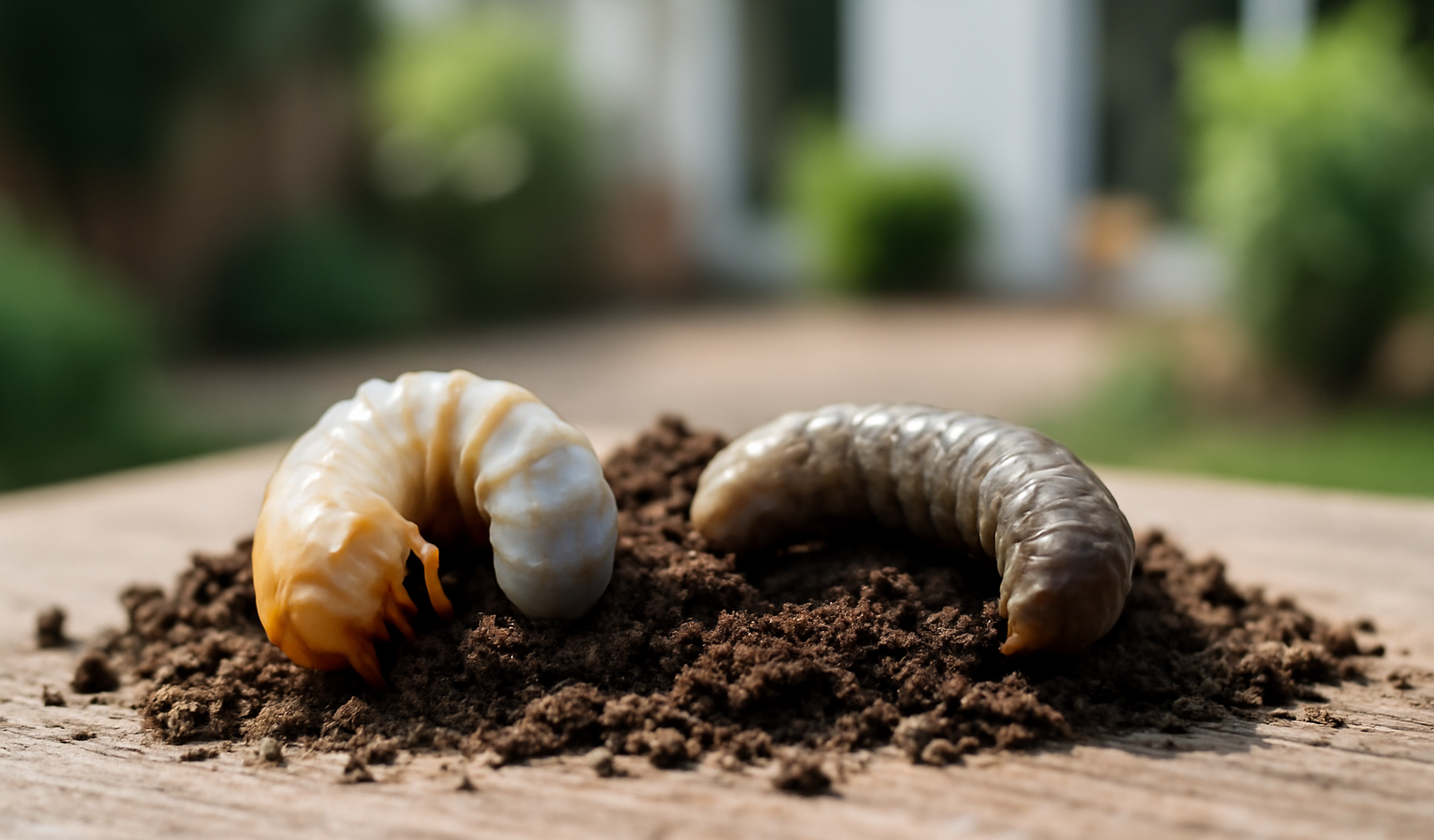
Find a fat pale larva while digging and you’re probably looking at a grub or a cutworm — but they’re completely different pests with different damage and different fixes, so identification matters. The fast tell: a grub is a plump, white, C-shaped beetle larva with a brown head and three pairs of legs near the front, and it curls into a tight C when disturbed. A cutworm is a smooth, dull gray, brown, or greenish caterpillar (a moth larva) that stays straight or curls loosely, has no obvious legs bunched at the front, and is the culprit when seedlings are mysteriously severed at the soil line overnight. Grubs eat roots below ground; cutworms eat stems and foliage at and just above the surface. This guide shows how to identify each and control both.
Key Takeaways
- Grubs are white, C-shaped beetle larvae with a brown head and three pairs of front legs; they feed on roots below ground.
- Cutworms are smooth, gray-brown moth caterpillars that curl loosely; they sever young seedlings at the soil line, usually at night.
- Grub damage shows as spongy, brown, easily-lifted lawn and wilting plants; cutworm damage is seedlings cut off clean at the base.
- Control grubs with beneficial nematodes or milky spore and good lawn care; control cutworms with collars, hand-picking at night, Bt, and clean soil.
- The classic test: dig at the soil line near a cut seedling for a curled cutworm, or peel back spongy turf to count white C-shaped grubs.
| Factor | Grubs | Cutworms |
|---|---|---|
| What it is | Beetle larva (June beetle, Japanese beetle, chafer) | Moth caterpillar (several noctuid species) |
| Shape | Plump, distinct C-curl, brown head capsule | Smooth, soft, curls loosely into a comma |
| Legs | 3 pairs of true legs bunched near the head | True legs plus prolegs spaced along body |
| Where it feeds | Roots, below soil | Stems at soil line; some climb to leaves |
| Damage sign | Spongy, brown, liftable lawn; wilting plants | Seedlings cut off clean at the base |
| When active | Late summer–fall (and spring) underground | Night feeders, spring–early summer |
| Control | Nematodes, milky spore, lawn care | Collars, night picking, Bt, tilling |
Grubs: How to Identify Them
Grubs are the larvae of scarab beetles — Japanese beetles, June beetles (May beetles), and masked chafers being the most common in lawns. They’re unmistakable once you’ve seen one: plump, soft, creamy-white bodies with a tan or brown hardened head capsule, three pairs of true legs clustered just behind the head, and a darker rear end (the hindgut showing through). Sizes range from a quarter-inch to over an inch depending on species and age. The defining behavior is the tight C-shape they assume when dug up and disturbed; they can’t move well above ground and mostly just curl and writhe. You’ll find them in the soil and root zone, usually the top few inches, where they feed on roots and organic matter.
Grub damage is a root problem, so the symptoms appear in the plants above. In lawns, the classic signs are irregular brown patches that don’t green up with watering, turf that feels spongy underfoot, and — the diagnostic clincher — grass that peels back like a loose carpet because the roots have been chewed away. Heavy grub feeding on garden plants causes wilting, stunting, and easy uprooting. A second giveaway is secondary damage: skunks, raccoons, moles, and birds tearing up the lawn at night to eat the grubs, often doing more visible harm than the grubs themselves. To confirm and gauge severity, cut a one-square-foot flap of turf about three inches deep and count the C-shaped grubs; six to ten per square foot is a typical treatment threshold for healthy cool-season lawns.
How to control grubs
The most popular and pet-safe biological controls are beneficial nematodes and milky spore. Nematodes are microscopic roundworms you water into moist soil; they infect and kill many grub species within days and work fast, but need reapplying every season or two. Milky spore is a bacterium that targets Japanese beetle grubs specifically and can give a decade of control once established, though it takes two to four years to build up. For a fuller comparison of these two, see our guide on beneficial nematodes vs milky spore.
Timing follows the beetle life cycle: the best window for either control is late summer to early fall (roughly August into September), when this year’s grubs are small, near the surface, and feeding hard. Spring applications catch overwintered grubs but they’re large and harder to kill. Whichever control you choose, keep the soil moist before and after applying — dry soil is the most common reason a biological treatment fails. Cultural practices matter just as much: a thick, deeply rooted lawn tolerates grub feeding far better, so mow high, water deeply but infrequently, and don’t overwater (beetles prefer to lay eggs in moist turf). For severe infestations on high-value lawns, a soil-applied insecticide is an option, but biological and cultural controls handle most home situations.
Cutworms: How to Identify Them
Cutworms are not worms at all but the larvae of several night-flying noctuid moths. They’re smooth, soft-bodied caterpillars, generally one to two inches long when mature, in dull shades of gray, brown, greenish, or black, sometimes with faint stripes or spots. Unlike the rigid C-curl of a grub, a disturbed cutworm curls loosely into a comma or coil and is fairly limp. They have true legs near the head plus prolegs spaced along the body, like other caterpillars, rather than a grub’s cluster of legs all up front. By day, cutworms hide just below the soil surface or under debris and clods near the plants they’re attacking; they emerge to feed after dark.
The signature damage gives them their name. Cutworms chew through the stems of young, tender plants right at or just below the soil line, felling seedlings like tiny trees — you’ll come out in the morning to find transplants and seedlings lying severed on the ground, often with the leafy top barely touched. A single cutworm can mow down a whole row of seedlings over a few nights. Some climbing species (“climbing cutworms”) scale plants to chew leaves, buds, and fruit higher up, but the textbook sign is seedlings cut off clean at the base. To confirm, scratch the soil within an inch or two of a freshly cut plant during the day — you’ll usually find the culprit curled up in the top inch of soil.
How to control cutworms
The classic, near-foolproof defense for transplants is a collar: a barrier around each seedling’s stem that cutworms can’t get past. A toilet-paper tube, a cardboard ring, or a strip of stiff plastic pushed an inch into the soil and standing two inches above it physically protects the stem at the vulnerable cut point. For existing infestations, go out an hour or two after dark with a flashlight and hand-pick the feeding caterpillars, dropping them into soapy water — highly effective for a few nights running. Daytime, scratch the soil around damaged plants to find and destroy the hiding larvae.
For a biological spray, Bt (Bacillus thuringiensis) applied to foliage and soil surface in the evening kills cutworms that ingest it and is safe for people, pets, and beneficial insects; spinosad is another effective option. Cultural controls cut populations off at the source: till the soil a couple of weeks before planting to expose overwintering larvae and pupae to birds and weather, clear out weeds and plant debris where moths lay eggs, and keep beds clean. Scattering diatomaceous earth or a coarse abrasive around stems gives some protection. Encouraging birds, ground beetles, and parasitic wasps provides natural control. As with most caterpillar pests, catching them early — before they size up and a single larva can fell several plants a night — makes everything easier.
Head-to-Head: Damage, Location, and Life Cycle
The clearest difference is where the damage happens. Grubs work entirely below ground, eating roots, so the harm shows up as failing, spongy lawn and wilting plants you can lift out easily — you rarely see the pest unless you dig. Cutworms work at the soil surface, severing stems, so the harm is dramatic and instantly visible: seedlings lying cut on the ground by morning. If your problem is dead patches of lawn and root loss, think grubs; if it’s seedlings sliced off at the base, think cutworms.
The insects themselves are easy to separate once you know the cues. Grubs are beetle larvae — plump, rigidly C-curled, with a brown head and legs bunched at the front. Cutworms are moth caterpillars — smooth, loosely coiled, soft, with legs and prolegs spread along the body. Their life cycles differ too: grubs are most damaging and most vulnerable to control in late summer and fall (with a spring window), while cutworms do their worst damage to seedlings in spring and early summer, which is also why protecting young transplants is the priority. Because the controls are entirely different — biologicals and lawn care for grubs, collars and night-picking for cutworms — getting the ID right is what keeps you from wasting effort on the wrong fix.
Verdict: Identifying and Controlling Each
Plump white larva that curls into a tight C with legs up front: Grub. Use beneficial nematodes or milky spore in late summer, keep soil moist, and grow a thick, deep-rooted lawn.
Smooth gray-brown caterpillar that curls loosely: Cutworm. Protect transplants with collars, hand-pick at night, spray Bt, and till before planting.
Spongy lawn that peels back like carpet: Grubs feeding on roots. Confirm with a one-square-foot count; treat if you find six to ten or more.
Seedlings cut off clean at the soil line overnight: Cutworms. Scratch the soil within an inch of the cut plant to find the curled larva and destroy it.
These two pests are confused only because both are fat pale larvae you turn up in the soil — but their behavior, damage, and control couldn’t be more different. Grubs are a below-ground root problem solved with biologicals and good turf care over a season; cutworms are a surface-level seedling problem solved with simple physical collars and a few nights of hand-picking. Match the fix to the pest: a quick ID — the rigid C-curl and front legs of a grub versus the loose coil of a cutworm caterpillar — tells you everything you need to know about which strategy will actually work.
Prevention for Both Pests
A few habits keep both problems small. For grubs, the most powerful prevention is a healthy lawn: deep, infrequent watering encourages deep roots that shrug off light grub feeding, while frequent shallow watering creates the moist surface soil egg-laying beetles prefer. Mowing high (around three inches for cool-season grass) shades the soil and supports vigorous roots. Monitoring is cheap insurance — a single one-square-foot turf check in late summer tells you whether numbers are climbing toward the treatment threshold while the grubs are still small and easy to control with nematodes.
For cutworms, prevention starts in the soil. Tilling or cultivating a bed a couple of weeks before planting exposes overwintering larvae and pupae to predators and weather, and clearing weeds and crop debris removes the cover where moths prefer to lay eggs. When you set out transplants, slip a collar around each one as routine practice rather than waiting for damage — it costs nothing and prevents the heartbreak of finding a row of seedlings felled overnight. Both pests are kept in check by a healthy predator community, so leaving habitat for ground beetles, birds, toads, and parasitic insects, and avoiding broad-spectrum insecticides that wipe them out, pays off against grubs and cutworms alike. Stay observant in spring and late summer — the two windows when these larvae do their damage — and you’ll rarely face a serious outbreak of either.
Frequently Asked Questions
How do I tell a grub from a cutworm at a glance?
A grub is a plump white larva that curls into a tight, rigid C and has three pairs of legs bunched right behind a brown head. A cutworm is a smooth, soft, gray-brown caterpillar that curls loosely into a comma, with legs and prolegs spaced along its whole body.
Which one is killing my seedlings overnight?
Cutworms. They sever young seedlings and transplants right at the soil line at night, leaving the tops lying on the ground. Grubs feed on roots below ground and cause wilting and dead lawn patches, not cleanly cut stems. Dig at the soil line near a cut plant to find the cutworm.
Do beneficial nematodes work on cutworms too?
Some nematode species (especially Steinernema) do attack cutworms and other surface-active larvae, so they can help. But the simplest, most reliable cutworm defenses are physical collars around transplants, night hand-picking, and Bt sprays. Nematodes are primarily marketed for soil-dwelling grubs.
When are grubs and cutworms most active?
Grubs do their most damage and are most vulnerable to control in late summer through fall, with a secondary spring window, all underground. Cutworms damage seedlings most in spring and early summer, feeding at night. Time grub controls to late summer and cutworm defenses to planting time.
Do collars really stop cutworms?
Yes — a simple barrier around each transplant’s stem (a toilet-paper tube, cardboard ring, or plastic strip) pushed an inch into the soil and standing two inches above it physically blocks cutworms from reaching the stem at the soil line. It’s one of the most effective and cheapest cutworm defenses.