

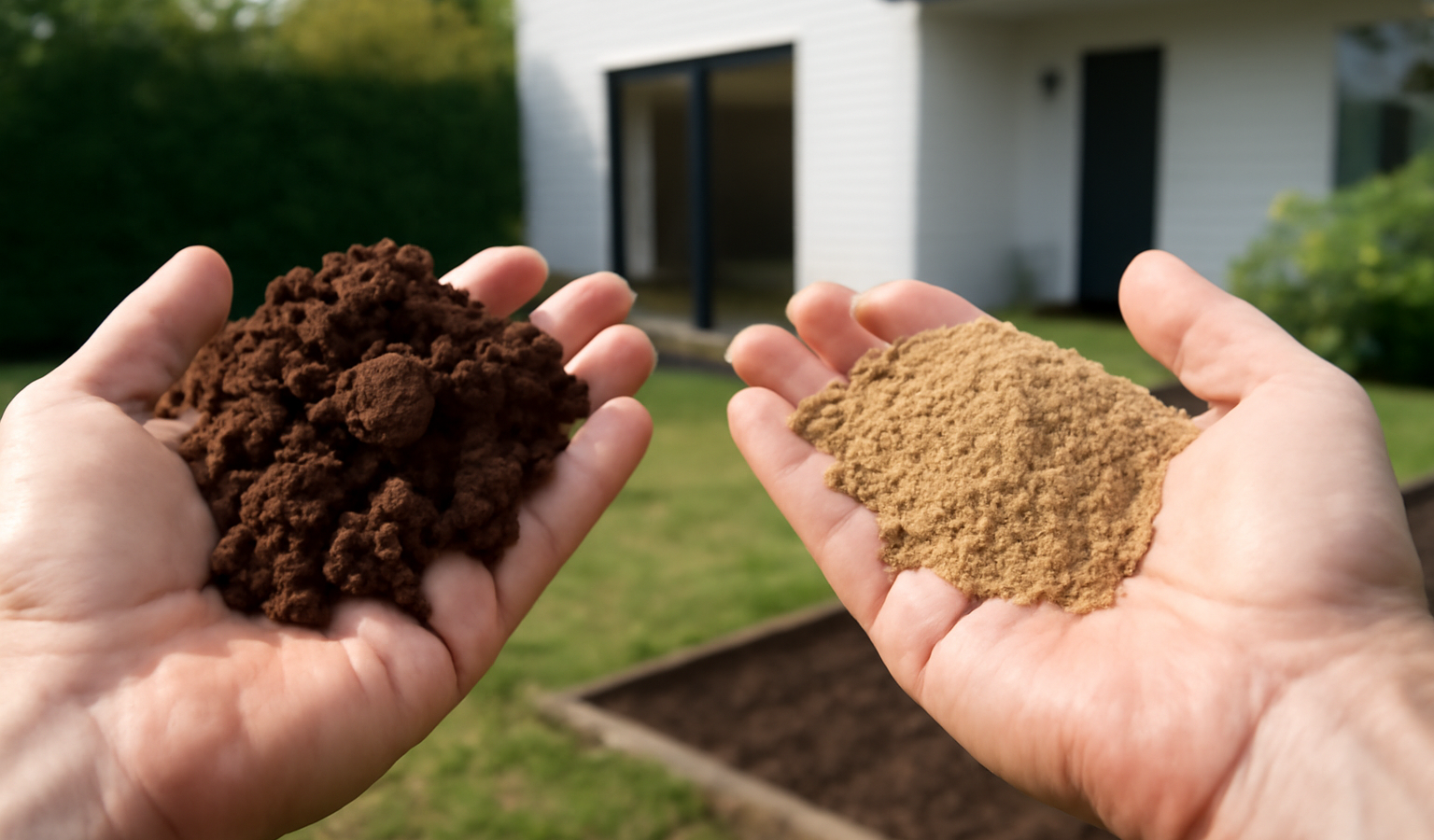
The fastest way to know which soil you are fighting is to grab a damp handful and squeeze. If it ribbons out like modeling clay and stays in a slick, sticky lump, you have clay. If it falls apart the moment you open your hand and feels gritty between your fingers, you have sand. Most gardens sit somewhere on that spectrum, and the difference dictates almost everything that follows: how often you water, when you can dig in spring, how much fertilizer washes away, and which plants will sulk. Clay soil is made of microscopic flat particles that pack tightly, hold water and nutrients, and drain slowly. Sandy soil is the opposite — large, round particles with big air gaps that drain fast, warm early, and let water and nutrients run straight through. Neither is “bad.” Each has real strengths, and each is improved by the same humble fix applied in the right way. This guide shows you how to identify what you have with two free tests, then how to manage and steadily upgrade each type so it works for you instead of against you.
Key Takeaways
- Clay holds water and nutrients but drains slowly and compacts; sandy soil drains fast but leaches nutrients and dries out quickly.
- Use the squeeze test and the jar (sedimentation) test to identify your soil in under a day.
- Compost is the universal fix — it opens up clay and adds water-holding sponge to sand.
- Never add sand to clay; you risk a concrete-like mix. Add organic matter instead.
- Work clay only when it crumbles, not when it is wet, to avoid destroying structure.
- Sandy soil needs frequent, light feeding and mulch to slow water loss.
Quick Comparison: Clay vs Sandy Soil
| Trait | Clay Soil | Sandy Soil |
|---|---|---|
| Particle size | Very fine (<0.002 mm) | Coarse (0.05–2 mm) |
| Drainage | Slow — can waterlog | Fast — can drought-stress |
| Nutrient holding | High (holds onto fertilizer) | Low (nutrients leach out) |
| Warms in spring | Late (cold and wet) | Early (drains and warms fast) |
| Workability | Hard when dry, sticky when wet | Easy to dig anytime |
| Compaction risk | High | Low |
| Best unimproved for | Thirsty, heavy feeders once drained | Root crops, herbs, drought-tolerant plants |
How to Tell Which Soil You Have
You do not need a lab. Two simple tests will tell you almost everything. The first is the squeeze-and-ribbon test. Moisten a handful of soil to the consistency of putty, then push it between your thumb and forefinger to form a ribbon coming up over your finger. A ribbon longer than two inches that holds together is heavy clay. A ribbon of one to two inches that breaks is a loam with significant clay. Soil that will not ribbon at all and feels gritty is sandy. If it feels smooth and floury rather than gritty, you have silt.
The Jar Test for Exact Proportions
For a precise read, fill a straight-sided quart jar one-third with soil, top it with water, add a teaspoon of dish soap, and shake hard for two minutes. Set it down and watch. Sand settles within a minute because the particles are heavy. Silt settles over the next couple of hours. Clay can take a day or two and stays cloudy longest. Mark the layers with a marker as they settle and measure each band. The proportions tell you your soil texture: more than 40 percent clay behaves like clay, while more than 50 percent sand behaves like sandy soil. This test is worth doing in two or three spots because soil can change across a single yard, especially near a house foundation where builders often leave subsoil clay behind.
Clay Soil: Strengths, Problems, and Fixes
Clay gets a bad reputation, but it is the most fertile soil base you can own once you manage its drainage. Those tiny particles carry an electrical charge that grips onto calcium, potassium, magnesium, and other nutrients, so clay soils rarely go hungry and hold fertilizer far better than sand. The problems are physical, not chemical. Clay compacts under foot traffic and rain, leaving little air for roots. It waterlogs in winter and bakes into brick in summer. It warms slowly, so spring planting runs two to three weeks behind sandier neighbors.
The single best fix is bulky organic matter — two to four inches of compost, well-rotted manure, or leaf mold spread on the surface and either forked in lightly or left for worms to incorporate. Organic matter glues clay particles into larger crumbs, creating the air gaps that drainage and roots need. Repeat every year; clay improvement is a marathon, not a one-time amendment. Gypsum (calcium sulfate) can help flocculate sodium-heavy clays in arid regions, but it does nothing for ordinary clay, so test before you spend money on it.
Timing is everything with clay. Only dig or walk on it when a squeezed handful crumbles rather than smears — working wet clay smears the particles into an airless, glazed mass that can take a season to recover. Raised beds are a powerful shortcut on heavy clay because they lift the root zone above the waterlogged native soil and let you build a better mix from scratch. If you garden on clay, consider our companion reading on choosing between compost and topsoil for bed-building, and lean toward plants that relish moisture-retentive ground.
Sandy Soil: Strengths, Problems, and Fixes
Sandy soil is a joy to dig and never waterlogs, which is why root crops like carrots, parsnips, and potatoes form clean, straight roots in it. It warms early, letting you sow weeks ahead of clay gardeners, and it is almost impossible to compact. The trade-off is memory: sand cannot hold onto water or nutrients. Rain and irrigation drain straight through, carrying dissolved fertilizer with them, so plants in pure sand swing between drought stress and hunger.
The fix is, again, organic matter — but the goal here is opposite to clay. In sand, compost acts as a sponge, holding water and nutrients in the root zone instead of letting them flush past. Aim for the same two to four inches of compost annually, and because sand has so little to grip, you will need to top up more often than clay gardeners do. Mulch is non-negotiable on sandy soil: a two-to-three-inch layer of bark, straw, or wood chips slows evaporation, moderates soil temperature, and breaks down to feed the sponge below.
Feed sandy soil little and often. A single heavy spring fertilizer dose largely washes away before plants use it, so split feeding into smaller monthly applications or use slow-release organic sources like blood meal, feather meal, and composted manure that release gradually. Drip irrigation suits sand far better than sprinklers because it delivers water slowly enough to be absorbed rather than drained. If you grow in containers or tight spaces on sandy ground, our guide on peat versus coco coir growing media covers water-holding amendments worth blending in.
The Mistake to Avoid: Don’t Add Sand to Clay
It sounds logical — clay drains poorly, sand drains fast, so mix them and split the difference. In practice this is the worst thing you can do. Adding modest amounts of sand to clay fills the gaps between clay particles with grit and produces something close to concrete. To meaningfully change clay’s texture with sand you would need to add more sand than clay by volume, which is impractical for a garden bed. The reliable path for both soils runs through organic matter, not the opposite mineral. Add compost, leaf mold, and mulch year after year, and clay loosens while sand firms up — both converging on the crumbly, dark, water-holding-yet-draining loam every gardener actually wants.
The Verdict: Which Soil Is Better?
If forced to choose unimproved soil, most experienced growers pick clay. Its fertility and water retention are assets you cannot easily add to sand, while clay’s drainage and workability problems are slowly solved with compost and patience. Sandy soil rewards you with early, easy planting and beautiful root crops, but it demands constant feeding and watering vigilance that never really lets up. The honest verdict, though, is that the “better” soil is the one you steadily improve. Both clay and sand become excellent garden loam through the same routine: annual compost, year-round mulch, minimal disturbance, and respect for moisture timing. Identify what you have this week with the jar test, then commit to one or two inches of organic matter every season. Within three years, the question of clay versus sand stops mattering, because you will be gardening on something far better than either. For broader site preparation, see our outdoor living and landscaping guides.
Frequently Asked Questions
How do I quickly tell if I have clay or sandy soil?
Moisten a handful and squeeze it. Clay forms a sticky ribbon that holds together; sandy soil feels gritty and crumbles apart immediately. The jar sedimentation test gives exact proportions overnight.
Can I just add sand to clay soil to fix drainage?
No. Small amounts of sand mixed into clay create a concrete-like texture that drains worse. Use bulky organic matter such as compost or leaf mold instead, applied year after year.
How much compost should I add each year?
Spread two to four inches of compost or well-rotted manure annually on both clay and sandy soils. Fork it in lightly or let worms incorporate it; consistency over years matters more than any single big application.
Why does my sandy soil dry out so fast?
Sand’s large particles leave big air gaps that water drains through quickly. Add organic matter to act as a sponge and mulch the surface with two to three inches of bark or straw to slow evaporation.
When can I dig clay soil without damaging it?
Only when a squeezed handful crumbles rather than smears. Working wet clay glazes the particles into an airless mass that can take a full season to recover, so wait until it is moist but friable.