

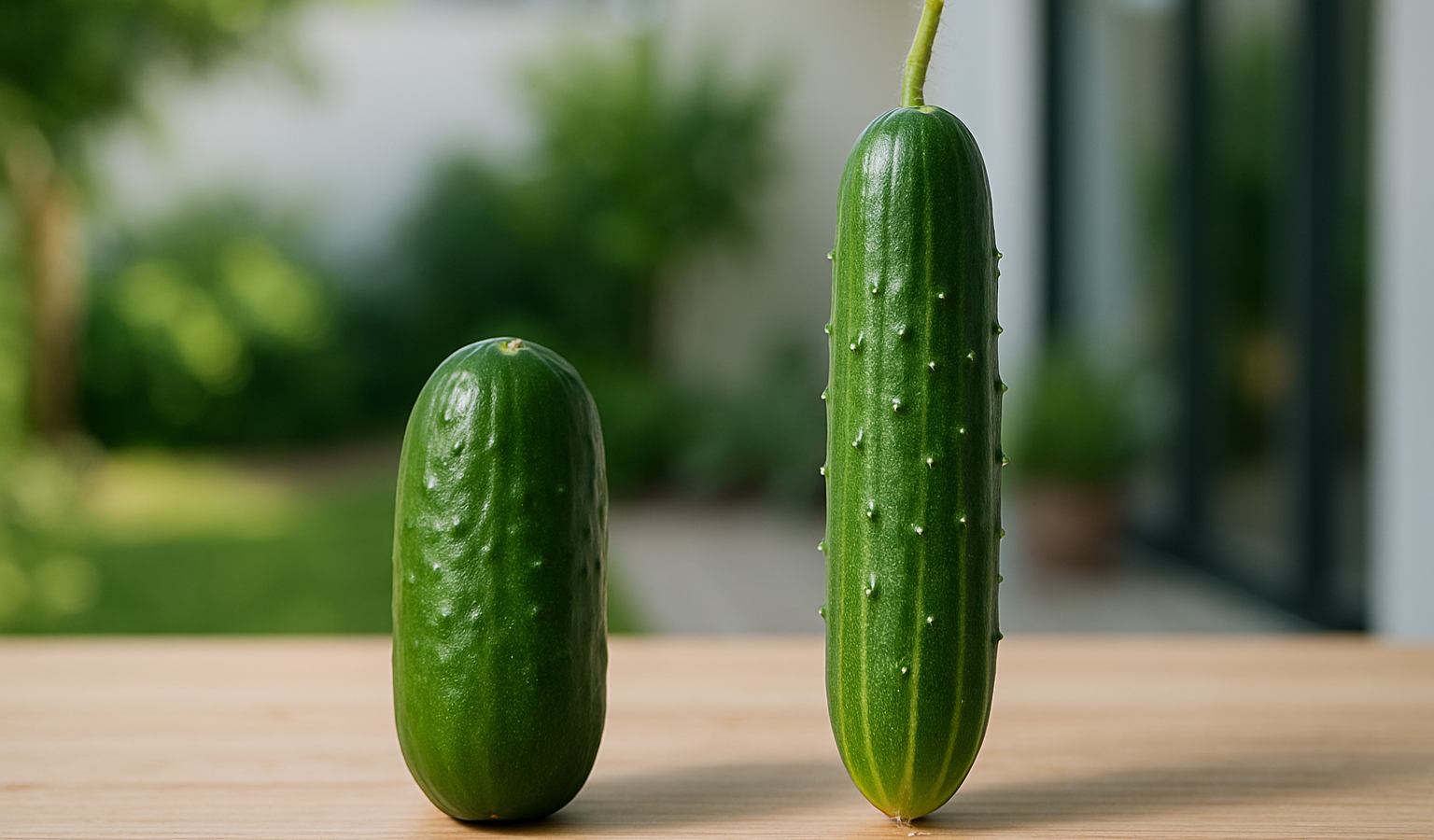
Walk through a seed catalog and you will see cucumbers split into two camps: compact “bush” types that stay knee-high, and sprawling “vining” types that will climb a 6-foot trellis and keep going. Gardeners often borrow the tomato vocabulary and call these determinate vs indeterminate cucumbers — bush plants behaving like determinates, vining plants like indeterminates. The shorthand is useful, but it is not botanically accurate, and that matters when you are planning spacing, trellising, and succession planting. This guide explains the real difference, names specific varieties worth growing, and helps you pick the growth habit that fits your space, your containers, and how you actually like to harvest.
Key Takeaways
- “Determinate vs indeterminate” is borrowed from tomatoes. Cucumbers do not truly determinate; the honest terms are bush (compact) and vining (long-vine) growth habits.
- Bush types like ‘Spacemaster’, ‘Bush Champion’, and ‘Patio Snacker’ stay 2–3 feet, need 12 inches of spacing, and thrive in containers and patios.
- Vining types like ‘Marketmore 76’, ‘Straight Eight’, and most slicers reach 6–8 feet, want 12–18 inches spacing on a trellis, and out-yield bush types per plant.
- Bush plants concentrate their harvest into a 2–3 week window; vining plants produce continuously for 6–8 weeks if you keep picking.
- For a steady supply from bush types, succession-plant every 2–3 weeks; for one big yield from a small footprint, trellis a vining type vertically.
| Feature | Bush (Determinate-type) | Vining (Indeterminate) |
|---|---|---|
| Mature size | 2–3 ft vines, compact mound | 6–8 ft vines, can exceed 10 ft |
| Spacing | 12 in apart, no trellis needed | 12–18 in apart on a trellis |
| Container friendly | Excellent (5+ gal pot) | Possible but needs large pot + tall trellis |
| Trellising | Optional; short cage helps | Strongly recommended, 5–6 ft |
| Days to maturity | ~48–58 days | ~55–70 days |
| Harvest pattern | Concentrated, 2–3 week flush | Continuous, 6–8 weeks if picked |
| Yield per plant | Lower (8–12 fruits typical) | Higher (15–30+ fruits) |
| Best use | Small spaces, patios, succession | Main-season supply, preserving |
| Disease airflow | Denser canopy, watch mildew | Better airflow when trellised |
First, the Honest Botany: Cucumbers Are Not Really Determinate
In tomatoes, “determinate” describes a genetic trait: the plant grows to a set height, sets all its fruit in a short window, and then essentially stops. “Indeterminate” tomatoes grow and fruit continuously until frost. That distinction is real and well-defined in tomato breeding. Cucumbers do not have the same clean genetic switch. Nearly all cucumbers will keep producing new flowers and fruit as long as the vine is healthy and you keep harvesting. What seed companies and gardeners are actually describing when they say “determinate cucumber” is a bush or compact growth habit — short internodes, limited vine length, and a more concentrated fruit set.
So why does the borrowed term stick? Because the practical experience lines up. Bush cucumbers behave like determinate tomatoes in the ways that matter to a gardener: they stay small, they tend to ripen a wave of fruit close together, and they wind down sooner. Vining cucumbers behave like indeterminate tomatoes: they keep climbing, keep flowering, and keep handing you fruit for a couple of months. Just know that if you go looking for “determinate cucumber seeds,” you are really shopping for bush varieties — the label is a convenience, not a botanical category. With that cleared up, the rest of the decision is genuinely useful.
Bush (Determinate-Type) Cucumbers: Compact and Container-Ready
Bush cucumbers were bred for small spaces. Instead of throwing out long runners, they hold a tight, mounded habit with vines that rarely pass 2 to 3 feet. That makes them the obvious pick for containers, raised-bed corners, balconies, and any spot where a rampant vine would be a nuisance. Reliable varieties include ‘Spacemaster’ (about 58 days, 7–8 inch slicers on a 2-foot plant), ‘Bush Champion’ (about 55 days, productive 8–11 inch fruits), and ‘Patio Snacker’ (about 50 days, snack-size cukes bred specifically for pots). ‘Salad Bush’ and ‘Bush Pickle’ round out the group if you want slicing or pickling in a compact form.
Space bush plants about 12 inches apart, or grow one plant per 5-gallon (or larger) container filled with a quality potting mix. They do not require a trellis, though a short tomato cage or a few stakes keeps fruit off the soil, improves airflow, and makes picking easier. Expect a typical bush plant to deliver somewhere in the range of 8 to 12 fruits, often concentrated into a 2 to 3 week flush. That concentration is a feature if you want a batch for a single round of pickling, and a limitation if you want cucumbers on the counter all summer.
Why bush types love containers
A compact root-to-vine ratio is exactly what a pot wants. Bush cucumbers do not demand the soil volume or the sprawling trellis a vining type does, so a single deep container on a sunny patio (6+ hours of direct sun) can carry a plant from seed to harvest. Use a pot at least 12 inches deep, keep it consistently moist — containers dry fast and cucumbers turn bitter under drought stress — and feed lightly every couple of weeks once flowering starts. If patio growing is your situation, our guide to small-space urban gardening covers container depth, watering, and sun mapping in more detail.
Vining (Indeterminate) Cucumbers: Climbers That Keep Producing
Most classic cucumbers are vining types, and for good reason — given a trellis and steady picking, they out-produce bush plants by a wide margin. ‘Marketmore 76’ (about 58–68 days) is the benchmark American slicer: 8–9 inch dark green fruits, disease resistance, and dependable yields. ‘Straight Eight’ (about 58–65 days) is an heirloom favorite producing uniform 8-inch cukes. Most pickling vines like ‘Boston Pickling’ and burpless slicers like ‘Tasty Green’ and ‘Suyo Long’ also fall in this camp. These plants will run 6 to 8 feet, and a vigorous vine in good soil can stretch past 10 feet by season’s end.
Grow vining cucumbers up rather than out. Space them 12 to 18 inches apart along a sturdy trellis, netting, or A-frame at least 5 to 6 feet tall. Vertical growing is the whole advantage here: it keeps fruit clean and straight, dramatically improves airflow (your best defense against powdery and downy mildew), and turns a plant that would smother 15 square feet of bed into a narrow green wall. A healthy vining plant commonly yields 15 to 30 or more fruits across the season, producing continuously for 6 to 8 weeks as long as you harvest regularly — and that “as long as you harvest” is not optional.
Cucumbers are most productive in warm soil and air; direct-sow once soil hits 65–70°F (USDA zones 3–9 all grow cucumbers, just on different calendars — zone 9 gardeners often plant in early spring and again in late summer, while zone 4 gardeners get one main mid-summer window). If you are still deciding what kind of cucumber to grow before you even reach the bush-versus-vining question, our breakdown of slicing vs pickling cucumbers will help you match variety to how you plan to eat them.
Trellising: Required for One, Optional for the Other
This is where the two habits diverge most in daily practice. Bush cucumbers can sprawl on the ground or lean on a 2–3 foot cage without much fuss. Vining cucumbers really should be trellised. A 5 to 6 foot trellis — cattle panel, nylon netting, or a wooden A-frame — lets the vine climb, keeps the developing fruit hanging straight rather than curling on the soil, and lifts the foliage into moving air. That airflow is the single biggest thing you can do to fend off mildew, which is the disease most likely to cut a cucumber season short.
Cucumbers climb with tendrils, but they appreciate a nudge. Guide young vines onto the support and tuck wandering tendrils back through the netting every few days. Once a vine catches, it largely climbs itself. On an A-frame, you also gain a shaded pocket underneath — handy in hot zones for a quick succession of lettuce or a few bush beans. The vertical footprint is what makes vining cucumbers viable even in small gardens: a 2-foot-wide trellised row can produce as much as a much larger sprawling patch.
Harvest Timing and Succession Planting
The harvest pattern is the practical heart of the bush-versus-vining decision. Bush types tend to set fruit in a concentrated 2 to 3 week wave, then taper. Vining types, kept picked, produce in a steady stream for 6 to 8 weeks. Neither is “better” — they suit different goals. If you preserve, a bush plant’s flush gives you a batch of pickling cukes close together. If you want sliced cucumber for salads every few days from June to September, a vining plant or two does that with less management.
Pick early and pick often
For both types, harvest on the young side. Slicers are best at 6 to 8 inches; picklers at 2 to 4 inches; burpless and Asian types when slim and firm. The cardinal rule is that leaving mature, yellowing fruit on the vine signals the plant to stop producing — a single over-ripe cucumber can throttle a vining plant’s output for days. Check every 1 to 2 days at peak season. This rule is exactly why vining types reward attention: pick diligently and they keep coming; let fruit linger and even an indeterminate vine winds down early.
Succession planting bridges the gap if you love the compact habit but want continuity. Because bush plants finish sooner, sow a new bush cucumber every 2 to 3 weeks until about 8 weeks before your first expected frost. Three staggered plantings of ‘Spacemaster’ or ‘Patio Snacker’ will hand you a near-continuous supply from compact plants — effectively engineering an indeterminate-style harvest out of determinate-type plants. With vining types, one well-tended planting usually carries the whole season, though a second sowing in midsummer can refresh production in long-season zones 7–9.
Which Should You Grow?
Choose bush (determinate-type) cucumbers if you garden in containers or a small raised bed, want to skip a tall trellis, or like harvesting a batch at once for pickling. They are also the friendlier option for new gardeners — less staking, less management, and a quick 48–58 day turnaround. Pair them with succession planting and they cover a long season despite their compact nature.
Choose vining (indeterminate) cucumbers if you have vertical space, want maximum yield from a narrow footprint, and value a long, steady harvest. They demand a real trellis and regular picking, but they reward both with weeks of fruit and better airflow against disease. Many gardeners grow both: a couple of bush plants in pots for early and convenient cukes, and a trellised vining row for the main summer supply. For more side-by-side vegetable decisions like this, browse our full plants and flowers guides.
The Verdict
There is no losing choice here — only a fit to your space and habits. If your garden is a patio, a balcony, or a few pots, bush cucumbers like ‘Spacemaster’ and ‘Patio Snacker’ are purpose-built for you: 12-inch spacing, no trellis required, and a fast, tidy harvest you can stretch with succession sowings. If you have a fence, an A-frame, or room for a 6-foot trellis, vining types like ‘Marketmore 76’ and ‘Straight Eight’ will out-yield the bush plants several times over and keep producing for two months straight. Remember that the determinate/indeterminate label is borrowed from tomatoes and only loosely fits — but bush-versus-vining is a real, decision-shaping difference. Match the habit to your footprint, keep the fruit picked young, and either path delivers more cucumbers than most households can eat.
Frequently Asked Questions
Are cucumbers really determinate or indeterminate like tomatoes?
Not technically. The terms are borrowed from tomato breeding. Cucumbers do not have the same genetic determinate trait — nearly all keep producing as long as they are healthy and harvested. “Determinate cucumber” really means a bush (compact) variety, and “indeterminate” means a long-vining one. The labels are a useful shorthand for growth habit, not a botanical category.
Can I grow vining cucumbers in containers?
Yes, but plan for it. Use a large pot (at least 5 gallons, ideally bigger) and pair it with a 5–6 foot trellis the vine can climb. Container soil dries fast, so consistent watering is critical to avoid bitter fruit. For pots specifically, bush types like ‘Patio Snacker’ are easier, but a trellised vining plant in a roomy container will out-produce them.
How far apart should I space bush versus vining cucumbers?
Space bush (determinate-type) plants about 12 inches apart, since they stay compact and do not need a trellis. Space vining (indeterminate) plants 12 to 18 inches apart along a trellis, growing them vertically so foliage gets airflow and fruit hangs straight. One bush plant per 5-gallon container also works well.
Why did my cucumber plant stop producing?
The most common cause is leaving mature, yellowing fruit on the vine — that tells the plant its job is done and it slows new fruit set. Pick cucumbers young (slicers at 6–8 inches) every 1–2 days at peak. Bush types also naturally taper after a 2–3 week flush, while heat stress, drought, and powdery mildew can shut down either type early.
How can I get a continuous harvest from bush cucumbers?
Succession-plant them. Because bush types fruit in a concentrated 2–3 week window, sow a fresh plant every 2 to 3 weeks until roughly 8 weeks before your first expected frost. Three staggered plantings of a variety like ‘Spacemaster’ will keep compact plants producing across most of the season, mimicking the continuous harvest of vining types.