

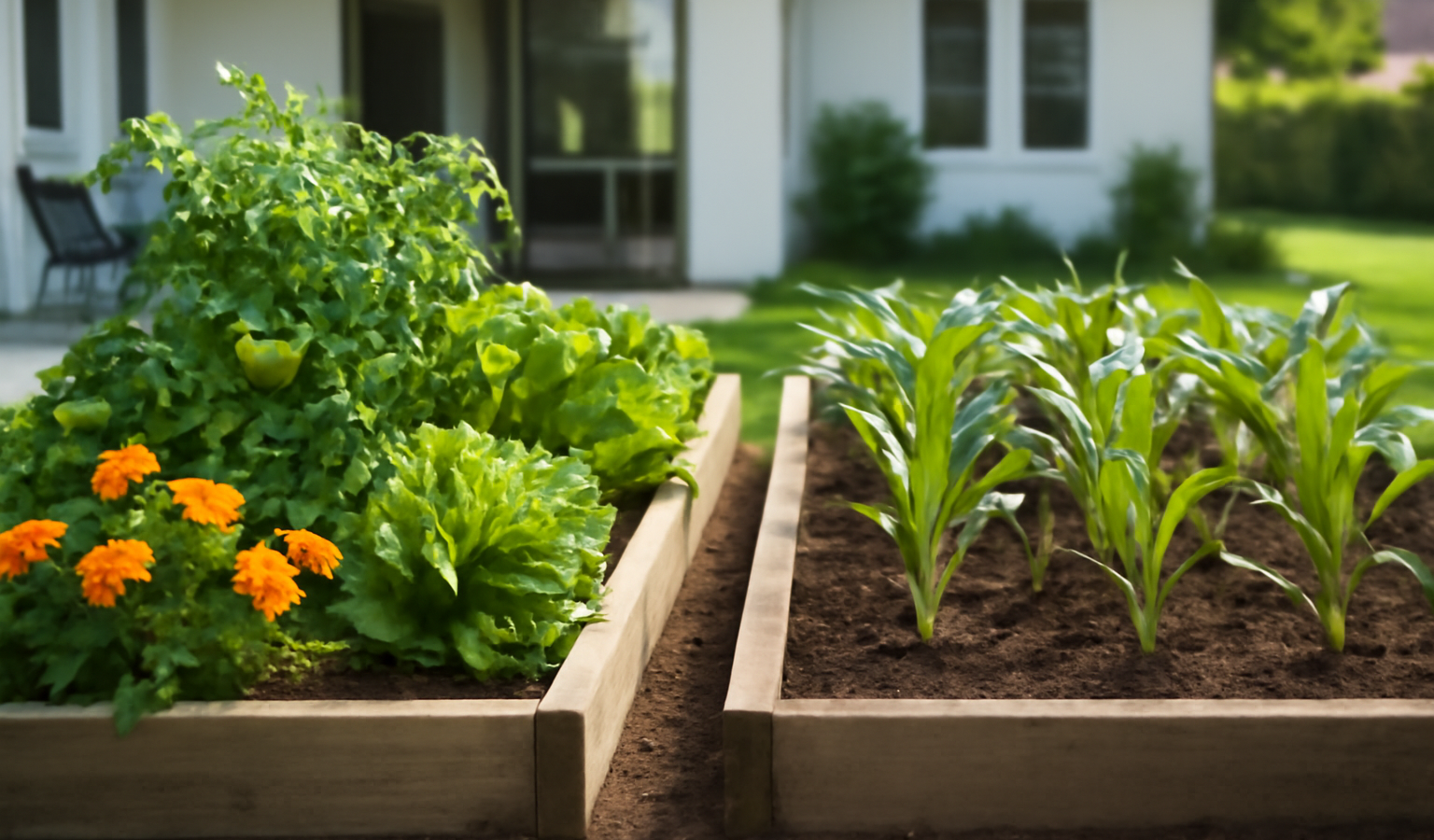
How you arrange the plants in your garden is as consequential as what you plant. Two philosophies compete. Companion planting (a form of polyculture) mixes different species together so they help one another — repelling pests, attracting pollinators, fixing nitrogen, providing shade, and confusing the insects that hunt by smell and sight. Monoculture grows a single crop in neat, uniform blocks or rows, the way commercial agriculture does, prioritizing simplicity, efficiency, and easy management. Companion planting builds a resilient, diverse mini-ecosystem that resists pests and disease naturally. Monoculture is simpler to plant, tend, and harvest, but concentrates crops in a way that pests and diseases love. For most home gardeners, the diverse approach is the clear winner — but monoculture has practical advantages worth understanding. This guide compares the two so you can design a garden that is both productive and resilient.
Key Takeaways
- Companion planting mixes mutually beneficial species to deter pests, attract pollinators and beneficial insects, fix nitrogen, and use space efficiently.
- Monoculture grows one crop in uniform blocks — simpler to plant, weed, and harvest, but a magnet for pests and disease that spread fast through identical plants.
- Diversity is the home garden’s best natural pest control: mixed plantings confuse pests, host predators, and avoid the “buffet” effect of single-crop blocks.
- Classic pairings include the Three Sisters (corn, beans, squash), tomatoes with basil, and carrots with onions; bad pairings exist too (beans dislike onions).
- Monoculture suits large-scale efficiency and mechanized harvest; companion planting suits resilient, productive home gardens.
Companion Planting vs Monoculture at a Glance
| Factor | Companion Planting | Monoculture |
|---|---|---|
| Layout | Mixed species interplanted together | Single crop in uniform blocks/rows |
| Pest pressure | Lower — diversity confuses and deters pests | Higher — concentrated host for pests |
| Disease spread | Slowed by plant diversity | Fast through identical plants |
| Pollinators & predators | Attracts and shelters beneficials | Few habitat resources |
| Soil health | Builds fertility; nitrogen-fixers help | Depletes specific nutrients; needs rotation |
| Space efficiency | High — vertical and layered use | Lower per square foot |
| Management ease | More planning and complexity | Simple to plant, weed, and harvest |
| Best for | Resilient, productive home gardens | Large-scale, mechanized growing |
Companion Planting: Diversity as a Strategy
Companion planting deliberately combines species that benefit each other, turning a garden bed into a small cooperative ecosystem. The mechanisms are concrete, not mystical. Strongly scented herbs and flowers like basil, marigolds, and nasturtiums mask the scent of target crops and repel or distract pests that locate food by smell. Flowering companions draw in pollinators that boost fruit set and predatory insects — ladybugs, lacewings, parasitic wasps — that eat aphids and caterpillars. Legumes such as beans and peas host bacteria that fix atmospheric nitrogen, enriching the soil for hungry neighbors. Tall plants shade and support shorter ones, while sprawling groundcovers shade the soil, retain moisture, and suppress weeds. And simply mixing species breaks up the dense, single-crop “buffet” that lets a pest population explode across identical plants.
The most famous example is the Native American “Three Sisters”: corn provides a stalk for beans to climb, beans fix nitrogen for the corn and squash, and sprawling squash leaves shade the soil, conserve moisture, and deter raccoons and weeds with their prickly stems. Other proven pairings include tomatoes with basil (which may improve flavor and repels some pests), carrots with onions (onion scent confuses the carrot fly), lettuce shaded by taller crops in summer heat, and marigolds throughout the bed to deter nematodes and aphids. There are anti-pairings too — beans and onions tend to suppress each other, and fennel inhibits many neighbors — so good companion planting means knowing both the friends and the foes.
The Real Advantages
Beyond pest control, companion planting uses space with remarkable efficiency, layering crops vertically and interplanting fast growers among slow ones so every square foot works. It builds soil health through diversity and nitrogen fixation, reduces the need for sprays, and creates the kind of resilient system where one pest or disease cannot wipe out everything at once. This diversity-first thinking is the same logic behind a thriving pollinator garden, where a mix of flowering species supports the beneficial insects that keep the whole garden in balance. The trade-off is planning: companion planting takes more thought to lay out, and a mixed bed can be a little more complex to weed and harvest than tidy single rows.
Monoculture: Simplicity and Efficiency
Monoculture grows a single crop in a uniform area — a block of nothing but tomatoes, a bed of only lettuce, rows of identical corn. It is the model of industrial agriculture, and it persists because it is genuinely efficient to manage. With one crop in one space, every plant has the same water, fertilizer, spacing, and timing needs, so planting, watering, weeding, pest treatment, and harvesting can all be standardized and, at scale, mechanized. There is no puzzle of competing requirements, no anti-pairings to avoid, and harvest is straightforward because everything ripens together in one place. For a gardener growing a large quantity of a single crop — a big patch of potatoes, a row of sweet corn for the freezer — monoculture’s simplicity is a real, practical benefit.
But that uniformity is also monoculture’s fundamental weakness, especially in a home garden. A solid block of one species is an open invitation to the pests and diseases that specialize in it: once they arrive, they find an unbroken food supply and spread explosively from plant to identical plant with nothing to slow them down. A single fungal disease or insect outbreak can take out the entire crop. Monoculture also depletes the soil unevenly, drawing down the same specific nutrients season after season, which is why it depends heavily on crop rotation and added fertilizer to stay productive. And a block of one flowering or non-flowering crop offers little habitat for pollinators and beneficial predators, so the natural checks on pests are absent. Monoculture trades resilience for simplicity — a fair trade at industrial scale with chemical backup, a riskier one in a backyard bed.
Where Monoculture Still Makes Sense
Even in a diverse garden, some crops are easiest grown in dedicated blocks. Wind-pollinated corn, for instance, sets ears better when planted in a tight block rather than a single row, so the pollen reaches the silks. Sprawling crops like potatoes or a large winter-squash patch are often simplest in their own space. The key is to break up monoculture blocks with diversity around and between them — border them with flowers and herbs, rotate them yearly, and avoid turning the whole garden into one giant single-crop expanse. Smart rotation is essential here; our guide on building healthy soil pairs naturally with rotating crops to keep monoculture beds productive.
How to Apply Both in a Home Garden
The smartest home gardens are not purely one or the other — they lean heavily on diversity while using small, managed blocks where it makes sense.
- Make diversity the default: interplant herbs, flowers, and vegetables so no single pest finds an unbroken target. Marigolds, basil, and nasturtiums earn their place in almost any bed.
- Use proven pairings: Three Sisters, tomatoes and basil, carrots and onions, lettuce under taller crops. Learn the anti-pairings too (beans away from onions, fennel off on its own).
- Block only when it helps: plant corn in a tight block for pollination, and give sprawling crops their own space — but surround those blocks with diversity.
- Always rotate: never grow the same crop family in the same spot two years running, whether you garden in mixes or blocks, to break pest and disease cycles and balance soil nutrients.
- Feed beneficials: keep something flowering throughout the season to host pollinators and the predatory insects that handle pests for you.
The Verdict
For the home gardener, companion planting wins clearly: diversity is the single most effective natural defense against pests and disease, it attracts the pollinators and predators that keep a garden in balance, it uses space efficiently, and it builds healthier soil — all without the chemical inputs that prop up large-scale monoculture. Monoculture’s simplicity is its only real edge, and it matters mainly at industrial scale or in small dedicated blocks for crops like corn that genuinely prefer it. The best backyard strategy is to make diversity your default, deploy proven companion pairings, plant the occasional managed block where a crop demands it, and rotate everything every year. Treat your garden as a small ecosystem rather than a factory floor, and it will reward you with steadier harvests, fewer pest disasters, and far less work spraying and rescuing crops that a monoculture would have left wide open.
Frequently Asked Questions
Is companion planting better than monoculture for a home garden?
For most home gardens, yes. Companion planting reduces pests and disease through diversity, attracts pollinators and beneficial predators, uses space efficiently, and builds soil health. Monoculture is simpler to manage but concentrates crops in a way that lets pests and diseases spread rapidly.
What is the Three Sisters companion planting method?
It is a classic Native American technique combining corn, beans, and squash. Corn gives beans a pole to climb, beans fix nitrogen in the soil for all three, and sprawling squash leaves shade the ground to conserve moisture and suppress weeds. Together they support each other and yield more than grown separately.
Why is monoculture more vulnerable to pests?
A solid block of one crop offers specialized pests and diseases an unbroken food supply, so once they arrive they spread explosively from one identical plant to the next with nothing to slow them. Diverse plantings confuse pests, host their predators, and prevent any single outbreak from taking everything.
Are there plants that should not be grown together?
Yes. Some pairings inhibit each other: beans and onions tend to suppress one another’s growth, and fennel inhibits many nearby vegetables and is best grown alone. Good companion planting means learning both the beneficial pairings and the ones to keep apart.
Can I combine companion planting and monoculture?
Absolutely, and many gardeners do. Make diversity your default but plant small dedicated blocks for crops that benefit from it, such as corn for better pollination. Surround those blocks with flowers and herbs, and rotate everything yearly to keep both pests and soil depletion in check.