

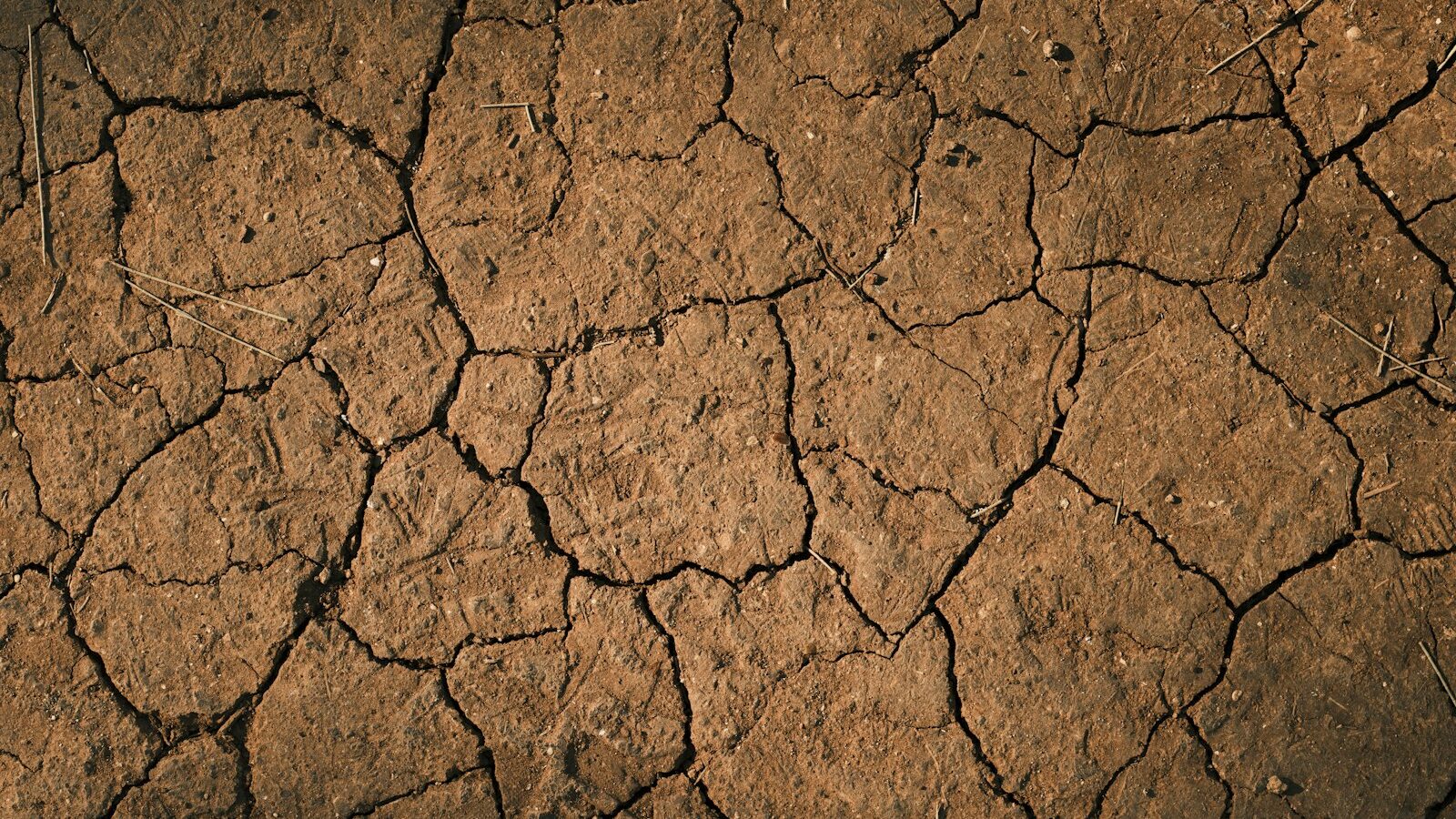
Clay soil is a paradox. It is naturally rich in minerals and holds nutrients and moisture better than any sandy soil, yet it can be miserable to garden in: rock-hard when dry, sticky and slick when wet, slow to drain, and quick to suffocate roots. The instinct is to fight the clay, often by dumping in sand or sprinkling on gypsum because a label promised a quick cure. Both usually disappoint. The real answer is less dramatic and far more effective: feed the soil organic matter, year after year, and let biology rebuild its structure. This guide explains why clay behaves the way it does, how to amend it correctly, why sand and gypsum are mostly myths for ordinary clay, and how to plant successfully while the long-term improvement takes hold.
Key Takeaways
- Clay’s tiny, tightly packed particles hold nutrients and water well but drain slowly and compact easily, so the fix is better structure, not richer chemistry.
- Organic matter (compost, aged manure, leaf mold) is the proven amendment: add 2 to 4 inches and work it into the top 6 to 12 inches, then keep adding it annually.
- Do not add sand to clay; the wrong ratio creates a concrete-like soil. Stick with organic matter instead.
- Gypsum only helps sodic (high-sodium) clay, confirmed by a soil test, and does little for ordinary clay despite the marketing.
- While the soil improves, plant in raised beds or mounds, choose clay-tolerant plants, and never work clay when it is wet.
Why Clay Soil Is Hard to Plant In
Soil texture is defined by particle size: sand is large, silt is medium, and clay is microscopically small. Clay particles are so tiny and flat that they pack together with very little pore space between them. That tight packing is what gives clay its frustrating traits. Water moves through slowly, so the soil drains poorly and roots can drown in soggy conditions; the same tight packing means clay compacts easily and turns brick-hard when it dries, leaving little room for air. Roots, which need oxygen as much as water, struggle to penetrate and breathe.
The upside is real, though, and worth remembering: those tiny particles have an enormous surface area that clings to nutrients and water, so well-managed clay is among the most fertile and drought-resilient soil you can have. The job is not to get rid of the clay. It is to create stable crumbs, aggregates of clay particles bound together with gaps between them, so the soil drains and breathes while keeping its fertility. That structure is built by organic matter and soil life, which is why amendment, not replacement, is the strategy.
Step 1: Test and Assess
Start with two simple tests. The jar test confirms texture: fill a clear jar one-third with soil, top with water, shake, and let it settle for a day; clay forms the topmost, slowest-settling layer, and a thick clay band confirms a heavy soil. A percolation test confirms drainage: dig a hole a foot deep, fill with water, let it drain, refill, and time the drop. If it drains less than an inch per hour, drainage is your limiting factor.
A lab soil test is worth the modest cost because it reports pH, nutrients, and crucially the sodium level, the one piece of information that tells you whether gypsum could ever help. Heavy clay that is also compacted from traffic or construction is a related but distinct problem; if your soil is dense because it was driven on or built over, see our companion guide on how to fix compacted soil, since aeration becomes part of the solution.
Step 2: Add Organic Matter (the Real Fix)
Organic matter is the single amendment that genuinely transforms clay, and there is no shortcut around it. As compost, aged manure, leaf mold, and similar materials break down, they feed earthworms, fungi, and bacteria whose activity binds clay particles into stable aggregates with pore space between them. The result over time is soil that drains better, holds air, warms faster in spring, and stays loose enough for roots and your trowel.
How much and how to apply
For a new bed, spread a 2 to 4 inch layer of finished compost over the surface and incorporate it into the top 6 to 12 inches of soil with a garden fork or broadfork. Do this when the soil is moist but not wet, never when it is sticky. In a no-dig approach, you can instead layer 2 to 4 inches of compost on the surface and let worms pull it down over a season; this avoids damaging structure and works well over time. Either way, the key is repetition: clay does not become loam in one application. Plan to add an inch or two of organic matter every year, and topdress beds with mulch such as shredded leaves or wood chips that continually feed the soil from above.
Cover crops and mulch
In areas you can leave fallow, deep-rooted cover crops like daikon radish, cereal rye, or clover drive roots through the clay and add organic matter when they die back, opening channels for water and air. Year-round mulch protects the surface from pounding rain that re-seals clay, moderates temperature, and keeps the soil food web fed. These slow-and-steady inputs are what turn unworkable clay into prized garden soil within a few seasons.
The Sand Mistake and the Gypsum Myth
Two popular shortcuts deserve a hard look because both waste money and effort on ordinary clay.
Do not add sand
It seems logical that mixing coarse sand into fine clay would create a balanced loam. In practice, unless you add a huge proportion of sand, the small clay particles simply fill the gaps between sand grains, producing a dense, cement-like material that is worse than the clay you started with. Achieving a true sandy loam would require mixing in such a large volume of sand that it is impractical for any normal garden. Skip the sand and put that effort into organic matter, which improves clay reliably regardless of dose.
Gypsum is not a clay buster
Gypsum (calcium sulfate) is marketed as a one-step clay-loosening miracle, and for most gardeners that claim is overblown. Gypsum works by supplying calcium that displaces sodium, so it genuinely improves soil structure only in sodic soils, those with a sodium problem, common in some arid and coastal regions. If your soil test shows high sodium, gypsum is the right tool. But the typical clay soil in a humid climate is not sodic, and on that soil gypsum does little to nothing for structure or drainage; it mainly adds calcium and sulfur as nutrients. Treat “just add gypsum to fix clay” as marketing, and let a soil test, not a product label, decide whether you actually need it. For everyone else, compost remains the answer.
Step 3: Improve Drainage
Because clay drains slowly, drainage strategy matters as much as amendment, especially in the early years before structure improves. The simplest and most effective approach is to plant up rather than down: raised beds and mounded planting areas lift roots above the heavy, waterlogged layer and give them well-drained soil to establish in. Even a 6 to 8 inch mound of amended soil over native clay dramatically improves survival for many plants while the underlying clay slowly improves.
Avoid the classic mistake of digging a planting hole in clay, backfilling it with rich, fluffy soil, and dropping a plant in. That creates a bathtub: water flows into the loose pocket, cannot escape through the surrounding clay walls, and the roots sit in standing water and rot. Instead, amend the whole bed broadly so water has somewhere to go, roughen the sides of any planting hole, and avoid planting in low spots that collect runoff.
Step 4: Plant Smart While the Soil Improves
You do not have to wait years to plant. Choose clay-tolerant plants that actually thrive in heavier, moisture-retentive soil. Many shrubs, ornamental grasses, and perennials are well suited, including many native species adapted to local clay; our overview of native versus non-native plants can help you pick species already matched to your conditions. Daylilies, asters, coneflowers, switchgrass, and many viburnums and dogwoods all tolerate clay well.
Two timing rules will save you grief. First, never work clay when it is wet; squeezing or digging saturated clay smears the particles and destroys the very structure you are trying to build, leaving dense clods that bake hard. Wait until it crumbles rather than ribbons in your hand. Second, mulch every bed after planting to keep moisture even and to protect the surface from crusting. With clay-tolerant plants, raised or mounded beds, and steady additions of organic matter, you can have a productive garden this season and genuinely loose, fertile soil within a few years.
Frequently Asked Questions
What is the best amendment for clay soil?
Organic matter, hands down: compost, aged manure, and leaf mold. Added repeatedly and incorporated into the top 6 to 12 inches, it builds stable soil structure that drains and breathes while keeping clay’s natural fertility. No single product matches consistent organic matter additions.
Should I add sand to clay soil?
No. Unless you add an impractically large proportion, sand mixed into clay tends to produce a dense, concrete-like soil that is worse than the original. Use organic matter instead, which improves clay reliably at any reasonable dose.
Does gypsum loosen clay soil?
Only sodic (high-sodium) clay, confirmed by a soil test. On ordinary clay in a humid climate, gypsum does little for structure or drainage and mainly acts as a calcium and sulfur source. Compost and improved drainage are the dependable fixes.
How long does it take to improve clay soil?
You will see meaningful improvement within one to three seasons of adding organic matter annually, with continued gains over years. Raised beds and clay-tolerant plants let you garden successfully right away while the soil structure develops underneath.
Can I dig amended soil into a planting hole in clay?
Avoid filling a hole in clay with fluffy soil; it becomes a bathtub that traps water and rots roots. Amend the whole bed broadly instead, roughen the hole’s sides, and consider raised or mounded beds so water can drain away from the root zone.