

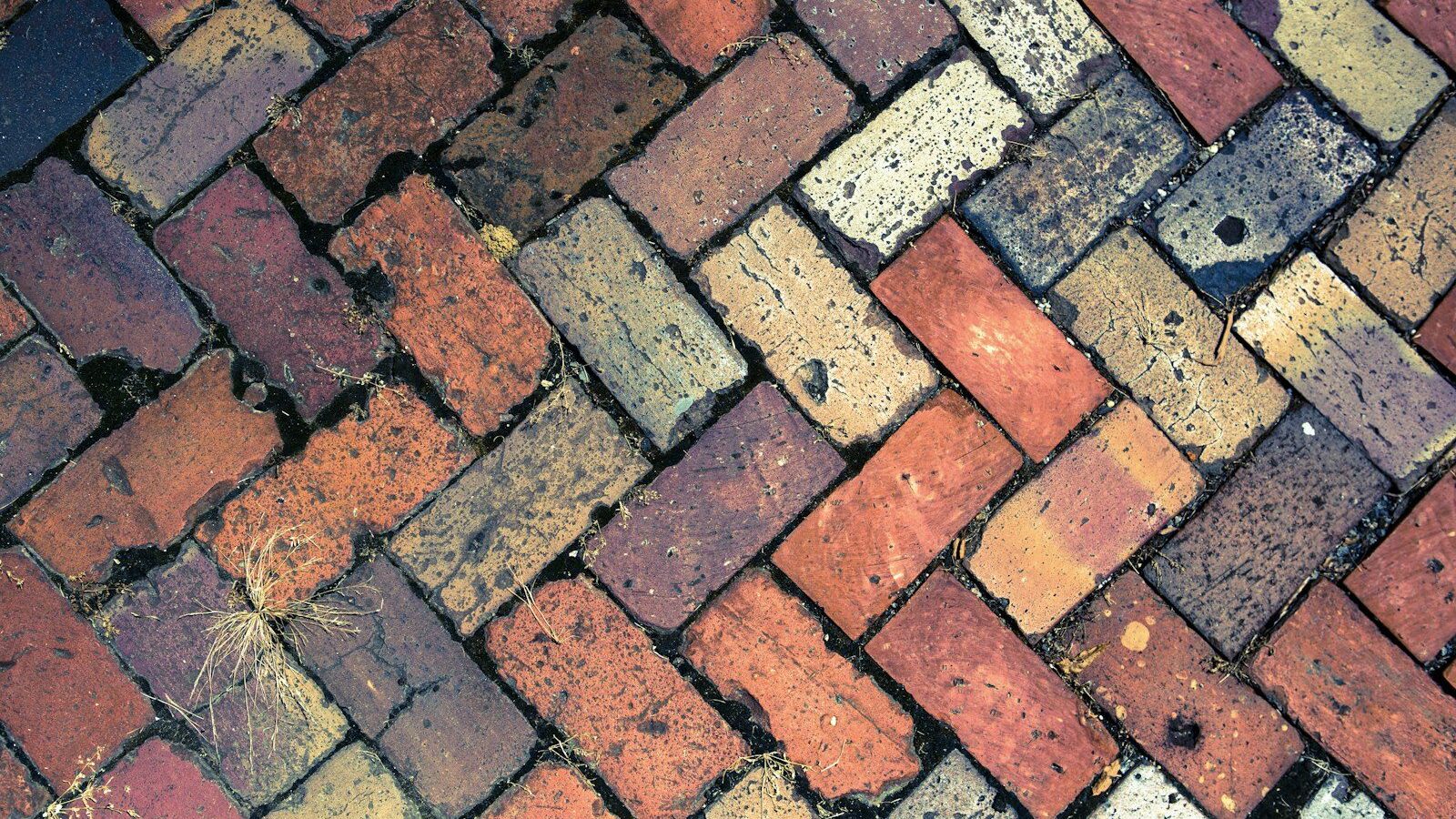
The verdict: choose concrete pavers if you want the most styles, sizes and colors for the money, or a permeable patio; choose clay brick pavers if you want color that never fades and a classic look that ages gracefully for decades. Both are strong enough for patios, walkways and even driveways when made to the right standard and installed on a proper base. Concrete pavers usually cost less to buy and install, but their surface color can fade and their aggregate can show over time. Clay brick costs more and comes in fewer shapes, but its color is fired through the whole unit, so it looks the same in 30 years as it does today. Here is how the two compare on every factor that matters.
Part of our Landscaping & Hardscaping guide →
In this guide
- Brick vs Concrete Pavers at a Glance
- Color Fastness: Brick’s Biggest Advantage
- Strength and Durability
- Cost Comparison
- Design and Style Options
- Installation Differences
- Maintenance
- Other Options: Reclaimed Brick, Brick-Look Concrete and Mixed Designs
- Climate Considerations
- Which Should You Choose?
- Frequently Asked Questions
Key Takeaways
- Clay brick color is fired into the material and is effectively permanent; concrete paver color fades gradually, especially in strong sun.
- Quality concrete pavers meet ASTM C936; clay paving brick for patios should meet ASTM C902, ideally the severe-weathering grade in freezing climates.
- Concrete pavers are typically cheaper and come in far more shapes, textures and permeable options.
- Brick is a better fit for historic homes and traditional designs; concrete suits modern, large-format and stone-look patios.
- Installation is nearly identical: compacted gravel base, bedding sand, edge restraint and joint sand.
Brick vs Concrete Pavers at a Glance
| Factor | Clay brick pavers | Concrete pavers |
|---|---|---|
| Material | Fired clay and shale | Cement, sand, aggregate and pigment |
| Color fastness | Permanent; color goes all the way through | Fades over years; surface wear can expose aggregate |
| Strength standard | ASTM C902 (paving brick) | ASTM C936 (interlocking concrete pavers) |
| Shapes and sizes | Mostly rectangles, some squares | Huge range including large slabs, stone and wood looks |
| Colors | Reds, browns, buff, charcoal, flashed tones | Almost any color and blend |
| Typical installed cost | Usually higher | Usually lower |
| Permeable options | Limited | Widely available |
| Edges | Square, crisp; chips can show | Often chamfered; tumbled options hide chips |
| Lifespan | Many decades | Decades with good installation |
| Best for | Traditional, historic, timeless designs | Budget, variety, modern and permeable patios |
Color Fastness: Brick’s Biggest Advantage
Clay brick gets its color from the minerals in the clay and the firing process in a kiln at very high temperatures. The color runs all the way through each brick, so wear, sun and weather do not change it. A brick patio that is decades old looks much like it did on day one, aside from a natural patina.
Concrete pavers are colored with pigments mixed into the concrete. Over years of UV exposure and foot traffic, the surface cement paste wears away, which dulls color and exposes the sand and stone aggregate underneath. Many quality concrete pavers use a “face mix” (a denser, more heavily pigmented top layer) to slow this, and sealing every few years helps maintain color. Still, a red concrete paver patio will usually look noticeably less red after a decade or two in full sun. If you want a specific color to last, clay brick is the safer bet.
Strength and Durability
Both materials are strong when made to standard. ASTM C936, the US standard for interlocking concrete pavers, calls for high compressive strength (an average of 8,000 psi) and low water absorption, which makes good concrete pavers suitable for driveways. ASTM C902 covers clay paving brick for pedestrian and light traffic, with grades for weathering exposure and traffic. In freezing climates, look for clay pavers rated for severe weathering and concrete pavers that meet C936, since freeze-thaw cycles and deicing salts are the main durability threat for both.
Practically, the bigger difference is how they wear. Concrete pavers can show surface wear and, if low quality, spall in freeze-thaw areas, especially where deicing salts are used. Clay brick is very hard and dense but can chip at sharp edges, and lower-quality or reclaimed building bricks (which are not paving brick) can crack and flake in cold weather. Never use ordinary wall brick for a patio surface.
Cost Comparison
Concrete pavers usually cost less than clay pavers, both for the material and often for installation, because they are manufactured in high volume and come in larger formats that cover more area per piece. Clay brick pavers typically carry a premium for the material, and the smaller unit size means more pieces to set. As a rough guide, many homeowners see professionally installed concrete paver patios in a range of roughly $12 to $30 per square foot and clay brick in roughly $15 to $40 per square foot, with base preparation, access, pattern complexity and region moving the number up or down. Our paver patio cost guide breaks down these factors in more detail.
Over the long term, the gap narrows. Clay brick needs no sealing to keep its color, while concrete pavers may be sealed every three to five years to slow fading. Both need occasional joint sand top-ups.
Design and Style Options
Concrete pavers win on variety. Manufacturers offer everything from small cobble shapes to 24-inch slabs, textures that mimic natural stone, flagstone and wood, tumbled and antiqued finishes, and multi-size pattern kits. They also come in permeable designs that let rain drain through wider joints filled with gravel, which can help with stormwater rules and runoff.
Clay brick offers a narrower but timeless palette: reds, browns, buffs, grays and charcoals, often with “flashed” tones from the kiln that vary naturally from brick to brick. Brick suits patterns like herringbone, basketweave and running bond, and fits naturally with brick homes, colonial and Craftsman architecture, and historic districts. For more on paver shapes and patterns, see types of pavers.
Installation Differences
Both are installed the same basic way: excavate, lay and compact a crushed gravel base (often 4 to 6 inches for patios, more for driveways and in poor soils), screed about an inch of bedding sand, set pavers, install edge restraints and compact joint sand. Our step-by-step guide on how to build a paver patio covers the process.
- Dimensional consistency: concrete pavers are molded and very uniform. Clay brick can vary slightly in size, which takes a bit more care when laying tight patterns.
- Cutting: both are cut with a wet saw or splitter. Clay is harder and dustier to cut.
- Spacers: many concrete pavers have built-in spacer nubs. Clay pavers come with or without lugs, so check before you order.
- Weight and handling: large concrete slabs are heavy and may need two people; clay brick pieces are small but numerous.
Maintenance
- Cleaning: both clean up with a stiff brush, water and a mild cleaner. Avoid aggressive pressure washing close to the surface, which can erode concrete paver faces and blast out joint sand. See how to clean pavers.
- Sealing: optional for clay brick; helpful for concrete pavers to slow fading and staining.
- Efflorescence: a white powdery residue can appear on both, more commonly on new concrete pavers. It usually fades with time and rain, and can be removed with a dedicated cleaner.
- Moss and weeds: in shady, damp areas both can grow moss in the joints. Polymeric joint sand reduces weeds and washout.
- Repairs: individual units of either type can be lifted and replaced. Keep a few spares from the original batch, since colors vary between production runs.
Other Options: Reclaimed Brick, Brick-Look Concrete and Mixed Designs
The choice is not always strictly one or the other. Several in-between options are worth knowing about:
- Reclaimed brick: salvaged street pavers and old paving brick have unmatched character and are a good match for historic homes. Make sure they were made as paving brick, not wall brick, and expect more size variation, chipped edges and extra sorting time. Supply can be limited, so buy enough for the whole job plus spares.
- Brick-look concrete pavers: many manufacturers make concrete pavers in brick sizes and red or flashed colors. They cost less than clay and lay quickly, but they share concrete’s tendency to fade, and up close the texture differs from fired clay.
- Thin clay pavers: thinner clay units can be mortared over an existing sound concrete slab, giving a brick surface without full excavation. The slab must be crack-free and well drained, and this is a mortar-set system rather than a sand-set one.
- Mixed designs: a common approach is a concrete paver field with a clay brick border or inlay. You get concrete’s lower cost across the large area and brick’s permanent color where the eye lands most, such as edges, steps and around a fire pit.
When mixing materials, confirm that the thicknesses match or plan the base to compensate, since clay pavers and concrete pavers are often made in different thicknesses. A difference of even a quarter inch creates a trip edge.
Climate Considerations
In cold climates with frequent freeze-thaw cycles, base preparation and drainage matter more than the paver choice. Use severe-weathering clay pavers or C936 concrete pavers, avoid rock salt where possible, and slope the patio at about 1/8 to 1/4 inch per foot away from the house. In hot, sunny climates, light-colored concrete pavers stay cooler underfoot than dark brick, but expect faster color fading on concrete. Coastal areas with salt spray are generally fine for both when properly installed.
Which Should You Choose?
- If budget is the top priority: choose concrete pavers.
- If you want color that never fades: choose clay brick.
- If your home is brick or historic: choose clay brick for a cohesive look.
- If you want a modern, stone-look or large-format design: choose concrete pavers.
- If you need a permeable patio for drainage or local rules: choose permeable concrete pavers.
- If you plan to drive on it: either works when rated for vehicles; concrete pavers to C936 are the most common choice for driveways.
For more patio and hardscape planning, browse our landscaping and hardscaping hub. If you would rather have a professional handle excavation, base and installation, you can compare local hardscaping pros through our landscaping services directory.
Frequently Asked Questions
Do brick pavers last longer than concrete pavers?
Both can last for decades when installed on a proper base. Clay brick keeps its color indefinitely, while concrete pavers tend to fade and show surface wear over time, so brick often looks better for longer.
Are brick pavers more expensive than concrete pavers?
Usually yes. Clay brick pavers typically cost more per square foot for materials and can take more labor because the units are smaller. Prices vary by region, product and pattern.
Do concrete pavers fade?
Yes, gradually. Sun and wear erode the surface cement and pigment, exposing aggregate. Pavers with a dense face mix fade more slowly, and sealing every few years helps maintain color.
Can I use regular bricks for a patio?
No. Wall or building bricks are not made for ground contact and foot traffic, and they can crack and flake in freeze-thaw conditions. Use paving brick rated to ASTM C902.
Which is easier to install yourself?
Concrete pavers are slightly easier for DIYers because they are uniform in size and often have built-in spacers. The base preparation, which is the hardest part, is the same for both.