

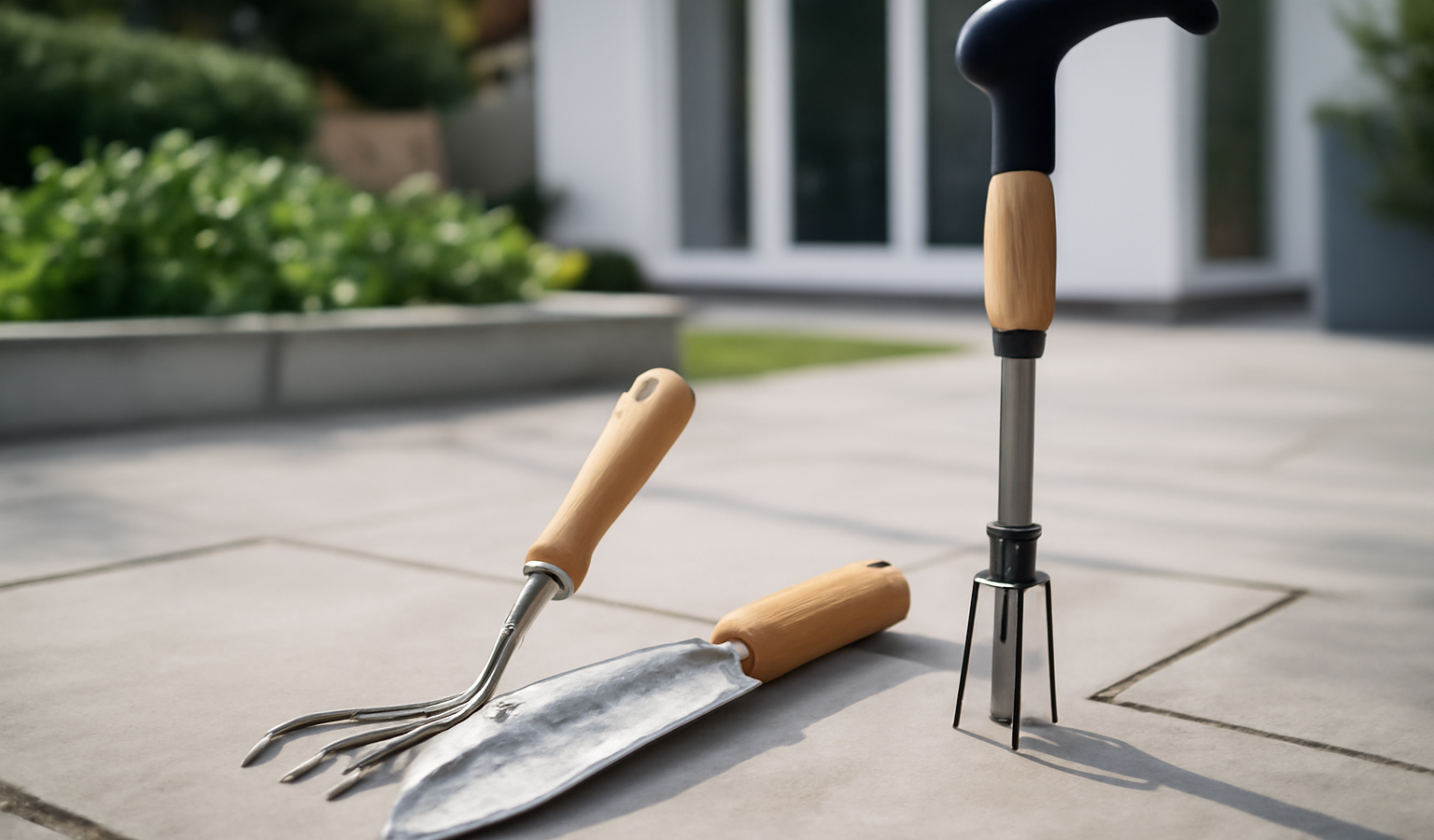
The right weeding tool is the difference between a chore that wrecks your back and a quiet, almost meditative hour in the garden. No single tool wins every situation: a stand-up puller is unbeatable for dandelions scattered across a lawn, a hori-hori knife is the all-day companion for crowded perennial beds, and a sharp stirrup hoe clears a whole vegetable row of seedling weeds in the time it takes to sip your coffee. After a lot of seasons pulling, slicing, and prying weeds out of clay, sand, and everything between, we’ve narrowed the field to seven tools that genuinely earn a spot in the shed. Buy the two or three that match your weeds and you’ll never dread weeding again.
As an Amazon Associate we earn from qualifying purchases. This page contains affiliate links at no extra cost to you.
Key Takeaways
- Match the tool to the weed. Taprooted weeds (dandelion, dock) need a prying or grabbing tool; shallow seedling weeds in beds are best sliced off with a hoe.
- A hori-hori knife is the one tool to own if you buy only one: it digs, pries, slices, cuts roots, and even measures planting depth.
- Stand-up weed pullers save your back on lawns by letting you remove dandelions without kneeling or bending.
- Stirrup (hula) hoes cut weeds at the root line with a push-pull motion and are the fastest way to clear large vegetable rows.
- Get the whole root on perennial weeds or they regrow; tools that grip or pry deep beat those that just snap the top off.
- Full-tang, forged steel and a comfortable handle matter more than price; a flimsy tool bends on the first stubborn taproot.
Comparison: Best Weeding Tools at a Glance
| Tool | Best For | Key Spec |
|---|---|---|
| Nisaku NJP650 Hori-Hori | Best overall all-rounder | 7.25 in stainless blade, full tang |
| Fiskars 4-Claw Stand-Up Weeder | Best stand-up puller | 39 in, 4 serrated claws, foot eject |
| Grampa’s Weeder | Best simple lawn puller | 45 in ash handle, 4-claw lever |
| CobraHead Original Weeder | Best precision hand weeder | Curved tempered steel blade |
| Rogue Garden Hoe 575G | Best heavy-duty hoe | 5.75 in reclaimed-steel head |
| Edward Tools Stirrup/Hula Hoe | Best for large beds | Oscillating loop, 54 in handle |
| Fisher Blacksmithing Hand Hoe | Best dandelion/taproot weeder | Forged fishtail/asparagus blade |
1. Nisaku NJP650 Hori-Hori — Best Overall
If you weed for an hour at a stretch in mixed perennial beds, the Japanese hori-hori knife is the tool to reach for, and the Nisaku NJP650 is the benchmark. The 7.25 in stainless blade is concave to scoop soil, sharpened on one edge for slicing roots and a serrated edge on the other for sawing through tougher stuff like turf, twine, or stubborn rhizomes. The pointed tip drives straight down alongside a taproot so you can pry the whole thing out instead of snapping it off.
It’s full-tang, so the blade runs the length of the wooden handle and won’t snap under prying load, the failure point of cheap garden knives. Depth gradations stamped into the blade double as a planting-depth gauge for bulbs and transplants. The downside is that it’s a knife: the edges are genuinely sharp, so you’ll want the sheath and some care around children, and bare wood handles need an occasional wipe of oil. For sheer versatility, nothing else here comes close.
Pros
- Does it all: digs, pries, slices, saws, measures depth
- Full-tang stainless blade won’t snap under load
- Serrated edge cuts turf, roots, and twine
- Concave blade scoops soil like a trowel
Cons
- Sharp edges demand a sheath and care
- Wood handle needs occasional oiling
- A kneeling/bending tool, not for stand-up lawn work
2. Fiskars 4-Claw Stand-Up Weeder — Best Stand-Up Puller
For dandelions and other taprooted weeds dotted across a lawn, a stand-up weeder is the back-saver you didn’t know you needed. The Fiskars 4-Claw model lets you weed entirely upright: position the head over the weed, step on the foot platform to drive four serrated stainless claws into the soil around the root, tilt back to grab the whole taproot, and push the eject lever to drop it into a bucket without bending or touching it.
The 39 in length suits most adults, the claws grab a wide enough root ball to pull dandelions intact most of the time, and the eject mechanism keeps your hands clean across dozens of weeds. It works best in moist soil; in hard, dry clay the claws struggle to penetrate, so water first or weed after rain. It’s also overkill for tight, crowded beds where a hand tool has more finesse. On a lawn, though, it turns a knee-grinding job into a standing walk.
Pros
- Weed standing up, no kneeling or bending
- Four claws grab the full taproot
- Foot eject drops weeds without touching them
- Ideal for dandelions across a lawn
Cons
- Struggles in hard, dry clay; needs moist soil
- Too bulky for crowded beds and tight spaces
- Leaves a small plug hole in the lawn
3. Grampa’s Weeder — Best Simple Lawn Puller
Grampa’s Weeder has been pulling dandelions since 1913, and its no-nonsense design is exactly why it endures. There’s no spring, no eject lever, nothing to break: a long ash handle ends in a forked four-claw steel head. You place the claws over the weed, step on the small foot bar to sink them, then lever the handle back toward you and the natural fulcrum levers the entire taproot out of the ground. Push the weed off the claws with your foot and move on.
At 45 in it’s tall enough to use fully upright, and because it’s mechanically dead simple it will likely outlast every other tool here. The trade-off is that there’s no eject mechanism, so you flick weeds off manually, and like all stand-up pullers it wants moist soil to bite into. For a purist who wants one rugged, repairable lawn weeder to hand down, this is it.
Pros
- Dead-simple lever design with nothing to break
- Real ash handle, comfortable and repairable
- Levers out full taproots with body weight
- Century-proven, likely to outlast you
Cons
- No eject lever; flick weeds off by hand or foot
- Needs moist soil to grab well
- Lawn-focused, not for bedwork
4. CobraHead Original Weeder — Best Precision Hand Weeder
The CobraHead is the tool serious vegetable and flower gardeners reach for when they need to work in close. Its curved, tempered-steel blade looks like a single steel fingernail on a comfortable recycled-plastic handle, and that shape lets it do an unusual amount: it slices weed roots just under the surface, hooks and lifts seedlings, scratches out furrows for seeding, cultivates between closely spaced plants, and tucks into spots a wider tool can’t reach.
Because the blade is narrow and tempered, it digs into compacted soil and around delicate roots without disturbing your good plants, making it ideal for weeding right up against lettuce, carrots, or perennials. It’s a hand tool, so it’s a kneeling-and-bending job over a big area, and the narrow blade isn’t the right choice for clearing a large open patch fast. For finesse work in tight, planted beds, though, it’s the most useful little weeder going.
Pros
- Curved blade slices, hooks, lifts, and furrows
- Narrow tip works in tight, planted spaces
- Tempered steel cuts compacted soil and roots
- Comfortable handle for long sessions
Cons
- A kneeling/bending hand tool
- Too narrow to clear large areas quickly
- Bare steel blade needs a wipe to prevent rust
5. Rogue Garden Hoe 575G — Best Heavy-Duty Hoe
When the weeds are established, the soil is hard, or you’ve let a patch get away from you, you want a hoe with real authority. Rogue Hoes are forged in the USA from reclaimed agricultural disc-harrow steel, and that heavy, hardened blade chops through roots, compacted clay, and tough crabgrass that would make a stamped big-box hoe fold. The 5.75 in head is the all-purpose size, wide enough to cover ground but narrow enough to work between plants.
The blade is sharpened on multiple edges so you can chop on the pull stroke and slice on the side, and the steel holds an edge through abuse. It’s heavier than a typical hoe, which is the whole point: the mass does the work so you swing less. That weight is the only real downside over a very long session, and it’s more tool than someone with only soft, light soil and small weeds really needs. For tough conditions, it’s the one to own.
Pros
- Forged reclaimed-steel head, nearly indestructible
- Chops through roots and hard, compacted clay
- Multiple sharpened edges for chop and slice
- Mass does the work, so you swing less
Cons
- Heavier than a standard hoe
- Overkill for soft soil and small weeds
- Premium price for a hoe
6. Edward Tools Stirrup / Hula Hoe — Best for Large Beds
For clearing seedling weeds across a big vegetable bed or row, nothing is faster than a stirrup hoe, also called a hula or oscillating hoe. The Edward Tools version has a sharpened metal loop that pivots slightly as you push and pull, slicing weeds off just below the soil line on both strokes. You skim it back and forth a half-inch under the surface and it shaves off young weeds by the dozen without you ever bending down.
The 54 in handle keeps you upright, and because it cuts shallow it severs weeds without churning up new weed seeds from deeper soil, which a digging tool tends to do. It’s at its best on small, young weeds in loose soil: it won’t pull an established dandelion taproot, and you’ll want to keep the loop sharp with a file for it to glide. Used weekly on seedlings, though, it keeps a whole garden weed-free with minimal effort.
Pros
- Cuts on push and pull, fast over large areas
- Long handle keeps you standing and comfortable
- Shallow cut doesn’t bring up new weed seeds
- Affordable and low-effort for routine weeding
Cons
- Won’t pull established taprooted weeds
- Needs frequent sharpening to glide well
- Best on young weeds in loose soil only
7. Fisher Blacksmithing Hand Hoe — Best Dandelion / Taproot Weeder
For prying deep taproots out of beds by hand, an old-fashioned forged fishtail (or “asparagus”) weeder is purpose-built and hard to beat. Fisher Blacksmithing hand-forges these in Montana, and the notched, V-tipped blade is made to slide straight down alongside a dandelion, dock, or thistle root, then lever the whole taproot up intact so it can’t regrow from a snapped-off piece.
The forged-steel head and hardwood handle make it a genuine heirloom tool, balanced and tough enough for serious prying without bending the way thin stamped weeders do. The V-notch also makes a tidy little tool for popping individual weeds out of cracks and tight spots. It’s a specialist: a single-weed hand tool that means kneeling, and it’s priced like the handmade item it is. For anyone who battles deep taproots in beds, it’s worth every penny. Pair it with a kneeling pad and your favorite garden gear for comfortable sessions.
Pros
- V-notch pries up whole taproots intact
- Hand-forged steel won’t bend under prying
- Heirloom build quality, hardwood handle
- Great for weeds in cracks and tight spots
Cons
- A single-weed hand tool, slow over large areas
- Requires kneeling and bending
- Premium, handmade pricing
Buyer’s Guide: How to Choose a Weeding Tool
Identify your weeds first
The single biggest factor is the kind of weed you fight most. Taprooted perennials like dandelion, dock, and thistle regrow from any root fragment left behind, so they need a tool that pries or grips the whole root out: a hori-hori, a fishtail weeder, or a stand-up claw puller. Shallow-rooted annual weeds and seedlings, by contrast, are best simply sliced off at the soil line with a hoe before they set seed. A garden usually has both, which is why most gardeners end up owning a hoe plus one prying tool.
Stand-up vs. hand tools
Stand-up pullers and long-handled hoes spare your knees and back and cover ground fast, which matters on lawns and in big open beds. Hand tools like the hori-hori, CobraHead, and fishtail weeder give precision in crowded, planted areas where a long tool is clumsy and risks your good plants. If weeding leaves you sore, lean toward long-handled tools and add a kneeling pad for the close work you can’t avoid.
Steel quality and construction
Cheap weeders bend on the first stubborn taproot. Look for forged or tempered steel and, in knives, a full tang where the blade runs through the handle. Forged tools (Rogue, Fisher) cost more but effectively last a lifetime. Stainless resists rust with no care; carbon and reclaimed steel hold a better edge but want a wipe of oil and dry storage. A comfortable, secure handle matters as much as the blade over a long session.
Timing and technique
Any weeding tool works better in moist soil; weed a day or two after rain or watering and roots slide out instead of snapping. Get weeds while they’re young and before they flower so you stop them seeding the next generation, the whole battle in a low-weed garden. Hoe shallow to avoid bringing buried weed seeds to the surface. Tools that disturb less soil keep the weed pressure lower over time, which dovetails with a smart mulching and bed-care routine.
Build a small kit, not one tool
Rather than hunt for one perfect weeder, most gardeners are best served by a small, complementary kit: a hori-hori for bedwork, a stirrup or push hoe for clearing rows, and a stand-up puller for dandelions in the lawn. Three well-chosen tools cover essentially every weeding situation and each does its job far better than one compromise tool trying to do all three.
Frequently Asked Questions
What is the best all-around weeding tool?
A Japanese hori-hori knife like the Nisaku NJP650 is the most versatile single tool. It digs, pries out taproots, slices roots, saws through turf, and even gauges planting depth, so it handles the widest range of weeding jobs in beds. For lawn dandelions, pair it with a stand-up puller.
How do I remove dandelions without them coming back?
You have to get the entire taproot; any fragment left behind regrows. Use a stand-up claw puller or a fishtail weeder to lever the whole root out, and do it when the soil is moist so the root slides free instead of snapping. Pull them before they flower and seed.
What’s the difference between a stirrup hoe and a regular hoe?
A stirrup (or hula) hoe has an open loop blade that oscillates and cuts on both the push and pull stroke, skimming weeds off just below the surface. A traditional draw hoe chops on the pull stroke only and digs deeper. The stirrup hoe is faster and shallower for seedling weeds in large beds.
Should I weed when the soil is wet or dry?
Moist, not soaking, soil is ideal. Roots release cleanly and pull out intact rather than breaking off. Weeding a day or two after rain or a deep watering makes every tool work better, especially for taprooted weeds and stand-up pullers that need to bite into the ground.
Do I really need more than one weeding tool?
Most gardens have both shallow seedling weeds and deep taprooted ones, and no single tool handles both well. A practical kit is a hoe for clearing rows, a hori-hori or hand weeder for bedwork, and a stand-up puller for lawn dandelions. Three tools cover nearly every situation.
Pick your weeding tools the way you’d pick a knife for the kitchen: by the job in front of you. If you battle dandelions across a lawn, start with the Fiskars or Grampa’s stand-up puller. If your weeds live in crowded beds, the Nisaku hori-hori and CobraHead will become extensions of your hand. And if you keep a big vegetable garden, a stirrup hoe run weekly over young weeds will save you more labor than any other single tool. Buy quality steel once, keep it sharp and dry, and these tools will outlast a decade of weeds.