


If you want a meadow, a prairie strip, wildlife cover or a low-input slope that stays put without mowing every week, native warm-season bunchgrasses are the backbone. Big bluestem (Andropogon gerardii) is the tall one, 4 to 7 feet, with the “turkey foot” seed heads that defined the tallgrass prairie. Little bluestem (Schizachyrium scoparium) is its shorter, tidier cousin, roughly 2 to 3 feet, with blue-green summer foliage that turns copper-red in fall. Both are deep-rooted, drought tolerant once established and native across most of the central and eastern US. Our top pick is the Outsidepride Big Bluestem 1 lb bag, which gives the clearest zone, height and seeding-rate guidance for garden-scale plantings. For acreage and deer cover, Hale Habitat and Seed sells both species as pure live seed, and for a small ornamental bed, the Survival Garden Seeds little bluestem packet is the easiest start. These are not lawn seeds; if you want a mowed turf, our best grass seed roundup is the better place to look.
Part of our Lawn Care guide →
In this guide
- Before You Buy: Big vs Little Bluestem
- 1. Outsidepride Big Bluestem 1 lb — Best Overall
- 2. Hale Habitat and Seed Big Bluestem 2 lb — Best for Wildlife Cover
- 3. Outsidepride Little Bluestem 1 lb — Best Little Bluestem for Gardens
- 4. Hale Habitat and Seed Little Bluestem 2 lb — Best for Acreage
- 5. Survival Garden Seeds Little Bluestem — Best Small Packet
- 6. Hale Habitat and Seed Big Bluestem 50 lb — Best Bulk
- Buyer’s Guide: What to Look For in Native Grass Seed
- Frequently Asked Questions
Disclosure: Urban Lotus Project is reader-supported. As an Amazon Associate we earn from qualifying purchases, at no extra cost to you.
How we compared: we compared 16 current Amazon grass seed listings on what each listing states (species, quantity, pure live seed, coverage, seeding rate and zones), set aside the five that were conventional lawn seed rather than native grasses, and chose from the remaining 11; we did not test or plant the seed, and availability changes.
| Product | Best for | Key features | Buy |
|---|---|---|---|
| Outsidepride Big Bluestem 1 lb | Best overall |
| Buy now →Check current price |
| Hale Big Bluestem 2 lb PLS | Best for deer and wildlife cover |
| Buy now →Check current price |
| Outsidepride Little Bluestem 1 lb | Best little bluestem for gardens |
| Buy now →Check current price |
| Hale Little Bluestem 2 lb PLS | Best little bluestem for acreage |
| Buy now →Check current price |
| Survival Garden Little Bluestem | Best small packet for beds |
| Buy now →Check current price |
| Hale Big Bluestem 50 lb Bulk | Best bulk for large restorations |
| Buy now →Check current price |
Prices change often; check Amazon for today’s price. As an Amazon Associate we earn from qualifying purchases.
Before You Buy: Big vs Little Bluestem
Pick big bluestem when you want height and mass: screening, deer and upland bird cover, the back of a large meadow, or erosion control on big slopes. It can flop in rich, heavily watered soil, so it does best on average to lean ground. Pick little bluestem when you want something that reads as a garden plant: it stays upright in clumps, fits in front of shrubs or along a path, and its fall color is one of the best of any native grass. Many meadow plantings use both, with little bluestem as the matrix and big bluestem in drifts. Both are warm-season grasses, which means they green up late in spring, grow through the heat and go dormant tan or copper in winter. They complement native wildflowers well; our flowers and perennials guide has companions to plant with them.
1. Outsidepride Big Bluestem 1 lb — Best Overall

Warm-season native prairie grass for zones 4 to 9, with a stated rate of 1 to 1.5 lb per 1,000 square feet.
Check price on AmazonWhy We Like It
- Clear zone range listed, 4 through 9
- States a garden-scale seeding rate per 1,000 square feet
- Notes it handles full sun or partial shade
- Same seed also sold in 5 and 10 lb bags
| Specification | Details |
|---|---|
| Species | Andropogon gerardii (big bluestem) |
| Quantity | 1 lb bag |
| Zones | USDA 4 to 9 |
| Mature height | 4 to 7 feet |
| Seeding rate | 1 to 1.5 lb per 1,000 sq ft |
| Pure live seed | Not stated in listing |
Outsidepride Big Bluestem — compressed specs
Outsidepride writes its listing for gardeners rather than land managers, and that is why it lands at the top for most readers. It gives the zone range, the mature height, the summer-to-fall color change from blue-green to reddish-copper, and a seeding rate expressed per 1,000 square feet, which is the unit most homeowners can work with. It also suggests either starting seed in trays or broadcasting directly and keeping the soil moist until germination. The stated rate is generous compared with typical prairie restoration rates, which suits a dense ornamental planting or a seed-only meadow where you want quick cover.
The same product appears on the shelf in 5 lb and 10 lb bags, so you can scale up without changing seed source. The one thing missing compared with the Hale bags is a pure live seed (PLS) figure, which tells you how much of the bag weight is viable seed rather than chaff and inert material.
Pros
- Homeowner-friendly seeding rate and sowing directions
- Wide zone range stated
- Available in larger bag sizes
Cons
- No PLS percentage listed
- Stated rate is heavy for large acreage
- Fluffy seed can be awkward to broadcast evenly
Check Outsidepride Big Bluestem 1 lb price on Amazon
2. Hale Habitat and Seed Big Bluestem 2 lb — Best for Wildlife Cover

Certified big bluestem sold as 2 lb pure live seed, which the listing says plants about a quarter acre.
Check price on AmazonWhy We Like It
- Sold by pure live seed weight, not bulk weight
- Listed as certified seed
- Coverage stated as about a quarter acre
- Pitched for deer and wildlife cover
| Specification | Details |
|---|---|
| Species | Big bluestem |
| Quantity | 2 lb pure live seed |
| Coverage | About 1/4 acre per bag |
| Mature height | Up to 7 feet |
| Seed status | Certified seed |
| Zones | Not stated in listing |
Hale Big Bluestem 2 lb — compressed specs
Hale sells to hunters and habitat managers, and its listing reflects that: certified seed, sold in pure live seed pounds, with coverage stated per acre fraction rather than per square foot. Buying by PLS matters with chaffy native seed. A bulk pound of native grass seed can be well under half viable seed by weight, so two PLS-labeled bags with the same weight on the front can contain very different amounts of live seed. Hale’s approach takes the guesswork out of planning a quarter-acre food plot border, a field edge or a bedding area.
Compared with the Outsidepride bag, this listing gives less help with garden use and no zone range, so it suits buyers who already know big bluestem grows in their region. If you are planting more than an acre, Hale’s 50 lb sack below uses the same species.
Pros
- PLS weight makes seeding rates predictable
- Certified seed
- Coverage stated in acres
Cons
- No zone range given
- Minimal sowing guidance in this listing
- More than most home gardens need
Check Hale Big Bluestem 2 lb PLS price on Amazon
3. Outsidepride Little Bluestem 1 lb — Best Little Bluestem for Gardens

Long-lived native bunchgrass with blue-green summer color, red fall color and silvery seed stalks.
Check price on AmazonWhy We Like It
- Fall color and seed-head detail in the listing
- Described as dense enough for ground coverage
- Pairs naturally with wildflowers in full sun
- Drought tolerant once established
| Specification | Details |
|---|---|
| Species | Little bluestem |
| Quantity | 1 lb bag |
| Exposure | Full sun |
| Color | Blue-green summer, red fall, silvery-white seed stalks |
| Seeding rate | Not stated in listing |
| Zones | Not stated in listing |
Outsidepride Little Bluestem — compressed specs
Little bluestem is the native grass most homeowners end up loving, and this 1 lb bag is enough for a sizable meadow bed or several hundred square feet of slope. The listing emphasizes ornamental use and blending with wildflowers, describes it as low maintenance and drought tolerant once established, and notes its value for pollinators and wildlife. It is the right choice when you want a grass that stays in proportion with coneflowers, black-eyed Susans and asters rather than towering over them.
Unlike the big bluestem listing from the same brand, this one does not state a zone range or seeding rate, so plan using general little bluestem guidance in the buyer’s guide below. Of the five little bluestem listings on the shelf, it is the mid-size option between the small Survival Garden packet and Hale’s 2 lb PLS bag.
Pros
- Strong ornamental and fall-color description
- Good quantity for home meadows
- Suits mixed wildflower plantings
Cons
- No seeding rate given
- No zones or PLS listed
- Slow to establish, like all native bunchgrasses
Check Outsidepride Little Bluestem 1 lb price on Amazon
4. Hale Habitat and Seed Little Bluestem 2 lb — Best for Acreage

Certified little bluestem sold as 2 lb pure live seed, stated to plant about a quarter acre.
Check price on AmazonWhy We Like It
- Pure live seed weight for accurate rates
- Listed as certified seed
- Notes its value for pollinators
- Matches Hale’s big bluestem for mixed plantings
| Specification | Details |
|---|---|
| Species | Little bluestem |
| Quantity | 2 lb pure live seed |
| Coverage | About 1/4 acre per bag |
| Type | Native perennial warm-season grass |
| Seed status | Certified seed |
Hale Little Bluestem 2 lb — compressed specs
This is the little bluestem counterpart to pick number two, with the same PLS labeling and quarter-acre coverage claim. The listing describes it as a perennial warm-season grass prominent in tallgrass prairie and important for pollinators. For anyone converting a field corner, pasture edge or large unused lawn to native cover, buying both Hale species lets you blend them at your chosen ratio with predictable live seed amounts.
As with the Hale big bluestem, the listing is light on how-to detail and does not give zones. Little bluestem is native from roughly the Rockies east, so most US buyers are within its range, but local ecotypes perform best; if you are doing a formal restoration, a regional native seed supplier may be a better match.
Pros
- PLS labeling
- Certified seed
- Easy to pair with Hale big bluestem
Cons
- Little growing guidance
- No zone range
- Seed origin not stated
Check Hale Little Bluestem 2 lb PLS price on Amazon
5. Survival Garden Seeds Little Bluestem — Best Small Packet

Single paper packet of open-pollinated little bluestem for zones 3 to 9, with planting and seed-saving notes.
Check price on AmazonWhy We Like It
- Widest zone range on the shelf, 3 to 9
- Packet includes planting and germination tips
- Listed as untreated and open-pollinated
- Right-sized for a bed or containers
| Specification | Details |
|---|---|
| Species | Schizachyrium scoparium |
| Quantity | 1 seed packet; seed count not stated in listing |
| Zones | USDA 3 to 9 |
| Mature height | About 3 feet |
| Notes | Deer resistant, self-seeds, copper fall color |
Survival Garden Seeds Little Bluestem — compressed specs
Not everyone wants a quarter acre of prairie. If you are planting a pollinator bed, a strip along a fence or a few clumps among perennials, a packet is plenty, and this one gives the most information of the small-quantity listings. It lists a zone range of 3 to 9, a height of about 3 feet, full sun, deer resistance and tolerance of heat and poor soil once established, and says the packet itself carries germination and seed-saving instructions. Starting little bluestem in cell trays and transplanting plugs is often more reliable than direct sowing for small areas.
The shelf also carries generic 500- and 1,500-seed packets of little and big bluestem, but those listings offer only a one-line description, so we chose this packet for its fuller details.
Pros
- Detailed planting information on the packet
- Wide zone range stated
- Good for starting plugs indoors
Cons
- Seed count not listed
- Too little for meadow-scale sowing
- Self-seeds, which some beds may not want
Check Survival Garden Little Bluestem price on Amazon
6. Hale Habitat and Seed Big Bluestem 50 lb — Best Bulk
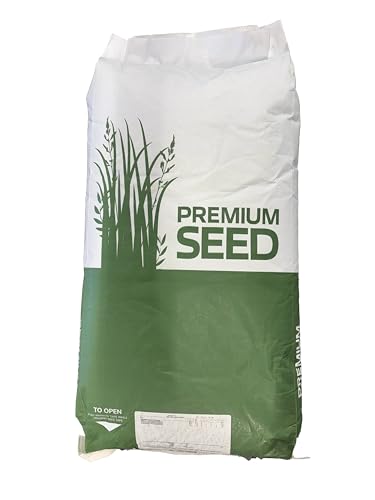
Bulk sack of certified big bluestem with a stated rate of 8 to 10 lb per acre, sown 1/4 to 1/2 inch deep.
Check price on AmazonWhy We Like It
- Only listing stating a per-acre rate and depth
- Spring or fall sowing window given
- Certified seed in a single large sack
- Enough for multi-acre plantings
| Specification | Details |
|---|---|
| Species | Andropogon gerardii, native bunchgrass |
| Quantity | 50 lb bulk |
| Seeding rate | 8 to 10 lb per acre |
| Planting depth | 1/4 to 1/2 inch |
| Timing | Spring or fall |
| Pure live seed | Not stated in listing for this size |
Hale Big Bluestem 50 lb — compressed specs
For landowners converting several acres, this sack is the scale that makes sense. It is also the only listing on the shelf that gives both a per-acre seeding rate and a planting depth, plus a spring-or-fall timing window, which makes it useful even as a reference for smaller plantings. At the stated rate, the sack covers roughly five to six acres of solid big bluestem, or more if blended with little bluestem and forbs.
Note that the 2 lb Hale bag is labeled as pure live seed while this bulk listing describes the bag as 50 lb bulk, so check the seed tag on arrival for PLS before calculating rates. Bulk native seed is usually best drilled with a native seed drill or broadcast with a carrier, then rolled.
Pros
- Per-acre rate, depth and timing stated
- Certified seed
- Scale for real restoration projects
Cons
- Far more than a home garden needs
- PLS not stated for the bulk size
- Needs equipment for even sowing at this scale
Check Hale Big Bluestem 50 lb Bulk price on Amazon
Buyer’s Guide: What to Look For in Native Grass Seed
Pure live seed (PLS)
Native grass seed is fluffy and includes stems, hulls and inert matter. PLS is the percentage of the bag weight that is viable seed of the named species, calculated from purity times germination. Restoration seeding rates are given in PLS pounds, so a bag sold by bulk weight may need a higher application to hit the same target. When a listing does not state PLS, the seed tag on the bag usually will.
Seeding rates
Rates vary widely by goal. Prairie restoration and wildlife plantings often use single-digit PLS pounds per acre for a single species, as the Hale bulk listing shows, while dense ornamental meadows on small lots are seeded much more heavily, as in Outsidepride’s per-1,000-square-foot rate. When mixing grasses with wildflowers, reduce the grass rate so the forbs are not crowded out.
Timing: dormant seeding vs spring
Warm-season grasses germinate when soil reaches roughly 60 to 65°F, so late spring to early summer sowing works in most regions. Many native seed growers also recommend dormant seeding in late fall or winter: freeze-thaw cycles work the seed into the soil and provide natural cold stratification, and the seed germinates when conditions are right. Avoid sowing in midsummer heat unless you can irrigate.
Site preparation
Weeds are the main reason native seedings fail. Remove existing turf and weedy growth before sowing, by smothering with tarps or cardboard for a season, repeated shallow tillage, or herbicide where appropriate. Rake to loosen the top half inch, broadcast seed mixed with a carrier such as dry sand or sawdust for even spread, then roll or walk it in for good seed-to-soil contact. Do not bury it deeper than about half an inch.
Patience in years one to three
Native bunchgrasses spend their first year growing roots, often showing only a few small shoots. Annual weeds will dominate in that first season; mow the planting to about 6 to 8 inches whenever weeds reach 12 to 18 inches tall, so they do not shade the seedlings or set seed. By the second year the grasses become visible, and by the third they typically fill in. After establishment, a mow or controlled burn in late winter, where permitted, keeps a meadow healthy.
Native grasses vs lawn grasses
Bluestems are not mowed turf. They grow in clumps, stand tall and look their best uncut through winter. If you want a drought-hardy lawn instead, see our guides to the best drought-tolerant grass seed and the best tall fescue grass seed, or the best Bermuda grass seed for southern lawns.
Frequently Asked Questions
When should I plant big bluestem seed?
Sow in late spring once soil reaches about 60 to 65°F, or dormant-seed in late fall to winter so the seed is naturally stratified and germinates in spring. The Hale bulk listing gives spring or fall as its sowing windows.
How deep should native grass seed be planted?
Shallow. The Hale big bluestem bulk listing states 1/4 to 1/2 inch. For broadcasting, rake lightly and roll or tamp the seed in rather than burying it.
Can I use big bluestem as a lawn?
No. It is a tall bunchgrass, 4 to 7 feet, meant for meadows, prairies and wildlife cover. It does not tolerate regular low mowing. Choose a turf grass for lawns.
Why are my native grasses so slow to grow?
Warm-season native grasses put most of their first-year growth into roots. Expect sparse top growth in year one, visible clumps in year two and a full stand by year three. Mow weeds high in the first season to reduce competition.
What does pure live seed mean?
It is the share of a bag’s weight that is viable seed of the labeled species, accounting for purity and germination. Seeding rates for native grasses are usually given in PLS pounds.