


The best green bean seed for most home gardens is a proven bush snap bean like Contender: it germinates reliably, needs no trellis, and starts producing in about two months. If you want one planting to keep producing all summer, add a pole bean such as Kentucky Wonder on a trellis. Below are seven bean seed listings that cover the main needs, from early cool-soil starters to canning workhorses and climbing heirlooms, with what each listing says about days to maturity, plant size and pod length.
Part of our Vegetable Gardening & Raised Beds guide →
In this guide
- Bush vs. Pole: Pick Your Type First
- 1. Sow Right Seeds Contender Bush Bean (Bulk Pack) — Best Overall Bush Bean
- 2. RDR Seeds Provider Bush Bean — Best for Cool Spring Planting
- 3. SVI Blue Lake 274 Bush Bean — Best for Canning and Freezing
- 4. Survival Garden Seeds Kentucky Wonder Pole Bean — Best Pole Bean
- 5. SVI Rattlesnake Pole Bean — Best Striped Heirloom Pole Bean
- 6. Isla’s Garden Seeds Roma II Bush Bean — Best Flat Italian-Style Bean
- 7. Survival Garden Seeds Tri Color Bush Bean Mix — Best Colorful Mix
- What to Look For in Green Bean Seeds
- Frequently Asked Questions
Disclosure: Urban Lotus Project is reader-supported. As an Amazon Associate we earn from qualifying purchases, at no extra cost to you.
How we compared: we compared 7 current Amazon green bean seed listings on what each listing states (variety, habit, days to maturity, pod size and seed count); we did not test or handle the products, and availability changes.
| Product | Best for | Key features | Buy |
|---|---|---|---|
| Sow Right Contender 110-Seed Pack | Best overall bush bean |
| Buy now →Check current price |
| RDR Seeds Provider 50 Seeds | Best for cool spring planting |
| Buy now →Check current price |
| SVI Blue Lake 274 50 Seeds | Best for canning and freezing |
| Buy now →Check current price |
| Survival Garden Kentucky Wonder | Best pole bean for long harvests |
| Buy now →Check current price |
| SVI Rattlesnake Pole Bean 50 Seeds | Best striped heirloom pole bean |
| Buy now →Check current price |
| Isla's Roma II Bush Bean | Best flat Italian-style bean |
| Buy now →Check current price |
| Survival Garden Tri Color Bush Mix | Best colorful variety mix |
| Buy now →Check current price |
Prices change often; check Amazon for today’s price. As an Amazon Associate we earn from qualifying purchases.
Bush vs. Pole: Pick Your Type First
Bush beans grow 1 to 2 feet tall, need no support, and produce most of their crop in a two- to three-week burst. That makes them ideal for canning and freezing in batches, and for gardeners who sow a new row every two to three weeks. Pole beans climb 5 to 10 feet, take a week or two longer to start, then keep producing for many weeks as long as you keep picking, often giving more beans per square foot. Our comparison of bush vs. pole beans goes deeper on the trade-offs, and our step-by-step guide on how to grow green beans covers soil, sowing, watering and harvest. This roundup is about choosing the seed. For more on planning the whole plot, see our vegetable gardening guide.
1. Sow Right Seeds Contender Bush Bean (Bulk Pack) — Best Overall Bush Bean

A bulk packet of about 110 stringless Contender bush bean seeds with clear germination and spacing guidance.
Check price on AmazonWhy We Like It
- Enough seed for several succession sowings
- Stringless 5 to 8 inch pods
- Performs in cool or hot seasons per listing
- Detailed soil temperature and spacing info
| Specification | Details |
|---|---|
| Variety | Contender bush snap bean |
| Seed count | About 110 seeds, minimum 2 oz |
| Days to maturity | 60 to 75 days |
| Plant size | 12 to 22 in tall, 16 to 20 in spread |
| Germination | 7 to 12 days at 65 to 75 degrees F soil |
| Zones | USDA 3 to 10 |
Sow Right Contender bulk — compressed specs
Contender is the most-listed variety on our shelf, and for good reason: it is an early, stringless bush bean that tolerates both short cool seasons and summer heat. This Sow Right bulk pack stands out because it gives you enough seed for a real bean patch. At the listing’s 3 to 4 inch spacing, 110 seeds plant roughly 30 to 35 feet of row, which you can split into two or three successive sowings two weeks apart for a steady supply.
The same seed is also sold in a smaller packet of about 30 seeds (B08QDY3G2T) if you only have a raised bed. Compared with the other Contender listings on the shelf, Sow Right gives the most complete growing information, including soil temperature for germination, and the company states it has taken the Safe Seed Pledge.
Pros
- Large seed count
- Early, adaptable variety
- Clear planting instructions
- Germination guarantee mentioned
Cons
- Bush habit means a concentrated harvest
- Too much seed for a single small bed
- Disease resistance not detailed
Check Sow Right Contender 110-Seed Pack price on Amazon
2. RDR Seeds Provider Bush Bean — Best for Cool Spring Planting
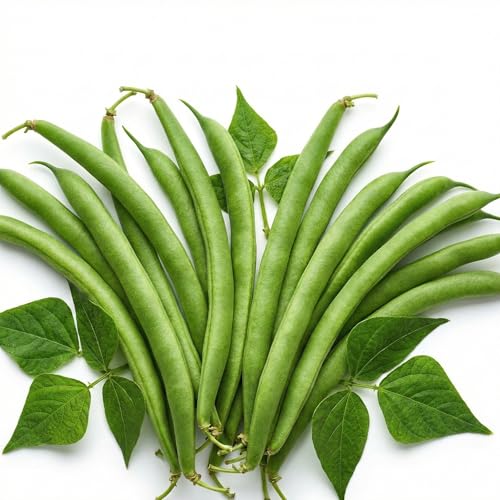
Provider bush snap bean, an open-pollinated 1966 release valued for coping with cooler spring weather.
Check price on AmazonWhy We Like It
- Variety known for cooler-weather performance
- Good for fresh eating, freezing and canning
- Waterproof storage packet
- USA grown and packed
| Specification | Details |
|---|---|
| Variety | Provider bush snap bean, heirloom |
| Seed count | 50 seeds |
| Plant height | 18 to 24 in |
| Spacing and depth | 2 to 4 in apart, 1 to 1.5 in deep |
| Germination | 7 to 14 days |
| Days to maturity | not stated in listing |
RDR Seeds Provider — compressed specs
Beans rot when sown into cold, wet soil, which is the main reason early plantings fail. Provider has long been a favorite for that first spring sowing because it copes with cooler conditions better than many beans, and the RDR listing calls this out directly. It suggests growing in about 65 to 85 degrees F and lists a tolerance range of roughly 60 to 90 degrees F.
The listing estimates 5 to 25 lb of beans from 50 seeds under good conditions, with the honest caveat that results vary. Compared with Contender, Provider plants are slightly taller in this listing. It does not state days to maturity, so plan using your seed company’s typical early-bean window and start picking when pods are pencil-thick.
Pros
- Good choice for early sowing
- Moisture-resistant packet
- Clear temperature guidance
Cons
- Days to maturity not listed
- Moderate seed count
- Concentrated bush harvest
Check RDR Seeds Provider 50 Seeds price on Amazon
3. SVI Blue Lake 274 Bush Bean — Best for Canning and Freezing

Bush Blue Lake 274 with 5.5-inch dark green pods produced in large flushes; no trellis needed.
Check price on AmazonWhy We Like It
- Variety long used by the canning industry
- Heavy flushes suit batch preserving
- Compact 12 to 24 inch plants
- Wide zone range listed
| Specification | Details |
|---|---|
| Variety | Blue Lake 274 bush bean |
| Seed count | 50 seeds |
| Days to maturity | 50 to 65 days |
| Pod length | About 5.5 in |
| Spacing | 1 in deep, 4 to 6 in apart |
| Zones | USDA 3 to 11 |
SVI Blue Lake 274 — compressed specs
Blue Lake 274 is the bush version of the classic Blue Lake pole bean, bred so that home gardeners and commercial growers could get Blue Lake’s thick, meaty, round pods without a trellis. The SVI listing emphasizes large flushes of uniform pods, which is exactly what you want when you plan a canning or freezing day: pick once, process a full batch.
Note that the listing uses “pole” in one bullet, but it describes compact 12 to 24 inch plants that need no trellis, which matches the bush 274 type. Compared with Contender, it is listed with a slightly shorter pod but a similar maturity window. Germination is listed at 5 to 10 days.
Pros
- Classic preserving variety
- Fast maturity window
- Container-friendly size
Cons
- Listing wording mixes bush and pole
- Harvest comes in flushes, not steadily
- Shorter pods than Kentucky Wonder
Check SVI Blue Lake 274 50 Seeds price on Amazon
4. Survival Garden Seeds Kentucky Wonder Pole Bean — Best Pole Bean
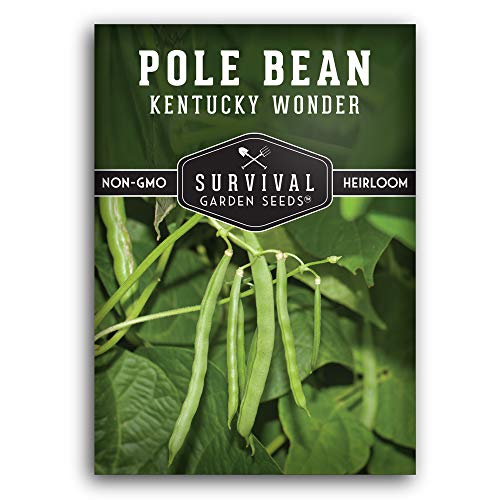
Heirloom climbing bean with 6 to 8 inch pods that keeps producing with regular picking.
Check price on AmazonWhy We Like It
- Long harvest window with repeated picking
- Grows up, saving bed space
- Long 6 to 8 inch pods
- Untreated, open-pollinated seed
| Specification | Details |
|---|---|
| Variety | Kentucky Wonder pole bean |
| Habit | Climbing vine for trellis, fence or poles |
| Pod length | 6 to 8 in |
| Seed treatment | Untreated, open-pollinated |
| Seed count | not stated in listing |
| Days to maturity | not stated in listing |
Survival Garden Kentucky Wonder — compressed specs
Kentucky Wonder is the classic American pole bean, and it is the bean to grow if you want one planting to feed the kitchen from midsummer until frost. The listing highlights the extended harvest window, better airflow from vertical growth, and long stringless pods with old-fashioned flavor. Set up a trellis, teepee or cattle panel before sowing so you do not disturb roots later.
Compared with the bush beans above, expect a later start but a much longer season. The listing leaves out seed count and maturity days, so check the packet details on the product page if you are planning exact row lengths. Rattlesnake, below, is the other pole option on our list.
Pros
- Produces for weeks
- Space-efficient
- Long, flavorful pods
Cons
- Needs sturdy support
- Later first harvest than bush beans
- Seed count not listed
Check Survival Garden Kentucky Wonder price on Amazon
5. SVI Rattlesnake Pole Bean — Best Striped Heirloom Pole Bean

Vigorous 5 to 7 foot vines with green pods striped in purple, ready in about 66 days.
Check price on AmazonWhy We Like It
- Distinctive purple-striped pods
- Heavy-producing vines per listing
- Maturity date stated, about 66 days
- Fast 4 to 10 day germination
| Specification | Details |
|---|---|
| Variety | Rattlesnake pole snap bean |
| Seed count | 50 seeds |
| Vine height | 5 to 7 ft |
| Days to maturity | About 66 days |
| Spacing | 1 in deep, 3 in apart |
| Sun | 6 to 8 hours daily |
SVI Rattlesnake — compressed specs
Rattlesnake is a Southern heirloom pole bean with dark green pods streaked in purple, which makes ripe beans easy to spot among the leaves. The stripes fade to green when cooked. The SVI listing describes vigorous 5 to 7 foot vines and pods ready in about 66 days, which is a useful planning number that the Kentucky Wonder listing does not give.
Gardeners in hot, humid regions often prefer Rattlesnake for summer pole beans. Grow it on a 6 to 7 foot trellis, and follow the listing’s advice to water at the base and keep leaves dry to reduce mold problems.
Pros
- Attractive, easy-to-find pods
- Stated maturity and spacing
- Long-season production
Cons
- Needs a tall trellis
- Stripes disappear when cooked
- Pod length not stated
Check SVI Rattlesnake Pole Bean 50 Seeds price on Amazon
6. Isla’s Garden Seeds Roma II Bush Bean — Best Flat Italian-Style Bean

Bush Roma II with smooth, flat, stringless pods about 4 to 5 inches long, ready in 55 to 60 days.
Check price on AmazonWhy We Like It
- Flat Romano-style pods for braising
- Bush habit, no trellis
- Listing recommends succession sowing
- Clear spacing and row width
| Specification | Details |
|---|---|
| Variety | Roma II flat bush bean |
| Seed count | 30+ seeds |
| Days to maturity | 55 to 60 days |
| Pod length | About 4 to 5 in, flat |
| Plant height | About 18 in |
| Zones | USDA 3 to 9 |
Isla’s Roma II — compressed specs
Roma-type beans have broad, flat pods with a meatier texture and a more pronounced bean flavor, and they hold up well in slow-cooked dishes. Roma II puts that pod on a compact bush plant. The Isla’s listing gives a full planting recipe: soil at 60 to 70 degrees F, 1 inch deep, 2 to 4 inches apart in rows 18 to 24 inches apart, and successive sowings every two weeks.
It is a good second variety alongside a round-podded bean like Contender or Blue Lake. The same seller also lists Jade, a slender round bush bean, on our shelf (B08D6YBRWY) if you prefer a classic pod.
Pros
- Distinct flat pods
- Thorough planting guidance
- Compact plants
Cons
- Smaller seed count
- Flat pods are less common in recipes
- Concentrated bush harvest
Check Isla's Roma II Bush Bean price on Amazon
7. Survival Garden Seeds Tri Color Bush Bean Mix — Best Colorful Mix

A blend of green Provider, yellow Golden Wax and purple Royal Burgundy bush beans in one pack.
Check price on AmazonWhy We Like It
- Three named heirloom varieties
- Purple pods are easy to spot at harvest
- Self-supporting bush plants
- Fun pick for kids’ gardens
| Specification | Details |
|---|---|
| Varieties | Provider, Golden Wax, Royal Burgundy |
| Habit | Bush, no trellis |
| Pods | Stringless green, yellow and purple |
| Seed treatment | Untreated, open-pollinated |
| Seed count | not stated in listing |
| Days to maturity | not stated in listing |
Survival Garden Tri Color — compressed specs
A mixed packet is an easy way to try several types without buying three packets. The listing names the components: green Provider, yellow Golden Wax and purple Royal Burgundy. Purple beans are especially handy because they stand out against the foliage, so fewer overgrown pods hide under leaves. Like the stripes on Rattlesnake, the purple color turns green when cooked.
The listing says the varieties mature together and continue producing with regular picking. As with any mix, you cannot control the ratio in each row, so this is a pick for variety and fun rather than for a uniform canning crop.
Pros
- Three colors in one pack
- Named, proven varieties
- No support needed
Cons
- Seed count not listed
- Ratio of colors not controllable
- Less uniform for preserving
Check Survival Garden Tri Color Bush Mix price on Amazon
What to Look For in Green Bean Seeds
Days to maturity and your season
Count back from your average first fall frost. Bush beans listed at 50 to 65 days fit almost anywhere in the continental US; pole beans need a longer frost-free window to pay off. In short-season northern gardens, favor early bush types like Contender and Provider. In the South, you can often fit a spring crop and a second late-summer sowing that matures in fall.
Seed count and how much to plant
Bush beans are usually spaced 2 to 6 inches apart, so a 10-foot row takes roughly 20 to 50 seeds. Pole beans are spaced a little closer along a trellis but produce over a longer period. A common target for fresh eating is 10 to 15 feet of bush row per person per sowing; plant more if you preserve. Buy a bulk pack if you plan successive sowings.
Heirloom, untreated and saving seed
Every pick here is listed as open-pollinated or heirloom, so you can save seed from the best plants. Beans are largely self-pollinating, which makes them one of the easiest crops for beginners to save. Let a few pods dry fully on the plant, shell them, and store the seeds cool and dry.
Soil temperature beats calendar date
Bean seed rots in cold soil. Wait until the soil is at least 60 degrees F at planting depth, typically one to two weeks after your last frost, and do not soak seeds for hours before planting. If plants grow but set few pods, the cause is usually heat, too much nitrogen or uneven watering; our guide on why beans are not producing walks through the fixes.
Frequently Asked Questions
What is the most productive green bean variety?
Pole beans such as Kentucky Wonder and Rattlesnake usually produce more over a season because they keep cropping for weeks. For bush beans, Contender, Provider and Blue Lake 274 are long-standing favorites for heavy flushes.
Should I plant bush or pole beans?
Plant bush beans if you want an early crop, no trellis and batch harvests for canning. Plant pole beans for a long, steady harvest in less ground space. Many gardeners grow both.
When should I plant green bean seeds?
Direct sow after your last frost once the soil reaches about 60 degrees F. Keep sowing bush beans every two to three weeks until about 60 to 70 days before your first fall frost.
Do I need to soak bean seeds before planting?
No. Plant them dry into moist soil. Long soaks can crack seed coats and increase rot, especially in cool soil.
Can I grow green beans in containers?
Yes. Compact bush types like Contender and Blue Lake 274 do well in containers at least 12 inches deep. Pole beans can work in larger pots with a sturdy trellis.