


Gerbera daisies can be grown from seed, and a packet of mixed hybrids gives you far more plants and colors than buying nursery pots. The catch is that gerbera seed is short-lived and a little particular: it needs fresh seed, light to germinate, steady warmth around 70–75°F, and about 14–18 weeks from sowing to first flower. Start indoors in late winter and you’ll have blooming plants for patio pots and sunny beds by early summer. Below we compare six current Amazon gerbera seed listings, chosen because their descriptions actually match gerbera daisies (several listings on the shelf describe other daisies), then cover exactly how to sow them for good germination.
In this guide
- 1. Outsidepride Hybrids Mix Gerbera Seeds — Best Overall
- 2. CarpetC Gerbera Daisy Seeds — Best Compact Plants for Pots
- 3. BuggyBeds Gerbera Daisy Seeds 300 Pcs — Best for Borders and Beds
- 4. Generic 300 Gerbera Daisy Seeds, Mixed Color — Best for Cutting Gardens
- 5. BuggyBeds Gerbera Daisy Mixed Seeds 300 Pack — Best for Big Blooms
- 6. Seeds Of Strength Hybrids Mix Gerbera — Best Small Packet to Try
- How to Germinate Gerbera Daisy Seeds
- Pots or Beds?
- What to Look For in Gerbera Seeds
- Frequently Asked Questions
Disclosure: Urban Lotus Project is reader-supported. When you buy through links on this page, we may earn an affiliate commission at no extra cost to you.
How we compared: we compared 6 current Amazon listings on what each listing states (seed count, plant size, bloom size, zones and growing directions). We did not test or handle the products, and availability changes.
| Product | Best for | Key features | Buy |
|---|---|---|---|
| Outsidepride Hybrids Mix Gerbera | Best overall with clear directions |
| Buy now →Check current price |
| CarpetC Gerbera Daisy Seeds | Best compact plants for pots |
| Buy now →Check current price |
| BuggyBeds Gerbera 300 Pcs | Best for borders and beds |
| Buy now →Check current price |
| Generic 300 Gerbera Mixed Color | Best for cutting gardens |
| Buy now →Check current price |
| BuggyBeds Gerbera Mixed 300 Pack | Best for big blooms |
| Buy now →Check current price |
| Seeds Of Strength Hybrids Mix | Best small packet to try |
| Buy now →Check current price |
Prices change often; check Amazon for today’s price. As an Amazon Associate we earn from qualifying purchases.
1. Outsidepride Hybrids Mix Gerbera Seeds — Best Overall

A 100-seed hybrid gerbera mix with compact 10-14 inch plants, 3.5-4 inch blooms and full sowing directions.
Check price on AmazonWhy We Like It
- Most complete growing directions on the shelf
- States zones 8 to 11 for perennial use
- Compact plants suit pots and edging
- Germination time and spacing listed
| Specification | Details |
|---|---|
| Seed count | 100 |
| Plant height | 10–14 in |
| Bloom size | 3.5–4 in |
| Germination | 10–21 days; cover thinly |
| Spacing | 12–16 in, 2–3 seeds per plant |
| Zones | USDA 8–11 as perennial |
Outsidepride Hybrids Mix Gerbera — compressed specs
Outsidepride’s listing reads like a proper seed packet: plant height, bloom size, soil pH range (6.1–7.5), spacing, sow rate, germination window and USDA zones. That level of detail is rare on this shelf, where most listings give only a seed count and general claims. The 100-seed count is smaller than the 300- and 500-seed generic packs, but for most home gardeners 100 gerbera seeds is plenty; you’ll rarely need more than a few dozen plants.
The listing also says flowers appear about 14 weeks after sowing, which lines up with a late-winter indoor start for early summer color. It describes the plants as deer-deterring, which we’d treat cautiously; hungry deer eat many things.
Pros
- Detailed sowing info
- Clear zone guidance
- Compact, container-friendly plants
Cons
- Fewer seeds than generic packs
- Mixed colors, not selectable
- Deer claim is optimistic
Check Outsidepride Hybrids Mix Gerbera price on Amazon
2. CarpetC Gerbera Daisy Seeds — Best Compact Plants for Pots

300+ Gerbera jamesonii seeds for compact 8-12 inch plants with 3-4 inch flowers on sturdy stems.
Check price on AmazonWhy We Like It
- Names the species, Gerbera jamesonii
- Compact 8 to 12 inch plants
- Honest zone note: annual outside 8 to 11
- Watering tip to keep leaves dry
| Specification | Details |
|---|---|
| Seed count | 300+ |
| Plant height | 8–12 in |
| Bloom size | 3–4 in |
| Bloom season | Late spring through summer |
| Zones | Perennial in 8–11, annual elsewhere |
CarpetC Gerbera Daisy Seeds — compressed specs
This listing stands out for naming the species and for being upfront that gerberas return only in zones 8–11 and are grown as annuals elsewhere, which is accurate. The 8–12 inch height is the shortest on the list, ideal for window boxes and small patio pots. Its advice to water at the base to keep leaves dry is also sound, since gerberas are prone to crown rot and leaf diseases.
Germination specifics like temperature and days aren’t stated, so follow the sowing guide below.
Pros
- Accurate hardiness info
- Very compact habit
- Generous seed count
Cons
- No germination details
- Colors not specified
- Seed age not stated
Check CarpetC Gerbera Daisy Seeds price on Amazon
3. BuggyBeds Gerbera Daisy Seeds 300 Pcs — Best for Borders and Beds
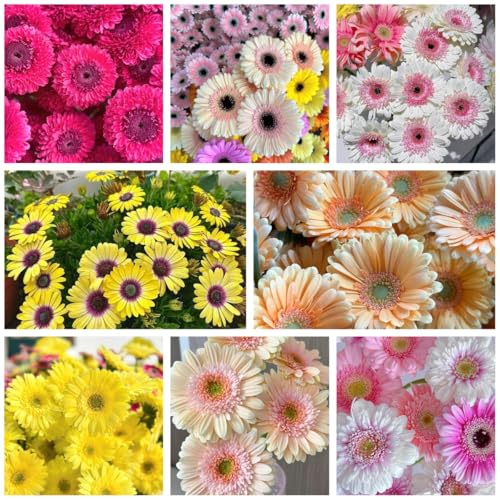
A 300-seed hybrid gerbera mix in red, yellow, pink, orange and white, with flowers about 14 weeks from sowing.
Check price on AmazonWhy We Like It
- Five-color mix listed
- Compact 10 to 14 inch plants
- Spacing guidance for bed planting
| Specification | Details |
|---|---|
| Seed count | 300 |
| Plant height | 10–14 in |
| Bloom size | 3.5–4 in |
| Time to bloom | About 14 weeks from sowing |
| Spacing | 12–16 in |
BuggyBeds Gerbera 300 Pcs — compressed specs
Plant size, bloom size and spacing match the Outsidepride listing closely, but with three times the seed count, so it suits anyone filling a long border or several large containers. The title calls the plants “cold hardy,” which is misleading: gerberas are tender perennials that won’t survive hard freezes. Treat them as annuals outside zones 8–11, or bring potted plants indoors before frost.
Pros
- Large seed count
- Useful size and spacing info
- Bright five-color mix
Cons
- “Cold hardy” claim is inaccurate
- No germination details
- Seed freshness not stated
Check BuggyBeds Gerbera 300 Pcs price on Amazon
4. Generic 300 Gerbera Daisy Seeds, Mixed Color — Best for Cutting Gardens

A 300-seed mixed gerbera pack aimed at cutting gardens, with full-sun and well-drained soil guidance.
Check price on AmazonWhy We Like It
- Focused on straight-stemmed cut flowers
- Clear sun and soil guidance
- Deadheading advice for repeat bloom
| Specification | Details |
|---|---|
| Seed count | 300 (500 version also listed) |
| Colors | Pink, red, yellow, orange, white |
| Sun | Full sun, 6–8 hours |
| Plant height | not stated in listing |
| Vase life claim | Up to two weeks with care |
Generic 300 Gerbera Mixed Color — compressed specs
Gerberas are one of the classic florist flowers, and this listing leans into that, emphasizing strong stems, vase life and continuous bloom with deadheading. It’s a reasonable pick for a cutting row, though it doesn’t give plant height or germination details. The same listing appears on the shelf in a 500-seed version if you need more.
Pros
- Cut-flower focus
- Good care basics
- Larger size available
Cons
- Unbranded seller
- No plant size stated
- “Spring to frost” bloom is optimistic in heat
Check Generic 300 Gerbera Mixed Color price on Amazon
5. BuggyBeds Gerbera Daisy Mixed Seeds 300 Pack — Best for Big Blooms

A 300-seed mixed gerbera pack whose listing claims flowers up to 4-5 inches across.
Check price on AmazonWhy We Like It
- Largest stated bloom size on the list
- Suited to containers and beds
- Five-color mix
| Specification | Details |
|---|---|
| Seed count | 300 |
| Bloom size | Up to 4–5 in |
| Colors | Pink, orange, yellow, red, white |
| Plant height | not stated in listing |
| Use | Containers, beds, borders, cut flowers |
BuggyBeds Gerbera Mixed 300 Pack — compressed specs
This second BuggyBeds listing advertises bigger flowers than the compact mixes above, up to 4–5 inches. Larger-flowered gerberas usually grow on taller stems, which suits cutting and the middle of a bed rather than small pots, though the listing doesn’t give plant height. BuggyBeds also lists a 500-seed gerbera pack on the shelf.
Pros
- Large flowers claimed
- Versatile use
- Good color range
Cons
- Plant height not given
- No sowing details
- Bloom size varies with care
Check BuggyBeds Gerbera Mixed 300 Pack price on Amazon
6. Seeds Of Strength Hybrids Mix Gerbera — Best Small Packet to Try

A 100-seed compact hybrid gerbera mix for containers, small gardens and homegrown bouquets.
Check price on AmazonWhy We Like It
- Right-sized packet for a first try
- Bred for compact, bushy growth
- Strong stems for arrangements
| Specification | Details |
|---|---|
| Seed count | 100 |
| Type | Hybrid mix |
| Colors | Red, pink, orange, yellow, white |
| Vase life claim | 7–14 days |
| Plant height | not stated in listing |
Seeds Of Strength Hybrids Mix — compressed specs
A 100-seed hybrid mix is a sensible size for a first attempt, since gerbera seed doesn’t store well and leftover seed loses viability fast. The listing says plants return “year after year with proper care,” which only holds in frost-free or near frost-free climates, or if you overwinter pots indoors.
Pros
- Manageable seed count
- Compact hybrids
- Cut-flower friendly
Cons
- Sparse growing details
- Perennial claim needs context
- Plant size not stated
Check Seeds Of Strength Hybrids Mix price on Amazon
How to Germinate Gerbera Daisy Seeds
Start With Fresh Seed
Gerbera seed loses viability quickly, often within months at room temperature. Buy close to sowing time, sow most of the packet in the first season, and store leftovers sealed in the refrigerator. If a packet is old, sow extra seeds per cell.
Timing
Start seeds indoors about 12–16 weeks before you want flowers, which for most of the US means January to early March. Transplant outdoors after your last frost, once nights stay above about 50°F.
Sowing Step by Step
- Fill cells or small pots with a fine, sterile seed-starting mix and moisten it.
- Lay the seeds on the surface, pointed end down if you can, and barely cover them with a dusting of vermiculite or leave them uncovered. Gerbera seed germinates best with light.
- Cover the tray with a clear dome or plastic to hold humidity.
- Keep the mix at about 70–75°F; a seedling heat mat helps.
- Place under grow lights or bright indirect light. Expect sprouts in roughly 7–21 days.
- Remove the dome once most seeds sprout and keep lights 2–4 inches above seedlings for 14–16 hours a day.
Our full guide on starting seeds indoors covers lights, heat mats and hardening off.
Growing On
Pot seedlings up into 3- to 4-inch pots once they have two or three true leaves, keeping the crown at or slightly above soil level; buried crowns rot. Feed lightly every two weeks with a diluted balanced fertilizer. Harden off for a week before planting in full sun (afternoon shade in hot Southern summers) in well-drained soil, 12–16 inches apart. For ongoing care, including watering, deadheading and overwintering, see our gerbera daisy care guide.
Pots or Beds?
Gerberas do well in both, but containers give you more control. A 6- to 8-inch pot holds one plant, and a 12-inch pot can take three. Use a quality potting mix with extra perlite for drainage, and let the top inch dry between waterings; constantly wet soil leads to crown rot, the most common way gerberas die. Pots also let you move plants into afternoon shade during heat waves and indoors before frost in colder zones.
In beds, choose a spot with full morning sun and good air flow, and raise the soil a few inches if it’s heavy clay. Space plants 12–16 inches apart so leaves dry quickly after rain. Mulch lightly, keeping it away from the crown. In zones 8–11, established bed plants can live for several years; elsewhere, enjoy them through summer and start fresh seed again next winter.
What to Look For in Gerbera Seeds
- A listing that describes gerberas: several shelf listings titled “gerbera” describe painted daisies or annual wildflowers in their text. Make sure the description matches.
- Growing details: plant height, bloom size, germination time and zones signal a seller that knows the crop.
- Realistic claims: gerberas aren’t cold hardy, fragrant or deer-proof. Be wary of listings that say they are.
- Seed count you’ll use: because seed doesn’t keep, 100 seeds is plenty for most gardens.
- Hybrid vs saving seed: most mixes are hybrids; seed you save won’t reproduce the same colors.
Prefer a hardier daisy for cold climates? Our roundup of Shasta daisy seeds covers a true perennial for zones 5–9. For more flower-growing guides, visit our flowers and perennials hub.
Frequently Asked Questions
Are gerbera daisies easy to grow from seed?
Moderately. Fresh seed, light, warmth around 70–75°F and humidity are the keys. Old seed is the most common reason for poor germination.
Do gerbera seeds need light to germinate?
Yes, they germinate best with light. Sow on the surface and cover very lightly with vermiculite, or not at all, and keep them under lights or bright indirect light.
How long does it take gerbera daisies to bloom from seed?
Usually about 14–18 weeks from sowing, depending on variety, light and temperature. Start indoors in late winter for early summer flowers.
Are gerbera daisies perennials?
They’re tender perennials, returning in USDA zones 8–11 in well-drained soil. Elsewhere, grow them as annuals or overwinter potted plants indoors in a bright window.
How long do gerbera seeds stay viable?
Not long. Viability drops noticeably within months at room temperature. Sow them soon after buying and refrigerate any leftovers in a sealed container.