

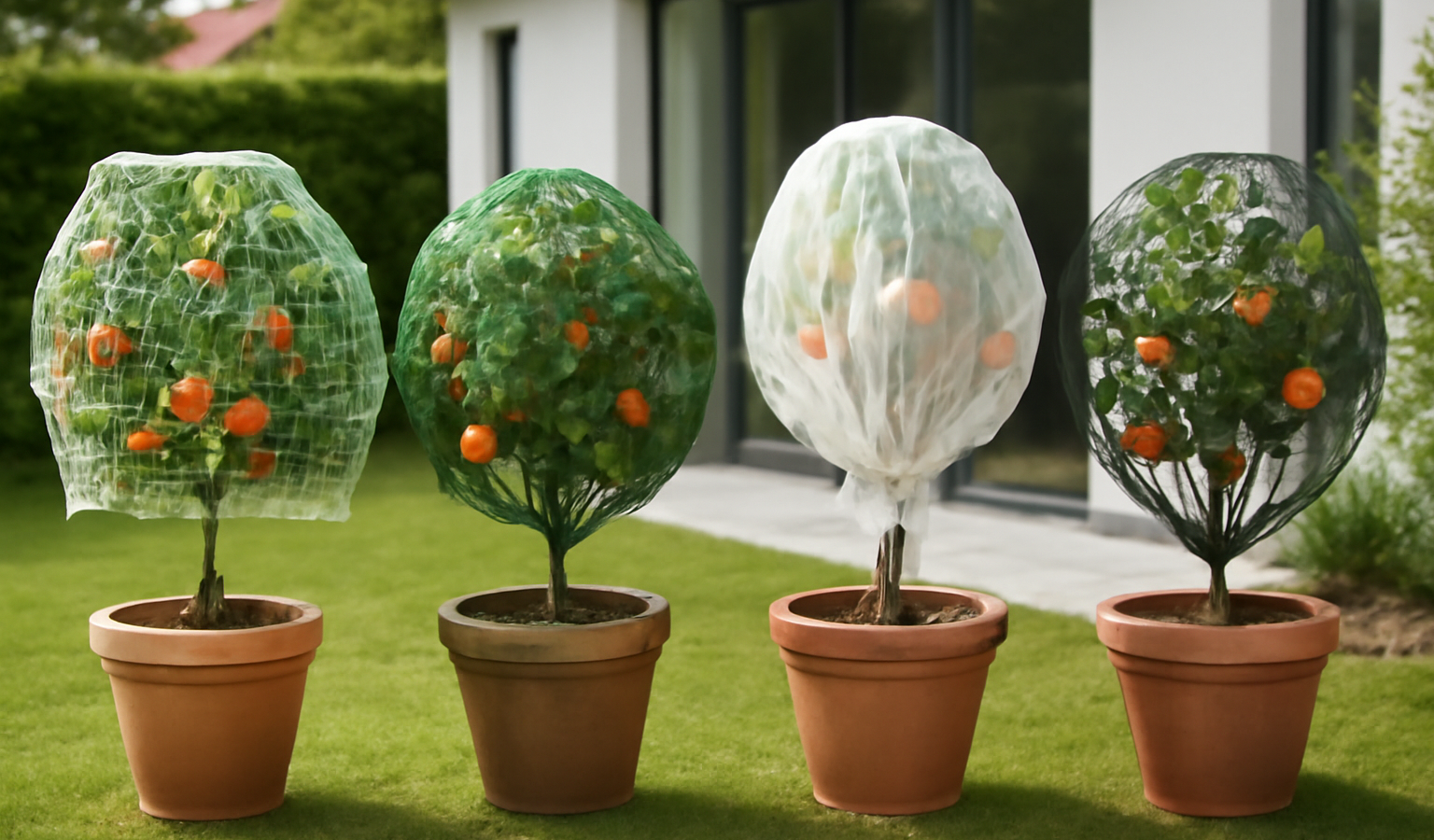
You wait all season for a cherry tree or a row of blueberries to ripen, and then a flock of robins clears the crop in two mornings. Netting is the single most reliable way to keep birds, and to a lesser extent squirrels and other critters, out of ripening fruit, but most gardeners reach for the wrong product, throw it on loosely, and end up with a tangled mess full of trapped wildlife. The right net is matched to the threat: tight 1/4-inch knitted mesh for small songbirds and June bugs, heavier woven netting on a frame for squirrels and raccoons, and bird-safe square mesh that does not snag feet and beaks. Below are seven netting options I have used or tested across cherries, blueberries, figs, and apples, with honest notes on mesh size, durability, UV life, and how each one behaves on a real tree.
As an Amazon Associate we earn from qualifying purchases. This page contains affiliate links at no extra cost to you.
Key Takeaways
- Mesh size decides the target. 1/2 to 3/4 inch stops most songbirds; 1/4 inch is needed for small finches and to block June beetles and some moths; 1-inch-plus only slows large birds.
- Knitted vs. extruded matters. Knitted (woven) netting resists tearing and re-tears far better than cheap extruded plastic, which goes brittle and disintegrates after one or two seasons.
- Drape-and-tie works for small trees; cages work for everything else. Loose draped netting on a big tree wastes material and traps birds. Build a simple PVC or wood frame and net the frame.
- Bird safety is real. Tightly tensioned square mesh prevents the loose pockets that entangle birds, snakes, and toads. Never leave slack netting on the ground.
- UV rating drives cost-per-year. A UV-stabilized net stored indoors over winter can last 5 to 10 seasons; an unrated dollar-store net is landfill by August.
| Product | Best For | Key Spec |
|---|---|---|
| De-Bird Garden Netting | Small trees & berry rows on a budget | 3/4 in mesh, 7.5 x 65 ft, extruded |
| Bird-X Standard Bird Netting | Heavy-duty drape over large trees | 3/4 in mesh, UV-treated polypropylene |
| Garden Netting 1/4 inch Knitted (Agfabric) | Finches, June bugs & fine pests | 1/4 in knitted mesh, multiple widths |
| Vegamatrix / VKO Drawstring Tree Net Bags | Single small trees & quick covers | Drawstring tie, 6 x 8 ft sized bags |
| Tenax Bird Net (heavy extruded) | Vineyards & orchard rows | 3/4 in mesh, rigid extruded HDPE |
| Plygene / Standard Anti-Bird Knitted Net | Reusable multi-season drape | Knitted, soft, re-ties without running |
| Hardware Cloth (1/2 in galvanized) | Squirrel & rodent cage panels | 1/2 in welded galvanized steel |
1. De-Bird Garden Netting
The De-Bird net is the default starter net for good reason: it is cheap, comes in a generous 7.5-by-65-foot roll, and the 3/4-inch mesh is small enough to keep robins, starlings, and grackles off cherries and blueberries. It is an extruded (molded) polyethylene net, so the strands are stiffer than knitted netting and the mesh holds its square shape, which actually makes it easier to drape evenly over a frame without bunching.
The trade-off is lifespan and snag behavior. Extruded plastic gets brittle under UV after a season or two, and if you tear it the damage tends to run. It is best used draped over a frame or a small tree and removed and stored each fall. For a single semi-dwarf cherry or a 10-foot blueberry row, one roll covers the job with material to spare.
Pros
- Inexpensive and widely stocked
- 3/4-inch mesh stops most songbirds
- Large roll covers small trees and berry rows
- Stiff mesh drapes evenly over a frame
Cons
- Extruded plastic goes brittle after 1–2 seasons of sun
- Tears can run if snagged
- Too coarse for finches or insect pests
2. Bird-X Standard Bird Netting
Bird-X has been making commercial pest-exclusion gear for decades, and their standard polypropylene bird netting is a step up in toughness from generic rolls. The 3/4-inch mesh is UV-treated, and the polypropylene strand is more flexible than extruded netting, so it conforms to an irregular tree canopy instead of fighting it. This is the net I reach for when I have to drape a full-size, untrained tree and a frame is not practical.
Because it drapes rather than sits on a frame, you have to gather and tie it snugly at the trunk to close off the bottom, otherwise birds simply walk in underneath. Tie it off below the lowest fruit with twine or zip ties. Expect three to five seasons if you store it dry over winter; UV will eventually chalk and weaken any polypropylene net left out year-round.
Pros
- UV-treated for a longer service life
- Flexible weave conforms to a tree canopy
- Reputable pest-control brand, consistent quality
- Available in large drape-friendly sizes
Cons
- Must be tied off at the trunk or birds get under it
- Loose drape can entangle birds if left slack
- Pricier than budget rolls
3. Agfabric 1/4-Inch Knitted Garden Netting
When the problem is small finches, house sparrows, or insect pests like June beetles and codling moths, 3/4-inch mesh is useless because the targets fit straight through. Agfabric’s 1/4-inch knitted netting closes that gap. The fine knitted mesh excludes small birds and a good share of fruit-damaging insects while still letting light, air, and rain through, so the fruit ripens normally underneath.
Knitted construction is the key word: the strands are looped rather than molded, so a poke does not turn into a running tear, and the netting is soft enough to drape directly on foliage without abrasion. It comes in several widths and lengths, which makes it easy to size to a single fig or a small espaliered apple. The fine mesh does collect leaves and debris, so plan to shake it out before storing.
Pros
- 1/4-inch mesh blocks finches and many insect pests
- Knitted strands resist running tears
- Soft enough to lay directly on foliage
- Multiple widths for precise sizing
Cons
- Fine mesh traps leaves and debris
- Reduces airflow slightly in humid climates
- More expensive per square foot than coarse netting
4. VKO Drawstring Fruit Tree Net Bags
For a single small tree or a few branches, a drawstring net bag is the fastest, least frustrating option there is. VKO and similar drawstring nets come pre-sewn into a sack with a cinch cord at the opening; you slip it over the canopy, pull the drawstring closed around the trunk, and you are done in under a minute. No frame, no tying, no loose skirt for birds to crawl under.
These are sized in the 6-by-8-foot range, so they suit dwarf and patio trees, columnar apples, and potted figs rather than full orchard specimens. The drawstring closure is the real selling point because it solves the number-one netting failure, an open bottom. Buy a size up from what you think you need so the bag clears the foliage without crushing fruit against the mesh.
Pros
- Drawstring closes the bottom completely
- On and off in under a minute, no frame
- Reusable season to season
- Ideal for dwarf, patio, and potted trees
Cons
- Fixed size limits use to small trees
- Fruit pressed against the mesh can still be pecked
- Cheaper bags use thin extruded mesh
5. Tenax Heavy-Duty Bird Net
Tenax is an Italian netting maker whose products show up in commercial vineyards and orchards, and their heavy extruded bird net is built for rows, not single trees. The HDPE mesh is rigid and dimensionally stable, so it can be strung along a vineyard trellis or a long blueberry row and stay put under wind without sagging into the canopy. The 3/4-inch mesh handles the usual songbird crowd.
This is overkill for a backyard with one cherry tree, but if you have a 50- or 100-foot run of grapes or berries it is exactly the right tool. The stiffness that makes it span well also makes it harder to drape over an irregular tree, so keep this one for trellised, in-row plantings. UV stabilization gives it a multi-season life if you roll and store it carefully.
Pros
- Rigid HDPE spans long rows without sagging
- UV-stabilized for multiple seasons
- Excellent for vineyards and berry rows
- Holds mesh shape under wind
Cons
- Too stiff to drape neatly over a single tree
- Sold in long lengths, overkill for small gardens
- Higher upfront cost
6. Knitted Anti-Bird Net (Reusable Soft Mesh)
If you want one net to keep and reuse for years, a soft knitted anti-bird net is the sweet spot between the brittle budget rolls and the rigid commercial product. The looped knit construction means it does not unravel when nicked, it folds down small for storage, and it is gentle on foliage and on the birds it deters. Most are sold in 13-by-33-foot or larger panels that cover a semi-dwarf tree with a frame.
The softness is a double edge: drape it loosely and it forms exactly the kind of slack pockets that entangle birds and toads. Used correctly, on a frame or pulled taut and tied at the trunk, it is the most reusable, lowest-waste option here. I keep two folded in a labeled bin and rotate them across cherries and figs each summer.
Pros
- Knitted mesh re-ties without running
- Folds compact for multi-season storage
- Soft on foliage and lower wildlife injury when tensioned
- Large panels suit framed semi-dwarf trees
Cons
- Forms entangling pockets if draped loosely
- Needs a frame or careful tensioning to be safe
- Mesh size varies by brand, check before buying
7. 1/2-Inch Galvanized Hardware Cloth (Squirrel & Rodent Cages)
Plastic netting stops birds; it does not stop a determined squirrel, which will chew straight through any soft mesh in seconds. When rodents are your problem, you need rigid metal, and 1/2-inch galvanized hardware cloth is the standard. You cut and bend panels to build a cage or wrap a frame, and the welded steel grid keeps squirrels, chipmunks, and rats out of figs, peaches, and bush fruit.
This is more of a build project than a drape-on solution: figure on a saw, gloves, and either a wood or PVC frame to attach the cloth to. The payoff is a permanent, chew-proof enclosure that also blocks birds in one go. The 1/2-inch grid is the right balance, fine enough to stop young squirrels and small rodents while staying cheaper and lighter than 1/4-inch cloth. Galvanizing resists rust for many years outdoors.
Pros
- Chew-proof against squirrels and rodents
- Blocks birds and mammals in one barrier
- Galvanized steel lasts many years outdoors
- Builds a permanent reusable cage
Cons
- Requires building a frame and cutting metal
- Heavy and not portable once assembled
- Sharp cut edges need filing or capping
How to Choose Fruit Tree Netting: A Buyer’s Guide
Start by naming the pest, because that single decision drives everything else. Robins, starlings, and grackles are stopped by 1/2- to 3/4-inch mesh. Finches, sparrows, and June beetles slip through anything coarser than 1/4 inch, so fine knitted netting is the only thing that works against them. Squirrels and rats laugh at plastic; they require galvanized metal. If you net for the wrong pest, you will still lose the crop.
Mesh Size and Construction
Mesh is measured across the open square. Knitted (woven, looped) netting outlasts extruded (molded) netting by years because a snag does not propagate into a running tear, and knitted strands flex instead of going brittle. Pay the small premium for knitted if you intend to reuse the net. Extruded netting is fine for a season or two of light duty.
Drape, Frame, or Cage
Draping a net straight onto a big tree wastes material and leaves loose pockets that trap and kill birds. For anything larger than a dwarf tree, build a simple frame from PVC, electrical conduit, or wood and stretch the net over it so it stays off the foliage and stays taut. Taut netting also keeps the fruit from pressing into the mesh where birds can still peck it. For small trees, a drawstring bag skips the frame entirely.
Bird Safety and UV Life
Loose, slack netting near the ground entangles birds, snakes, and toads, and a tangled animal is both a welfare problem and a hole in your defense. Keep netting tensioned and lift the bottom edge off the soil, or tie it firmly to the trunk. Finally, check for UV stabilization: a stabilized net stored dry over winter lasts 5 to 10 seasons, while an unrated net chalks and shatters within one summer, making the cheap option the expensive one over time.
Netting is only one layer of a complete fruit-protection plan. Pair it with good canopy management, and if you are training trees flat against a wall, our guide on how to espalier fruit trees shows a form that makes netting far simpler. For broader strategies beyond mesh, see how to protect fruit trees from birds, and browse more buyer guides at our Tools & Gear hub.
Frequently Asked Questions
What mesh size keeps birds off a cherry tree?
For robins, starlings, and grackles, 1/2 to 3/4 inch is enough. If small finches or house sparrows are raiding the tree, drop to 1/4-inch knitted netting because the smaller birds fit straight through coarser mesh.
Does fruit tree netting hurt birds?
It can, if it is left loose and slack. Birds, snakes, and toads get entangled in baggy netting that pools on the ground. Keep the net tensioned over a frame or tied firmly at the trunk, and lift the bottom edge off the soil to make it safe.
Will netting stop squirrels?
No. Squirrels chew straight through plastic netting in seconds. To exclude squirrels and rodents you need rigid 1/2-inch galvanized hardware cloth built into a cage or wrapped over a frame.
How long does fruit tree netting last?
A UV-stabilized knitted net that you remove and store dry each winter can last 5 to 10 seasons. Cheap extruded netting without UV treatment, left out year-round, often becomes brittle and unusable within a single summer.
Should I drape netting directly on the tree or use a frame?
Use a frame for anything bigger than a dwarf tree. A frame keeps the net taut and off the foliage so fruit cannot press into the mesh, prevents entangling pockets, and makes the net far easier to put on and take off. Drawstring bags are the exception for small trees.