

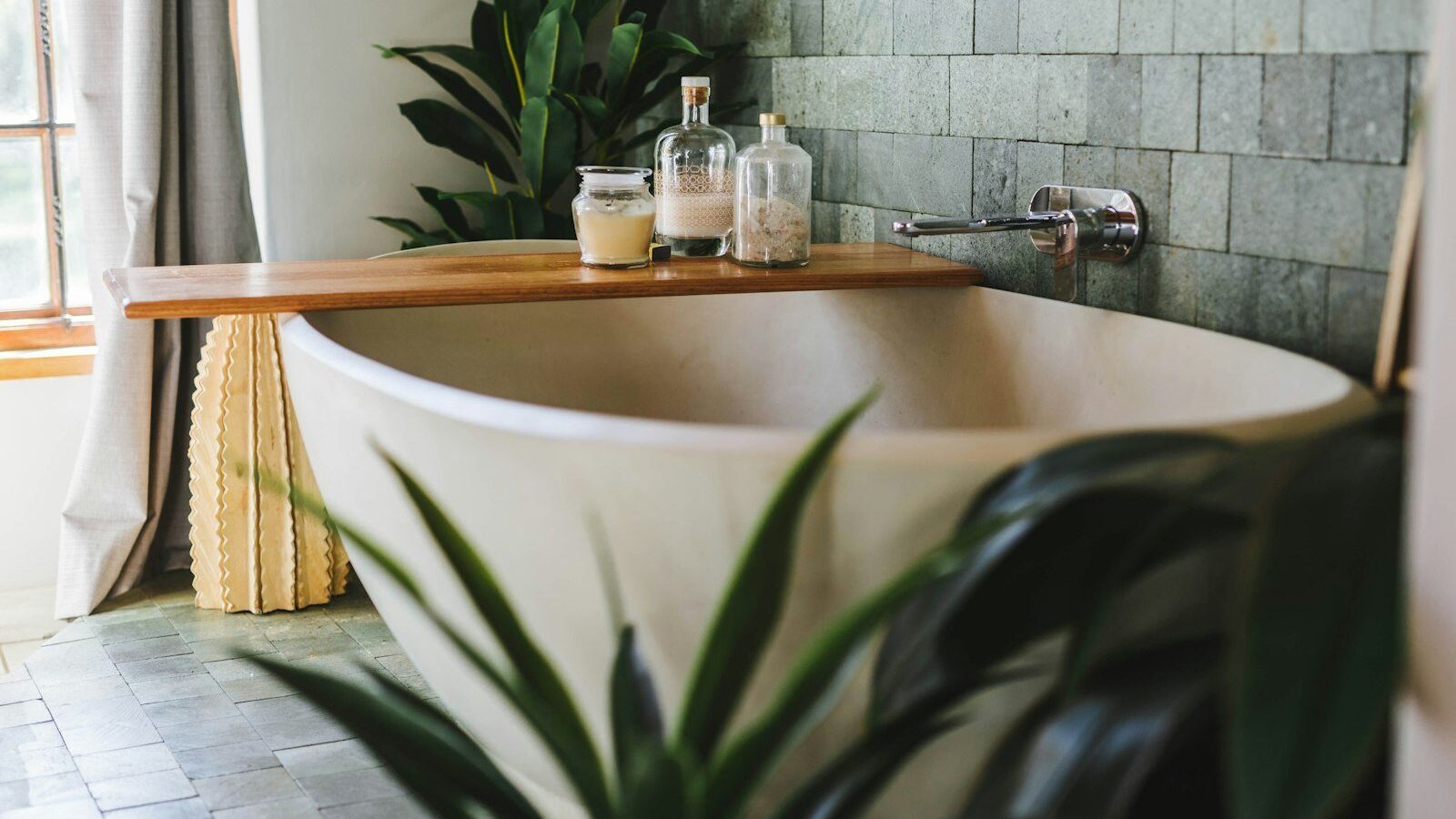
The best bathroom plants are tropical understory species that evolved in warm, humid, shaded forests: ferns, pothos, philodendrons, peace lilies, calatheas, orchids and air plants. A bathroom gives them the steady humidity they struggle to find in the rest of a heated or air-conditioned home. The limiting factor is almost always light, not moisture. A bathroom with a frosted window that gets bright, indirect light can grow nearly any humidity-loving houseplant; a windowless bathroom can only support the toughest low-light plants, and even those need regular time near a window or a small grow light. This guide lists the best plants for each bathroom light level, explains how to place them where they will thrive, and covers the few plants that dislike bathrooms despite their reputations.
In this guide
- First, Assess Your Bathroom’s Light
- Best Bathroom Plants at a Glance
- Best Plants for Bright Bathrooms
- Best Plants for Medium-Light Bathrooms
- Best Plants for Low-Light Bathrooms
- Windowless Bathrooms
- Placement Tips
- Bathroom Plant Care Tips
- Choosing Pots and Planters for a Bathroom
- Bathroom Plant Combinations That Work
- Plants to Skip in the Bathroom
- Frequently Asked Questions
Key Takeaways
- Light, not humidity, decides which plants will survive in your bathroom. Assess it first.
- Ferns, calatheas, orchids and air plants benefit most from bathroom humidity.
- Pothos, heartleaf philodendron, ZZ, snake plant and cast iron plant are the best choices for dim bathrooms.
- Windowless bathrooms need a small LED grow light on a timer, or a weekly rotation to a brighter room.
- Humid air does not replace watering; check soil moisture as you would anywhere else, and make sure pots drain.
First, Assess Your Bathroom’s Light
- Bright indirect light: a sizable window, frosted or clear, that lets in plenty of daylight without direct sun hitting the plant for more than an hour or two. You can read easily at midday without the lights on.
- Medium light: a small window or a window on the north side. The room is dim but usable without lights during the day.
- Low light: a small, heavily frosted or shaded window, or a window far from where plants will sit.
- No natural light: interior bathrooms. Plants here depend on artificial light.
Most bathroom ceiling lights are too dim and too briefly on to sustain plants. A plant that looks fine for a month in a dark bathroom is usually living off stored energy and will decline.
Best Bathroom Plants at a Glance
| Plant | Light needed | Humidity benefit | Pet safe? |
|---|---|---|---|
| Boston fern | Bright indirect to medium | High | Yes |
| Bird’s nest fern | Medium to low | High | Yes |
| Maidenhair fern | Bright indirect | Very high | Yes |
| Calathea and prayer plant | Medium indirect | High | Yes |
| Phalaenopsis orchid | Bright indirect | High | Yes |
| Air plants (Tillandsia) | Bright indirect | High | Yes |
| Pothos | Low to bright indirect | Moderate | No |
| Heartleaf philodendron | Low to bright indirect | Moderate | No |
| Peace lily | Low to medium | Moderate | No |
| Snake plant | Low to bright | Low (tolerates) | No |
| ZZ plant | Low to bright indirect | Low (tolerates) | No |
| Cast iron plant | Low | Moderate | Yes |
| Lucky bamboo | Low to medium | Moderate | No |
| Staghorn fern (mounted) | Bright indirect | High | Yes |
Best Plants for Bright Bathrooms
Boston fern
Boston ferns are the classic bathroom plant because dry indoor air is what usually kills them. In a bright, steamy bathroom, their arching fronds stay lush instead of crisping. Keep the soil evenly moist and hang them where they get bright, indirect light. ‘Kimberly Queen’ is a more upright, tidier alternative. See our Boston fern care guide.
Maidenhair fern
Delicate, lacy and famously fussy everywhere else, maidenhair fern can actually thrive in a bright bathroom. Never let it dry out completely, and keep it away from drafts from an exhaust fan or window.
Orchids and air plants
Phalaenopsis (moth) orchids like the warmth and humidity of a bright bathroom and rebloom more readily there than in dry living rooms. Water when the bark is nearly dry, usually every 7 to 10 days. Air plants (Tillandsia) absorb moisture through their leaves; in a humid bathroom they need soaking less often, about every one to two weeks. Both need bright, indirect light, so place them near the window.
Staghorn fern
Mounted on a board, a staghorn fern makes a living wall sculpture. Bathroom humidity helps it, but it needs bright light and periodic soaking of the mount.
Best Plants for Medium-Light Bathrooms
Calathea and prayer plant
Calatheas, stromanthes and Maranta prayer plants have patterned leaves that brown at the edges in dry air. A bathroom with a north or east window often suits them perfectly. Use filtered or distilled water if leaf tips brown; they are sensitive to minerals in tap water.
Bird’s nest fern
With wide, glossy, rippled fronds rising from a central rosette, bird’s nest fern is tougher than most ferns and handles medium to fairly low light. Water around the base rather than into the central cup, which can rot. Our bird’s nest fern care guide has details.
Peace lily
Peace lilies tolerate lower light and enjoy humidity. They droop dramatically when dry and recover within hours of watering, which makes them good indicator plants. They bloom best in medium light.
Best Plants for Low-Light Bathrooms
Pothos and heartleaf philodendron
These trailing vines are the most adaptable bathroom plants. They grow in low light, though more slowly and with less variegation, and they look great trailing from a shelf above the toilet or from a hanging planter. Water when the top inch or two of soil is dry. See how to care for a pothos.
Snake plant, ZZ plant and cast iron plant
These are low-light survivors. Snake plants and ZZ plants are drought-tolerant and do not need bathroom humidity, but they tolerate it as long as the soil is not kept wet. Water them sparingly, every two to four weeks. Cast iron plant handles very dim, cool corners and is pet safe. For more options, browse our list of low-light houseplants.
Lucky bamboo
Dracaena sanderiana, sold as lucky bamboo, grows in water or soil and tolerates low light. Change the water every week or two and use distilled or filtered water to prevent yellowing.
Windowless Bathrooms
No plant photosynthesizes on darkness. In an interior bathroom you have three practical options:
- Add a grow light: a small full-spectrum LED bulb in a fixture or clamp light, on a timer for 10 to 12 hours a day, supports pothos, ZZ, snake plants and even ferns.
- Rotate plants: keep two of the same plant and swap them weekly between the bathroom and a bright room.
- Accept a shorter stay: treat bathroom plants as temporary decor, moving them to a bright spot to recover every few weeks.
Placement Tips
- Windowsill and window ledges: best spot for orchids, air plants and ferns that need the most light.
- Shower caddies and corner shelves: suitable only if they get some window light. Plants inside the shower can be splashed with soap and hot water, so choose sturdy species like pothos and keep them away from direct spray.
- Hanging planters: great for trailing pothos and Boston ferns; hang them where they will not hit heads or fixtures and where water drips are easy to catch.
- Top of the toilet tank or vanity: fine for small pots if light reaches the spot.
- Keep plants a few feet from heaters and away from strong exhaust-fan drafts.
Bathroom Plant Care Tips
Humidity reduces how quickly soil dries, especially in small, windowless rooms. Always check soil before watering. Use pots with drainage holes and saucers, and empty saucers after watering to prevent root rot and fungus gnats. Run the exhaust fan or crack the door after showers so air circulates; stagnant, constantly wet air encourages mold on soil surfaces and leaf diseases.
Fertilize lightly, at half strength, every four to six weeks in spring and summer, and less in low light, where plants grow slowly. Wipe dust and soap film off leaves with a damp cloth. If the rest of your home is dry and you want to grow humidity-loving plants elsewhere too, see our guide on how to increase humidity for houseplants, and the houseplants and containers hub for more care guides.
Choosing Pots and Planters for a Bathroom
Bathrooms are hard on materials. Unglazed terracotta wicks moisture and can grow white mineral crust and green algae in a steamy room, though it does help soil dry faster for plants like snake plants. Glazed ceramic, plastic and fiberglass pots hold up better and keep fern soil moist longer. Whatever you choose, it needs a drainage hole. If you love a decorative cachepot without one, keep the plant in its plastic nursery pot inside it and lift it out to drain after watering.
Self-watering pots suit ferns, calatheas and peace lilies, which like steady moisture, but they can keep succulent-type plants too wet. Wall-mounted planters and suction-cup shelves free up counter space in small bathrooms; mount them within reach so watering is not a chore, and make sure any hook in a ceiling is anchored into a joist or rated anchor, since a wet hanging fern can weigh 10 pounds or more.
Bathroom Plant Combinations That Work
- Bright bathroom with a deep windowsill: a Phalaenopsis orchid and two or three air plants on the sill, with a Boston fern hanging above the tub.
- North-facing bathroom: a calathea on the vanity, a bird’s nest fern on the floor, and a trailing pothos on a high shelf.
- Small, dim powder room: a ZZ plant on the counter and a cast iron plant in the corner, rotated to a brighter room every few weeks.
- Windowless bathroom with a grow light: a heartleaf philodendron trailing from a shelf under a small LED fixture set to 12 hours a day.
Plants to Skip in the Bathroom
- Succulents and cacti: most dislike constant humidity and low light, and they rot easily. Snake plants and ZZ plants are the exceptions.
- Fiddle leaf fig and other high-light trees: bathrooms rarely offer enough light.
- Herbs like basil and rosemary: they need several hours of direct sun.
- Flowering plants needing full sun, such as hibiscus and geraniums.
Frequently Asked Questions
What plant is best for a bathroom with no window?
Pothos, ZZ plant and snake plant survive best, but even they need artificial light. Add a small LED grow light on a timer or rotate plants to a bright room weekly.
Do plants help with bathroom humidity or mold?
Plants have only a small effect on room humidity and do not prevent mold. Ventilation with an exhaust fan is what controls bathroom moisture.
Can I put a plant in the shower?
Yes, if the shower gets natural light and the plant is out of direct spray. Pothos, ferns and air plants are common shower plants. Avoid soap buildup on leaves.
Are bathroom plants safe for cats?
Ferns, calatheas, orchids, air plants and cast iron plants are generally considered pet safe. Pothos, philodendron, peace lily, snake plant and ZZ are toxic if chewed.
How often should I water bathroom plants?
Less often than the same plants elsewhere, because humidity slows drying. Check the soil with a finger and water only when the top inch is dry, or as each species prefers.