

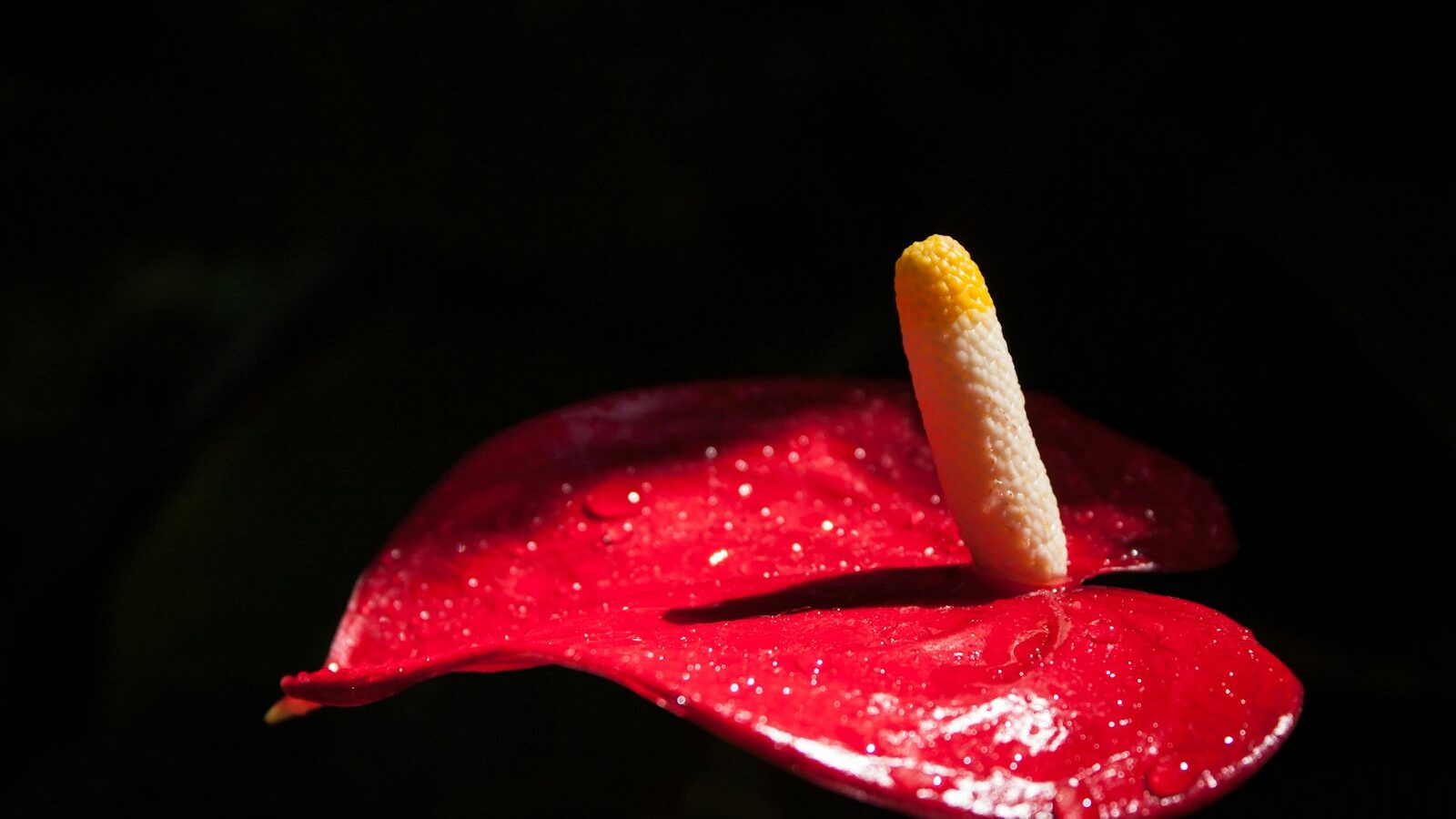
The anthurium (also called the flamingo flower or laceleaf) is famous for its glossy, heart-shaped blooms that can last for weeks and reappear all year long. Those waxy “flowers” are actually colorful leaf bracts called spathes, and with the right light, humidity, and feeding they keep coming back. This guide walks you through everything you need to keep an anthurium healthy, vibrant, and blooming continuously.
In this guide
Anthurium quick care
- Light: bright indirect (for blooms)
- Water: when top inch dry
- Humidity: high
- Soil: chunky, airy aroid mix
- Toxic to pets
As an Amazon Associate we earn from qualifying purchases.
Light: the key to continuous blooms
Light is the single most important factor for getting an anthurium to flower. These plants grow as epiphytes in the dappled canopy of Central and South American rainforests, so they want plenty of brightness without the harshness of direct sun. Give an anthurium bright, indirect light and it will reward you with a near-constant supply of spathes; tuck it into a dim corner and it will survive but stop blooming altogether.
An east-facing windowsill is ideal, offering gentle morning sun. North-facing windows work in summer but may be too dim in winter. South- and west-facing windows are fine as long as you set the plant a few feet back or filter the light with a sheer curtain, since hot afternoon rays will scorch the leaves.
Signs the light is wrong
- Too little light: few or no flowers, leggy stems, smaller new leaves.
- Too much light: pale, bleached, or scorched patches on the leaves.
- Just right: deep green leaves and a steady rotation of fresh spathes.
If your home is short on natural light, a simple LED grow light on a timer for 10 to 12 hours a day will keep an anthurium blooming through the darkest months. The same indirect-light rule applies to many tropical houseplants. See our plant & flower care guide for more.
Watering and humidity
Anthuriums like consistent moisture but absolutely hate sitting in soggy soil. Their thick, fleshy roots rot quickly when waterlogged, so the goal is evenly moist, never wet. Water thoroughly until liquid drains from the bottom, then wait until the top inch of soil feels dry before watering again. Depending on your home, that usually works out to roughly once a week in summer and every 10 to 14 days in winter.
Always empty the saucer after watering so the pot is never standing in runoff. If your tap water is heavily chlorinated or high in minerals, let it sit out overnight or use filtered or rainwater, as anthuriums are sensitive to salt buildup that shows up as brown leaf tips.
Keeping humidity high
As rainforest natives, anthuriums crave humidity of 60% or higher, well above the dry 30 to 40% of the average heated or air-conditioned home. Low humidity is the most common reason for crispy brown leaf edges. To raise it:
- Run a small humidifier nearby, which is the most reliable option.
- Group plants together so they share transpired moisture.
- Set the pot on a pebble tray filled with water (keep the pot above the waterline).
- Keep anthuriums out of the path of heating vents, radiators, and AC drafts.
If you love high-humidity bloomers, the peace lily is a close aroid relative with similar needs and a more forgiving temperament.
Soil and potting
Because anthuriums grow on tree branches in the wild rather than in dense ground soil, they need a chunky, airy mix that drains fast and lets air reach the roots. Standard potting soil packs down too tightly and holds water against the roots, which leads to rot. Aim for a loose blend that stays moist but never muddy.
A reliable recipe is roughly one-third quality potting mix, one-third orchid bark, and one-third perlite, with a handful of horticultural charcoal mixed in. If you would rather buy something ready-made, a bagged aroid or orchid and aroid potting mix works perfectly straight out of the bag.
Always choose a pot with drainage holes. Anthuriums actually bloom better when slightly root-bound, so resist the urge to over-pot. Looking for a new plant to start with? A healthy nursery anthurium plant already in bloom is the easiest way to begin.
Feeding for nonstop flowers
Anthuriums are light but steady feeders, and regular fertilizing is what fuels continuous blooming. During the active growing season of spring through early fall, feed every two to four weeks with a diluted fertilizer. To encourage flowers specifically, choose a formula higher in phosphorus, the middle number on the label.
- Use a bloom-boosting fertilizer diluted to half the recommended strength.
- Only fertilize moist soil to avoid burning the roots.
- Cut back or stop feeding in late fall and winter when growth naturally slows.
- Flush the soil with plain water every couple of months to clear out salt buildup.
Overfeeding is just as harmful as underfeeding. Too much fertilizer causes leaf burn, salt crust on the soil surface, and weak growth, so when in doubt, feed less rather than more.
Why your anthurium stops blooming (and deadheading)
If your anthurium has gone all green and refuses to flower, the cause is almost always environmental. Run through this checklist before assuming the plant is unhealthy:
- Not enough light: the number one reason. Move it somewhere brighter (but still indirect).
- No fertilizer: without phosphorus, the plant has no fuel to make spathes.
- Wrong temperature: anthuriums bloom best between 70 and 85°F and stall below 60°F.
- Stress: overwatering, root rot, or pests divert energy away from flowering.
- Dormancy: a slight winter pause is normal and resolves on its own.
Deadheading spent blooms
Anthurium spathes last a long time, often six to eight weeks, but eventually they fade, turn green, and droop. Removing these spent blooms (deadheading) redirects the plant’s energy into producing new flowers instead of seeds. Trace the flower stem down to its base and snip it off with clean, sharp scissors. Wipe the blades with rubbing alcohol first to avoid spreading disease.
Repotting and propagation by division
Anthuriums only need repotting every two to three years, or when you see roots circling the surface or pushing out the drainage holes. Spring is the best time. Move up just one pot size, refresh the chunky aroid mix, and water lightly afterward. If you notice the plant lifting out of the soil with aerial roots exposed, simply repot a little deeper or top-dress with fresh mix.
Dividing your plant
The easiest and most reliable way to propagate an anthurium is by division, best done while repotting. Mature plants naturally form offsets (pups) with their own roots:
- Gently remove the plant and shake loose the soil to expose the root ball.
- Find a natural clump with several leaves and its own healthy roots.
- Tease it apart by hand, or cut cleanly with a sterilized knife so each section keeps roots.
- Pot each division in fresh aroid mix and keep it warm and humid while it settles in.
Water the new divisions sparingly for the first couple of weeks and avoid fertilizing until you see fresh growth, which signals the roots have re-established.
Common problems, pests, and pet safety
Brown tips and yellow leaves
- Brown, crispy tips: usually low humidity, but can also come from salt buildup or fertilizer burn. Raise humidity and flush the soil.
- Yellow leaves: most often overwatering or poor drainage. Check that the roots are firm and white, not mushy and brown.
- Brown spots: can be sunburn (move out of direct sun) or fungal leaf spot (improve airflow and avoid wetting the leaves).
- Drooping: either thirst or root rot, so feel the soil before deciding which.
Pests to watch for
The usual suspects are spider mites (fine webbing and stippled leaves), mealybugs (white cottony fuzz in leaf joints), scale (brown bumps on stems), and aphids. Inspect regularly, especially the undersides of leaves. Wipe pests off with a cloth and treat with insecticidal soap or a diluted neem oil spray every week until they are gone. Isolate any affected plant so the infestation does not spread.
Toxicity to pets and people
Like other aroids, anthuriums are toxic to cats, dogs, and humans. The leaves and stems contain insoluble calcium oxalate crystals that cause intense mouth and throat irritation, drooling, and vomiting if chewed. Keep anthuriums well out of reach of curious pets and small children, and wash your hands after pruning. If a pet ingests part of the plant, contact your veterinarian or a pet poison helpline. If you want flowering aroids and have nibbling pets, weigh the risk carefully, as the related orchids are a non-toxic, pet-safe alternative for adding color.
Frequently asked questions
Why won’t my anthurium bloom?
The most common reason is too little light. Anthuriums need bright, indirect light to flower, so move yours closer to a bright window (out of direct sun) and feed it every two to four weeks during the growing season with a phosphorus-rich fertilizer. Correct temperatures of 70 to 85°F and removing any stress from overwatering also help blooming resume.
How often should I water an anthurium?
Water when the top inch of soil feels dry, which is typically once a week in summer and every 10 to 14 days in winter. Water thoroughly until it drains from the bottom, then empty the saucer. The chunky soil should stay evenly moist but never soggy, since wet roots quickly rot.
How do I get rid of brown tips on the leaves?
Brown, crispy tips are most often caused by low humidity. Raise humidity to 60% or more with a humidifier or pebble tray. Brown tips can also signal salt or fertilizer buildup, so flush the soil with plain water and consider switching to filtered or rainwater if your tap water is hard.
How do I propagate an anthurium?
The easiest method is division during repotting. Remove the plant, find a clump of leaves that has its own roots, and gently separate it from the main plant. Pot each division in fresh aroid mix and keep it warm and humid until new growth appears.
Are anthuriums safe for cats and dogs?
No. Anthuriums are toxic to cats, dogs, and humans because they contain calcium oxalate crystals that irritate the mouth and digestive tract. Keep them out of reach of pets and children, and contact a vet or poison helpline if any part is ingested.