

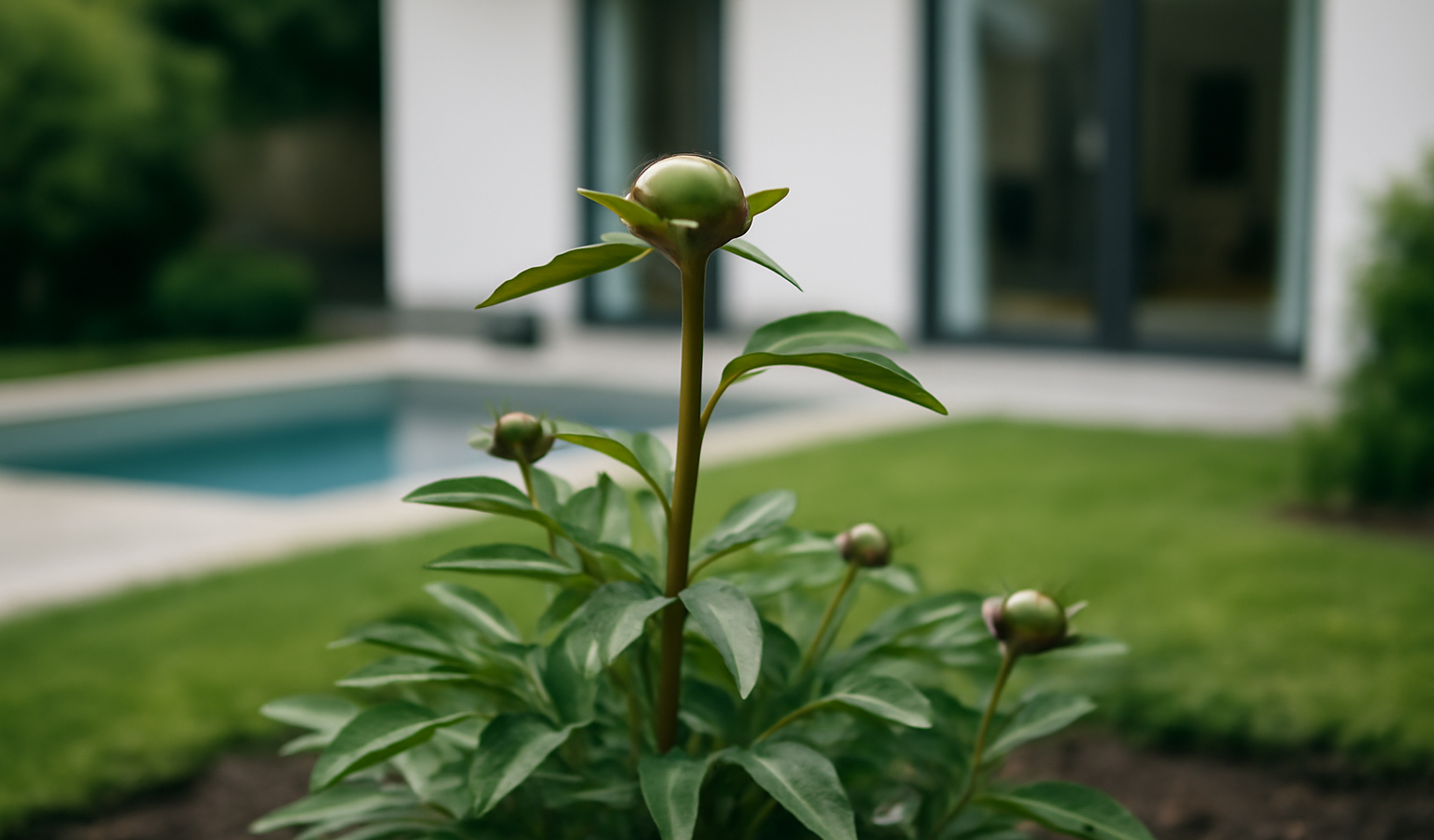
A peony that throws up plenty of healthy green leaves but refuses to flower is one of the most common complaints I hear from gardeners, and it is almost always fixable once you know what to look for. Peonies are long-lived plants, often outlasting the people who planted them, but they are also patient to a fault: a buried crown, a shady corner, or a fresh transplant can keep a plant leafy and bloomless for years without ever looking sick. The good news is that the causes are few and well understood. In nearly every case the problem comes down to planting depth, light, age, feeding, or simple impatience, and once you correct the underlying issue the flowers come back reliably for decades. This guide walks through each cause in the order I check them, shows you how to diagnose which one is affecting your plant, and gives you concrete fixes. It also clears up the stubborn old myth that ants are responsible for peony bloom failure, because they are not, and chasing that idea wastes time you could spend solving the real problem.
Key Takeaways
- Planting too deep is the single most common cause: herbaceous peony eyes should sit only 1 to 2 inches below the soil surface, never deeper.
- Peonies need full sun, at least 6 hours a day, to set flower buds; a plant in shade will grow leaves but skip blooms.
- Newly planted, recently moved, or freshly divided peonies sulk for 1 to 3 years and may not flower well until they settle.
- Too much nitrogen produces lush foliage at the expense of flowers; feed low-nitrogen, high-phosphorus instead.
- Ants do not cause bloom failure and do not harm the plant; they are simply feeding on sweet nectar from the buds.
Cause 1: The Peony Is Planted Too Deep
If I had to bet on a single reason a peony will not bloom, this is it. Herbaceous peonies set their flower buds from growth points called eyes, the pink or reddish buds clustered at the top of the crown. Those eyes need to sit close to the surface to trigger flowering. Bury them too deep and the plant reads the signal as “stay vegetative,” so it pushes leaves year after year and never blooms. This is by far the most frequent mistake, and it is easy to make because a peony root looks like something that ought to be planted deep, the way you would plant a shrub or a tree. It is not. The correct depth is shallow, and the difference between right and wrong is measured in inches.
How to diagnose it
In fall, gently scrape away the soil around the base of the crown until you find the eyes, those plump buds where next year’s stems will emerge. Measure how far below the soil surface they sit. If the eyes are more than 2 inches down, the plant is too deep and that is almost certainly why it is not blooming. A plant that is otherwise vigorous, with full green foliage and no sign of disease, but produces no buds, points strongly to depth. You can also look at how the plant was set: if you or a previous gardener mounded soil or mulch heavily over the crown, the eyes may have ended up far deeper than intended. Settling over time, added topdressing, and thick mulch all conspire to bury a crown that started at the right level.
How to fix it
The fix is to reset the planting depth, and the best time to do it is early to mid fall, when the plant is going dormant. Dig the whole clump, keeping as much root as you can, and replant so the eyes sit only 1 to 2 inches below the finished soil line. In colder regions, USDA zones 3 through 5, aim for the shallower end, about 1 inch, but never expose the eyes completely. In warmer zones, 6 through 8, you can plant slightly deeper, up to a full 2 inches, to give the crown a little insulation from heat, but do not exceed 2 inches anywhere. After replanting, water it in well and resist the urge to pile mulch over the crown. A light winter mulch in cold zones is fine for the first year, but pull it back in spring so it does not bury the eyes. Expect the plant to take a season to recover from being moved, then bloom the following year.
Cause 2: Too Much Shade
Peonies are sun plants. They can survive in partial shade, but surviving and blooming are two different things. To build the energy reserves needed to set and open flowers, a peony wants a minimum of 6 hours of direct sun a day, and more is better in most climates. A plant tucked under a maturing tree, on the north side of a house, or crowded by taller perennials and shrubs will often stay perfectly healthy and green while quietly refusing to flower. This one sneaks up on people, because the shade that starves the plant of bloom-fueling light often arrives gradually as nearby trees and shrubs grow up around a peony that was planted in full sun years ago.
How to diagnose it
Spend a sunny day watching the spot. Note when direct sun first hits the plant and when it falls into shadow, and add up the hours of unobstructed sun. Anything under 6 hours is suspect, and under 4 hours all but guarantees a bloomless plant. Pay attention to the season too: a bed that gets plenty of light in early spring before the trees leaf out can drop into deep shade by the time peony buds are forming in May. Foliage gives a clue as well. A shaded peony often has thinner, floppier stems that lean toward the brightest patch of sky, and the leaves may be a darker, softer green than those of a plant in strong sun.
How to fix it
You have two options: bring more sun to the plant or bring the plant to more sun. If a single overhanging branch or an overgrown neighbor is the culprit, thinning or removing it may restore enough light without moving anything. If the whole site has gone shady, move the peony in fall to a spot with at least 6 hours of direct sun, replanting at the correct 1-to-2-inch depth while you are at it. Choose the new location carefully, since peonies dislike being moved and you want this to be the last time. Give it room away from trees, shrubs, and aggressive perennials so it keeps its sun as the garden matures. As with any transplant, expect a season or two of sulking before it hits full stride and blooms freely.
Cause 3: The Plant Is Too Young or Recently Moved
Sometimes the plant is doing everything right and simply needs time. Peonies are not in a hurry. A young plant, a recent transplant, or a fresh division will often spend its first couple of years building roots and crown before it has the resources to flower. This is normal, and the worst thing you can do is dig it up to investigate or move it again, which only resets the clock. Patience is genuinely part of the answer with peonies, and a plant that disappoints you the first spring may astonish you the third.
How to diagnose it
Think back over the plant’s history. Did you plant or divide it within the last 1 to 3 years? Was it moved recently? Was it a small division or a potted plant from a nursery rather than an established clump? Any of these point to age and establishment as the cause. A division with only one or two eyes will take longer to bloom than a generous one with several. If the plant is otherwise in a good spot, planted at the right depth, in full sun, and simply young, then time is the only real treatment. A healthy, slowly expanding clump that adds more stems each spring is a plant on track, even if it has not flowered yet.
How to fix it
Wait, and support the plant while it establishes. Keep it watered through dry spells in its first couple of seasons, weed around it so it is not competing for light and nutrients, and leave it undisturbed. If you are dividing peonies to multiply them, do it in early fall and make sure each division has 3 to 5 eyes; a piece that small will establish faster and bloom sooner than a single-eye fragment. Do not fertilize heavily in an attempt to rush things, because as the next section explains, that can backfire and delay flowering further. Mark your calendar for two or three springs out and let the plant do its work. A well-sited peony that is merely young is the easiest problem on this list, because it solves itself.
Cause 4: Too Much Nitrogen
A peony that produces enormous, glossy, dark-green leaves and not a single flower is often a plant that has been overfed with nitrogen. Nitrogen drives leafy, vegetative growth, and when there is too much of it the plant pours its energy into foliage at the expense of blooms. This commonly happens by accident: a peony planted at the edge of a lawn catches the runoff from regular high-nitrogen lawn fertilizer, or a gardener trying to be generous reaches for an all-purpose feed heavy on the first number in the N-P-K ratio. The plant looks lush and vigorous, which makes the lack of flowers especially puzzling, but the very lushness is the tell.
How to diagnose it
Look at the balance of leaf to flower. A nitrogen-overdosed peony is dense, tall, and aggressively green, with thick stems and large leaves, yet few or no buds. Consider whether the plant sits near a fertilized lawn or in a bed that gets frequent high-nitrogen feeding. If you have been applying a lawn or all-purpose fertilizer with a high first number, such as a 30-0-4 or similar, that is a strong clue. The diagnosis is essentially a process of matching very vigorous, flowerless foliage with a history of generous nitrogen, whether deliberate or from drifting lawn feed.
How to fix it
Stop applying high-nitrogen fertilizer near the peony and keep lawn feed away from the bed. Peonies are not heavy feeders and often need nothing at all in decent soil. If you do feed, switch to a low-nitrogen, higher-phosphorus formula in spring, something like a 5-10-5 or a bloom-oriented blend, which supports flower formation rather than leaf growth. A modest topdressing of compost in fall is usually plenty for an established plant. It can take a full season for the plant to work through excess nitrogen, so give it a year after you correct the feeding before you judge the result. As a rule, when a peony looks too good to be true and still will not bloom, ease off the food rather than adding more.
Cause 5: The Ant Myth (and What Really Blasts Buds)
Few garden beliefs are as persistent as the idea that peonies need ants to open, or conversely that ants are to blame when buds fail. Let me be clear: ants do not cause peony bloom failure, and they are not required for the flowers to open either. The truth is simpler and harmless. Peony buds secrete a sweet nectar on the outside of the developing flower, and ants show up to feed on it. That is the entire relationship. The ants are opportunistic visitors drawn to sugar, nothing more. They do not damage the buds, they do not eat the flowers, and removing them does nothing to help or hurt blooming. If your peony is not flowering, the ants on it are a coincidence, not a cause, and spraying or fighting them is wasted effort.
How to diagnose it
If you are seeing ants but the plant is otherwise setting buds that simply fail to open, the ants are a red herring; look elsewhere. The real culprit when formed buds turn brown and shrivel before opening is usually environmental or disease-related, not insect. A late spring frost can blast buds that have already formed, turning them brown and mushy after a cold snap, which is common when warm weather coaxes the plant forward early and then temperatures drop. Botrytis, a fungal disease often called bud blast, is another genuine cause: it shows up as buds that blacken and dry up, sometimes with grayish mold, frequently in cool wet springs or where air circulation is poor. Note whether the failure followed a frost or a stretch of damp weather, and check for any fuzzy gray growth on the affected buds.
How to fix it
Ignore the ants; they need no treatment and pose no threat. If you want them off cut flowers, just shake or rinse the stems before bringing blooms indoors. For frost damage, there is little to do once it has happened, but you can throw a light cover over the plants overnight when a late frost threatens buds that are nearly open. For botrytis bud blast, improve air circulation by giving plants space, cut and remove any affected buds and stems promptly, clear away all dead foliage in fall so the fungus has nowhere to overwinter, and avoid overhead watering that keeps the buds wet. Healthy spacing and good fall cleanup prevent the great majority of disease-related bud blast without any spraying at all.
Preventing Peony Bloom Problems for the Long Term
Most peony bloom failures trace back to decisions made at planting, which means a little care up front saves years of frustration. Start by choosing the right spot: full sun, at least 6 hours a day, in well-drained soil, with plenty of room away from trees, shrubs, and greedy perennials that will crowd it as the garden fills in. Plant in early to mid fall, setting the eyes only 1 to 2 inches below the surface, shallower in cold zones 3 through 5 and no deeper than 2 inches even in warm zones 6 through 8. Pick a location you can commit to, because peonies resent being moved and reward those who leave them alone with decades of bloom. For more on building a long-lived flower bed, browse our plants and flowers guides, and if you are designing the space around the bed, our outdoor living resources can help you plan it.
Once planted, the maintenance is light. Keep mulch and topdressing off the crown so the eyes never get buried over time, which is the slow path to a plant that quietly stops blooming. Go easy on fertilizer; skip high-nitrogen lawn feed near the bed and use a low-nitrogen, higher-phosphorus feed only if your soil is poor. Cut the foliage to the ground in fall and remove it from the garden to keep botrytis and other diseases from overwintering. Divide only when you must, in early fall, leaving 3 to 5 eyes per division, and accept that a divided or moved plant will sulk for 1 to 3 years before returning to full bloom. Above all, be patient: a peony that is well sited, planted shallow, given sun, and left undisturbed will bloom faithfully for a generation or more.
Frequently Asked Questions
How deep should I plant a peony so it blooms?
Set the eyes only 1 to 2 inches below the soil surface. Aim for about 1 inch in cold USDA zones 3 to 5 and up to 2 inches in warmer zones 6 to 8, but never deeper than 2 inches. Planting too deep is the most common reason peonies grow leaves but never flower.
How many years until a new peony blooms?
A newly planted, divided, or recently moved peony typically takes 1 to 3 years to settle and bloom well. Divisions with 3 to 5 eyes establish and flower faster than single-eye fragments. If the plant is healthy and well sited, the most reliable treatment is simply patience.
Do peonies really need ants to bloom?
No. Ants are drawn to the sweet nectar on peony buds and feed on it, but they do not cause the flowers to open and do not harm the plant. If your peony is not blooming, the ants are a coincidence. Look instead at planting depth, sunlight, age, and fertilizer.
Why are my peony buds turning brown before they open?
Buds that form and then brown or shrivel are usually hit by a late spring frost or by botrytis, a fungal disease called bud blast. Cover plants on frosty nights, space them for airflow, remove affected buds, and clear away all dead foliage in fall to prevent disease.
Can too much fertilizer stop a peony from flowering?
Yes. Too much nitrogen, often from lawn fertilizer drifting into the bed, drives lush green foliage at the expense of flowers. Keep high-nitrogen feed away from peonies and, if needed, use a low-nitrogen, higher-phosphorus formula such as 5-10-5 in spring to support blooms.