

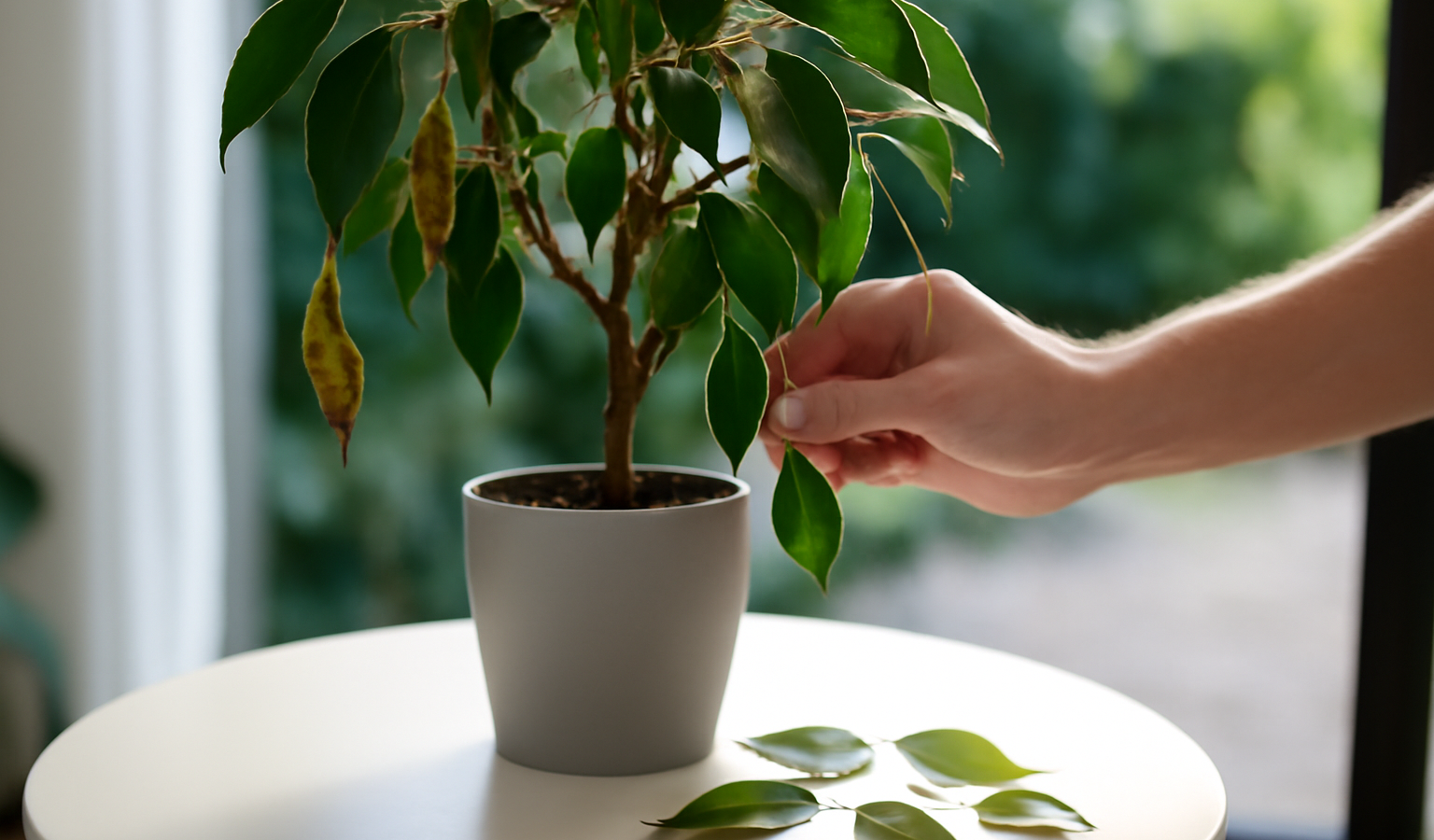
Few houseplant problems are as unsettling as watching leaves drop, one after another, with no obvious explanation. Leaf drop is the plant’s broadest distress signal: it is a response to stress, and almost anything that stresses a plant can trigger it. The challenge is that many different causes, environmental shock after a move, watering that is either too much or too little, a sudden drop in light, a cold draft, or a pest infestation, all produce the same symptom. That is why “why is my houseplant dropping leaves?” rarely has a single answer and why the key skill is diagnosis. This guide walks through the major causes one by one, with the specific clues that distinguish each, so you can identify what is actually stressing your plant and apply the right fix before it sheds itself bare. It also covers the normal leaf shedding that you can safely ignore.
Key Takeaways
- Leaf drop is a general stress response; the same symptom can come from shock, watering extremes, low light, drafts, or pests, so diagnosis matters most.
- A recent move, repot, or seasonal change often causes a burst of leaf drop from environmental shock that settles once the plant acclimates.
- Overwatering rots roots so they cannot supply leaves, while underwatering dehydrates them; both cause drop but look and feel different at the soil.
- Sudden low light, cold drafts from windows, doors, and AC vents, and blasts of hot dry air from heaters all trigger stress shedding.
- Check leaf undersides and stems for pests, and remember that some lower-leaf shedding is simply normal aging you can ignore.
Diagnose Before You React
Because so many causes share this one symptom, resist the urge to immediately water more, move the plant, or reach for a spray. Start by asking what recently changed. Did you just buy, move, or repot the plant? Has the season turned, shortening the days or kicking on the heat? Then read the pattern of the drop. Sudden drop right after a change points to shock. Yellowing, soft leaves dropping with wet soil suggests overwatering. Crispy, brown, curling leaves dropping with bone-dry soil suggests underwatering. Lower, inner leaves dropping while the plant otherwise looks fine is often normal aging or low light. Drop concentrated near a door, window, or vent implicates drafts. And drop accompanied by stippling, webbing, sticky residue, or visible bugs means pests.
Feel the soil a couple of inches down, look at the leaves you still have, check their undersides, and note the plant’s location. These few observations usually narrow the cause to one or two of the categories below, which is far more useful than guessing. With the likely culprit identified, the fix is straightforward.
Cause 1: Environmental Shock and Sudden Change
Diagnose: Plants dislike abrupt change, and a sudden burst of leaf drop very often follows one. Bringing a new plant home subjects it to a completely different light, temperature, and humidity than the greenhouse it came from, and it commonly sheds several leaves in protest over the first weeks, this is classic transplant or acclimation shock. The same happens after repotting, which disturbs the roots, and after any big move within the home or the seasonal shift indoors in fall. Fiddle leaf figs are notorious for this, but most plants do it to some degree. The clue is timing: the drop begins shortly after a move, purchase, or repot, and tends to taper off once the plant settles.
Fix: Mostly, give it time and stability. Settle the plant into a spot with appropriate light and leave it there; do not keep relocating it chasing a fix, since every move resets the shock. Maintain steady watering, avoid fertilizing a stressed plant, and resist the urge to repot again right away. Most plants stop dropping and push new growth once they have acclimated over a few weeks. When repotting, disturb the roots as little as possible and water it in well to ease the transition. The main thing is patience and consistency: a plant adjusting to a new environment needs calm, stable conditions, not intervention.
Cause 2: Overwatering and Underwatering
Diagnose: Watering extremes in both directions are a leading cause of leaf drop, and telling them apart is essential because the fixes are opposite. Overwatering keeps the soil soggy, suffocates and rots the roots, and the damaged roots can no longer move water to the leaves, so the plant drops them, often after they yellow and turn soft or mushy, frequently starting with lower leaves, while the soil stays wet and may smell sour. Counterintuitively, an overwatered plant can look thirsty because its rotted roots cannot drink. Underwatering dehydrates the plant, so leaves go dry, crispy, brown, and curled, then drop, and the soil is bone-dry and pulling away from the pot’s edge. Feel the soil to decide: wet and the leaves are soft and yellow means overwatering; dry and the leaves are crispy means underwatering.
Fix: Match the correction to the cause. For overwatering, stop watering and let the soil dry out; check that the pot has drainage holes and never leaves the plant standing in water, and if roots have rotted, unpot, trim away the brown mushy roots, and repot into fresh, well-draining mix. For underwatering, give a thorough soak until water drains from the bottom, and if the soil has gone water-repellent and dry, bottom-water by setting the pot in a tray to rehydrate the root ball fully. Going forward, water by checking the soil rather than the calendar: for most houseplants, water when the top inch or two has dried, then water deeply and let excess drain. Consistent, appropriate watering is the most important thing you can do to stop leaf drop. For the overwatering side of this story, see our guide to why a pothos turns yellow.
Cause 3: Low Light and Seasonal Change
Diagnose: Light drives the energy a plant needs to support its leaves, and when light falls too low, the plant sheds leaves it can no longer afford to keep, typically the older, lower, and inner leaves first. This commonly shows up after a move to a darker room, when something starts blocking a window, or seasonally in fall and winter as days shorten and the sun weakens. A plant that was thriving and then begins dropping interior leaves as winter sets in is very likely reacting to reduced light. The remaining growth may also look sparse, pale, or stretched (leggy) as the plant strains toward what light there is.
Fix: Improve the light. Move the plant closer to your brightest window, clean dust off the leaves so they absorb more light, and in dim rooms or dark winters add a grow light to make up the deficit. Acclimate it gradually if you are moving it into much brighter conditions, so the leaves do not scorch. Expect a plant to drop a few leaves as a normal adjustment to the lower light of winter and to slow down overall in that season; reduce watering and stop feeding while growth is slow. As light returns in spring, or once you supplement it, the shedding stops and new growth resumes. Matching the plant to a spot with enough light for its needs prevents this kind of drop from recurring.
Cause 4: Drafts, Temperature Swings, and Pests
Diagnose: Two more culprits round out the list. Drafts and temperature extremes stress plants quickly: cold blasts from a drafty window, an exterior door opening in winter, or an air-conditioning vent, and hot, dry air from a heater or radiator, all cause sudden leaf drop, often concentrated on the side of the plant facing the source. Most tropical houseplants resent sudden chills below the mid-fifties Fahrenheit and the dry, fluctuating air near heat sources. The clue is location: drop is worst near a door, window, vent, or appliance. Pests are the other cause to rule out. Spider mites, mealybugs, scale, aphids, and thrips feed on the plant, weaken it, and trigger leaf drop, leaving signs like fine webbing, stippled or speckled leaves, sticky honeydew residue, white cottony tufts, or small bumps on stems and leaf undersides.
Fix: For drafts and temperature, move the plant away from cold windows, exterior doors, AC vents, radiators, and heaters, and aim for stable, comfortable room temperatures without sudden swings. A few feet of distance from a vent or a drafty pane is often all it takes. For pests, isolate the affected plant immediately so the infestation does not spread, then inspect thoroughly, wipe or rinse off what you can, and treat with insecticidal soap or horticultural oil, repeating per the label until the pests are gone. Check the leaf undersides and stem joints carefully, since that is where most of these pests hide. A clean, well-sited plant kept away from drafts and inspected regularly rarely drops leaves from these causes. For more pest and care help, browse the Plants & Flowers hub.
When Leaf Drop Is Normal, and How to Prevent the Rest
Before you treat leaf drop as an emergency, remember that some of it is simply natural. Plants shed their oldest, lowest leaves as they age and put energy into new growth, so the occasional yellowing and dropping of a bottom leaf or two on an otherwise healthy, growing plant is completely normal and needs no action. Many plants also slow down and drop a few leaves in winter, and some, like certain figs, are famously dramatic about shedding when anything changes. The distinction that matters is between a slow trickle of old leaves from a thriving plant, which is fine, and a rapid wave of leaf drop, especially of newer leaves or from a plant that otherwise looks stressed, which signals one of the problems above.
To prevent the troublesome kind, give your plants stability and suitable conditions. Place each plant where it gets the light it needs and leave it there rather than shuffling it around. Water by checking the soil, deeply when the top inch or two dries, never on a rigid schedule, and ensure good drainage so roots stay healthy. Keep plants away from cold drafts, hot vents, and sudden temperature swings, and inspect regularly for pests so you catch them early. Go easy on a stressed or newly moved plant: no fertilizer, no repotting, just calm, consistent care while it settles. Diagnose by the pattern, fix the actual stressor, and accept the small amount of natural shedding, and your houseplants will hold onto their leaves and grow steadily.
Frequently Asked Questions
Why is my new houseplant dropping leaves so soon after I bought it?
Almost certainly acclimation shock. Moving from a greenhouse to your home changes the light, temperature, and humidity drastically, and many plants shed several leaves in protest over the first weeks. Settle it in a good spot, keep care consistent, and the drop should taper off as it adjusts.
How do I tell if leaf drop is from overwatering or underwatering?
Feel the soil and the leaves. Wet, soggy soil with soft, yellowing leaves means overwatering and rotting roots. Bone-dry soil with crispy, brown, curling leaves means underwatering. The fixes are opposite, so always check the soil before deciding whether to water more or less.
Can cold drafts make a houseplant drop leaves?
Yes. Cold air from drafty windows, exterior doors, and AC vents, as well as hot dry air from heaters and radiators, stresses tropical houseplants and triggers leaf drop, often worst on the side facing the source. Move the plant a few feet away to stable, comfortable temperatures.
Is it normal for houseplants to drop some leaves?
Yes. Plants naturally shed their oldest, lowest leaves as they age and grow, and many slow down and drop a few leaves in winter. An occasional yellow bottom leaf on a healthy plant is fine. A rapid wave of dropping, especially of newer leaves, signals a problem to diagnose.
Should I fertilize a plant that is dropping leaves?
No, not while it is stressed. Fertilizing a struggling or newly moved plant can make things worse. First diagnose and fix the cause, whether shock, watering, light, drafts, or pests, and let the plant stabilize and resume growth before you feed it again, ideally in the growing season.