

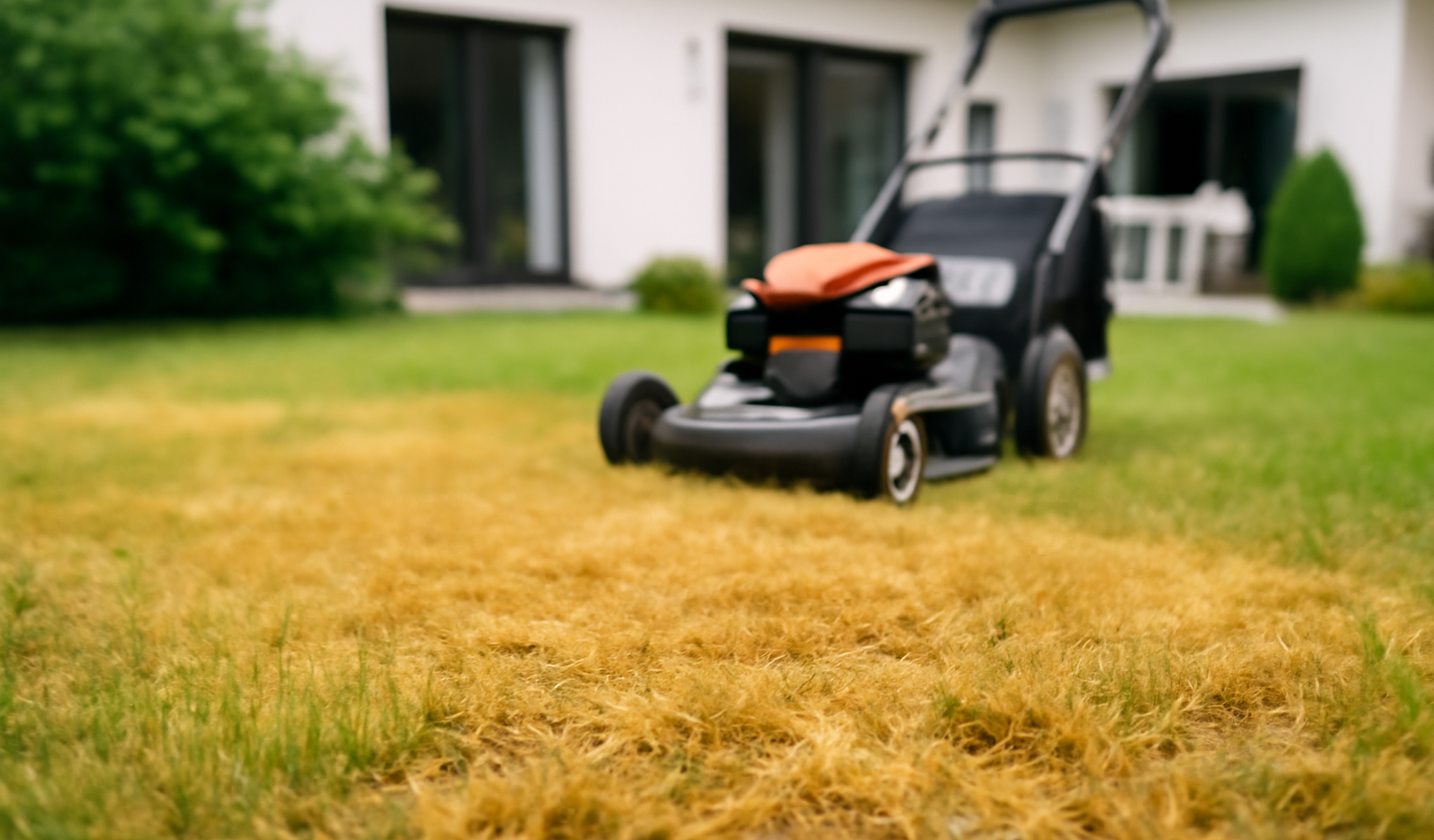
You finish mowing, step back to admire the lawn, and within a day or two the whole thing has a pale, washed-out, yellowish cast that wasn’t there before. The grass was green when you started. So what happened? In almost every case, grass turning yellow after mowing is mechanical, not a fertilizer problem or a disease you caught too late. The mower did something to the leaf blades that the plant is now reacting to, and the discoloration is the tissue dying back from the damaged tips. The good news is that mechanical problems have mechanical fixes — most of them free, and most of them things you can correct before the next mow. This guide walks through the four causes that account for the overwhelming majority of post-mow yellowing: a dull blade that shreds instead of slices, scalping over uneven ground, cutting too much off at once, and mowing while the grass is still wet. For each one you’ll get a way to confirm it’s the culprit and a concrete fix, followed by a prevention routine that keeps the lawn green from one mow to the next.
Key Takeaways
- A dull blade tears grass tips instead of cutting them, leaving frayed ends that brown and give the lawn a yellow haze within 24 to 48 hours.
- Sharpen your mower blade at least twice per season — roughly every 20 to 25 hours of mowing — and inspect it monthly during peak growth.
- Never remove more than one-third of the grass height in a single pass; cutting shorter shocks the plant and exposes pale lower stems.
- Mow only when the grass is dry, raise the deck about half an inch in summer heat, and level your mower deck if one side cuts lower than the other.
- Most mechanically yellowed lawns recover to full green in 7 to 14 days once you correct the cause and resume proper mowing.
Cause 1: A Dull Blade Shredding the Tips
This is the single most common reason a lawn yellows after mowing, and it’s the one people overlook most often. A sharp mower blade slices each grass leaf cleanly, the way a knife cuts a tomato. A dull blade doesn’t cut — it beats the grass over and tears it, leaving a ragged, shredded end on every single blade across the entire lawn. Those torn ends can’t seal off cleanly, so they dry out, turn straw-colored, and die back a fraction of an inch. Multiply that frayed tip by the millions of grass plants in your yard and you get exactly the pale, yellow-tan haze that appears a day or two after mowing. The damage also opens the door to fungal disease, because the ragged wounds are slow to heal and stay moist longer.
How to diagnose it
Get down on your knees the day after mowing and look closely at the tips of a dozen or so grass blades. A clean cut looks like a flat, sharp slice across the top of the leaf. A torn cut looks white, frizzy, and split — sometimes with the leaf shredded into thin strands at the very end. Those whitish, frayed tips are what photograph as overall yellow from standing height. Another tell: the yellowing is uniform across the whole lawn rather than patchy, because the blade hits every area equally. If you’ve mowed more than 20 to 25 hours since your last sharpening, or if you’ve hit a rock, root, or hidden sprinkler head recently, assume the blade is dull until you prove otherwise.
How to fix it
Sharpen the blade. Disconnect the spark plug wire first so the engine can’t start, tip the mower on its side with the air filter and carburetor facing up (so oil and gas don’t leak), and remove the blade with a socket wrench, marking which side faces down. You can sharpen it yourself with a flat metal file or an angle grinder, following the existing bevel — you’re aiming for a butter-knife edge, not a razor, and you don’t need to remove much metal. Keep the blade balanced; a lopsided blade vibrates and cuts unevenly. A blade-balancing cone or a nail through the center hole will show you if one side is heavier, in which case grind a touch more off the heavy end. If the cutting edge is deeply nicked or worn thin, just buy a replacement — they typically run 15 to 30 dollars and screw right on. Plan to sharpen at least twice per season, once in spring and again at midsummer, and more if you mow large areas or sandy soil that dulls steel fast. A freshly sharpened blade transforms cut quality immediately, and the new growth will come in green within a week.
Cause 2: Scalping on Uneven Ground
Scalping is when the mower cuts the grass far shorter than you intended in specific spots, often right down to the stems or even the soil. It happens over high points in the lawn — bumps, mounds over tree roots, the crowns of gentle slopes, and ridges left by old tire ruts. As the deck rolls over a rise, the blade dips into the grass and shears it to the nub, exposing the pale, sun-starved lower portion of the plant and sometimes brown thatch and dirt. Unlike the uniform haze of a dull blade, scalping produces distinct yellow or brown patches and streaks that map directly onto the lawn’s high spots. It looks alarming, but the grass usually isn’t dead — it’s just been cut into tissue that was never meant to see daylight.
How to diagnose it
Walk the yellow areas and feel the ground under them. Scalped spots sit on bumps, mounds, or ridges — the surrounding green grass will be in the dips and flats. Part the grass in a yellow patch with your fingers: if you see short, stubby stems with the green leaf tissue gone, and the patch lines up with a high point you can feel underfoot, that’s scalping. A reliable test is to lay a straight board or a long level across the suspect area; the scalped zones will be where the board contacts the turf while green grass falls away into the gaps on either side. If the yellowing follows the contours of the land rather than your mowing pattern, scalping is your answer.
How to fix it
Two moves. First, raise your cutting height. If your deck is set low, bumping it up one notch — usually half an inch — gives the blade more clearance over high spots and prevents most casual scalping immediately. Taller grass also tolerates the occasional dip far better than a low cut does. Second, address the unevenness itself over time. For minor lumps, you can topdress the low areas around a high spot with a thin layer of sand-and-soil mix, a quarter inch at a time, letting the grass grow through it, until the surface evens out. For pronounced bumps or root mounds, you may need to cut the sod, remove or add soil underneath, and lay the sod back down. Until the ground is level, mow those areas with the deck raised and avoid mowing the high spots when the grass is tall and floppy, since long blades fold over and get cut shorter on the rebound. For more on building and maintaining a level, healthy turf surface, the outdoor living and lawn care hub covers leveling and topdressing in depth.
Cause 3: Cutting Too Short and the One-Third Rule
There’s a strong temptation to mow low so you can mow less often. It backfires. When you remove more than about a third of the grass height in one pass, you cut into the lower stem tissue rather than the leafy upper blade. That lower tissue is paler, less able to photosynthesize, and the sudden loss of leaf area shocks the whole plant. The grass responds by yellowing, slowing its growth, and pouring energy into regrowing leaves instead of roots. Cut too short repeatedly and you also let sunlight reach the soil, which dries out the surface, stresses the roots, and invites weeds like crabgrass to germinate in the thin spots. The yellowing from a too-short cut tends to be widespread and shows up within a day or two, often alongside a noticeably stubbly, thin look.
How to diagnose it
Think back to how tall the grass was before you mowed and how short it is now. If you let it get to 5 inches and then cut it down to 2, you removed 60 percent of the height — far past the one-third limit — and yellowing is the predictable result. Measure the current height with a ruler and compare it to the recommended range for your grass type. Cool-season grasses like Kentucky bluegrass, tall fescue, and perennial ryegrass do best mowed at 2.5 to 4 inches. Warm-season grasses vary: bermudagrass likes 1 to 2 inches, zoysia 1 to 2.5 inches, St. Augustine 2.5 to 4 inches. If your finished height sits below the bottom of your grass’s range, you cut too short, full stop.
How to fix it
Adopt the one-third rule and stick to it: never remove more than one-third of the total blade height in a single mowing. If your tall fescue is supposed to live at 3.5 inches, mow it when it reaches about 5.25 inches, taking it back down to 3.5. When grass gets away from you — after a vacation or a stretch of rain — don’t try to bring it back to target in one cut. Mow it down by a third, wait two or three days for it to recover, then mow again, stepping it down toward your goal over two or three sessions. Raise the deck another half inch during summer heat and drought; taller grass shades its own roots, holds soil moisture, and handles stress far better than a close-shaved lawn. Set your mower to the correct height for your species and leave it there, and the too-short yellowing problem disappears.
Cause 4: Mowing Wet Grass
Mowing right after rain or early in the morning while the dew is still heavy is convenient but rough on the lawn. Wet grass blades lie down, bend, and clump together instead of standing up straight for a clean cut. The mower then mashes and tears rather than slicing, leaving the same ragged, browning tips you get from a dull blade — even when the blade is sharp. Wet clippings also clump and mat on the lawn surface in thick wads that smother the grass underneath, blocking light and trapping moisture. Those smothered patches yellow within a day or two. Worse, the combination of torn wounds, trapped moisture, and matted clippings is a near-perfect setup for fungal diseases like brown patch and dollar spot, which spread on wet, freshly cut turf. So wet mowing can yellow your lawn three different ways at once: ragged cuts, smothering clumps, and disease.
How to diagnose it
This one is usually obvious from timing — if you mowed while the grass was visibly wet or while your shoes got soaked walking across it, suspect wet-cut damage. Look for clumps and rows of matted clippings left behind on the surface; a properly dry mow throws fine clippings that disappear into the canopy, while a wet mow leaves visible gobs and streaks. Lift one of those clumps a day later and you’ll often find pale, blanched grass underneath that was smothered. If the yellowing shows up in the wheel-track and discharge patterns where wet clippings piled up, and especially if you start seeing circular tan patches a few days on, wet mowing is the cause.
How to fix it
Let the grass dry before you mow. After rain, wait until the surface moisture has evaporated and the blades stand back up — usually a few hours of sun and a light breeze, sometimes most of a day in cool weather. In the morning, hold off until the dew has burned off, generally mid-morning or later. A quick check: walk across the lawn, and if your shoes come back wet, give it more time. If you’ve already got clumps down, rake or blow them off the lawn so they stop smothering the grass, and run the mower over the area again once everything is dry to chop up and redistribute the debris. Going forward, keeping the blade sharp and mowing dry will prevent the disease problems that wet mowing kicks off. If brown patches have already appeared and are spreading, ease off nitrogen fertilizer, water early in the day rather than evening so the lawn dries before nightfall, and let the fungus run its course as the grass recovers.
How to Prevent Yellowing for Good
Once you’ve identified the culprit, keeping the lawn green from one mow to the next comes down to a short, repeatable routine. Sharpen your mower blade twice a season at minimum — spring and midsummer — and inspect it monthly during peak growth, replacing it when the edge is worn or nicked. Set the deck to the correct height for your grass type and leave it there: 2.5 to 4 inches for most cool-season lawns, 1 to 2 inches for bermudagrass, adjusting up by half an inch when summer heat and drought set in so the taller canopy shades and protects the roots. Follow the one-third rule every time, mowing often enough that you never have to take off more than a third of the height, and step overgrown grass down across multiple cuts instead of scalping it in one. Mow only when the grass is dry, and level out the bumps and ridges that cause scalping by topdressing low areas a quarter inch at a time over the season. Alternate your mowing direction each time so the wheels don’t compact the same lines and so blades get cut from different angles, which gives a cleaner, more even result.
If your lawn has already yellowed, don’t panic and don’t reach for fertilizer to fix it — feeding stressed grass often makes things worse. In nearly every mechanical case, the grass is alive and simply needs to grow out the damaged tips. Correct the cause, water deeply but infrequently (about an inch per week including rain), keep mowing on schedule with a sharp blade at the right height, and the lawn will green back up on its own. Expect visible improvement in 7 to 14 days for healthy turf during the growing season, a little longer in the heat of summer or if disease got established. The lawn that yellows after every mow isn’t unlucky — it’s telling you something specific about your blade, your height, your ground, or your timing. Fix that one thing and the green stays. For broader seasonal lawn care and planting guidance to keep the whole yard thriving, browse the outdoor living guides, and if you’re thinking about filling thin or shaded areas with groundcover instead of fighting grass there, the plants and flowers section has alternatives worth a look.
Frequently Asked Questions
Why does my grass turn yellow only a day or two after mowing?
The yellow cast comes from the damaged tips of the grass blades drying out and dying back. A dull blade tears the ends, or a too-short or wet cut leaves ragged wounds, and it takes a day or two for that frayed tissue to brown. The delay is why people don’t always connect the yellowing to the mow itself.
How often should I sharpen my mower blade?
At least twice per growing season — once in spring and once at midsummer — or roughly every 20 to 25 hours of mowing. Inspect it monthly during peak growth and sharpen or replace it sooner if you hit a rock or root, or if the cut edges of your grass look white and frayed instead of cleanly sliced.
What is the one-third rule for mowing?
Never remove more than one-third of the grass’s total height in a single mow. If your lawn lives at 3 inches, mow it when it reaches about 4.5 inches. Cutting more than that shocks the plant, exposes pale lower stems, and causes the widespread yellowing and stress you’re trying to avoid.
Will yellow grass after mowing grow back green?
Almost always, yes. Mechanical yellowing means the leaf tips are damaged, not that the plant is dead. Correct the cause, keep watering about an inch per week, and mow on schedule with a sharp blade at the right height. Healthy turf greens back up in 7 to 14 days during the growing season.
Is it really that bad to mow wet grass?
Yes, for three reasons. Wet blades bend and clump so the mower tears instead of slicing, the clumps mat down and smother the grass underneath, and the wet wounds invite fungal diseases like brown patch. Wait until the surface is dry and the blades stand back up — if your shoes get wet walking the lawn, it’s too soon.