

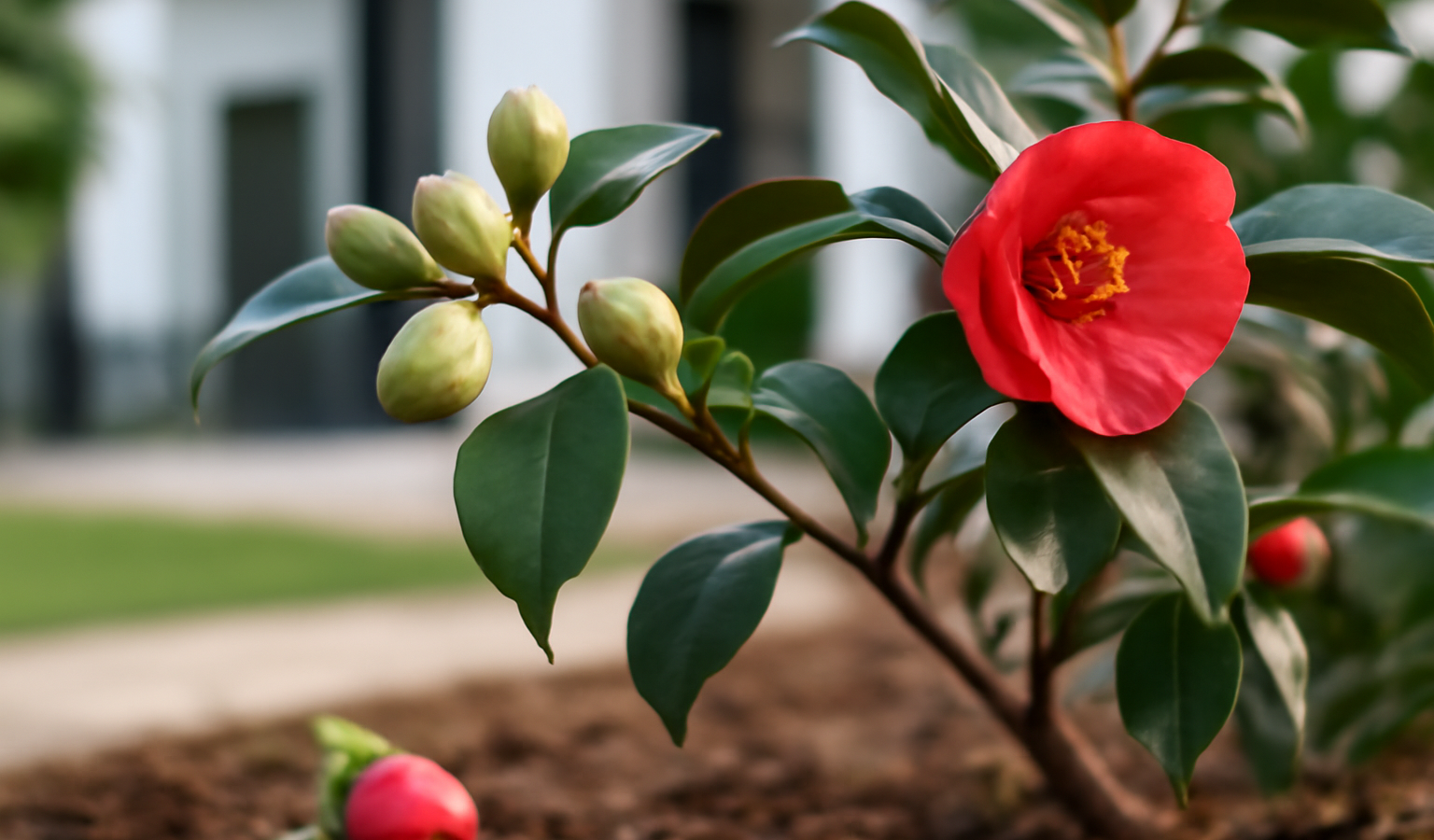
A camellia loaded with plump flower buds in late fall is one of the great promises of the winter garden. So it is genuinely disheartening when those buds yellow, swell oddly, or simply drop to the ground one by one without ever opening. Bud drop is the single most common complaint camellia growers bring to a nursery counter, and the frustrating part is that the plant itself usually looks healthy: glossy green leaves, no obvious pests, plenty of growth. The buds just quit.
The good news is that camellia bud drop is almost always a response to a specific stress, not a disease that kills the shrub. Once you identify which stress is at work, the fix is usually straightforward and the plant will hold and open its buds the following season. This guide walks through the five causes that account for the overwhelming majority of cases, how to tell them apart, and exactly what to do about each one. Camellias set their buds in summer for a bloom that can be six months away, which means a lot can go wrong in the interval, but it also means you have a long window to correct the problem.
Key Takeaways
- Inconsistent soil moisture is the number one cause of camellia bud drop; the shrub aborts buds it cannot support.
- A hard cold snap below roughly 15°F can freeze and brown swelling buds, especially on early varieties.
- Overwatering and poor drainage suffocate roots and trigger the same bud-shedding response as drought.
- Camellia bud mites cause buds to fall before they color up; check for dropped buds that feel dry and small.
- Mulch, steady watering, and a sheltered site fix most cases the season after you correct them.
Cause 1: Inconsistent Watering and Drought Stress
This is the cause to suspect first because it is responsible for more bud drop than every other factor combined. Camellias set far more buds than they can realistically open, and when the plant senses a water shortfall it triggers a protective abscission response, shedding the youngest, most expendable buds to conserve moisture for foliage and survival. The trouble is that the critical dry spell often happens months before the buds were supposed to open, in late summer or early fall, so growers rarely connect the cause to the effect.
How to diagnose it
Dig a trowel into the root zone, four to six inches down, and feel the soil. Camellia roots are shallow and fibrous, sitting in the top foot of soil where they dry out fast. If the soil is dusty or only barely damp, drought stress is your answer. Think back over the previous summer and fall: was there a stretch of three or four weeks with little rain and no supplemental watering? A camellia planted near a house foundation, under a roof overhang, or competing with tree roots is especially prone to going dry without anyone noticing because rainfall never reaches it. Buds dropped from drought are usually small, firm, and brown, and they let go before showing any petal color.
How to fix it
Water deeply and consistently from the time buds form in summer all the way through bloom. Aim for the equivalent of one to one and a half inches of water per week during dry spells, applied slowly so it soaks in rather than running off. A soaker hose looped around the drip line and run for 30 to 45 minutes twice a week is far better than a quick daily sprinkle, which only wets the surface. The goal is soil that stays evenly moist but never waterlogged. If your camellia is under an overhang or eave, assume it gets essentially no rain and water it on a schedule year round. For more on getting irrigation right, our guide to soaker hose vs drip irrigation compares the two approaches for shrub beds.
Cause 2: A Hard Cold Snap or Freeze
Camellias are surprisingly cold tolerant as plants, but their flower buds are far more vulnerable than their wood and leaves. Once buds begin to swell and the bud scales loosen in late winter, a sudden plunge to the mid-teens or lower can freeze the developing flower inside. The bud may hang on for a week or two looking deceptively fine, then turn brown, mushy, or papery and drop. Camellia sasanqua blooms in fall and usually escapes the worst cold, but Camellia japonica, which blooms from midwinter into spring, frequently loses buds to late freezes.
How to diagnose it
Timing is the giveaway. If buds dropped within a few days to two weeks after a notably cold night, freeze damage is the likely culprit. Slice a dropped or browning bud open with a knife: cold-killed tissue is brown and water-soaked throughout the center, often with a darkened, glassy look, rather than the dry brown of a drought-aborted bud. You will also tend to see the damage concentrated on the most exposed side of the shrub, the side facing open sky or the prevailing wind, while buds sheltered against a wall or under the canopy survive.
How to fix it
You cannot un-freeze a damaged bud, so this fix is about prevention going forward. Site cold-sensitive japonicas where they get protection from morning sun and harsh wind; an east or north exposure that warms slowly is actually safer than a south wall that thaws frozen tissue too fast. When a hard freeze is forecast and buds are swelling, drape the shrub with frost cloth or an old bedsheet in the evening, draped to the ground to trap soil heat, and remove it the next morning. A thick mulch layer moderates root-zone temperature too. In borderline climates, choosing later-blooming or more cold-hardy varieties dodges the problem entirely.
Cause 3: Overwatering and Poor Drainage
It feels backward, but too much water produces the same bud drop as too little. Camellias demand sharp drainage; their roots need air as much as moisture. When soil stays saturated, whether from heavy clay, a low spot that collects runoff, or simple overwatering, the roots cannot take up oxygen, begin to suffocate, and stop functioning. A plant with damaged roots cannot move water to its buds, so it sheds them exactly as a drought-stressed plant would. This is why overwatered and underwatered camellias can look identical from above.
How to diagnose it
Check the soil and the site rather than just the buds. If the root zone is soggy or smells sour, if the plant sits in a low spot where puddles linger after rain, or if you are watering daily on heavy clay, drainage is your problem. Yellowing between the leaf veins on older leaves often accompanies root suffocation. A quick percolation test tells the story: dig a hole a foot deep near the plant, fill it with water, and time how long it takes to drain. If water still stands after several hours, drainage is poor.
How to fix it
Stop any reflexive daily watering and let the soil dry to the point where the top inch or two is dry before watering again. For chronically wet sites, the real fix is improving drainage: plant camellias high, with the top of the root ball an inch or two above grade, and amend heavy soil with coarse organic matter and pine bark fines. In the worst cases, relocate the shrub to a raised bed or a better-drained spot. Camellias in containers should always have ample drainage holes and a chunky, acidic mix rather than dense bagged potting soil that stays wet.
Cause 4: Camellia Bud Mites and Other Pests
When watering and weather check out but buds still drop before they color, look to pests, primarily the camellia bud mite. These microscopic mites feed on the developing buds, and the damage causes buds to abort and fall, often while still small and tight. Thrips and, in some regions, certain weevils can also feed on buds and contribute to drop. Because the mites are too small to see without magnification, the symptom pattern is what you diagnose by.
How to diagnose it
The signature of bud mite damage is heavy drop of small, dry buds combined with roughened, bronzed bud scales and sometimes a generally dull, bronzed cast to nearby new foliage. If the shrub is well watered, was not frozen, drains fine, and is still dropping a large number of undersized buds, pests move up the list. Examine fallen buds and the base of remaining ones with a hand lens; you may see fine bronzing or rough scarring where the mites have fed.
How to fix it
Horticultural oil is the standard control. A thorough spray of dormant-rate horticultural oil, covering the undersides of leaves and the buds, smothers mites and their eggs; repeat per the label, typically in late winter and again as new growth appears. Keep the plant vigorous, because a stressed shrub is more susceptible, and rake up and dispose of fallen buds and debris to reduce overwintering populations. Avoid broad-spectrum insecticides that wipe out the predatory mites which otherwise help keep bud mites in check.
Cause 5: Soil Too Dry at the Root Zone From Site Problems
This is a structural cousin of simple drought: the plant is in a spot where the root zone stays chronically too dry no matter the weather, so buds rarely make it to opening. Camellias planted directly under the dense canopy of a large tree, jammed against a hot south-facing foundation, or set in fast-draining sandy soil with no organic matter live in a permanent moisture deficit. They may survive and grow, but they shed buds nearly every year because they simply never have the reserves to finish them.
How to diagnose it
Look at the planting situation as a whole. If the camellia is fighting aggressive tree roots, growing in pure sand, or baking against masonry, and bud drop recurs every single year regardless of rainfall, the site itself is the problem rather than any one season’s care. Bare, hard, root-filled soil under the plant and a thin, neglected mulch layer are tell-tale signs that moisture never lingers long enough.
How to fix it
Build the soil’s water-holding capacity and reduce competition. Spread a two to three inch layer of organic mulch such as pine bark or pine straw over the root zone, keeping it a couple inches off the trunk, to slow evaporation and moderate temperature. Top-dress with compost annually to enrich sandy soils. If tree roots are the issue, you may need to water more heavily and more often to compensate, or move the shrub. Camellias are acid lovers, so an acidic mulch and the occasional acidifying fertilizer keep them thriving; a healthy, well-fed plant holds its buds far more reliably. Our overview of hardwood vs softwood mulch can help you pick the right material.
Preventing Camellia Bud Drop for Good
Prevention comes down to consistency and the right site. Plant camellias in well-drained, acidic, organic-rich soil in a spot sheltered from harsh afternoon sun and drying wind, and away from foundations and aggressive tree roots. Mulch generously every year and keep that mulch topped up. Water deeply and evenly from summer bud set through spring bloom, treating any plant under an eave as if it never rains there. Feed lightly with an acidic, slow-release fertilizer after flowering, and avoid heavy nitrogen late in the season, which pushes tender growth at the expense of bud quality. For more on feeding the right way, see our comparison of slow-release vs quick-release fertilizer.
Finally, accept that a camellia will always shed a few buds; it sets more than it can open, and some thinning is normal and even healthy, producing larger remaining flowers. The problem to address is wholesale drop, where most or all buds fall before opening. Work through the five causes above in order, watering and weather first, then drainage and pests, and in most gardens you will have a shrub covered in winter flowers the very next season.
Frequently Asked Questions
Is it normal for a camellia to drop some buds?
Yes. Camellias set far more buds than they can open and naturally thin some, which actually produces larger flowers on the buds that remain. Worry only when most or all of the buds drop before they show color, which signals a stress like drought, freeze, poor drainage, or bud mites.
Why do my camellia buds turn brown and fall without opening?
Brown, dry buds usually mean drought or chronic root-zone dryness, while brown, mushy, water-soaked buds after a cold night point to freeze damage. Slice a bud open: dry brown throughout suggests water stress, while glassy water-soaked tissue suggests cold injury.
Can overwatering cause camellia bud drop?
Absolutely. Saturated soil suffocates the roots so they can no longer move water to the buds, and the plant sheds them just as it would in a drought. Camellias need sharp drainage; plant them high and avoid daily watering on heavy or poorly draining soil.
What are camellia bud mites and how do I treat them?
Bud mites are microscopic pests that feed on developing buds, causing them to abort and drop while still small, often with roughened, bronzed bud scales. Control them with thorough applications of horticultural oil in late winter and again as new growth appears, and clean up fallen buds.
Should I fertilize a camellia that is dropping buds?
Feed lightly with an acidic, slow-release fertilizer after bloom, but do not push heavy nitrogen in late summer or fall, which forces tender growth at the expense of buds. Fix the underlying water or drainage issue first; fertilizer will not stop bud drop caused by stress.