

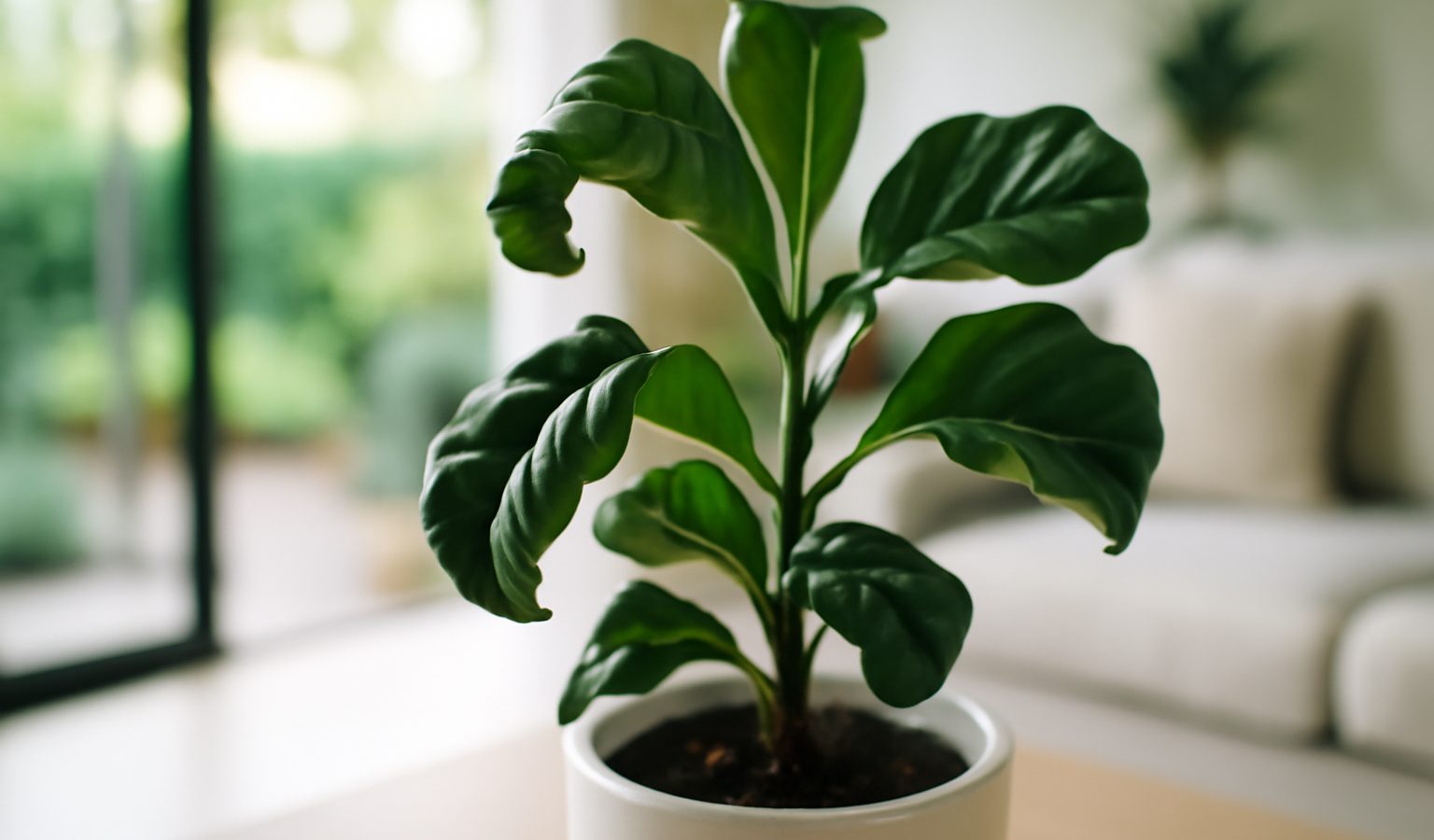
Curling leaves are a houseplant’s way of saying it is under stress and trying to protect itself. A leaf that curls inward, cups upward, crisps at the edges, or rolls under is usually conserving moisture or shielding itself from something in its environment, and the curl is a clue you can read. The most common causes are a water deficit, whether from underwatering, dry air, or excess heat, but pests and root problems also force leaves to distort. Because curling looks similar across these causes, the trick is to notice the accompanying signs: is the soil dry or wet, the air parched, the plant near a heat source, the undersides crawling with pests, or the roots in trouble? This guide breaks down each cause with its distinguishing symptoms and the right fix, so you can uncurl your plant by treating what is actually wrong rather than guessing.
Key Takeaways
- Leaf curling is usually a moisture-conservation response; the plant curls to reduce surface area and water loss when it is stressed.
- Underwatering is the most common cause: leaves curl and crisp while the soil is bone-dry, and a deep soak usually reverses it.
- Low humidity makes leaves curl and brown at the edges, especially on tropical plants and in dry winter rooms with the heat on.
- Excess heat and direct sun, or a spot near a radiator or vent, cause curling as the plant loses water faster than its roots replace it.
- Pests like spider mites and aphids, and root problems from overwatering or being pot-bound, also curl leaves; check undersides and roots.
Read the Curl and the Conditions
Start by gathering clues rather than reacting. Look at how the leaves curl and what else is happening. Leaves curling or cupping with dry, crispy edges and bone-dry soil point to underwatering or dry air. Curling with brown, crispy edges in a heated or air-conditioned room suggests low humidity. Curling on a plant in hot direct sun or beside a radiator or vent points to heat stress. Curling or distorted new growth with stippling, webbing, sticky residue, or visible bugs means pests. And curling with yellowing, wilting, and soggy soil, or a plant that has clearly outgrown its pot, points to root problems.
So before doing anything, feel the soil a couple of inches down, check the humidity and temperature around the plant, note whether it sits near a heat or AC source or in harsh sun, and inspect the undersides of the leaves for pests. These quick checks usually point straight to one of the causes below. Curling that comes with bone-dry soil is a very different problem from curling that comes with soggy soil, even though the leaves can look similar, so let the conditions tell you which fix to apply.
Cause 1: Underwatering and Thirst
Diagnose: This is the leading cause of curling leaves. When a plant is short of water, it curls its leaves inward or cups them to reduce the exposed surface area and slow water loss, a direct survival response to drought. The signature signs are leaves that curl and may crisp or brown at the edges, accompanied by soil that is dry well down into the pot, often pulling away from the sides, and sometimes general wilting or drooping. The plant may feel light when you lift the pot. Underwatering frequently develops when you wait too long between waterings, when the potting mix has become hydrophobic and water runs off instead of soaking in, or when a thirsty, fast-growing plant in a sunny spot is not getting enough to keep up.
Fix: Water it thoroughly. Give a deep soak until water runs from the drainage holes, and if the soil has gone water-repellent, bottom-water by setting the pot in a tray or basin for fifteen to thirty minutes so the root ball rehydrates fully from below, then let it drain. A simply thirsty plant often uncurls within a day or two of a proper drink. Going forward, water by checking the soil rather than the calendar: for most houseplants, water deeply when the top inch or two has dried, and do not let the pot go bone-dry to the bottom between waterings. Consistent, thorough watering keeps the leaves flat and turgid and prevents the repeated drought stress that causes chronic curling.
Cause 2: Low Humidity
Diagnose: Many popular houseplants are tropical species adapted to humid air, and indoor environments, especially in winter with the heating running, are often far drier than they like. When humidity is too low, leaves lose moisture to the air faster than the roots can resupply, and they respond by curling, cupping, and browning or crisping along the edges and tips. The clue that humidity is the issue rather than the soil is that the curling and edge-browning appear even though you are watering adequately and the soil is moist, and they worsen in dry rooms, in winter, or near heating that parches the air. Thin-leaved tropicals like calatheas, marantas, ferns, and many aroids are especially prone to humidity-driven curling.
Fix: Raise the humidity around the plant. Group plants together so they share the moisture they transpire, set them on a tray of pebbles with water kept just below the pot base, or run a small humidifier nearby, which is the most reliable method for humidity-loving plants. Keep these plants out of the path of dry, moving air from heating vents and radiators. Misting gives only brief, minor relief and is no substitute for genuinely higher ambient humidity. Moving humidity-sensitive plants to naturally damper rooms such as a bright bathroom or kitchen also helps. Once the air around them is moister, new growth comes in flat and the curling and edge-crisping ease.
Cause 3: Excess Heat and Direct Sun
Diagnose: Too much heat or harsh direct light pushes a plant to lose water faster than its roots can replace it, and the leaves curl to protect themselves. Suspect heat stress when the curling appears on a plant sitting in intense, unfiltered sun, pressed against a hot summer window, or placed close to a radiator, heating vent, or other heat source. Heat-stressed leaves often curl or cup, and may also show scorched, faded, or brown patches on the side facing the sun or the heat. The pattern tends to be worst during heat waves, in summer sun, or in winter right beside an active heater, and the plant may wilt during the hottest part of the day even when the soil is not especially dry.
Fix: Relieve the heat and harsh light. Move the plant out of scorching direct sun into bright indirect light, or diffuse the fierce afternoon rays with a sheer curtain, acclimating it gradually so it does not suffer further shock. Keep plants away from radiators, heating vents, and hot appliances, and give them a few feet of distance from any heat source. During heat waves, make sure thirsty plants are not also running dry, since heat plus drought compounds the curling. Most plants want bright light but not blistering direct sun or radiator heat against the foliage. Once the temperature around the leaves moderates, the curling relaxes and new growth comes in normally. For a closely related issue on a specific plant, see our guide to why monstera leaves curl.
Cause 4: Pests and Root Problems
Diagnose: Two internal causes round out the picture. Sap-sucking pests, spider mites, aphids, thrips, and whiteflies, feed on the plant’s juices and especially attack soft new growth, causing leaves to curl, distort, pucker, and stipple. Look for fine webbing (spider mites), clusters of small insects on stems and new leaves (aphids), silvery scarring (thrips), or tiny white flies that scatter when disturbed (whiteflies), and check the leaf undersides where they congregate. Root problems are the other internal cause. Overwatering rots the roots so they can no longer deliver water, paradoxically causing the leaves to curl and wilt as if thirsty even though the soil is wet, and a plant that has become pot-bound, with roots circling and filling the container, cannot take up enough water and nutrients, so its leaves curl and the soil dries out very fast after watering.
Fix: For pests, isolate the plant so they do not spread, rinse off what you can, and treat thoroughly with insecticidal soap or horticultural oil, repeating per the label every several days until the infestation clears, paying special attention to the undersides and new growth. For overwatering and root rot, stop watering, let the soil dry, check for drainage, and if roots are brown and mushy, unpot, trim the rot, and repot into fresh, well-draining mix. For a pot-bound plant, repot into a container an inch or two larger with fresh mix to give the roots room to function again. Healthy roots and a pest-free plant supply the leaves properly, and the curling resolves. Browse more troubleshooting in the Plants & Flowers hub.
Putting the Diagnosis Together
The reason curling leaves confuse so many plant owners is that the same protective curl shows up across very different problems, and the wrong fix can deepen the stress. The way through is always the same: read the conditions before you act. Curling with bone-dry soil means the plant is thirsty, so soak it. Curling with crispy edges in dry, heated air means low humidity, so raise the moisture around it. Curling on a plant in harsh sun or beside a heat source means heat stress, so move it to gentler conditions. Distorted, puckered new growth with bugs on the undersides means pests, so isolate and treat. And curling with soggy soil or a root-packed pot means a root problem, so address the watering or repot. The soil moisture is often the single most telling clue, because thirst and root rot can look alike on the leaves but are opposites at the roots.
Prevent curling in the first place by giving plants steady, suitable care. Water consistently by checking the soil, keep humidity-loving tropicals in moister air away from drying vents, site plants in bright light without scorching sun or radiator heat, inspect regularly for pests, and repot before a plant becomes badly pot-bound. A plant whose water, humidity, light, and roots are all in good order keeps its leaves flat, firm, and fully expanded. When a curl does appear, treat it as information: identify which condition is off, correct that one thing, and the leaves will relax and your plant will return to healthy, normal growth.
Frequently Asked Questions
Why are my houseplant leaves curling inward?
Curling inward is usually a moisture-conservation response. The plant reduces its exposed leaf surface to slow water loss when it is short of water, whether from underwatering, dry air, or heat stress. Check the soil and the environment to pin down which, then correct that cause.
Will curled leaves uncurl after I fix the problem?
Often, yes, if you act soon. Leaves curled from simple thirst typically flatten within a day or two of a good soak. Leaves badly crisped, scorched, or pest-damaged may not fully recover, but once you fix the cause the new growth comes in flat and healthy.
Does low humidity cause leaves to curl?
Yes, especially on tropical plants. When the air is too dry, leaves lose moisture faster than the roots replace it and curl with browning, crispy edges, even though the soil is moist. Raise humidity with a pebble tray, a humidifier, or by grouping plants, and keep them away from drying vents.
Can overwatering make leaves curl?
Yes. Overwatering rots the roots so they can no longer supply water to the leaves, which then curl and wilt as if thirsty even though the soil is wet. Check the soil: curling with soggy soil means a root problem, so stop watering, improve drainage, and trim any rotted roots.
How do I know if pests are curling my leaves?
Look closely at the undersides and new growth. Spider mites leave fine webbing and stippling, aphids cluster on soft new shoots and distort them, and thrips cause silvery scarring with curled, puckered growth. If you see bugs, webbing, or sticky residue, isolate the plant and treat with insecticidal soap or horticultural oil.