

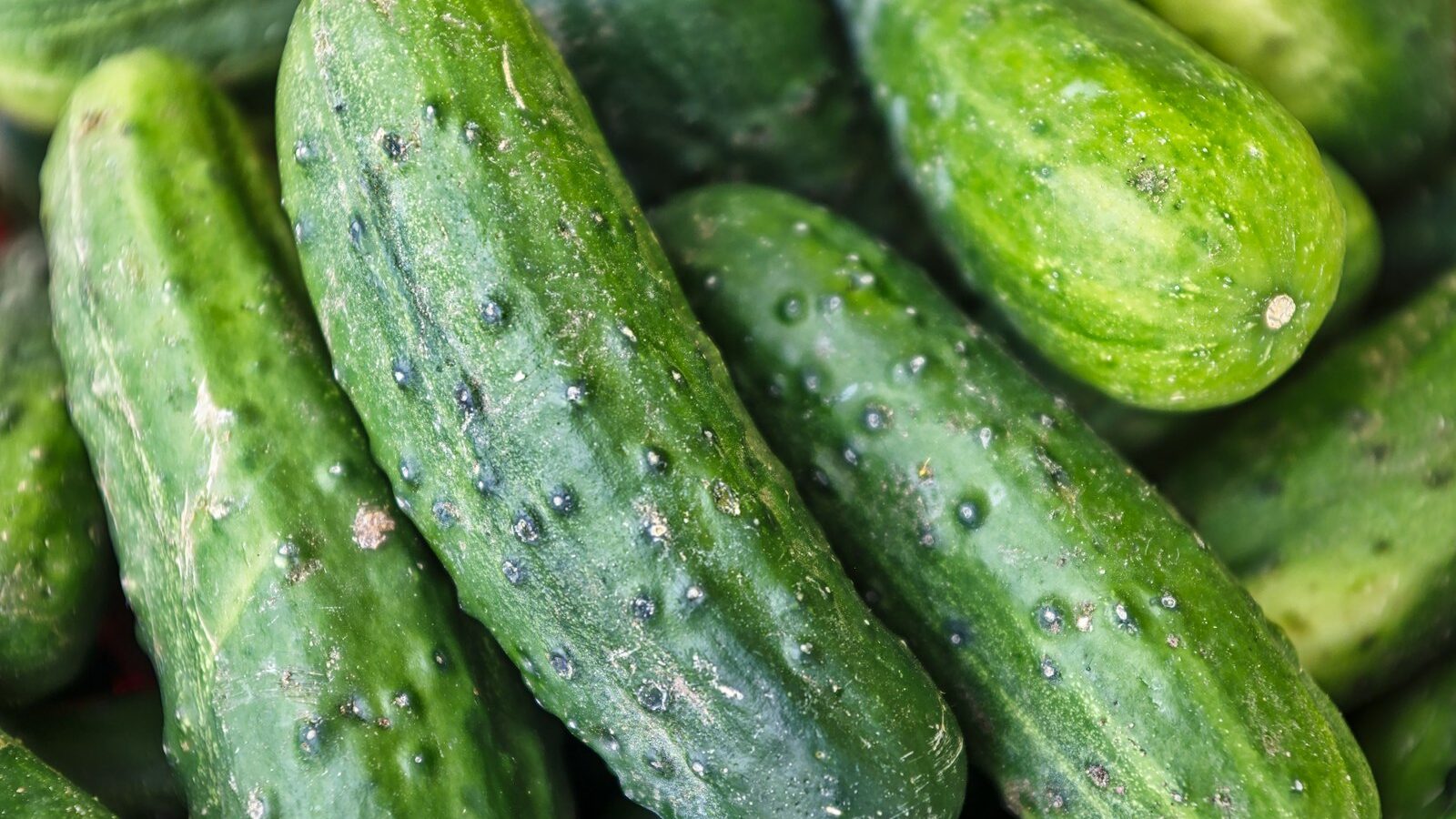
You walk out to the cucumber patch expecting straight, supermarket-perfect fruit, and instead you find cucumbers bent into hooks, pinched in the middle, or curled into tight C-shapes like green commas. It is one of the most common questions home gardeners ask, and the short answer is reassuring: a curled cucumber is almost always a growing-condition problem, not a disease, and the fruit is still perfectly edible. The bend is a record of what the plant experienced while that cucumber was sizing up. The most frequent cause by far is incomplete pollination, but uneven water, heat stress, pests, and nutrient or physical problems can all twist a fruit out of shape. This guide walks through every likely cause, shows you how to tell them apart, and gives you concrete fixes so next week’s harvest comes off the vine straight.
Key Takeaways
- Poor pollination is the No. 1 cause. A cucumber needs many pollen grains spread evenly across the flower’s stigma. When only part of it gets fertilized, that side stops growing and the fruit curls toward the under-pollinated end.
- Uneven water makes fruit crook and pinch. Dry spells followed by a heavy soak during sizing produce misshapen cucumbers. Aim for 1–2 inches of water a week, applied deeply and consistently.
- Heat above ~90°F damages pollen. Sustained heat waves leave flowers partly fertilized and stress the whole plant, so curling spikes in midsummer.
- Pests and viruses distort growth. Aphids, cucumber beetles, spider mites, and cucumber mosaic virus all warp fruit. Check leaf undersides and look for mottling.
- Curled cucumbers are safe to eat. Shape does not affect flavor or safety. Fix the cause for prettier fruit, but slice and enjoy the crooked ones.
Cause 1: Incomplete Pollination (the Usual Culprit)
This is the single most common reason cucumbers curl, and once you understand the mechanics it makes perfect sense. A cucumber fruit is essentially a swollen seed cavity, and each developing seed releases growth hormones that tell the flesh around it to expand. For a straight cucumber, the flower’s stigma needs to receive hundreds of pollen grains spread evenly across its surface, which means a bee has to visit the female flower several times. If only one side of the flower gets pollinated, only the seeds on that side develop. The fertilized side keeps growing while the under-pollinated side stalls, and the fruit bends toward the side with fewer seeds. The result is a hook, a C-shape, or a cucumber that is fat at one end and thin and tapered at the other.
How to diagnose it
Pollination problems show a clear pattern. Curling tends to be worst early in the season before bee populations build up, and again late in the season as activity tapers off, and it spikes during cool, wet, or windy stretches when bees stay home. Slice a curled fruit lengthwise and look at the seeds: a poorly pollinated cucumber has plump seeds clustered on the outer, fatter side of the curve and few or undeveloped seeds on the thin, inner side. That lopsided seed set is the fingerprint of partial pollination. Take a walk through the patch mid-morning on a warm day and count the bees you see. If the flowers are open and healthy but no pollinators are working them, you have found your problem. Heavy rain during bloom washes pollen off the flowers and grounds bees, which is why a stretch of wet weather is often followed by a crop of crooked cucumbers a week later.
How to fix it
Get more pollinators into the garden and help them do their job. Plant a band of nectar-rich flowers such as zinnias, borage, cosmos, sunflowers, or sweet alyssum near the cucumber bed to draw and keep bees around. Critically, stop spraying any insecticide during bloom, even organic ones like pyrethrin or insecticidal soap, and never spray in the morning when bees are foraging; if you must treat a pest, do it at dusk. If bees are simply scarce, hand-pollinate. Early in the morning when flowers first open, pick a male flower (it grows on a thin stalk with no tiny fruit behind it), peel back the petals, and dab its pollen-laden anther across the stigma of several female flowers (each has a miniature cucumber behind the bloom). A small soft artist’s brush works just as well, moving pollen flower to flower. One quick pass each morning during peak bloom dramatically improves fruit shape. Finally, know your variety: parthenocarpic cucumbers, the seedless and many greenhouse or “burpless” types, set fruit without any pollination at all, and they reliably produce straight, uniform cucumbers. If pollination is a chronic battle in your garden, switching to a parthenocarpic variety solves it outright. For help choosing, our guide comparing English vs. pickling cucumbers covers which types fruit without bees and which are worth growing for your kitchen.
Cause 2: Inconsistent or Insufficient Water
Cucumbers are roughly 95 percent water and they size up fast, sometimes adding noticeable length in a single day during peak season. That breakneck growth makes them exquisitely sensitive to water supply. When the soil swings from bone-dry to soaked and back, the fruit grows in fits and starts: it pauses during drought, then surges when water returns, and the uneven expansion shows up as pinched, crooked, or constricted cucumbers. A fruit that took a hard check while half-grown often ends up with a narrow waist or a sharp bend at the point where growth stalled.
How to diagnose it
Think back over the past two weeks of weather and watering. If you had a dry spell, missed a few waterings, or watered shallowly and often rather than deeply, water stress is a strong suspect. Plants growing in containers or hanging baskets are especially prone because their limited soil volume dries out fast in summer heat. Watch the leaves in the afternoon: cucumbers that wilt in midday heat and recover by evening are flagging mild stress, but plants that stay wilted into the cool of the morning are genuinely short on water. Curling from water trouble usually comes with other clues, such as slightly bitter fruit or leaves that look dull and tired rather than perky.
How to fix it
Aim for steady, deep moisture: about 1 to 2 inches of water per week, more in heat, delivered in a way that keeps the root zone evenly damp rather than swinging wet to dry. The best tools are a drip line or soaker hose on a timer, which deliver water slowly to the soil and keep foliage dry, cutting disease risk at the same time. Water deeply two or three times a week instead of a light daily sprinkle so moisture reaches down where the roots are. Then mulch: a 2- to 3-inch layer of straw, shredded leaves, or grass clippings over the root zone is the single most effective fix, slowing evaporation and buffering the soil against the wet-dry cycle. The soil itself matters too; beds that drain too fast or hold too little water make even watering harder. If your ground dries out within a day of a soaking, our breakdown of clay vs. sandy vs. loam soil explains how to amend it to hold moisture longer.
Cause 3: Heat and Temperature Stress
Cucumbers love warmth, but they have limits, and a heat wave is a classic trigger for a sudden batch of curled fruit. Once daytime temperatures push past about 90°F and stay there, cucumber pollen loses viability, so even with plenty of bees working the flowers, fertilization is patchy, which loops you right back to the under-pollination problem from Cause 1. Sustained heat also stresses the whole plant: it closes its leaf pores to conserve water, slows photosynthesis, and may drop or abort flowers entirely. The combination of poor pollen and a stressed plant produces misshapen, hooked, and undersized fruit.
How to diagnose it
The tell here is timing. If your cucumbers were coming off the vine straight and then started curling right after a run of 90°F-plus days, heat is almost certainly the driver. The effect is delayed: the flowers that were stressed by the heat become the misshapen fruit you harvest a week or so later, so look back at the weather, not just at today. Heat-stressed plants often also show some flower drop and a temporary pause in fruit set during the hottest stretch, with production rebounding once temperatures ease. If curling consistently peaks in your hottest weeks and improves when it cools, you have your answer.
How to fix it
You cannot change the weather, but you can soften its impact. Drape 30 to 40 percent shade cloth over the plants during the worst of a heat wave, especially shielding them from harsh afternoon sun; even an old bedsheet on a hoop frame for a few brutal days helps. Keep water steady, because well-hydrated plants tolerate heat far better than thirsty ones, and lean on that mulch layer to keep the root zone cooler. Over the longer term, time your plantings so the peak fruiting window dodges your region’s hottest stretch; in hot climates, a second sowing in midsummer for a fall crop often produces far straighter cucumbers than the midsummer harvest. The plants will usually recover and resume setting good fruit on their own once the heat breaks, so a few crooked cucumbers during a heat wave is rarely cause for alarm.
Cause 4: Pests and Virus Damage
Insect feeding and disease can both distort cucumber fruit, sometimes dramatically. Aphids cluster on tender growth and flowers, and their feeding warps developing tissue. Cucumber beetles, the striped and spotted ones, chew on flowers and foliage and, worse, transmit bacterial wilt and viruses as they go. Spider mites stipple and stress the leaves, sapping the plant’s ability to feed its fruit. The most insidious culprit is cucumber mosaic virus, which produces mottled, light-and-dark-green fruit that is warty, bumpy, curled, and stunted. Once a plant has the virus there is no cure, so identifying it early matters.
How to diagnose it
Get up close and turn the leaves over. Aphids show as tiny green, black, or gray specks crowded on the undersides and growing tips, often with sticky honeydew and ants in attendance. Spider mites leave fine yellow stippling on the leaf surface and faint webbing underneath; a sharp tap of the leaf over white paper reveals moving dots. Cucumber beetles are easy to spot, about a quarter inch, yellow with black stripes or spots, often right in the flowers. Virus is different: look for a marbled, mosaic pattern of light and dark green on both leaves and fruit, with distorted, lumpy cucumbers and crinkled or downward-cupped foliage. If your curled fruit is also mottled and warty rather than smooth, suspect virus rather than simple pollination failure.
How to fix it
For aphids and mites, start with the cheapest tool: a strong jet of water to the leaf undersides every couple of days knocks down most of the population. Follow up with insecticidal soap or neem oil if they persist, spraying at dusk to protect bees and coating the undersides thoroughly. For cucumber beetles, hand-pick them in the cool morning when they are sluggish, use yellow sticky traps, and protect young plants with floating row covers; just remember to remove the covers once flowering starts so pollinators can reach the blooms. There is no treatment for cucumber mosaic virus, so the only response is to pull and dispose of infected plants promptly (in the trash, not the compost) to stop it spreading, and to control the aphids that carry it. Going forward, choose virus-resistant varieties, keep weeds down since they harbor both aphids and the virus, and rotate where you plant cucurbits each year.
Cause 5: Nutrient Imbalance or Physical Obstruction
Two less common but very fixable causes round out the list. The first is nutrition, specifically potassium. Potassium drives fruit development, and a deficiency leaves cucumbers tapered, narrow at the stem end, and sometimes club-shaped or curled, often alongside yellowing leaf margins on the older leaves. The second is purely mechanical: a cucumber that grows up against a leaf, a stem, a trellis wire, the ground, or a neighboring fruit simply bends around the obstacle as it lengthens, the same way a tree root deforms around a rock. This is the easiest cause of all to confirm because you can usually see the offending object pressed into the curve.
How to diagnose it
For physical obstruction, just look at where the fruit is growing. A cucumber curled neatly around a trellis wire, hooked over a stem, or pressed flat against the soil on its low side has been bent by the object, not by anything happening inside the plant. These curls are usually clean, single bends rather than the lopsided taper of poor pollination. For potassium, look at the whole plant: deficiency shows as scorched, yellowing, or browning edges on the older, lower leaves first, weak overall vigor, and fruit that is consistently narrow and pointed at the stem end across the whole crop rather than randomly hooked. Sandy soils and beds that have been heavily harvested without feeding are the most likely to run short on potassium.
How to fix it
The mechanical fix is the simplest in gardening: grow your cucumbers up a trellis or net so the fruit hangs straight down, free of leaves, wires, and soil. Vertical growing not only produces straighter cucumbers but also improves airflow, cuts disease, and makes harvesting far easier. Give each plant room, space them 12 to 18 inches apart, and gently reposition any fruit you find wedged against an obstruction. For nutrition, feed with a balanced fertilizer once flowering begins and make sure it supplies adequate potassium, the third number in the N-P-K ratio; a tomato-and-vegetable feed or one rated something like 5-10-10 works well. Avoid overdoing nitrogen, the first number, since excess nitrogen pushes leafy growth at the expense of good fruit. A mulch of compost and a midseason dose of a potassium source such as kelp meal or wood ash (used sparingly) keeps cucumbers fed through a long harvest.
Preventing Curled Cucumbers Next Season
Prevention pulls all five causes together into a handful of good habits. Plant pollinator-friendly flowers near the patch and never spray insecticides during bloom, so bees can fully fertilize every flower; if pollination is a recurring struggle, grow a parthenocarpic variety that does not need them. Water deeply and consistently, 1 to 2 inches a week through drip or soaker lines, and mulch heavily to hold that moisture steady and keep roots cool through heat waves. Trellis your plants so fruit hangs free, give them 12 to 18 inches of space and good airflow, and scout the leaf undersides weekly for aphids, mites, and beetles so you catch trouble before it distorts the crop. Feed with a balanced, potassium-adequate fertilizer once fruiting starts, and rotate your cucurbits to a fresh bed each year to dodge soilborne disease and virus-carrying pests. Picking cucumbers young and often, every day or two at peak, also helps, since fruit left too long on the vine is more likely to deform and signals the plant to slow new production. The same fruit-set logic applies across the squash family, and if you also grow summer squash, our guide on why squash is not fruiting covers the closely related pollination issues. For more vegetable troubleshooting and growing guides, browse the Plants & Flowers hub.
Above all, do not toss those crooked cucumbers. A curled, hooked, or C-shaped fruit is just as crisp, sweet, and nutritious as a straight one; the bend tells you about its growing conditions, not its quality. Slice them for salads, pack the hooked ones into pickle jars where shape never matters, and use the curls as your cue to adjust water, shade, or pollination for the next flush. Fix the cause and you will be harvesting handsome, straight cucumbers within a couple of weeks, but in the meantime, the crooked ones eat exactly the same.
Frequently Asked Questions
Are curled cucumbers safe to eat?
Yes, completely. A curled, hooked, or C-shaped cucumber is just as safe, crisp, and flavorful as a straight one. The shape comes from growing conditions like uneven pollination or water, not from any disease or toxin. Slice them up or use the bent ones for pickles where shape does not matter.
What is the most common reason cucumbers curl?
Incomplete pollination is by far the most common cause. A cucumber flower needs many pollen grains spread evenly across its stigma, which takes several bee visits. When only part of the flower is pollinated, that side stops developing seeds and the fruit curls toward the under-pollinated end.
How do I hand-pollinate cucumbers to prevent curling?
Early in the morning when flowers open, pick a male flower (thin stalk, no tiny fruit behind it), peel back the petals, and dab its pollen onto the stigma of several female flowers, each of which has a miniature cucumber behind the bloom. A small soft brush moving pollen flower to flower works just as well.
Does watering affect cucumber shape?
Yes. Cucumbers grow fast and are about 95 percent water, so swings from dry to soaked make them grow in fits and starts, producing pinched or crooked fruit. Provide 1 to 2 inches of water per week deeply and evenly through drip or soaker lines, and mulch to keep soil moisture steady.
Will growing cucumbers on a trellis stop them from curling?
It helps a lot. Vertical growing lets the fruit hang straight down, free of leaves, wires, and the ground, so it cannot bend around obstacles. Trellising also improves airflow and pollinator access. It will not fix curling caused by poor pollination, heat, or water, but it eliminates the mechanical kind entirely.