

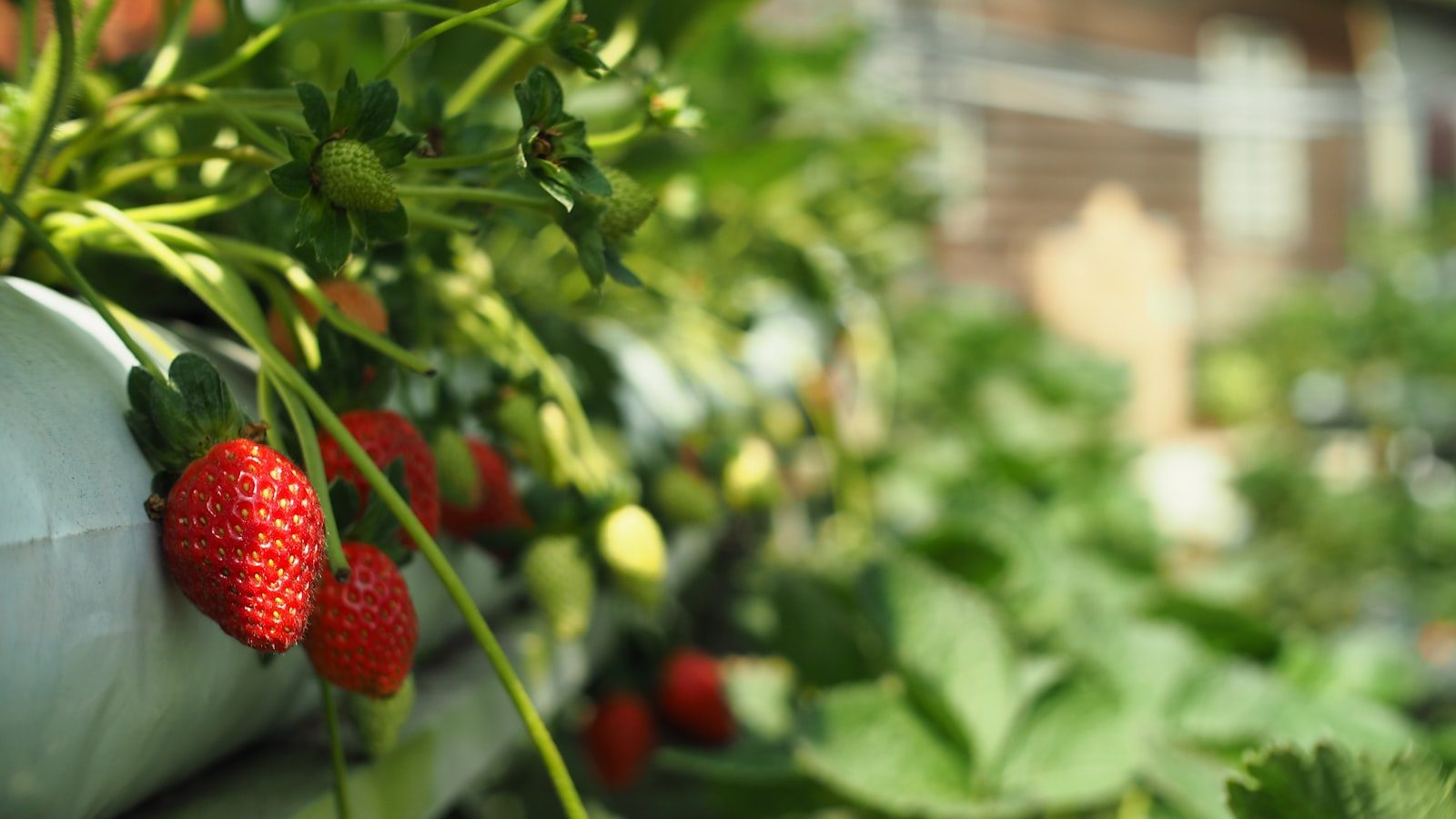
Strawberries are the perfect crop for going vertical. They have shallow roots, stay compact, and naturally cascade — so stacking them up a tower or pocket planter turns a few square feet of patio or balcony into a productive berry patch. A vertical strawberry planter also solves the two biggest headaches of growing berries in the ground: it lifts the fruit off wet soil so it doesn’t rot, and it makes the plants far harder for slugs and pillbugs to reach. This guide covers three proven builds you can finish in an afternoon — a drilled-bucket tower, a stacked-pot tower, and a rain-gutter wall planter — plus the soil mix, spacing, watering, and varieties that keep a tower cropping all season.
Key Takeaways
- A vertical tower fits 12–20 strawberry plants in roughly one square foot of floor space and keeps fruit clean and off the ground.
- The easiest DIY build is a stacked food-grade bucket or pot tower with a central watering pipe so moisture reaches every level evenly.
- Use a light, fast-draining mix — quality potting soil cut with compost and perlite — never heavy garden soil, which compacts and waterlogs in containers.
- Plant day-neutral or everbearing varieties (Albion, Seascape, Tristar) for a long, steady harvest from a small footprint rather than one June flush.
- Vertical containers dry out fast in sun and wind — expect to water daily in summer, and feed lightly every 2–3 weeks because frequent watering flushes nutrients out.
Why grow strawberries vertically
Strawberry plants only root a few inches deep and spread less than a foot wide, which makes them ideal candidates for stacking. Growing them up rather than out delivers several practical wins. You get far more plants per square foot — a tower can hold a dozen or more where a single ground plant would sit. The fruit hangs in the air instead of resting on damp soil, so it stays clean and rots far less. Pests that crawl, like slugs and pillbugs, struggle to reach elevated berries. And the whole patch is at a comfortable height, so picking and tending happen without bending over a low bed. On a balcony or small patio, a vertical planter may be the only way to grow a worthwhile crop at all.
Choosing the right strawberry variety
The variety you plant determines how a tower performs. There are three types:
- June-bearing — one big crop in late spring/early summer. Heavy yield but a short window, and they send out lots of runners that clutter a tower.
- Everbearing — two or three flushes across the season (early summer and fall).
- Day-neutral — fruit steadily from late spring until frost regardless of day length, and produce few runners.
For a vertical planter, day-neutral and everbearing types are the clear choice. A steady trickle of berries from a compact plant suits a small tower far better than one explosive June harvest, and the lack of runners keeps the planter tidy. Reliable day-neutral varieties include Albion, Seascape, San Andreas, and Tristar; Quinault is a good everbearer. Start from bare-root crowns in early spring or from plug plants any time the weather is mild.
Build option 1: The stacked bucket tower
This is the most reliable DIY tower because a central watering pipe carries moisture to every layer — the usual failure point of vertical planters.
Materials
- One or two food-grade 5-gallon buckets (or a tall planter pot).
- A length of 1.5–2 inch PVC pipe, cut a few inches taller than the bucket.
- A drill with a 2-inch hole saw and a small bit.
- Potting mix, compost, and perlite.
Steps
- Drill four to six 2-inch planting holes around the side of the bucket, staggered in two rows, plus several drainage holes in the base.
- Drill a grid of small holes along the length of the PVC pipe so water can seep out at every level, and cap or plug the bottom.
- Stand the pipe upright in the center of the bucket. Wrap the pipe’s lower section with landscape fabric to stop soil clogging the holes.
- Fill around the pipe with your mix, firming gently. As you reach each planting hole, tuck a strawberry plug through it so the crown sits at the surface and roots point inward.
- Plant the top of the bucket with two or three more crowns. Water by pouring into the central pipe — moisture spreads outward to every level.
Build option 2: The stacked-pot tower
If drilling buckets isn’t your style, stack graduated terracotta or plastic pots. Set a large pot at the base, fill it with mix, and center a smaller pot on top of the soil; repeat with progressively smaller pots to form a tiered pyramid. Plant strawberries around the exposed rim of soil at each tier. Thread a watering pipe up the center as in option one, or simply water each tier from the top and let it cascade. This build is attractive and needs no power tools, but watering is a bit less even, so check lower tiers for dryness. Strawberry “stacker” planters sold commercially work on exactly this principle if you’d rather buy the stack.
Build option 3: The rain-gutter wall planter
For a sunny fence or wall, mount lengths of vinyl rain gutter horizontally in a stacked row. Cap the ends, drill drainage holes along the bottom every foot, and fix the gutters to the wall on brackets, leaving room between rows for the plants to cascade. Fill with mix and space plants about 8 inches apart along each channel. This design maximizes wall area, keeps every plant at eye level, and drains freely — just remember that shallow gutters hold little soil and dry out quickly, so they need diligent watering and more frequent feeding.
Soil, spacing, and planting
Containers live and die by their soil. Never use garden soil or topsoil — it compacts into a dense, airless block in a pot. Mix roughly two parts quality potting soil, one part compost, and a generous handful of perlite per gallon for drainage. Strawberries like slightly acidic soil (pH 5.5–6.5) and steady moisture without waterlogging.
Space plants about 8 inches apart in the planting holes, and set each crown so the top of the crown — where leaves emerge — sits right at the soil surface. Planting too deep buries the crown and rots it; too shallow exposes roots and dries them out. Pinch off any flowers for the first few weeks after planting so the plant invests in roots first; you’ll be rewarded with stronger plants and heavier later yields.
Watering, feeding, and light
Vertical planters have a lot of surface area exposed to sun and wind, so they dry out fast. In summer heat expect to water daily, and twice on the hottest days for shallow gutter builds; the central-pipe bucket design makes this quick and even. Check the lower levels of any tower, as the top often dries first while the base stays wet — or vice versa in a stacker. Water until it runs from the drainage holes.
Because frequent watering flushes nutrients out of the limited soil, feed every two to three weeks with a balanced or slightly potassium-rich liquid fertilizer (the kind sold for tomatoes works well for fruiting). Give strawberries at least 6–8 hours of direct sun a day for sweet, abundant fruit; rotate a freestanding tower occasionally so all sides ripen evenly.
Season-long care and overwintering
Snip off runners as they appear to keep plants focused on fruit rather than spreading — unless you want a few to root new plants. Pick berries as soon as they’re fully red; frequent picking encourages more flowers. Remove any moldy or damaged fruit promptly to stop rot spreading. Strawberry plants are productive for about three years, so plan to refresh a third of your crowns each year.
In cold climates, the exposed soil in a vertical planter freezes harder than ground beds, which can kill crowns. Before hard frost, move the planter to an unheated garage or shed, or wrap it in burlap and mulch heavily, then return it to the light as growth resumes in spring. For more compact-space growing ideas, see our guides to building a raised planter box and the herb spiral, or explore the full urban gardening guides.
Frequently Asked Questions
How many strawberry plants fit in a vertical tower?
A typical 5-gallon bucket tower holds 12–16 plants across its side holes and top, and taller stacked builds can reach 20 or more — all in about one square foot of floor space. Space the plants roughly 8 inches apart so each has room for foliage and airflow.
What soil should I use in a strawberry planter?
Use a light, fast-draining container mix: about two parts quality potting soil, one part compost, and a handful of perlite per gallon. Avoid garden soil or topsoil, which compacts and waterlogs in pots. Strawberries prefer slightly acidic soil around pH 5.5–6.5.
How often do I water a vertical strawberry planter?
Vertical planters dry out quickly, so water daily in summer and twice a day in extreme heat for shallow builds. A central watering pipe in a bucket tower distributes moisture evenly to every level. Always water until it drains from the bottom, and check the layer that tends to dry first.
Which strawberry varieties are best for towers?
Day-neutral and everbearing varieties suit towers best because they fruit steadily over a long season and send out few messy runners. Reliable choices include Albion, Seascape, San Andreas and Tristar (day-neutral) and Quinault (everbearing). Skip heavy June-bearers, which give one short flush and lots of runners.
Will my strawberry tower survive winter outdoors?
In mild climates, yes, but in cold regions the exposed soil freezes hard enough to kill crowns. Before a hard freeze, move the planter into an unheated garage or shed, or wrap it in burlap and mulch heavily. Return it to a sunny spot once growth restarts in spring.