

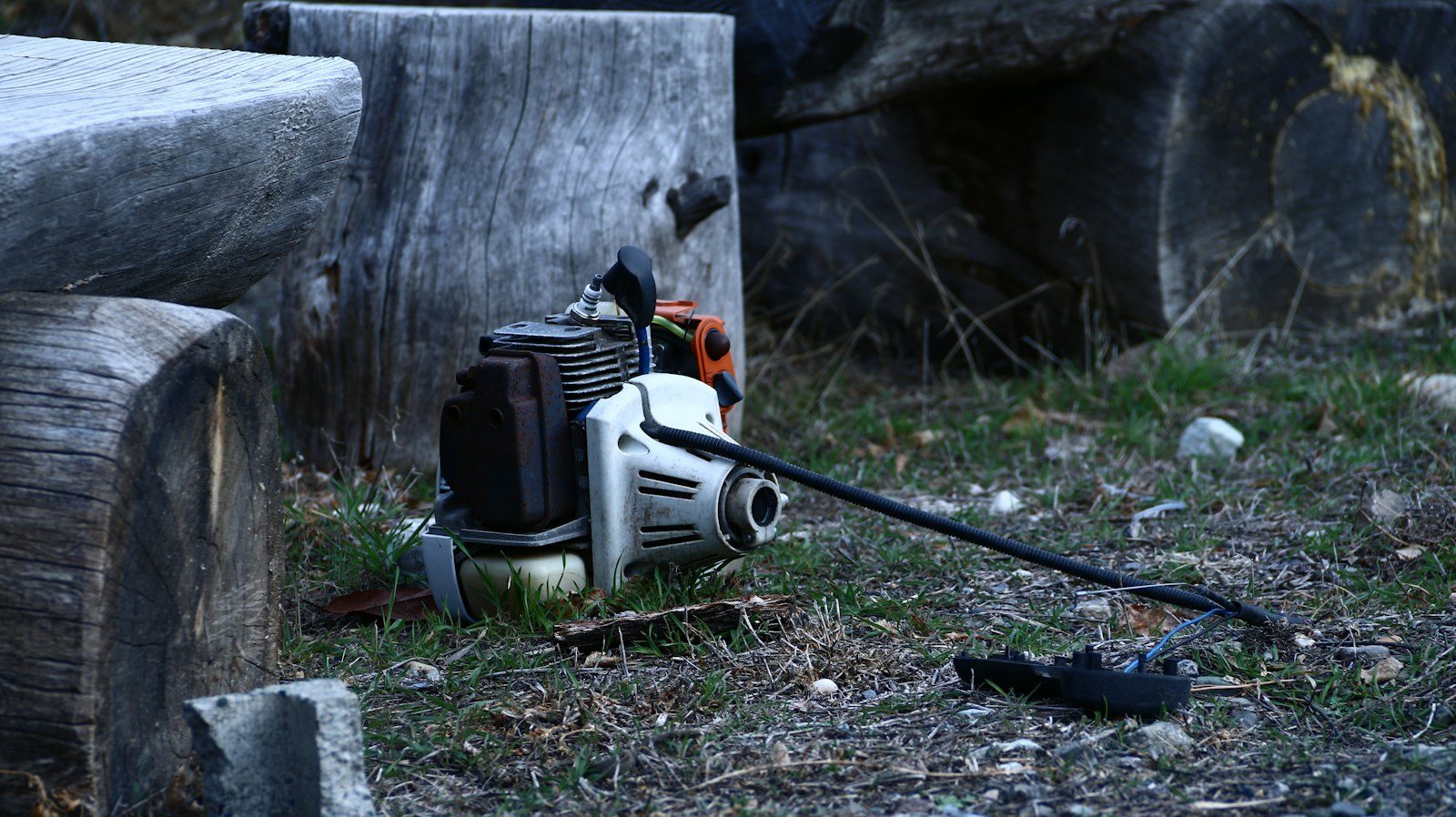
String trimmers, also called weed eaters, weed whackers or grass trimmers, come in three power types (gas, battery and corded electric), two shaft shapes (straight and curved), and a few specialty formats: attachment-capable “split shaft” systems, wheeled trimmers and brushcutters. For most suburban lawns under about half an acre, a battery trimmer with a straight shaft is the easiest place to start. Gas still makes sense for large properties and heavy weeds, and corded models suit small yards on a budget. This guide explains each type, what it is good at and where it falls short, so you know which category to shop before you compare specific models.
In this guide
- The Three Power Types at a Glance
- Gas String Trimmers
- Battery-Powered String Trimmers
- Corded Electric String Trimmers
- Straight Shaft vs Curved Shaft
- Attachment-Capable (Split Shaft) Trimmers
- Wheeled String Trimmers
- Brushcutters and Blade-Capable Trimmers
- Trimmer Heads and Line Feed Systems
- How to Choose the Right Type
- Features Worth Paying For
- Frequently Asked Questions
Key Takeaways
- Battery trimmers now cover most home lawns: quiet, no fuel, push-button start.
- Gas trimmers still lead on runtime and power for acreage, ditches and thick brush.
- Corded trimmers are light and inexpensive but limited by cord length, usually about 100 feet.
- Straight shafts reach farther and under shrubs; curved shafts are lighter and easier to handle for shorter users.
- Attachment-capable trimmers turn one powerhead into an edger, pole saw, blower and more.
The Three Power Types at a Glance
| Type | Best for | Strengths | Limits |
|---|---|---|---|
| Gas (2-stroke or 4-stroke) | Large lots, acreage, heavy weeds and brush | Unlimited runtime with refueling, high power, thick line | Noise, fumes, pull starting, fuel and engine maintenance |
| Battery (cordless) | Most suburban yards | Quiet, instant start, low maintenance, shares batteries with other tools | Runtime per battery, upfront battery cost |
| Corded electric | Small yards near an outlet | Lightest, cheapest, unlimited runtime | Cord management, reach limited to cord length |
Gas String Trimmers
Gas trimmers use a small engine, typically between about 25cc and 35cc for homeowner and light pro models. Most are 2-stroke, which means you mix oil into the gasoline, usually at a 50:1 ratio. Some use 4-stroke engines that take straight gas with oil in a separate crankcase, and a few hybrids run on mixed fuel with a 4-stroke design. The 2-stroke versus 4-stroke choice affects weight, torque and fuel handling; we cover it in our guide to 2-stroke vs 4-stroke trimmers.
Choose gas if you trim large areas, cut along fence lines and ditches with tall, tough weeds, or work far from any outlet without wanting a stack of batteries. Gas trimmers can run heavier line, often 0.095 inch and up, and many accept brush blades. The trade-offs are noise loud enough that hearing protection is a must, exhaust, vibration, pull starting, and the maintenance that comes with any small engine: fresh fuel, air filter, spark plug and winter storage.
Battery-Powered String Trimmers
Cordless trimmers have improved enough that they now handle the typical homeowner’s trimming without compromise. Platforms range from 18V and 20V for light trimming to 40V, 56V, 60V and 80V for gas-like performance. Higher voltage generally means more power and the ability to spin thicker line, but battery capacity, measured in amp-hours (Ah), determines runtime. A 4Ah to 5Ah battery on a 40V-class trimmer commonly covers a typical suburban lot on one charge; large properties may need a second battery.
Brushless motors are worth looking for: they run cooler, last longer and get more runtime from each battery than brushed motors. Many battery trimmers also have variable speed triggers or high/low settings, which let you save battery on light grass and boost power for weeds. The big advantage beyond quiet operation is the battery ecosystem: if you already own a mower, blower or drill on the same platform, a bare-tool trimmer costs much less than a kit. Our roundup of the best cordless string trimmers compares current models, and gas vs battery string trimmers goes deeper on that decision.
Corded Electric String Trimmers
Corded trimmers plug into an outdoor extension cord. They are the lightest and least expensive option, need almost no maintenance and never run out of power. Motors are usually rated in amps, commonly around 4 to 6.5 amps for homeowner models, with most using 0.065- or 0.080-inch line.
They make sense for townhomes, small city lots and anyone who trims a small area near the house. The catch is the cord: you need an outdoor-rated extension cord of the right gauge (thicker wire for longer runs, often 14 or 12 gauge beyond 50 feet), and you will spend time flipping it around trees and beds. Practical reach is limited to about 100 feet from an outlet.
Straight Shaft vs Curved Shaft
| Feature | Straight shaft | Curved shaft |
|---|---|---|
| Reach | Longer; gets under shrubs, decks and fences | Shorter |
| Weight and balance | Slightly heavier, head farther away | Lighter, more compact |
| User height | Better for taller users | Often more comfortable for shorter users |
| Durability | Usually a solid drive shaft, more durable | Usually a flexible cable drive |
| Attachments | Most attachment-capable models are straight | Rarely attachment-capable |
| Heavy cutting | Better; can often take blades | Best for light trimming and edging |
Curved-shaft trimmers were once the default for homeowners because they are light and easy to point. Today most mid-range and better trimmers, gas or battery, are straight-shaft, and that is the right choice for most buyers. Pick curved only if you are on the shorter side, have a small, open yard and want the lightest tool possible. Many straight-shaft models also have adjustable or telescoping shafts and auxiliary handles that solve the fit problem for shorter users.
Attachment-Capable (Split Shaft) Trimmers
Attachment-capable trimmers, often called split-shaft or multi-tool systems, have a shaft that separates partway down. You keep the motor or engine (the powerhead) and swap the lower section for other tools: an edger, a pole saw, a hedge trimmer, a cultivator, a blower or a brushcutter. Most major gas and battery brands sell these systems, and many attachments fit only their own brand.
They are a good fit if you need several tools occasionally but do not want to store and maintain several motors. The trade-offs are a slightly heavier, less balanced feel than a dedicated trimmer, the time spent swapping heads, and the fact that if the powerhead fails, every attachment is out of action. If you edge every week, a dedicated edger may still be better; see our string trimmer vs edger comparison.
Wheeled String Trimmers
Wheeled trimmers, sometimes called string mowers or walk-behind trimmers, put a large trimmer head on a push frame with big wheels. Gas versions use engines in the 140cc to 200cc range, and some battery models exist. They swing thick line, often 0.155 inch, across a wide path, typically about 20 to 24 inches.
They are built for acreage: long fence lines, field edges, overgrown lots, ditches and areas too rough for a mower. Because the weight rides on wheels, you can trim for an hour without arm fatigue. They are not for detail work around beds or trees. Our roundup of the best wheeled string trimmers compares current models if you have that kind of property.
Brushcutters and Blade-Capable Trimmers
A brushcutter is a heavy-duty straight-shaft trimmer, almost always gas or high-voltage battery, built to run a metal blade as well as string. They usually have a bike-style or J-handle and a harness to carry the weight. Use one for saplings, thick brambles and woody weeds that would shred string. Never fit a blade to a trimmer whose manual does not approve it; the gearbox, guard and handle must be designed for blades. Our guide to string trimmer blades explains blade types and safety.
Trimmer Heads and Line Feed Systems
- Bump feed: Tap the head on the ground to release more line. The most common type and easy to use.
- Automatic feed: Feeds line on its own, typically when you release and squeeze the trigger. Common on light electric models; can waste line.
- Fixed line: Pre-cut pieces of line slot into the head. No spooling, good for heavy line.
- Easy-load heads: Thread line straight through the head and wind by twisting the knob, no disassembly. A real time saver.
Single-line heads are lighter and lower-drag; dual-line heads cut faster. Line diameter matters too, and every trimmer has a maximum it can spin. Our guide to what size trimmer line to use explains how to match line to your machine and weeds.
How to Choose the Right Type
| Your situation | Type to shop |
|---|---|
| Small yard, outlet nearby, tight budget | Corded electric, straight or curved shaft |
| Typical suburban lot up to about 1/2 acre | Battery, 40V-class or higher, straight shaft, brushless |
| Already own battery tools from one brand | Bare-tool trimmer on that platform |
| One to several acres, tough weeds | Gas straight-shaft or high-voltage battery with spare batteries |
| Need edger, pole saw and trimmer | Attachment-capable system |
| Fields, long fence lines, rough areas | Wheeled string trimmer |
| Saplings and brambles | Brushcutter with an approved blade |
Once you know the type, compare specific models in our main best string trimmers roundup, and see our lawn care guide for how trimming fits into a full mowing and edging routine.
Features Worth Paying For
- Cutting swath: 13 to 15 inches for light trimming, 16 to 18 inches for faster coverage on bigger lots.
- Adjustable auxiliary handle: Lets you set a comfortable grip; essential on longer shafts.
- Rotating head or edging mode: Some trimmers rotate the head 90 or 180 degrees for vertical edging along walks.
- Variable speed: Saves battery and line on light grass.
- Easy-start features (gas): Primer bulbs, decompression valves and spring-assist starters reduce pull effort.
- Shoulder strap or harness: Helpful for heavier gas models and long sessions.
Whatever type you choose, wear eye protection, long pants and closed-toe shoes, and use hearing protection with gas models. Trimmer line throws stones and debris with real force.
Frequently Asked Questions
What is the difference between a string trimmer and a weed eater?
None in practice. Weed Eater is a brand name that became a generic term, like weed whacker. All refer to a handheld tool that cuts grass and weeds with spinning nylon line.
Is a straight or curved shaft trimmer better?
Straight shafts are better for most people: longer reach, more durable drive and usually attachment or blade capability. Curved shafts suit shorter users with small, open yards who want the lightest tool.
Are battery string trimmers as powerful as gas?
High-voltage brushless battery trimmers match many homeowner gas trimmers for grass and typical weeds. Gas still has the edge for extended runtime and heavy brush work on large properties.
What size trimmer do I need for 1 acre?
For about an acre, a gas straight-shaft trimmer or a high-voltage battery model with a spare battery works well. If most of the work is long fence lines or rough ground, consider a wheeled trimmer.
Can I put a blade on any string trimmer?
No. Only fit blades to trimmers whose manual approves them, with the correct guard and handle. Most curved-shaft and light electric trimmers are not designed for blades.