

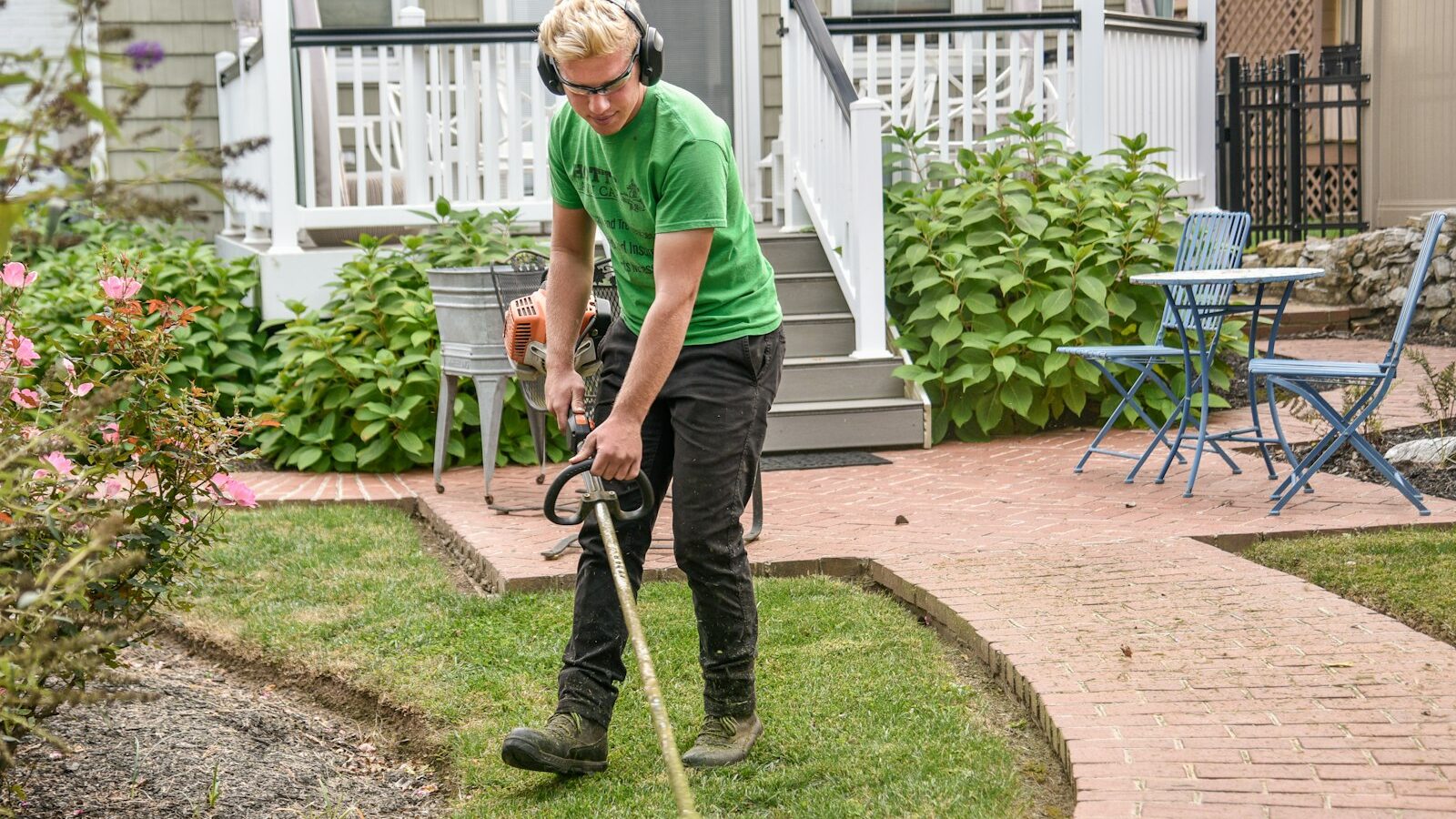
A string trimmer is the tool that separates a “pretty good” lawn from a sharp, finished one. It tackles the fence lines, tree rings, walkways, and tall weeds that your mower can’t reach. But the category has split into four very different worlds: gas, battery, corded electric, and the new high-output cordless models that genuinely rival gas. Below are seven trimmers we’d actually recommend in 2026, one for every kind of yard and budget, with the trade-offs spelled out so you don’t overspend or underbuy.
As an Amazon Associate we earn from qualifying purchases.
Our top picks
- Best overall: EGO Power+ 16″ POWERLOAD LINE IQ (ST1623T)
- Best battery / cordless: Milwaukee M18 FUEL 16″ (3046)
- Best gas: Echo SRM-2620 (17″)
- Best corded electric: Greenworks 5.5-Amp 15″ (21272)
- Best for large properties: Husqvarna 525LST
- Best lightweight: Ryobi 18V ONE+ HP Brushless 15″
- Best budget: BLACK+DECKER BESTA510 6.5-Amp 14″
| Model | Power | Cut width | Best for |
|---|---|---|---|
| EGO Power+ ST1623T | 56V battery | 16″ | Best overall |
| Milwaukee M18 FUEL 3046 | 18V battery | 14″–16″ | Best cordless / pro |
| Echo SRM-2620 | 25.4cc gas | 17″ | Best gas |
| Greenworks 21272 | 5.5A corded | 15″ | Best corded electric |
| Husqvarna 525LST | 25.4cc gas | ~19″ | Large properties |
| Ryobi 18V ONE+ HP | 18V battery | 13″–15″ | Lightweight |
| BLACK+DECKER BESTA510 | 6.5A corded | 14″ | Best budget |
The 7 best string trimmers of 2026
EGO Power+ 16″ POWERLOAD LINE IQ (ST1623T) — best overall
The EGO ST1623T is the trimmer we point most homeowners toward because it removes the two things people hate most: gas mixing and re-spooling line. Its LINE IQ system automatically senses and feeds line to hold a full 16-inch cutting swath, so you never stop to bump-feed or pull line by hand. POWERLOAD lets you reload the head by feeding line through and pressing a button, no winding involved. The telescopic carbon-fiber straight shaft is rigid, light, and backed by a lifetime warranty against breakage.
Running on EGO’s 56V platform, it delivers gas-class cutting power and up to about 60 minutes of continuous runtime with the included 4.0Ah ARC Lithium battery. It’s quiet, starts instantly, and shares batteries with EGO’s huge mower, blower, and chainsaw lineup. For anyone who wants gas-level results without the maintenance, this is the complete package and our default recommendation. If you’re shopping cordless specifically, see our dedicated best cordless string trimmers guide for more head-to-head detail.
Pros
- Auto line feed (LINE IQ) keeps a full 16″ swath
- POWERLOAD reloading with no winding
- Lightweight carbon-fiber shaft, lifetime shaft warranty
- Shares batteries with EGO’s full tool lineup
Cons
- Premium price for a homeowner trimmer
- Auto-feed burns line faster than bump-feed
Milwaukee M18 FUEL 16″ (3046) — best battery / cordless for pros
If you’re already on Milwaukee’s M18 platform or want professional-grade cordless performance, the M18 FUEL 16″ string trimmer is hard to beat. Its POWERSTATE brushless motor produces 1.76 horsepower, which Milwaukee rates as more power than a 31cc gas engine. Three speed modes span roughly 4,600 to 6,200 RPM, and the adjustable guard lets you dial the cutting swath between 14 and 16 inches depending on whether you want runtime or maximum reach.
The Easy Load head accepts up to 25 feet of line in under 30 seconds, and in testing the trimmer turned in nearly 58 minutes of runtime in low mode (about 23 minutes flat-out on high with a large battery). Ergonomics and balance are top-tier. The catch is weight: with a big REDLITHIUM FORGE pack it climbs past 13 pounds, so it’s a serious tool rather than a casual one. For homeowners deep in the Milwaukee ecosystem, that battery sharing makes it an easy call.
Pros
- More power than 31cc gas, three speed modes
- Adjustable 14″–16″ cutting swath
- Fast Easy Load head, strong runtime in low mode
- Shares M18 batteries with Milwaukee’s tool range
Cons
- Heavy with high-capacity batteries
- Best value only if you already own M18 packs
Echo SRM-2620 — best gas
When the job is tall, wet, or relentless, gas still has an answer, and the Echo SRM-2620 is the homeowner-friendly version of a pro favorite. Its 25.4cc two-stroke engine is built around a military-grade magnesium block with a 1.62:1 gear reduction for fast line acceleration, and it swings a generous 17-inch cutting swath. You can refuel and keep going in seconds, which is exactly why crews still reach for gas on big, overgrown days.
The standout feature is the Speed-Feed 400 head: you reload dual 0.095-inch line in seconds without opening the spool, which is one of the fastest systems in any trimmer at any price. A straight 59-inch shaft gives good reach and balance for taller users. At about 12 pounds with a two-stage air filter for durability, it’s heavier and noisier than battery, and it needs oil-mixed fuel and seasonal upkeep, but for raw cutting endurance it’s our top gas pick.
Pros
- Pro-grade 25.4cc engine, wide 17″ swath
- Speed-Feed 400 head reloads in seconds
- Instant refueling for all-day work
- Durable two-stage air filtration
Cons
- Loud and requires mixed fuel plus maintenance
- Heavier than battery options
Greenworks 5.5-Amp 15″ (21272) — best corded electric
Corded electric is the most overlooked value in the trimmer aisle. If your trimming areas sit within an extension cord’s reach of an outlet, a corded model gives you unlimited runtime, no batteries to charge, and no fuel, for a fraction of the price of cordless. The Greenworks 21272 weighs just over 7 pounds, starts instantly with a trigger, and has a 15-inch cutting path that’s wider than most budget tools.
A pivoting head converts it from trimmer to edger with an included edging wheel, and the 0.065-inch dual-line auto-feed keeps line flowing without bumping. The obvious limitation is the cord: you’re tethered to an outlet and need to manage the line around obstacles, so it’s best for small to mid-size suburban lots rather than rural acreage. For a tidy lawn on a tight budget with zero maintenance, it’s a smart buy.
Pros
- Unlimited runtime, no batteries or fuel
- Light (~7 lb) with a wide 15″ path
- 2-in-1 trim/edge with included wheel
- Inexpensive and maintenance-free
Cons
- Tethered to an outlet; cord management needed
- Not suited to large or remote areas
Husqvarna 525LST — best for large properties
For acreage, dense brush, and long fence lines, the Husqvarna 525LST is a commercial-grade workhorse that stays comfortable through hours of use. Its 25.4cc X-TORQ engine produces 1.34 horsepower with cleaner, more efficient combustion than older two-strokes, and a larger 0.65-liter fuel tank means fewer refuel stops on big jobs. A hi-torque gearbox drives faster line acceleration for cutting through thick, overgrown grass.
What sets it apart on long sessions is Husqvarna’s LowVib rubber-isolated handle, which keeps vibration low (around 3 m/s²) to reduce hand fatigue. Tap’n Go line feed lets you advance line by tapping the head on the ground, and a metal skid plate adds durability against fences and curbs. At about 10.4 pounds without cutting head it’s manageable, but it’s still gas: loud (98 dB at the ear), needs mixed fuel, and demands routine maintenance. For big yards, that’s a fair trade.
Pros
- Efficient X-TORQ engine, big fuel tank for long runs
- LowVib handle reduces fatigue on long jobs
- Hi-torque gearbox powers through heavy growth
- Durable metal skid plate, Tap’n Go feed
Cons
- Loud, needs mixed fuel and upkeep
- Overkill for small suburban lawns
Ryobi 18V ONE+ HP Brushless 15″ — best lightweight
Not everyone needs a 13-pound cutting machine. If you have a small yard, limited storage, or want something easy on the arms and back, the Ryobi 18V ONE+ HP brushless trimmer is the sweet spot. At around 7.3 pounds it’s noticeably lighter than 40V and gas trimmers, yet the HP brushless motor delivers more cutting power than a 21cc gas engine. An integrated sliding guard adjusts the swath between 13 and 15 inches so you can balance reach against runtime.
It’s attachment-capable, accepting Ryobi’s expandable shaft tools (edger, brush cutter, pole saw), and runs on the enormous 18V ONE+ battery platform that powers hundreds of Ryobi tools, which keeps the long-term cost down. Expect over 40 minutes of runtime on a 4Ah pack. It won’t out-muscle the EGO or Milwaukee, but for the price, weight, and ecosystem, it’s the most approachable cordless trimmer here.
Pros
- Light (~7.3 lb) and easy to handle
- Brushless motor; more power than 21cc gas
- Adjustable 13″–15″ swath, attachment-capable
- Huge, affordable 18V ONE+ battery ecosystem
Cons
- Shorter runtime than 56V/40V platforms
- Not ideal for heavy brush or large acreage
BLACK+DECKER BESTA510 6.5-Amp 14″ — best budget
When you want a no-fuss trimmer for the lowest possible price, the BLACK+DECKER BESTA510 is tough to beat. This corded 6.5-amp model is one of the best-selling trimmers in the country for good reason: it’s lightweight, plugs into any outlet, and starts with a trigger pull. The PowerDrive transmission delivers more torque to the line than the amp rating suggests, so it handles ordinary grass and weeds without bogging down.
The Automatic Feed System (AFS) advances 0.065-inch line without bumping, and a 2-in-1 design rotates the head and deploys an edging wheel for clean borders along walks and drives. A cord-retention hook keeps the extension cord from yanking loose mid-job. The 14-inch swath is on the small side and you’re tied to an outlet, but for tidying a modest lawn on a budget, nothing else delivers this much convenience for the money.
Pros
- Very affordable and widely available
- Light, instant trigger start, no maintenance
- Auto-feed line plus 2-in-1 trim/edge
- Cord-retention system prevents disconnects
Cons
- Smaller 14″ swath and 0.065″ line
- Corded; not for big or remote yards
Free, no-obligation quote · Connect with a local pro
How to choose a string trimmer
Gas vs. battery vs. corded
Gas still wins on raw endurance and refuel-and-go runtime, making it the choice for large properties, heavy brush, and all-day use. The trade-offs are noise, emissions, vibration, mixed-fuel handling, and seasonal maintenance. Battery (cordless) has closed the gap dramatically: high-voltage platforms like EGO’s 56V and Milwaukee’s M18 now match gas on cutting power for most homeowner tasks, with instant starting, low noise, and zero fuel. You pay more upfront and manage runtime, but if you already own batteries in a platform, a bare tool is a bargain. Corded electric is the cheapest, lightest, lowest-maintenance option with unlimited runtime, but the cord limits you to areas near an outlet. Match the power source to your lot size first, then narrow by features.
Cutting width
Cutting width (swath) determines how much ground you clear per pass. Budget and lightweight trimmers run 12–14 inches; mid-range and premium tools run 15–17 inches or more. A wider swath means fewer passes and faster work on big areas, but it draws more power and burns line faster. Many modern trimmers, including the Milwaukee and Ryobi above, have an adjustable guard so you can widen the swath for open areas and narrow it for runtime or precision around beds.
Line feed: bump, automatic, or fixed
Bump feed advances line when you tap the head on the ground. It’s the most common and gives you control, but it’s a habit to manage. Automatic feed (like EGO’s LINE IQ or BLACK+DECKER’s AFS) senses and feeds line for you so you never stop, at the cost of using more line over time. Fixed-line heads, common on pro gas trimmers, use pre-cut blades or load fast via systems like Echo’s Speed-Feed; they’re simple and durable. Also note the line diameter: 0.065″ suits light grass, 0.080″–0.095″ handles heavier weeds and brush.
Straight vs. curved shaft
Straight-shaft trimmers offer more reach under shrubs and fences, better balance for tall users, and are usually compatible with attachments and brush-cutter blades. Curved-shaft models are shorter, lighter, and feel more maneuverable for quick trimming, which suits smaller users and small yards. Most of our gas and premium picks use straight shafts; lightweight budget tools often go curved.
Attachment capability
If you’d eventually like one powerhead to run an edger, pole saw, hedge trimmer, or cultivator, buy an attachment-capable straight-shaft model. Ryobi’s Expand-It and similar systems let you swap heads on a single shaft, which saves money and storage. Pair the right trimmer with the rest of your kit using our essential garden tools guide, and once your edges are crisp, browse our lawn edging ideas for ways to make those clean lines last.
Frequently asked questions
Are battery string trimmers as good as gas?
For most homeowners, yes. High-voltage cordless trimmers like the EGO 56V and Milwaukee M18 FUEL match or exceed the cutting power of small gas engines (often rated against 21cc–31cc gas) and start instantly with no fuel or fumes. Gas still pulls ahead for all-day commercial use and dense brush, mainly because you can refuel in seconds rather than wait on a charge.
What size string trimmer do I need for my yard?
For small lots near an outlet, a corded or 18V trimmer with a 13–15″ swath is plenty. For mid-size suburban yards, a 15–16″ cordless trimmer hits the sweet spot. For acreage, heavy weeds, or long fence lines, choose a gas or high-output cordless model with a 16–19″ swath and an adjustable guard.
What’s the difference between a string trimmer and a weed eater?
Nothing, they’re the same tool. “Weed Eater” is a brand name that became a generic term, like calling a tissue a Kleenex. “String trimmer,” “weed whacker,” and “line trimmer” all refer to a tool that spins nylon line to cut grass and weeds your mower can’t reach.
What line diameter should I use?
Match the line to the job. 0.065″ line handles light residential grass and tight trimming. 0.080″ is a good all-around size for typical yards. 0.095″ and thicker is for heavy weeds, tall grass, and brush, and is common on gas and high-output cordless trimmers. Always use the diameter range your trimmer specifies.
Should I get a straight or curved shaft?
Choose a straight shaft for more reach under bushes and fences, better balance, attachment compatibility, and brush-cutter use. Choose a curved shaft if you want a lighter, more maneuverable tool for quick trimming on a small yard. For all-purpose and larger jobs, straight-shaft is the more capable pick.
Bigger job? Hire a pro.
For large, tall or hazardous work, compare free, no-obligation quotes from vetted local tree pros near you.