

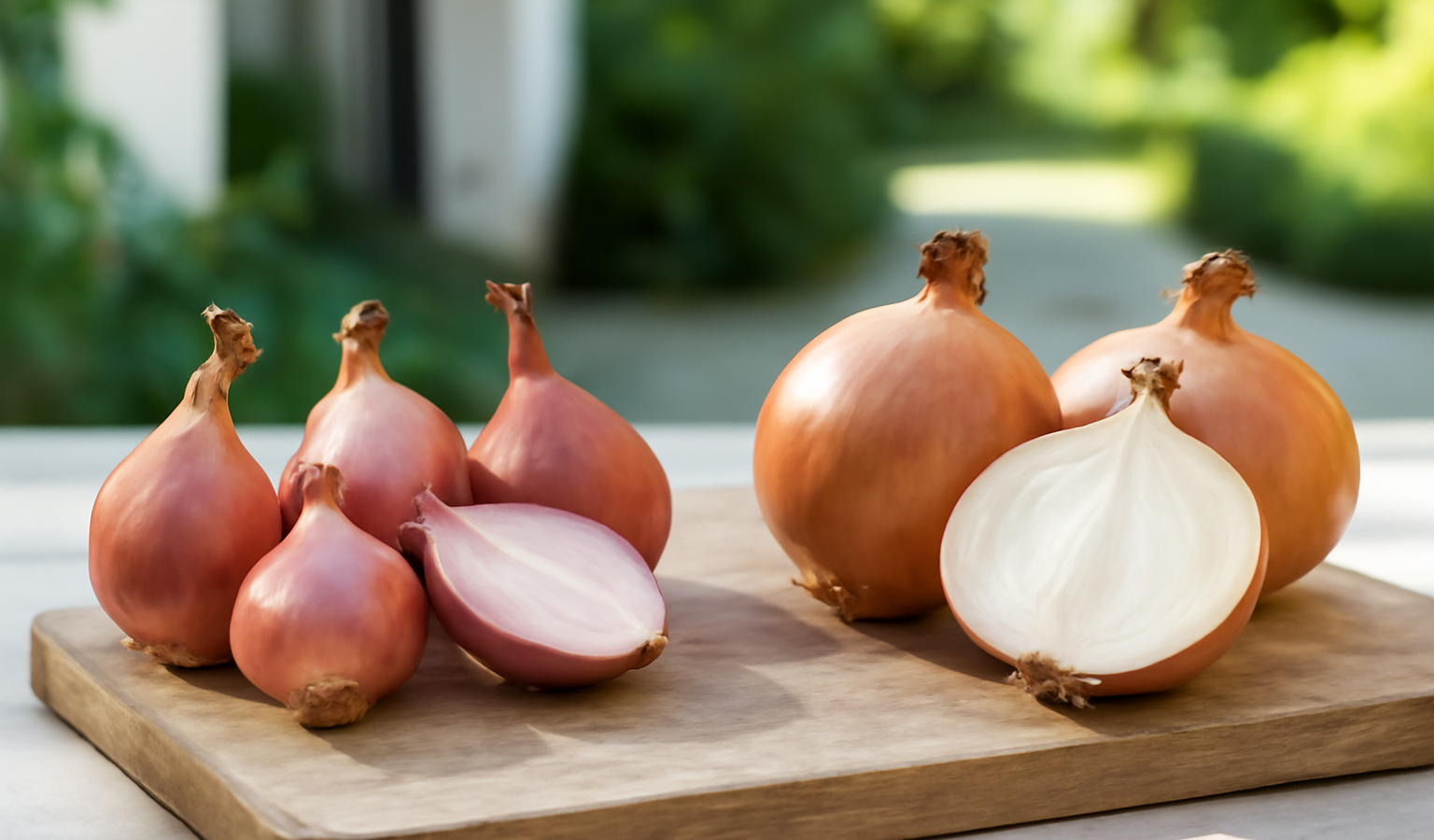
Shallots and onions are both alliums grown from bulbs, and from a distance the plants look nearly identical — but they differ in flavor, growth habit, and how you cook with them. Shallots (Allium cepa Aggregatum group) are smaller, grow in clusters of cloves like garlic, and have a milder, sweeter, more refined flavor with a subtle garlicky note. Common onions (Allium cepa) grow as a single large bulb and bring a bolder, sharper, more pungent punch. In the garden they are grown almost the same way; in the kitchen they play different roles. Here is exactly how they differ and how to grow each one.
Key Takeaways
- Shallots — grow in clusters from one planted clove, mild and sweet with a hint of garlic; prized for vinaigrettes, sauces, and delicate dishes.
- Onions — grow as a single large bulb, bolder and sharper; the all-purpose cooking workhorse.
- Both are grown from sets, transplants, or seed in cool conditions and harvested when tops flop over.
- Onions are day-length sensitive (long-day, short-day, day-neutral) — match the type to your latitude.
- Shallots multiply: plant one clove, harvest a cluster — and you can save some to replant.
The Core Differences
The biggest structural difference is how they grow. Plant a single onion set or seed and you get one bulb that swells larger and larger. Plant a single shallot clove and it divides underground into a cluster of several bulbs — much like garlic — so you harvest a handful from each one you planted. That multiplying habit is why shallots are sometimes called “multiplier onions” and why gardeners can save a few bulbs each year to replant indefinitely.
Flavor is the difference cooks care about most. Onions are pungent and sharp raw, mellowing to sweet when cooked, and they range from sweet types (Vidalia, Walla Walla) to sharp storage onions. Shallots are gentler and more nuanced — sweeter, less harsh raw, with a faint garlic undertone — which makes them the choice when you want allium flavor without overpowering a delicate dish. Shallots also have a finer texture and tend to “melt” when cooked, dissolving into sauces in a way a coarse onion does not. Size differs too: a shallot bulb is small (often an ounce or two), while onions range from golf-ball to softball-sized.
Side-by-Side Comparison
| Factor | Shallots | Onions |
|---|---|---|
| Growth habit | Cluster of cloves from one bulb | Single large bulb |
| Bulb size | Small (1–2 oz typical) | Medium to large |
| Flavor | Mild, sweet, hint of garlic | Bold, sharp, pungent |
| Texture when cooked | Fine; melts into sauces | Coarser; holds shape |
| Best uses | Vinaigrettes, sauces, delicate dishes | All-purpose cooking base |
| Day-length sensitive? | Less critical; long-day favored | Yes — choose by latitude |
| Multiplies? | Yes — replant saved bulbs | No (from sets/seed each year) |
| Storage | Stores well, several months | Storage types keep longest |
Growing Onions
The single most important onion-growing decision is day length, because onions bulb in response to the length of daylight. Long-day onions need 14 to 16 hours of daylight and suit northern latitudes (roughly the northern US and Canada). Short-day onions bulb at 10 to 12 hours and suit the South. Day-neutral (intermediate) types work in the middle of the country and are the safest bet if you are unsure. Plant the wrong type for your latitude and you get tiny bulbs or none — this is the number one reason home onion crops fail.
Plant onions in early spring (or fall in mild-winter areas) in full sun and rich, loose, well-drained soil. Set transplants or sets about 4 to 6 inches apart, keep them weeded (onions compete poorly with weeds) and consistently watered, and feed with nitrogen early for big tops, which drive big bulbs. Stop watering when the tops begin to yellow and flop over — that is the signal to harvest. Cure harvested bulbs in a warm, dry, airy spot for a couple of weeks before storing, and storage varieties will keep for months.
Growing Shallots
Shallots are grown much like onions but are, if anything, even easier and more rewarding because of how they multiply. The simplest method is to plant individual shallot cloves (cloves separated from a cluster), pointed end up, with the tip just at the soil surface, about 6 to 8 inches apart. Plant in early spring, or in fall in mild climates for a bigger, earlier harvest. They want the same full sun, rich, well-drained soil, and steady moisture as onions, and the same low-weed-competition care.
Each clove you plant will divide into a cluster of four to a dozen new bulbs. Harvest when the tops yellow and fall over, usually in early to midsummer, then cure them like onions in a dry, airy place. Set aside some of the best bulbs to replant next season — a self-perpetuating crop. Because shallots are generally less fussy about day length than bulb onions, they are a forgiving choice for new allium growers. For more on the wider edible garden and companion crops, see our plants and flowers guides.
In the Kitchen
Use onions as your everyday cooking base — diced and sautéed as the foundation of soups, stews, sauces, and stir-fries, caramelized for sweetness, or sliced raw (sharp) onto burgers and sandwiches. They are cheap, store long, and bring assertive flavor that stands up to bold dishes. Sweet onions are best raw or lightly cooked; storage onions are the all-purpose workhorse.
Reach for shallots when you want allium flavor that is subtle and refined: minced raw into a classic vinaigrette, the base of a pan sauce where they melt and add body, or anywhere a regular onion would be too harsh or too coarse. Their gentle sweetness and fine texture make them a staple of French cooking. Yes, they cost more and are smaller, so most cooks keep onions as the daily driver and shallots for dishes where finesse matters. A practical swap: roughly three small shallots equal one medium onion in volume, though the flavor will be milder. If you are weighing other kitchen-garden trade-offs, our thyme vs oregano comparison covers the herb side of the same flavor question.
Harvesting, Curing, and Storage
Both crops signal harvest the same way: the green tops yellow, soften at the neck, and flop over to the ground. When about half to three-quarters of the tops have fallen, stop watering and let the bulbs firm up for a few days, then lift them on a dry day. Resist the urge to bend the tops over early to “force” ripening — letting them flop naturally produces better-keeping bulbs. Brush off loose soil but do not wash them; moisture invites rot during curing.
Curing is the step that determines how long your harvest stores. Spread the bulbs in a single layer in a warm, dry, well-ventilated spot out of direct sun — a covered porch, garage, or airy shed — for two to three weeks until the necks are fully dry and the outer skins are papery. Once cured, trim the tops to an inch and the roots close, and store in a cool, dark, dry place with good airflow (mesh bags or slatted crates). Shallots store well for several months; among onions, the pungent storage varieties keep longest, while sweet onions are best eaten within weeks. Remember to set aside your best shallot bulbs to replant next season.
Common Growing Problems
The most frequent disappointment with onions is small bulbs, almost always from the wrong day-length type for your latitude, or from weed competition and a nitrogen shortage early in the season. Get those three right — correct type, weed-free rows, and ample nitrogen while the tops are growing — and bulb size improves dramatically. Both crops also bolt (send up a flower stalk) if exposed to a cold snap after they have started growing; bolted bulbs are still edible but store poorly, so use them first. Choosing the right planting time and avoiding oversized transplants reduces bolting.
Rot and disease usually trace back to too much moisture or poor drainage, especially as bulbs near maturity, which is why you taper off watering before harvest. Thrips and onion maggots can affect both; healthy soil, crop rotation, and avoiding planting alliums in the same spot year after year keep pressure down. Splitting (a single onion forming a double bulb) often comes from irregular watering — steady, even moisture during bulbing produces clean single bulbs.
The Verdict: Which to Grow
Grow onions if you want a high-yield, everyday cooking staple, you cook a lot, and you can match the right day-length type to your latitude — they give you the most usable bulk per row. Grow shallots if you value flavor over volume, want a low-fuss crop that multiplies and can be replanted year after year, or cook dishes where a milder, sweeter, garlicky allium shines. Many gardeners grow both: a generous bed of onions for the kitchen workhorse, plus a smaller patch of shallots for the dishes that deserve them. Both are easy, satisfying crops that reward the same simple care — full sun, rich loose soil, steady water, and a harvest when the tops flop.
Frequently Asked Questions
Are shallots just small onions?
No. Shallots are a distinct allium that grows in clusters of cloves from a single planted bulb, like garlic, and have a milder, sweeter flavor with a hint of garlic. Onions grow as one large bulb and are sharper.
Can I substitute shallots for onions?
Yes, but adjust for the milder flavor. Roughly three small shallots equal one medium onion in volume, and the result will be sweeter and gentler. Shallots also melt into sauces where onions stay coarser.
Why are my onions so small?
Usually the wrong day-length type for your latitude. Onions bulb in response to daylight hours — use long-day in the North, short-day in the South, or day-neutral if unsure. Weed competition and low nitrogen also shrink bulbs.
Do shallots come back every year?
They effectively can. Each clove you plant multiplies into a cluster, so you can save the best bulbs from each harvest to replant the next season, giving you a self-perpetuating crop.
When do I harvest shallots and onions?
For both, harvest when the green tops yellow and flop over — usually early to midsummer. Then cure the bulbs in a warm, dry, airy spot for about two weeks before storing.