

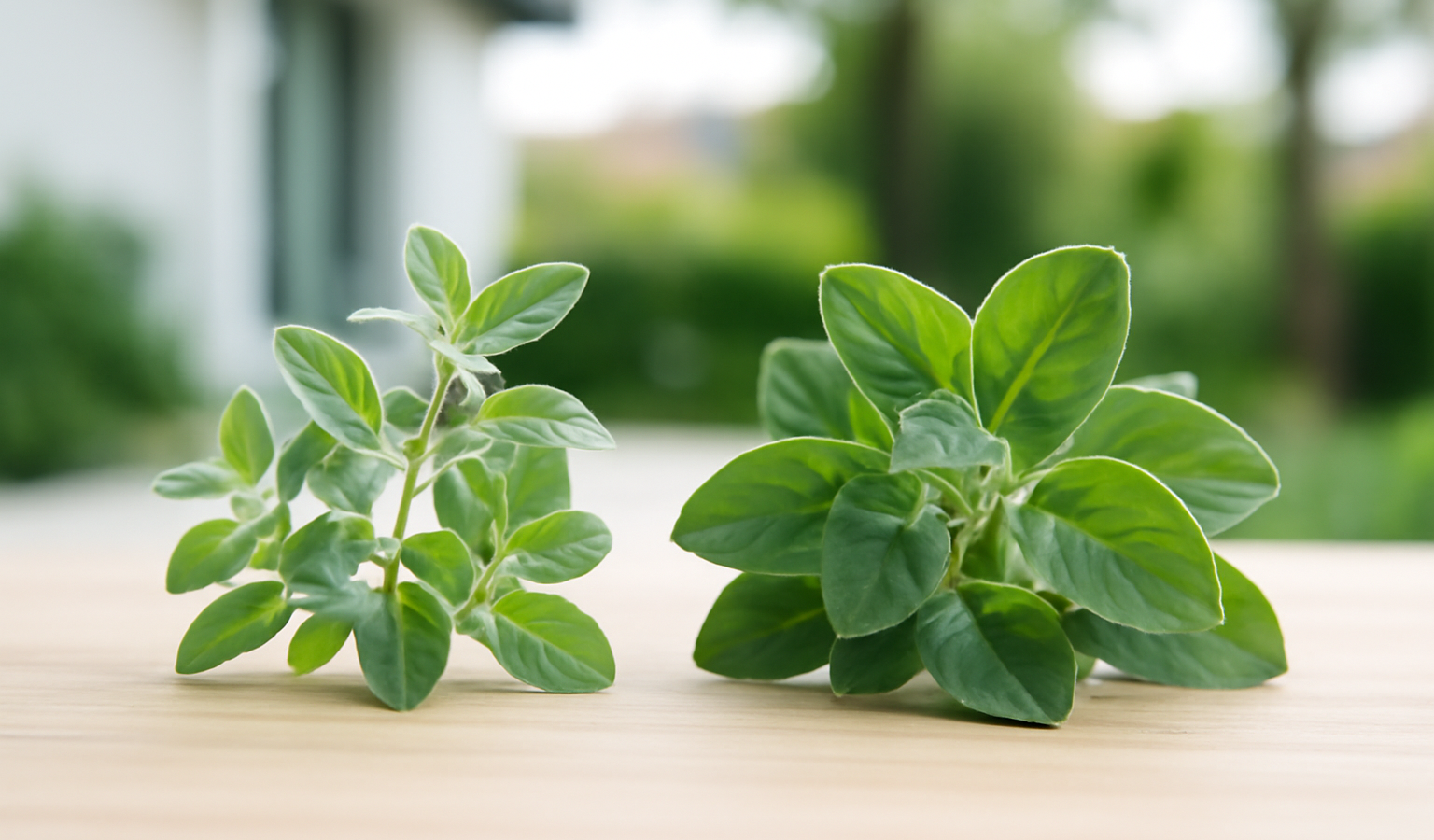
Marjoram and oregano are so closely related that they are frequently mislabeled at the garden center and used interchangeably in recipes — but anyone who has tasted them side by side knows they are not the same herb. Both belong to the genus Origanum, both come from the Mediterranean, and both carry that warm, slightly woodsy aroma. The difference is one of intensity and personality. Oregano (Origanum vulgare) is the bold, pungent, almost peppery herb you taste in pizza sauce and Greek dishes. Marjoram (Origanum majorana) is its sweeter, softer, more floral cousin — gentler, more delicate, and quicker to fade with heat. If you remember nothing else, remember this: oregano is the loud one, marjoram is the subtle one. This guide breaks down exactly how they differ in the garden and the kitchen so you can grow and cook with each confidently.
Key Takeaways
- Oregano (Origanum vulgare) is bold, pungent, and slightly bitter; it holds up to long cooking and high heat.
- Marjoram (Origanum majorana) is sweeter, more floral and delicate; add it near the end of cooking so the flavor survives.
- Botanically marjoram is sometimes called “sweet marjoram” and is a distinct species, while oregano is hardier and more cold-tolerant.
- Visually, marjoram has smaller, fuzzier, gray-green leaves and tiny knot-like flower buds; oregano leaves are larger and darker.
- Oregano is a reliable perennial in USDA zones 4–10; marjoram is tender and often grown as an annual outside zones 9–10.
Marjoram vs Oregano at a Glance
| Factor | Marjoram | Oregano |
|---|---|---|
| Botanical name | Origanum majorana | Origanum vulgare |
| Flavor | Sweet, floral, mild, slightly citrusy | Bold, pungent, earthy, slightly bitter |
| Aroma | Delicate, balsam-like | Sharp, peppery, robust |
| Leaf appearance | Small, oval, fuzzy, gray-green | Larger, flatter, darker green |
| Flower buds | Round “knots” before opening | Loose clusters, pink to white |
| Cold hardiness | Tender; zones 9–10 perennial | Hardy; zones 4–10 perennial |
| When to add in cooking | End of cooking / raw | Early; survives long simmering |
| Best uses | Egg dishes, dressings, delicate soups | Tomato sauce, pizza, grilled meats |
Oregano: The Bold Mediterranean Workhorse
Oregano is the herb most people picture when they think “Italian.” Its flavor is assertive — earthy, slightly bitter, with a peppery bite that intensifies when the leaves dry. That punch is exactly why oregano dominates pizza sauce, marinara, chili, and Greek dishes like roasted lamb and horiatiki salad. Unlike many tender herbs, oregano’s flavor actually deepens with cooking, so you can add it early in a simmering sauce and let it develop over an hour without losing potency. Dried oregano is one of the few herbs that is arguably better than fresh for certain dishes, because drying concentrates the carvacrol and thymol compounds responsible for its signature kick.
Not all oregano is the same, either. Greek oregano (Origanum vulgare subsp. hirtum) is the most pungent and the one you want for true Mediterranean cooking. Italian oregano is a milder marjoram-oregano hybrid. And “Mexican oregano” is not an Origanum at all — it is Lippia graveolens, a different plant with a citrusy, more savory profile used in Latin cooking. When you buy a plant labeled simply “oregano,” crush a leaf and taste it; a strong, hot, lingering flavor means you have the real culinary Greek type rather than a bland ornamental.
Growing Oregano
Oregano is one of the easiest perennial herbs to grow and survives winters down to USDA zone 4 with a little mulch. It thrives on neglect: full sun, lean well-drained soil, and infrequent watering. Rich soil and overwatering actually weaken its flavor, diluting the essential oils that give it punch. Space plants 8 to 10 inches apart, pinch the tips to keep them bushy, and harvest just before the plant flowers for peak flavor. Left alone, oregano spreads by runners and can become a low, sprawling groundcover, so many gardeners grow it in a container or a defined bed edge to keep it in bounds. For a fuller routine, our guide on growing kitchen herbs walks through soil, light, and harvest timing for the whole Mediterranean group.
Marjoram: The Sweet, Delicate Cousin
Marjoram tastes like oregano that has been softened and sweetened. It has the same warm, woodsy base note, but it is rounder, more floral, and carries a faint citrus and pine quality that oregano lacks. It is also far more delicate — both in flavor and in the kitchen. Marjoram’s aromatic oils are volatile and disappear quickly under heat, which is why you add it at the very end of cooking or use it raw in dressings and herb butters. Toss it into a long-simmering sauce and most of its charm evaporates within minutes.
This gentleness makes marjoram the perfect herb for foods you do not want to overpower: scrambled eggs and omelets, delicate cream soups, roasted carrots, white fish, vinaigrettes, and herb-stuffed poultry. It pairs beautifully with thyme and parsley, and it is a key component of classic blends like herbes de Provence and za’atar variations. If a recipe calls for oregano but you find oregano too harsh, marjoram is the friendliest substitute — just use a bit more, since it is milder, and add it later in the process.
Growing Marjoram
Sweet marjoram is tender and frost-sensitive, behaving as a perennial only in USDA zones 9 and 10. Everywhere colder, gardeners treat it as an annual, start it indoors from seed 6 to 8 weeks before the last frost, or overwinter a potted plant indoors on a sunny sill. Like oregano it wants full sun and sharply drained soil, but it is a little fussier about cold, wet feet. Space plants 6 to 8 inches apart and harvest the moment those distinctive round flower buds — the “knots” that give knotted marjoram its name — begin to form, because that is when the oils peak. Pinch regularly to prevent it from getting leggy. Because it is compact and tidy, marjoram is an excellent container herb and an attractive edging plant in a Mediterranean-style herb garden where drainage and heat are easy to provide.
How to Tell Them Apart in the Garden
When the two plants sit unlabeled next to each other, a few visual cues separate them reliably.
- Leaf size and color: Marjoram leaves are smaller, more oval, slightly fuzzy, and a soft gray-green. Oregano leaves are larger, flatter, and a deeper, glossier green.
- Flower buds: Marjoram forms tight, round, knot-like buds before the small white flowers open — its most distinctive trait. Oregano buds are looser and open into pink, purple, or white clusters.
- Growth habit: Oregano sprawls and spreads aggressively by runners; marjoram stays more compact and upright.
- The crush test: Rub a leaf between your fingers. Marjoram smells sweet, soft, and almost perfumed. Oregano smells sharp, hot, and pungent — you will feel the difference instantly.
The crush-and-smell test is the fastest and most reliable method, especially since young plants can look nearly identical. Trust your nose over the label.
Can You Substitute One for the Other?
Yes, with adjustments. Because they share a flavor family, marjoram and oregano can stand in for one another in a pinch — but the swap is not one-to-one.
- Replacing oregano with marjoram: Use about one and a half times as much marjoram, and add it late in cooking. Expect a softer, sweeter result without oregano’s bite — fine for many dishes, less authentic for pizza or Greek food.
- Replacing marjoram with oregano: Use roughly two-thirds as much oregano so you do not overpower the dish, and consider adding a pinch of thyme to soften oregano’s sharpness toward marjoram’s floral profile.
- Dried vs fresh: Dried oregano is intensely concentrated; use one teaspoon dried for one tablespoon fresh. Marjoram loses more of its character when dried, so fresh is strongly preferred.
The Verdict
Neither herb is better — they are tools for different jobs. Reach for oregano when you want bold, robust flavor that survives long cooking: tomato sauces, pizza, chili, grilled and roasted meats, and anything that needs a Mediterranean punch. Reach for marjoram when you want a delicate, sweet, floral note in eggs, dressings, light soups, fish, and dishes you do not want to overwhelm — and add it at the end so its volatile oils survive. In the garden, grow oregano as a tough, spreading perennial and treat marjoram as a tender annual or potted plant in cold climates. Grow both if you cook seriously, because together they cover the full range from gentle to assertive within the same lovely Origanum family. Once you have tasted them side by side, you will never confuse the two again.
Frequently Asked Questions
Is marjoram just a milder oregano?
Essentially, yes — but they are distinct species. Marjoram (Origanum majorana) is sweeter, more floral, and gentler than oregano (Origanum vulgare), which is bold and peppery. They share a flavor family, but marjoram’s volatile oils are more delicate and fade quickly with heat.
Can I substitute oregano for marjoram in a recipe?
You can, but use about two-thirds as much oregano since it is stronger, and consider adding a pinch of thyme to mimic marjoram’s softer, floral character. The dish will taste more robust and less sweet than it would with true marjoram.
How can I tell marjoram and oregano apart by looking?
Marjoram has smaller, fuzzy, gray-green oval leaves and forms tight round “knot” buds before flowering. Oregano has larger, flatter, darker green leaves and looser flower clusters. The surest test is to crush a leaf: marjoram smells sweet and perfumed, oregano smells sharp and hot.
Is marjoram or oregano easier to grow?
Oregano is easier and far hardier, surviving winters down to USDA zone 4 as a perennial. Marjoram is tender and frost-sensitive, so outside zones 9–10 most gardeners grow it as an annual or overwinter it indoors. Both want full sun and well-drained, lean soil.
When should I add each herb during cooking?
Add oregano early — its flavor deepens and holds up through long simmering and high heat. Add marjoram at the very end of cooking or use it raw, because its delicate aromatic oils evaporate within minutes of heat exposure.