

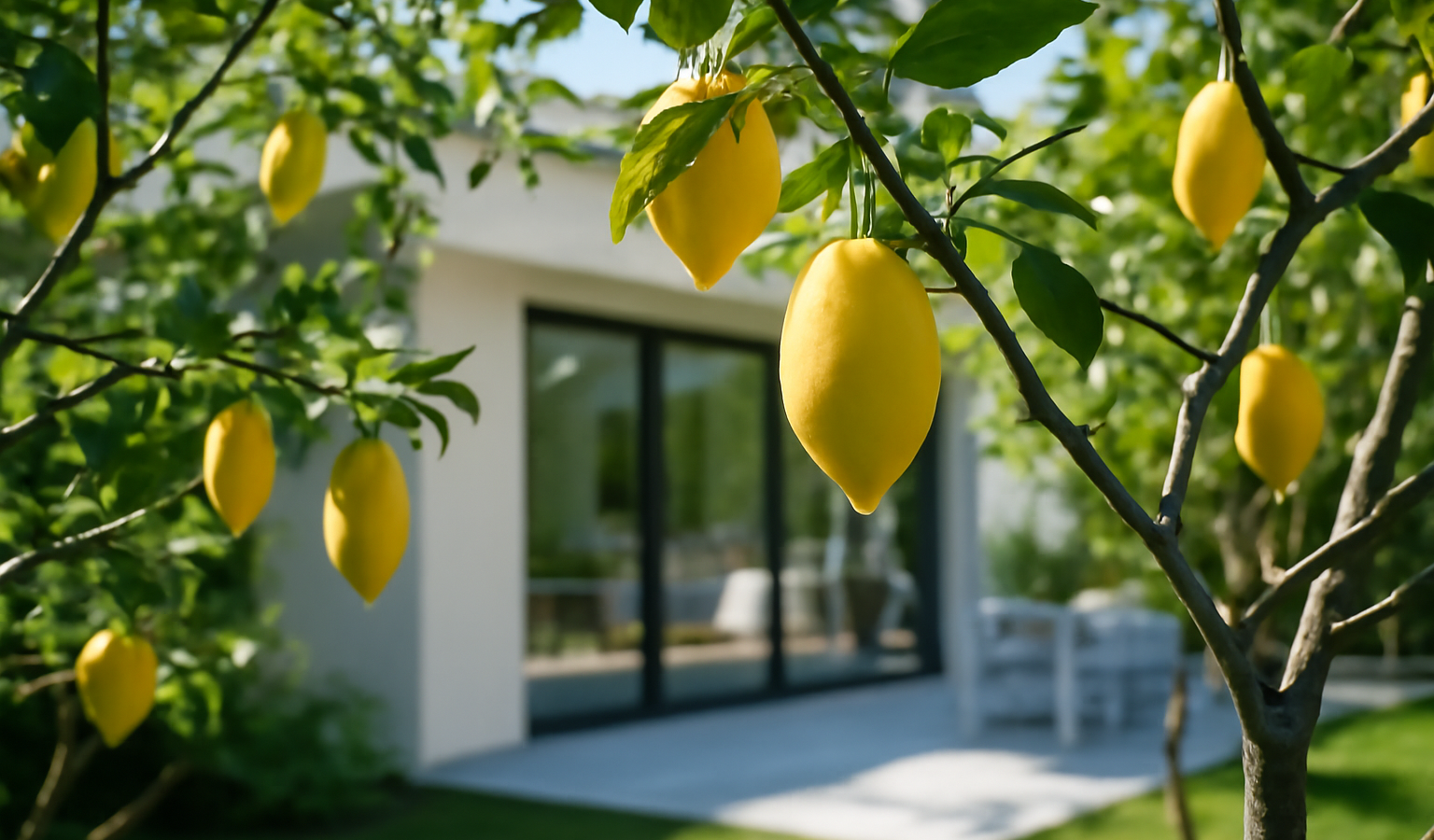
It feels wrong to pull perfectly good young fruit off a tree and drop it on the ground, but thinning is one of the highest-payback things you can do in a backyard orchard. A tree left to ripen everything it sets produces a heavy crop of small, mediocre fruit—and often breaks limbs doing it. A thinned tree channels the same energy into fewer fruit, so each one grows bigger, colors better, and tastes sweeter. Thinning also reduces limb breakage, curbs the boom-and-bust “biennial bearing” cycle, and limits the spread of pests and rot. This guide covers exactly when to thin, how far apart to leave fruit for each species, the techniques that work, and why removing fruit reliably gives you more usable harvest.
Key Takeaways
- Thin while fruit is small—dime to nickel size, usually 2–4 weeks after petal fall, and just after “June drop.”
- Space remaining fruit 6–8 in apart for apples and pears, 4–6 in for peaches and nectarines; leave one fruit per cluster.
- Fewer fruit means each gets more sugar and water—you trade quantity for noticeably larger, sweeter fruit.
- Thinning prevents limb breakage and reduces biennial bearing (alternate heavy/light crop years).
- Plums, cherries, and most citrus need little or no thinning; stone fruit and apples benefit the most.
Why Thinning Produces Bigger, Better Fruit
A fruit tree has a finite budget of sugars, water, and minerals to spend in a season. When it sets hundreds of fruit, that budget gets divided into hundreds of tiny shares—so you get many small fruit. Remove half of them and each survivor inherits a larger share, sizing up dramatically. The relationship isn’t linear: cutting fruit count by a third often more than doubles individual fruit size, because final size depends on how many cells each fruit can build and how much it can swell. Larger fruit also concentrates more sugar, so flavor improves alongside size.
There are three other big reasons to thin. First, limb protection: a branch loaded end-to-end with apples can snap or bend permanently, and a torn limb is an open wound for disease. Second, biennial bearing: trees that overcrop one year exhaust themselves setting next year’s flower buds, so they crop heavily one season and barely at all the next. Thinning to a moderate load every year smooths this into steady annual harvests. Third, pest and disease control: touching fruit in a tight cluster lets coddling moth larvae, brown rot, and earwigs move fruit-to-fruit. Spacing fruit out breaks those bridges.
When to Thin
Timing matters more than most people realize, because fruit size is largely locked in by how early you thin. Aim to thin while fruit is still small—dime to nickel diameter, roughly 1/2 to 1 inch—which for most temperate fruit lands 2 to 4 weeks after petal fall (full bloom). In much of the US that’s late May through June.
Many trees do some self-thinning in the so-called June drop, naturally shedding excess fruit a few weeks after bloom. Don’t rely on it—it rarely removes enough. The ideal strategy is to wait until just after June drop so you can see which fruit the tree has already aborted, then hand-thin the rest to your target spacing. Thinning earlier (right after petal fall) gives the biggest size response and the strongest effect on next year’s flower bud set, so if you must choose, lean early. Thinning late—after fruit is golf-ball size or larger—still helps with limb load but gives much less size benefit because the tree has already committed energy.
How Far Apart to Space Fruit, by Type
Spacing is the heart of the job. Fruit on the same spur or cluster competes most fiercely, so the general rule is one fruit per cluster, then a set distance between the fruit you keep along the branch.
- Apples: Reduce each cluster (usually 4–6 flowers) to the single largest “king” fruit, then thin so remaining apples are 6–8 inches apart.
- Pears: Similar to apples—one fruit per cluster, 6–8 inches apart. European pears can carry a touch more than apples.
- Peaches and nectarines: The biggest beneficiaries. Thin to 4–6 inches apart (some growers go to 8 in for show-size fruit). Peaches set heavily and produce notably small fruit if left unthinned.
- Apricots: Thin to 2–4 inches apart.
- Plums: Japanese plums benefit from thinning to 3–4 inches; European/prune plums usually need little.
- Cherries, figs, persimmons, most citrus: Generally need no thinning—they self-regulate or carry small fruit fine.
When you can’t reach exact numbers, use the “hand-width” shortcut: leave roughly one apple per spread hand along a branch, one peach every four fingers. It’s faster than measuring and close enough.
How to Thin: Technique
For soft, small fruit you can thin by hand. Hold the branch steady with one hand so you don’t strip leaves or knock off keepers, and twist or snap the unwanted fruit off with the other, or pinch through the stem with your thumbnail. For peaches, some gardeners use the “strike” method on large trees—gently tapping branches with a padded pole to knock off loosely attached fruit—but hand-thinning gives precise spacing. Always remove first: damaged, undersized, insect-stung, or doubled fruit, and any growing in a tight cluster. Keep the largest, best-positioned fruit, ideally one hanging where it won’t rub a branch.
Pick up and remove the thinned fruit from under the tree rather than leaving it to rot, since dropped fruit harbors pests and disease that carry into next season. Thinning is a good moment to also notice limb structure and crowding—if your tree is dense, a winter pruning pass pairs well with summer thinning, and you can fold both into your overall orchard and landscape maintenance routine.
Cluster Thinning vs. Spacing
It helps to think of thinning in two stages. The first is cluster thinning: most apples and pears bloom in clusters of four to six flowers, and if every one sets, you get a dense knot of fruit that shades and crowds itself. Reduce each cluster to its single best fruit—usually the central “king” bloom, which sets first and grows largest. The second stage is spacing thinning: once clusters are reduced to one fruit each, step back and look at the whole branch, then remove additional single fruit so the keepers sit at the recommended distance apart. Doing both gives far better results than either alone. A branch that has been cluster-thinned but not spaced still carries too many fruit overall; one that’s spaced but left with full clusters wastes energy on competition within each knot.
Chemical and Bloom Thinning (Briefly)
Commercial apple growers often thin chemically—spraying at bloom or shortly after to cause excess fruit to drop—because hand-thinning thousands of trees isn’t feasible. For a backyard grower this is rarely worth the precision and risk; the products are sensitive to timing, weather, and variety, and a mistake can strip the whole crop. Hand-thinning a few trees is more accurate, more satisfying, and carries no chance of an over-thinning disaster. One low-tech “bloom thinning” trick that is homeowner-friendly: on alternate-bearing apples in a heavy “on” year, rub off a portion of the flower buds or blossoms early to lighten the load before fruit even sets, which conserves the tree’s energy for next year’s flower buds and helps break the biennial cycle.
Don’t Over-Thin
It is possible to remove too much. Leave enough fruit to use the tree’s capacity—over-thinning wastes potential harvest and can even cause some fruit to grow oversized and split. Stick to the spacing guidelines; they already build in a generous size margin. A mature semi-dwarf apple comfortably ripens 100–200 good apples, so you are reducing a glut, not gutting the crop.
Thinning and Tree Health Over Time
The long game is steady annual cropping and a structurally sound tree. By thinning every year you keep the tree from the exhaustion that triggers alternate bearing, and you protect scaffold limbs from the slow sag and splitting that overloaded branches develop. Young trees especially should be thinned hard—or stripped entirely in their first fruiting year—so they invest in roots and framework rather than a premature heavy crop. Combined with good watering during fruit sizing (1–2 in per week) and the right rootstock for your space, thinning is what separates a backyard tree that produces tiny annual gluts from one that delivers reliable, dessert-quality fruit. If you’re still choosing trees, our guide to standard vs dwarf fruit trees covers how size affects crop load and management.
Frequently Asked Questions
When should I thin fruit on my trees?
Thin while fruit is small—dime to nickel size, about 2–4 weeks after petal fall, and ideally just after the natural “June drop.” Earlier thinning gives the biggest size boost and the strongest effect on next year’s flowering.
How far apart should I leave fruit?
Apples and pears: 6–8 inches apart, one fruit per cluster. Peaches and nectarines: 4–6 inches. Apricots: 2–4 inches. Japanese plums: 3–4 inches. Cherries, figs, and most citrus generally don’t need thinning.
Will I really get a bigger harvest by removing fruit?
You get bigger, sweeter individual fruit and more usable harvest. The tree’s energy budget is fixed, so concentrating it into fewer fruit dramatically increases size—cutting fruit count by a third often more than doubles each fruit’s size.
What is biennial bearing and does thinning fix it?
Biennial bearing is when a tree crops heavily one year and barely at all the next, because overcropping exhausts its ability to set flower buds. Thinning to a moderate load every year smooths this into consistent annual harvests.
Which fruit should I remove first?
Take off the damaged, undersized, insect-stung, and doubled fruit first, plus any in tight clusters where fruit touches. Keep the largest, best-positioned fruit on each spur, and leave them spaced at the recommended distance.