

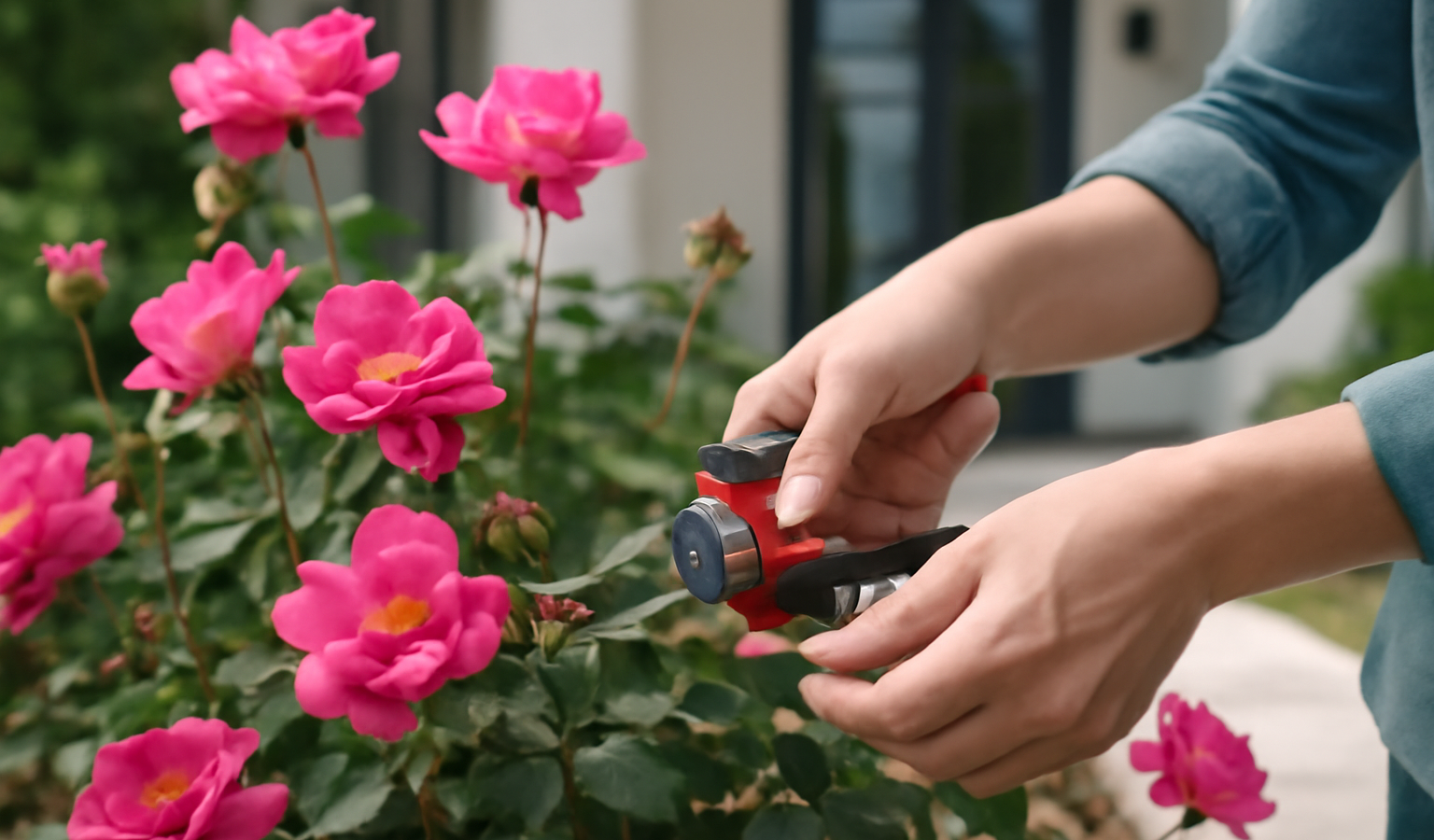
Knock Out roses earned their fame by being almost impossible to kill and by blooming nonstop from spring to frost with little fuss. But “low-maintenance” is not the same as “no-maintenance.” Left completely unpruned, a Knock Out turns into a dense, twiggy mound that gets leggy, blooms less, and traps the humid, stagnant air that fuels disease. The good news is that these shrub roses are remarkably forgiving — you do not need the fussy, cut-to-an-outward-facing-bud-at-a-45-degree-angle precision that hybrid teas demand. A single well-timed hard cut each year plus a bit of summer tidying is all it takes. This guide covers exactly when to prune (the timing is the part people get wrong), how far to cut back, how to deadhead for more flowers, the optional summer shaping, and the handful of mistakes that lead to weak, disease-prone plants.
Key Takeaways
- Do the main prune in late winter or early spring, just as the buds begin to swell — right around when forsythia blooms in your area.
- Cut the whole shrub back by about one-third to one-half, down to 12–18 inches for a hard reset. Knock Outs bloom on new wood, so this drives a flush of fresh growth and flowers.
- Remove all dead, damaged, crossing, and pencil-thin twiggy growth and open up the center for airflow to cut down on black spot.
- Deadhead through summer (or shear lightly) to keep the bloom cycles coming, though Knock Outs are self-cleaning and will rebloom even if you skip it.
- Always use clean, sharp bypass pruners, and prune above an outward-facing bud or simply shear the mass — these roses tolerate both.
Why Knock Outs Are Easy to Prune
The key difference between Knock Out roses and old-fashioned hybrid teas is what they bloom on. Knock Outs flower on new wood — growth produced in the current season — so cutting the plant back hard each spring is not just safe, it is exactly what produces the best display. Every branch you shorten responds with vigorous new shoots, each tipped with flowers. That is why you can be far more aggressive and far less precise than with roses that bloom on old wood.
Knock Outs are also self-cleaning, meaning spent blooms drop on their own and the plant reflowers in roughly six-to-eight-week cycles all season without deadheading. So pruning is really about controlling size, renewing vigor, and improving airflow rather than coaxing reluctant flowers out of the plant.
When to Prune Knock Out Roses
The main annual prune happens in late winter to early spring, just as the leaf buds begin to swell but before much new growth has pushed. A reliable natural cue is forsythia bloom — when the forsythia in your neighborhood lights up yellow, it is Knock Out pruning time. In the warm South this might be February; in colder zones it could be March or even early April. The point is to cut just before the burst of spring growth so the plant channels all that energy into the new shoots you want.
Avoid a hard prune in fall. Cutting in autumn stimulates tender new growth that gets killed by winter cold and can stress the plant. The exception, in any season, is removing dead or damaged canes — that is always fair game. In very cold zones, a light fall trim just to reduce wind-rock on tall canes is fine, but save the real pruning for spring.
Tools and Safety
Use sharp bypass pruners (not anvil-type, which crush stems) for canes up to about half an inch, and loppers for thicker, older canes. Wear thick gauntlet-style rose gloves and long sleeves — Knock Out thorns are real. Disinfect blades with rubbing alcohol or a diluted bleach solution between plants, especially if you have had black spot or other disease, so you are not spreading spores cane to cane.
How to Do the Main Spring Prune
- Remove the “three Ds” first: cut out every dead, damaged, and diseased cane back to healthy green wood or to the base. Healthy wood is green or white inside; dead wood is brown and dry.
- Thin out the clutter: remove thin, twiggy growth thinner than a pencil and any canes that cross or rub. Take out a few of the oldest, woodiest canes at the base to encourage fresh growth.
- Open the center: aim for an open, vase-like or rounded framework so air and light reach the middle of the shrub. Good airflow is your best defense against black spot.
- Cut the whole shrub down by about a third to a half. For a typical Knock Out, that often means reducing it to roughly 12 to 18 inches tall. Don’t be timid — these roses regrow fast and bloom heavily on the new growth.
- Make cuts above an outward-facing bud where you can, about a quarter inch above the bud, so new shoots grow outward and keep the center open. With Knock Outs you can also simply shear the mass to shape and they will respond well.
After pruning, clean up and discard all fallen leaves and clippings from around the base — old foliage harbors disease spores. A fresh layer of mulch and a feeding with a balanced rose fertilizer as growth begins sets the plant up for a strong season. The same “renew and open up” thinking applies to most flowering shrubs; compare it with the timing-specific approach in our guide to pruning lilacs, which flower on old wood and must be cut at the opposite time of year.
Summer Deadheading and Shaping
Because Knock Outs are self-cleaning, deadheading is optional — but a light midseason cleanup can tidy the shrub and nudge the next bloom flush along. When a wave of flowers fades, you can either snip individual spent clusters back to a five-leaflet leaf, or simply shear the whole shrub lightly to remove the dead heads and slightly reduce its size. Many gardeners do one light shaping cut in midsummer to keep the plant compact and refresh the look.
Stop any significant pruning six to eight weeks before your first expected fall frost. Late-season cuts push tender growth that won’t harden off in time and may be damaged by cold.
Common Mistakes to Avoid
Pruning too lightly. Timid trimming leaves a congested, leggy plant. Knock Outs thrive on a confident hard cut each spring — removing a third to a half of the shrub renews vigor and bloom.
Pruning at the wrong time. Hard pruning in fall invites winter dieback. Save the main cut for late winter or early spring as buds swell.
Using dull or anvil pruners. Crushed, ragged cuts heal slowly and invite disease. Keep bypass blades sharp and clean.
Leaving the center congested. A dense, closed-up shrub traps humidity and fuels black spot. Thin the interior so air moves through.
Not cleaning up debris. Diseased leaves left on the ground reinfect the plant. Rake and discard all clippings and old foliage after pruning. For more shrub and landscape care, browse the Outdoor Living hub.
Renewal Pruning for Older Shrubs
After several seasons, even a well-pruned Knock Out builds up thick, woody base canes that flower less and crowd the center. Every few years, give the shrub a renewal prune to keep it young and productive. During the spring cut, identify the two or three oldest, thickest, grayest canes — the ones with rough, peeling bark and few new shoots — and remove them entirely at the base with loppers or a small pruning saw. This stimulates fresh, vigorous canes from the crown that bloom far more freely than tired old wood.
Don’t take out more than about a third of the major canes in any single year, or you’ll over-stress the plant and cost yourself bloom. Spread heavy renewal across two or three springs. The payoff is a shrub that stays compact, dense with flowering wood, and resistant to the legginess that overtakes neglected Knock Outs. Pair renewal pruning with an annual spring feeding and a refreshed 2-to-3-inch mulch layer (kept a few inches off the canes) and the plant will reward you with bloom flushes from late spring straight through to your first frost.
Feeding and Care After Pruning
Pruning and feeding go hand in hand. Once you’ve made the spring cut and you see new growth pushing, apply a balanced or rose-specific granular fertilizer (something like a 4-6-4 or a dedicated rose food) according to the label rate, scratched lightly into the soil at the drip line and watered in. Repeat a lighter feeding after each major bloom flush through midsummer, then stop feeding about six to eight weeks before your first frost so you’re not pushing tender growth into the cold.
Water deeply at the base — an inch or so per week in the absence of rain — rather than wetting the foliage, since wet leaves invite black spot and powdery mildew. Knock Outs are bred for disease resistance, but good airflow from proper pruning, clean ground free of fallen leaves, and base watering keep them looking their best. With this simple rhythm of one hard spring prune, light summer shaping, occasional renewal cuts, and steady feeding, a Knock Out rose stays a tidy, nonstop-blooming workhorse for many years.
Frequently Asked Questions
When should I prune my Knock Out roses?
Do the main prune in late winter or early spring, just as the buds begin to swell — a good cue is when forsythia blooms in your area. This is typically February in the South and March to early April in colder zones. Avoid hard pruning in fall, which encourages tender growth that winter will kill.
How far back can I cut Knock Out roses?
Quite far. Cutting the shrub back by one-third to one-half — often down to 12 to 18 inches — is normal and beneficial. Knock Outs bloom on new wood, so a hard spring cut produces a flush of vigorous, flower-covered growth. They are very forgiving of aggressive pruning.
Do I need to deadhead Knock Out roses?
No, they are self-cleaning and will rebloom on their own roughly every six to eight weeks all season. Deadheading or a light midseason shearing is optional and mainly tidies the plant and can slightly speed the next bloom flush.
Can I shear Knock Out roses with hedge trimmers?
Yes. Unlike hybrid teas, Knock Outs tolerate shearing well, and many gardeners simply shear the mass to shape it. For the main annual prune, though, it is worth also reaching in to remove dead canes and open the center for airflow to reduce disease.
Why are my Knock Out roses getting leggy and blooming less?
That is the classic sign of skipped pruning. Without an annual hard cut, the shrub grows tall, twiggy, and congested, with fewer flowers and more disease. A firm spring prune that removes a third to a half of the plant and opens the center restores compact, heavy-blooming growth.