

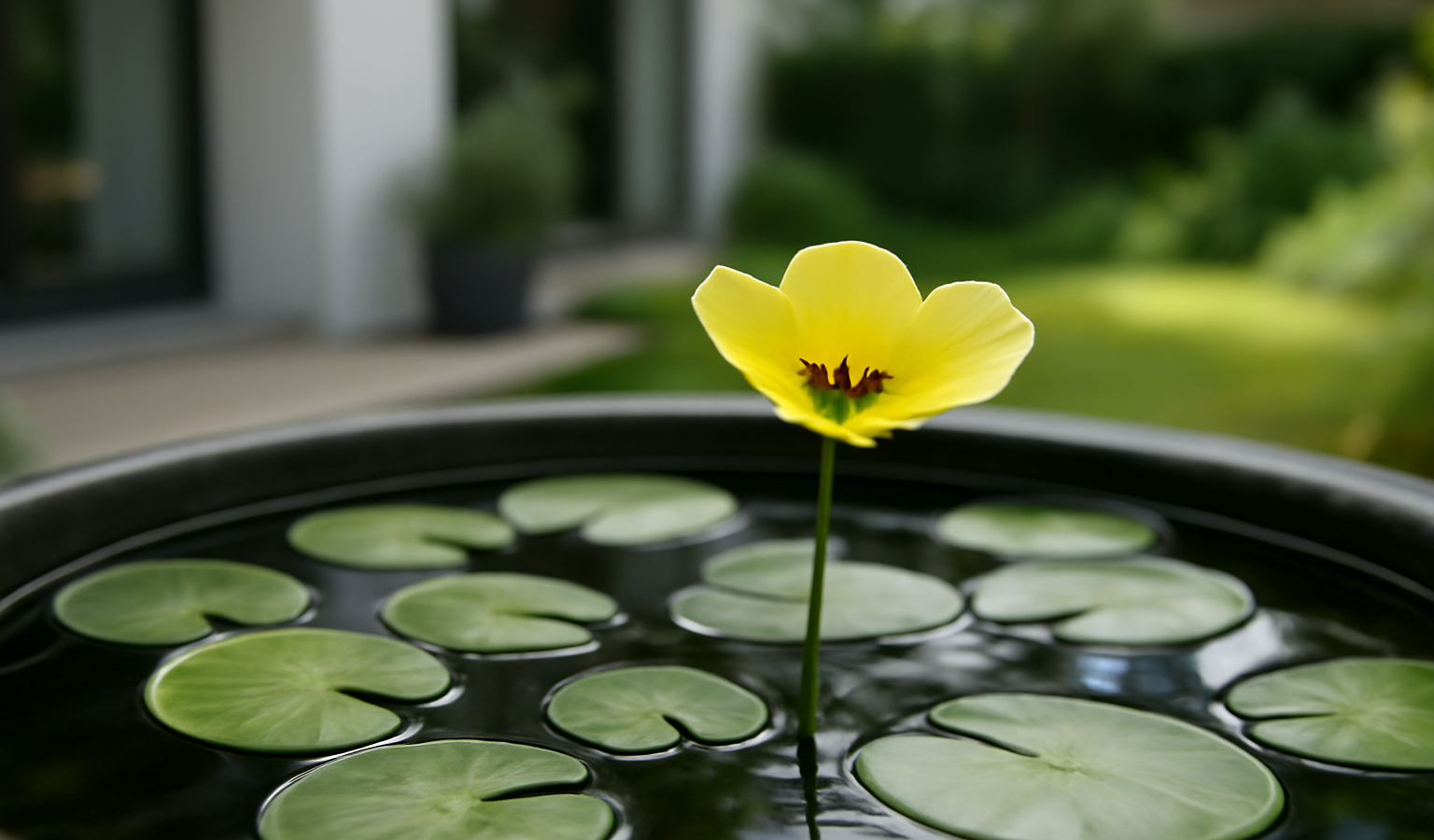
Water poppy (Hydrocleys nymphoides) is one of those plants that earns its place in a pond fast. It throws up glossy, heart-shaped leaves that float on the surface like a miniature water lily, and from early summer onward it produces a steady parade of three-petaled, lemon-yellow blooms with a dark, brushy center. Each flower lasts only about a day, but a healthy clump opens fresh ones almost every morning through the warm months. If you want continuous color in the shallow margins of a pond without the bulk of a true water lily, this is the plant I reach for. It is also a genuinely forgiving grower, which makes it a great pick for anyone moving past their first season of pond keeping. The catch is that water poppy is enthusiastic to a fault, so a little planning around depth and containment goes a long way toward keeping it as an asset rather than a chore.
Key Takeaways
- Water poppy is a tender tropical, hardy in USDA zones 9-11; grow it as an annual or overwinter it indoors in colder zones.
- Plant it as a shallow-water marginal with the pot top about 2 to 12 inches below the surface; aim for roughly 6 inches over the soil once established.
- Always keep it in a basket or pot to control its vigorous, runner-spreading habit, which can become invasive in warm climates.
- Give it full sun (6+ hours) and still or slow-moving water for the most blooms.
- Use heavy clay or loam aquatic soil topped with pea gravel, and feed with aquatic fertilizer tabs monthly during the growing season.
- Propagation is effortless: snip the rooted plantlets that form along the runners and pot them up.
What Water Poppy Is and Why Grow It
Hydrocleys nymphoides is a South American aquatic native to the warm waters of Central and South America, where it scrambles across the shallow edges of ponds and slow streams. The common name comes from those cheerful yellow flowers, which really do look like little poppies riding just above the water. The leaves are the other half of the appeal: thick, waxy, and rounded, they sit flat on the surface and form a low green carpet that contrasts beautifully with upright marginals like rushes or pickerel.
Beyond looks, water poppy pulls real weight in a pond ecosystem. The floating foliage shades the water surface, which helps keep temperatures down and starves out the algae that thrive in bright, warm conditions. That same canopy gives fish a place to hide from herons and from the midday sun, and it offers cover for fry. For a small to medium pond, a single well-grown clump can deliver lily-like surface coverage at a fraction of the cost and fuss of a true Nymphaea. If you are building out the plant list for a new feature, it pairs nicely with other warm-season choices covered in our water gardens and ponds guides.
Hardiness and USDA Zones
This is a tender tropical plant, full stop. Water poppy is reliably hardy only in USDA zones 9 through 11, and even within that range the coldest pockets of zone 9 can be marginal. Some sources list it as zone 10-11 and treat zone 9 as a gamble, which matches my experience: it sails through warm winters but sulks or dies if the water turns genuinely cold. To keep it actively growing, the water needs to stay above roughly 55 to 60 degrees Fahrenheit. Below that it stalls, drops leaves, and goes dormant.
The hard limit is frost. A freeze that touches the crown will kill the plant outright, so anyone in zone 8 or colder should treat water poppy as either a summer annual or a houseplant for the off-season. That is not as discouraging as it sounds. The plant grows so fast and propagates so easily that buying or saving a small start each spring is trivial, and it will fill in by midsummer. I will walk through overwintering further down for those who want to carry the same plant from year to year.
Planting Depth: The Single Most Important Setting
Water poppy is a shallow-water or marginal plant, not a deep-water one, and getting the depth right is the difference between a lush, blooming mound and a stretched-out, flower-shy mess. The target is to set the crown so the top of the pot sits roughly 2 to 12 inches below the water surface. The sweet spot for most ponds is about 6 inches of water over the soil. That depth keeps the roots warm and gives the plant the shallow conditions it loves while still leaving room for the floating leaves to spread.
The plant adapts its stem length to the depth you give it. In shallow water it stays compact and grows lush, with leaves clustered tightly and flowers held just above the surface. In deeper water the stems elongate to push the leaves up to the light, which can leave the clump looking leggy and reduce flowering. So if you have a choice, err toward the shallow end of the range.
A Simple Two-Step Depth Method
When you first pot up a young plant, start shallow. Set the pot on a shelf or stand so there is only about 2 to 3 inches of water over the top of the soil. Shallow, warm water gets the roots active quickly and encourages the plant to push out new leaves and runners. Once it is clearly growing and you can see fresh foliage spreading, lower the pot in stages to its final 6 to 12 inch depth. Dropping it gradually over a week or two avoids shocking the plant and lets the stems adjust. This staged approach consistently gives me a faster, fuller establishment than dunking a fresh start straight into deep water.
Potting and Soil
Plant water poppy in an aquatic mesh basket or a wide, shallow pot rather than a tall, narrow container. The plant runs sideways, so a broad footprint suits it. Use a heavy clay or loam-based aquatic soil. This matters more than people expect: light, fluffy potting mixes are full of peat and bark that float right out of the pot the moment they hit water, fouling the pond and starving the roots. A dense, mineral soil stays put and holds nutrients where the roots can reach them.
After potting, top-dress the surface with a half-inch to an inch of pea gravel. The gravel does two jobs: it pins the soil down so it does not cloud the water, and it stops fish, especially koi and goldfish, from rooting around and uprooting the plant. Tuck an aquatic plant fertilizer tab down into the root zone at planting time and you have given the plant everything it needs to take off.
Containment: Keep It in a Pot, Always
This is the part I want every grower to take seriously. Water poppy spreads vigorously by runners, or stolons, that creep across the surface and root at each node. Left unchecked in a soft-bottomed pond, it will march across open water and can take over the whole feature in a single warm season. In frost-free climates it does not stop at your pond edge either; it has naturalized and is considered invasive or a noxious weed in several warm regions because it escapes into natural waterways and outcompetes native plants.
The fix is simple and non-negotiable: always grow it in a container. A potted plant is easy to lift, thin, and control, and it keeps the root mass from colonizing your pond liner or substrate. Check your local and regional regulations before planting, because in some places water poppy is restricted or banned outright. And whatever your climate, never dump trimmings, runners, or whole plants into lakes, rivers, ditches, or storm drains. Bag the excess and compost it well away from water, or dry it out completely before disposal. Responsible containment is what separates a charming pond plant from an ecological problem.
Light Requirements
Water poppy is a sun lover. For the heaviest bloom, give it full sun, meaning at least 6 hours of direct light a day. In that much light it flowers almost nonstop through summer. It will tolerate part shade, but expect fewer flowers and a looser, leggier habit as the plant reaches for light. If your pond is partly shaded, position the pot in the brightest spot you have and accept that bloom will be lighter. When people tell me their water poppy has plenty of leaves but no flowers, the cause is almost always too little sun or too much depth.
Water Conditions
Give water poppy still or slow-moving water. It evolved in calm shallows, and its floating leaves and short flower stems are not built for turbulence. Keep it well away from fountain spray, waterfall splash zones, or any spot with strong current. Moving water repeatedly submerges the leaves and flowers, batters the foliage, and discourages blooming. If you run a fountain or stream, tuck the plant into a quiet backwater or a separate calm zone of the pond. The plant is not fussy about water chemistry within the normal range of a garden pond, so the main thing to manage is keeping the surface around it relatively placid.
Fertilizing for More Blooms
A well-fed water poppy is a flowering machine. During the active growing season, push an aquatic plant fertilizer tab into the soil near the roots about once a month. These slow-release tabs deliver nutrients directly to the root zone without dumping fertilizer into the open water, which would only feed algae. The difference in flower count between a fed plant and an unfed one is dramatic, so do not skip this if blooms are your goal. Stop feeding as the season winds down and growth slows, since the plant cannot use the nutrients once it goes dormant or you move it indoors. Yellowing leaves during the height of summer often signal that the plant has burned through its food and is ready for another tab.
Propagation Made Easy
If you can use scissors, you can propagate water poppy. As the runners stretch out across the water, they form plantlets at the nodes, and each little plantlet arrives already equipped with its own roots and leaves. To make new plants, simply snip a rooted plantlet free from the runner, set it into a small basket of aquatic soil, top with gravel, and start it shallow just as you would a nursery start. Within a couple of weeks it will be growing on its own.
You can also divide a mature clump by lifting the pot and cutting the root mass into sections, each with healthy crowns and roots. Division is handy in spring when you are repotting anyway. Between the two methods, you will never need to buy water poppy twice, and you will likely end up with plenty to share. For other easy-multiply pond plants, you might enjoy our notes on growing dwarf papyrus in the same shallow margins.
Seasonal Care and Overwintering
In zones 9 through 11 water poppy can stay in the pond year round, though growth slows when the water cools. Trim off any yellowed or tatty leaves to keep it tidy. In colder zones you have two paths. The first is to treat it as an annual, let the frost take it, and start fresh each spring. The second is to overwinter a potted plant indoors. Before the first frost, lift the pot out of the pond and move it into a bright, warm spot indoors: a tub, an aquarium, or even a large bucket of water set under a grow light or a sunny window. Keep the water above about 60 degrees Fahrenheit and the plant will tick along through winter, ready to go back out once the pond warms in spring.
The key timing point for cold-climate growers is to get the plant out of the pond before frost, not after. Once frost has hit the crown, there is usually nothing left to save. Plan the move on the early side. The same before-frost discipline applies to most tender aquatics, and the broader strategy is worth reading up on in our guide to overwintering pond plants.
Pests and Common Problems
Water poppy is largely trouble-free, but a few issues come up. Aphids are the most common, clustering on the emergent leaves and flower stems. In a fish pond, resist the urge to spray; most insecticides are toxic to fish. Instead, blast the aphids off with a hose so they fall into the water, where fish will happily eat them, or simply submerge the affected leaf for a few seconds. The fish usually handle the rest.
Yellowing leaves point to either cold water or low nutrients; address the temperature first, then add a fertilizer tab. No flowers almost always means too little sun or planting too deep, so move the pot brighter and shallower. And if the plant is overrunning the pond, that is the runner habit doing exactly what it does. Thin the runners regularly through the season, pulling or snipping the wandering stems back to the pot. Staying on top of this every couple of weeks keeps the clump contained and the rest of your plants happy.
Deadheading and Routine Trimming
Because each bloom lasts only about a day, spent flowers are a normal part of the cycle and the plant does not need deadheading to keep flowering. That said, pinching off the finished blooms and any submerged seed pods keeps the planting looking crisp and reduces the chance of self-seeding in warm climates. Make routine trimming a habit: every week or two, pull off yellow or damaged leaves, snip back excess runners, and tidy the edges of the clump. A few minutes of grooming keeps water poppy in scale with the rest of your pond and prevents the slow creep toward overgrowth. Treat it well on depth, light, and containment, and this little South American charmer will reward you with months of bright yellow blooms.
Frequently Asked Questions
How deep should I plant water poppy?
Set the pot so the top of the soil sits about 2 to 12 inches below the surface, with roughly 6 inches being ideal. Start a new plant shallow, around 2 to 3 inches over the soil, then lower it gradually to its final depth as it establishes.
What USDA zones is water poppy hardy in?
It is a tender tropical, reliably hardy only in USDA zones 9 through 11. In colder zones grow it as an annual or overwinter a potted plant indoors in bright, warm water above about 60 degrees Fahrenheit. Frost will kill it.
Is water poppy invasive?
It can be. Water poppy spreads aggressively by rooting runners and is considered invasive or weedy in some warm regions. Always grow it in a container, thin the runners, check local regulations, and never release it into natural waterways.
Why won’t my water poppy bloom?
The usual culprits are too little sunlight or planting too deep. Move the pot to a spot with at least 6 hours of direct sun and raise it to shallower water. A monthly aquatic fertilizer tab during the growing season also boosts flowering.
How do I propagate water poppy?
It is very easy. The runners form plantlets at their nodes, each with its own roots and leaves. Snip a rooted plantlet free, pot it in heavy aquatic soil topped with gravel, and start it shallow. You can also divide a mature clump in spring.