

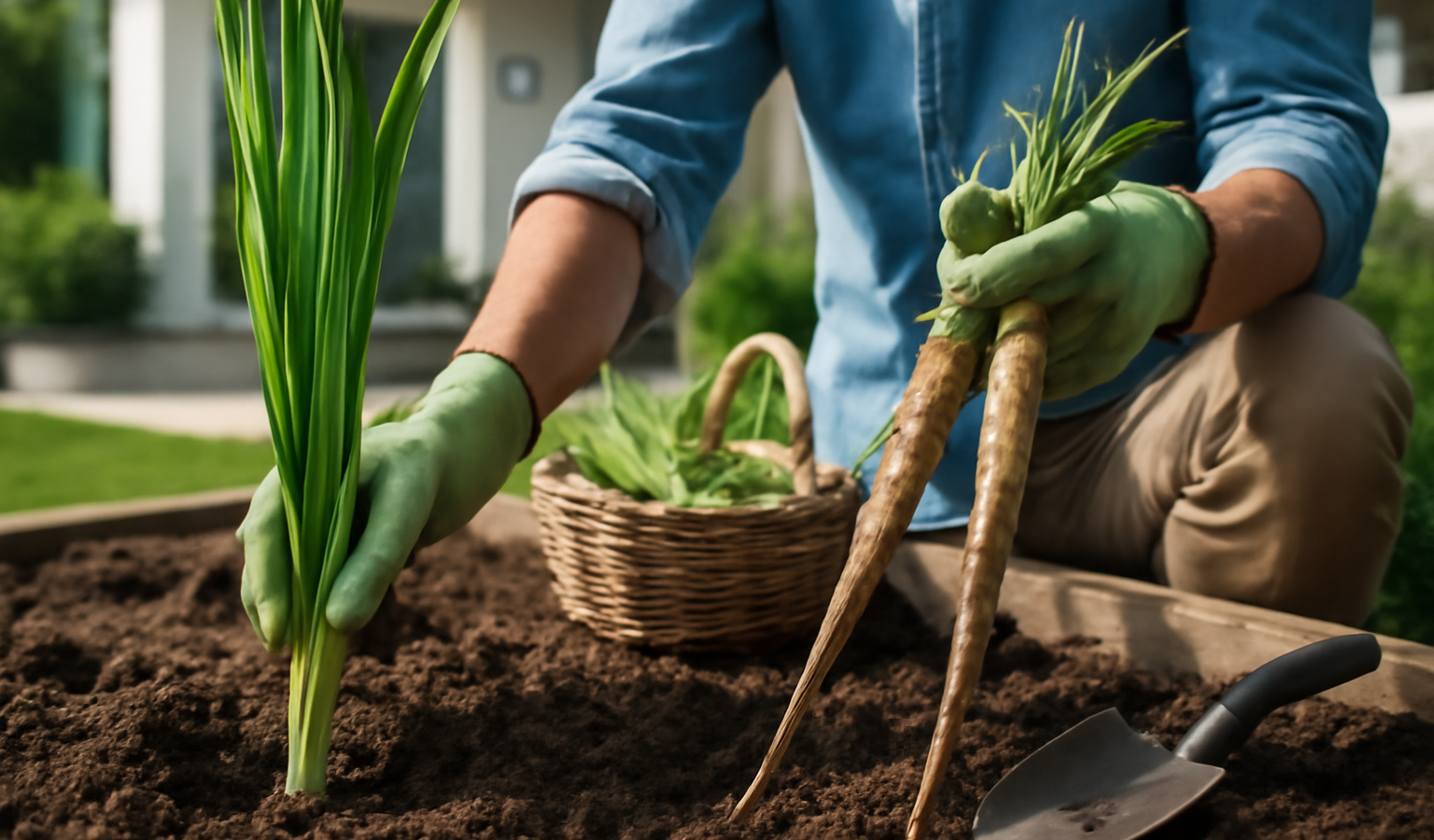
Salsify is one of those old-fashioned vegetables that has nearly vanished from gardens and deserves a comeback. Grown for its long, slender, cream-colored taproot, it earns its nickname “oyster plant” from a delicate flavor that many describe as faintly like oysters or artichoke. It is not a fast or flashy crop — salsify needs a long season and deep, loose soil to form a good straight root — but it is genuinely easy, almost untroubled by pests, and even sweeter after a frost. This guide covers sowing the fussy fresh seed, preparing the deep bed a taproot demands, the long growing season, and how to harvest the roots without snapping them.
Key Takeaways
- Salsify is a long-season root crop needing 120–150 days — direct-sow in early spring as soon as soil is workable.
- Use fresh seed every year; salsify seed loses viability fast and old seed germinates poorly.
- It needs deep, loose, stone-free soil (12+ inches) so the long taproot grows straight, just like carrots and parsnips.
- Direct-sow only — the taproot resents transplanting; thin to 2–4 inches apart.
- Harvest in late fall after a frost or two, which sweetens the roots; dig carefully so they do not snap.
What Is Salsify and Where It Grows
Salsify (Tragopogon porrifolius) is a hardy biennial grown as an annual for its edible taproot, harvested in its first season before it would naturally flower in its second year. The root resembles a long, thin, off-white carrot or parsnip, typically 8–12 inches long and an inch or so wide. You may also encounter scorzonera (Scorzonera hispanica), often called black salsify, a close relative with dark-skinned roots and a similar flavor; it is grown almost identically.
Salsify is cold-tolerant and adaptable, performing well across USDA zones 4–9. It is a cool-season-friendly crop that handles frost beautifully — in fact frost improves it. Because it needs a long season to mature, gardeners get the best roots by planting as early as the soil allows and letting the plants grow all the way into late autumn.
Preparing the Soil for a Straight Root
Like all long taproot crops, salsify lives and dies by its soil. The single most important step is creating a deep, loose, stone-free bed so the root can drive straight down without forking, twisting, or stalling. Dig and loosen the soil to a depth of at least 12 inches, and 15 inches is better, removing rocks, clods, and debris as you go.
- Texture: Aim for light, sandy or loamy soil. Heavy clay produces stunted, forked, hairy roots — if that is what you have, build a tall raised bed or deep container filled with loose mix.
- pH: Slightly acidic to neutral, around 6.0–7.5.
- Fertility: Work in well-rotted compost, but avoid fresh manure and heavy nitrogen. Like carrots, salsify forks and grows hairy in over-rich or freshly manured soil. A modest amount of balanced fertilizer at planting is plenty.
- Stones: Sift them out. A single buried pebble can split a root in two.
The deep-bed preparation here is identical to what other root vegetables need — the same care that produces clean carrots and parsnips produces clean salsify. If you are setting up beds for root crops generally, our Plants & Flowers growing guides cover the soil prep that pays off across the board.
Sowing Salsify Seed
Two rules dominate salsify sowing. First, always use fresh seed — salsify seed loses viability very quickly, often within a year, and old seed germinates so poorly that it is the most common reason people fail with this crop. Buy a new packet each season. Second, direct-sow only. The taproot is the entire point of the crop, and it resents being disturbed; transplanting causes forking and stunting, so salsify is never started indoors and moved.
Sow as early in spring as the soil can be worked, even while nights are still cool, to give the long season a full head start. In mild-winter regions you can also sow in fall for a spring harvest.
- Plant seeds about 1/2 inch deep, spacing them an inch or two apart in rows 12–18 inches apart.
- Keep the seedbed consistently moist; germination is slow and uneven, taking 1–3 weeks. Some gardeners soak the seed overnight to speed things up.
- Mark the row well — slow germination makes it easy to forget where you planted or to weed out the thin grassy seedlings by mistake.
- Once seedlings are a couple of inches tall, thin to a final spacing of 2–4 inches apart so each root has room to size up.
Caring for Salsify Through the Season
Salsify is refreshingly low-maintenance once established. The main jobs are weeding and watering. Keep the bed weed-free, especially early on, because the slender grass-like seedlings compete poorly. Weed by hand or with shallow cultivation near the plants so you do not nick the developing root.
Water consistently to keep the soil evenly moist — about an inch a week. Steady moisture produces smooth, tender roots; an erratic wet-dry cycle causes the roots to crack or grow woody and tough. A layer of mulch helps even out soil moisture and suppress weeds. Salsify is not a heavy feeder, so apart from the compost worked in at planting, it generally needs little supplemental fertilizer; if growth seems weak, a light midseason feeding of balanced fertilizer is enough. One of the best things about salsify is how few pests bother it — it is largely ignored by the insects and diseases that plague other vegetables, making it a genuinely easy crop to tend once the slow start is behind you.
The Long Season and Why Patience Pays
Set your expectations for a long haul. Salsify needs roughly 120 to 150 days to mature a worthwhile root, which is why early sowing matters so much. There is nothing to harvest in early or midsummer — the plant spends those months quietly building its taproot underground while putting up grassy foliage above. This is not a crop for the impatient or for a short growing window; it is one you plant in spring and forget about until fall.
If you leave roots in the ground over winter, the plant will resume growth in its second year and send up a tall stalk topped with pretty purple, dandelion-like flowers that form fluffy seed heads. By then the root has turned woody and inedible, so for eating you harvest in the first fall. Some gardeners do let a few plants flower the second year to collect their own fresh seed for the next sowing, neatly solving the short-viability problem.
Harvesting and Storing Salsify
Harvest in late fall, after the plants have been through a frost or two. Cold weather converts some of the root’s starches to sugars, sweetening and improving the flavor — frost is a feature, not a problem, for this crop. The roots are ready when they have reached full size, generally 8–12 inches long and around an inch thick at the crown.
Dig, do not pull. The long, brittle roots snap easily if you yank them, and a broken root bleeds sap and stores poorly. Loosen the soil deeply alongside the row with a garden fork or spade, working well away from the roots, then ease them up from below. Handle them gently. In mild climates with workable soil, you can leave salsify in the ground and dig roots as needed through winter — heavy mulch keeps the soil diggable. In colder regions, dig the whole crop before the ground freezes solid and store the roots in damp sand in a cool root cellar, or refrigerate them, where they keep for several weeks. The flavor is at its best fresh; in the kitchen, peel and drop the roots into acidulated water (water with a splash of lemon or vinegar) to stop the cut surfaces from browning. For more cool-season harvest tips, browse the Plants & Flowers hub.
Frequently Asked Questions
How long does salsify take to grow?
Salsify is a long-season crop that needs roughly 120 to 150 days to mature a good root. Sow it as early in spring as the soil can be worked and harvest in late fall — there is little to pick before autumn, as the plant spends summer building its taproot underground.
Why did my salsify seed fail to germinate?
The usual culprit is old seed. Salsify seed loses viability very quickly, often within a year, so always buy fresh seed each season. Germination is also naturally slow and uneven (1–3 weeks), so keep the bed consistently moist and be patient before giving up.
Can I grow salsify in clay or shallow soil?
Poorly — heavy or stony soil produces stunted, forked, hairy roots. Salsify needs deep, loose, stone-free soil at least 12 inches deep so the long taproot grows straight. If your ground is heavy clay, build a tall raised bed or use a deep container filled with loose, sandy mix.
When should I harvest salsify?
Harvest in late fall after the plants have experienced a frost or two, which sweetens the roots by converting starches to sugars. Dig the roots out carefully with a fork rather than pulling them, since the long, brittle taproots snap easily and broken roots store poorly.
What does salsify taste like?
Salsify has a mild, delicate flavor often compared to oysters — hence its nickname “oyster plant” — with hints of artichoke. The roots can be boiled, roasted, mashed, or fried, and they are best harvested after frost when the flavor is sweetest.