

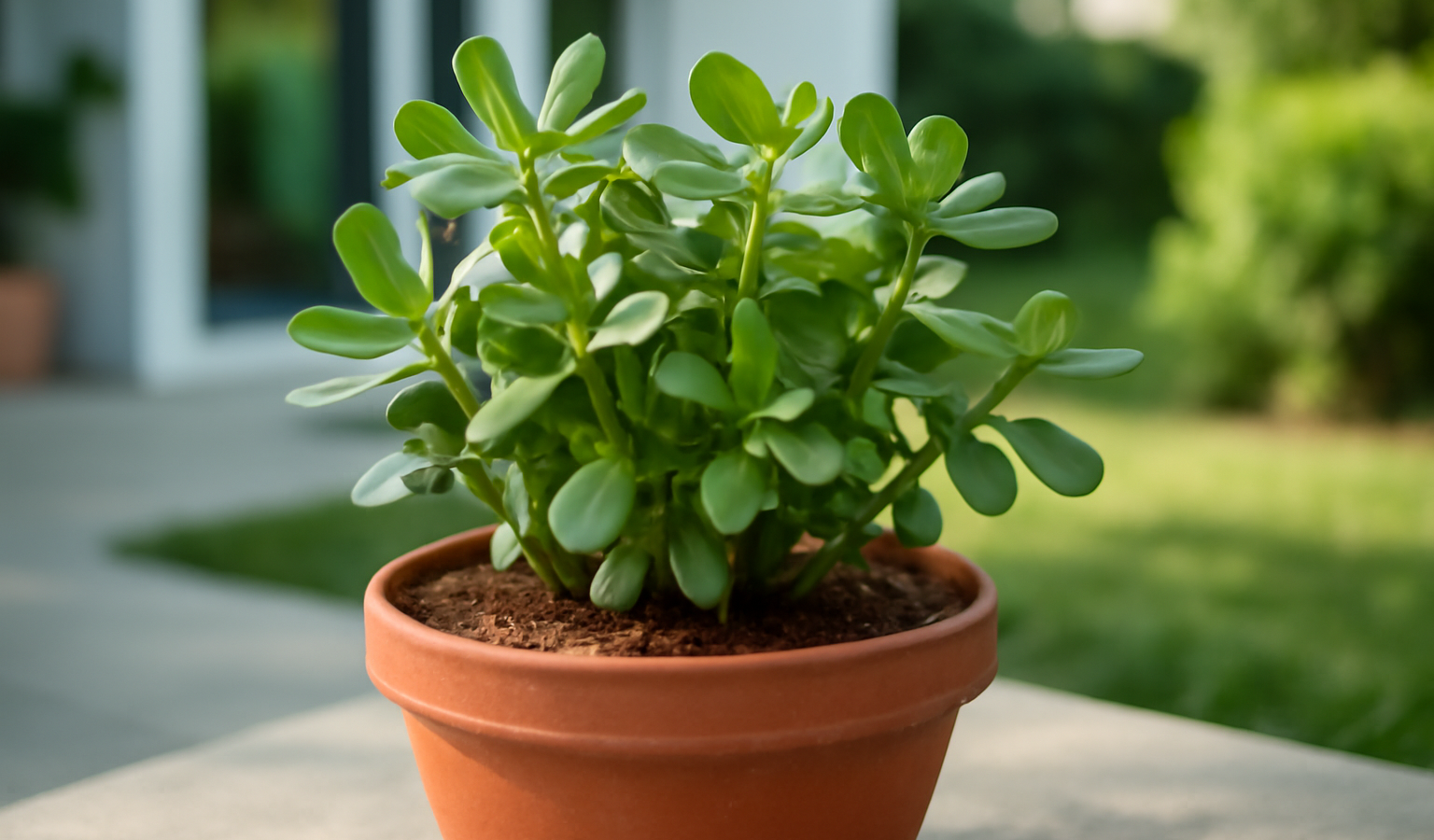
Purslane is the rare vegetable that millions of gardeners already grow without meaning to — it is the sprawling, fleshy “weed” with paddle-shaped leaves that colonizes warm, dry ground — and it happens to be one of the most nutritious greens on the planet, with more omega-3 fatty acids than any other leafy vegetable. Once you decide to grow it deliberately rather than pull it, purslane (Portulaca oleracea) becomes a near-effortless summer crop: a low, succulent mat of crunchy, slightly lemony, mildly salty leaves that you eat raw in salads or wilt like spinach. Sow the tiny seed barely covered once the soil has warmed past 60–70°F, thin to about 6 inches apart, and you can begin picking in three to four weeks. Treated cut-and-come-again, it regrows fast and crops all summer in the very heat and drought that flatten lettuce and spinach. Hardy as a self-seeding annual across USDA zones 5–11, purslane asks for full sun, lean soil, and almost nothing else — in fact, pamper it with rich soil and shade and it sulks. This guide covers wild versus cultivated golden purslane, sowing into warm soil, spacing, the repeat harvest, managing its enthusiastic self-seeding, and a crucial note on distinguishing it from a toxic look-alike.
Key Takeaways
- Succulent superfood: Purslane is a fleshy, crunchy green with the highest omega-3 content of any leafy vegetable, plus a pleasant lemony, faintly salty tang.
- Loves heat and neglect: It thrives in full sun, lean soil, and drought — the conditions that destroy lettuce — and resents rich soil and shade.
- Sowing: Surface-sow the tiny seed (barely cover) once soil is 60–70°F; germinates in about a week.
- Spacing: Thin to about 6 inches apart, or grow as a dense baby-leaf mat and cut young.
- Harvest: Pick from 3–4 weeks, cut-and-come-again — snip stems above a leaf node and it rebranches all summer.
- Zones & self-seeding: A frost-tender annual across USDA zones 5–11 that self-seeds prolifically; deadhead to control spread.
Wild, Golden, and the Toxic Look-Alike
There are two purslanes worth knowing in the garden. Common (wild) purslane is the low, ground-hugging plant with reddish stems and small green leaves that turns up uninvited in paths, beds, and cracks — it is entirely edible and is exactly the same species seed companies sell. Golden or cultivated purslane has been selected for a more upright habit, larger paddle-shaped leaves, and a yellow-green to golden color; it is easier to harvest and a touch milder, which is why most gardeners growing it on purpose choose a named cultivated strain. Both are grown identically and taste similar.
One safety note matters before you forage or grow purslane: it has a dangerous look-alike. Hairy-stemmed spurge (Euphorbia maculata and relatives) grows in the same dry, sunny ground and at a glance resembles a sprawling purslane, but spurge is toxic. The reliable tells are that purslane has smooth, hairless, fleshy succulent stems and leaves, while spurge has thin, wiry, non-succulent stems, often fine hairs, and — the giveaway — oozes a milky white sap when you snap a stem. Purslane’s sap is clear. When you grow purslane from purchased seed in a known bed there is no confusion; the warning is for anyone tempted to harvest volunteers from elsewhere in the yard.
When and How to Sow
Purslane is firmly warm-season and, like its relatives, will not germinate in cold ground. Wait until soil has warmed to at least 60°F, ideally 70°F — in most regions that means late spring after the last frost has passed. The seed is very small, so sow it shallowly: scatter on a raked, firmed surface and barely cover it, no more than an eighth of an inch, or press it into the soil surface, because it germinates best with light and warmth. Keep the surface moist and seedlings appear in about seven to ten days.
Direct-sowing is easiest, but you can also start purslane in modules a few weeks before your soil warms and transplant the young plants out. Because it crops fast and self-seeds, a single early sowing often hands you a continuous supply, but making a fresh sowing every three to four weeks through early summer guarantees a run of tender young growth. It grows happily in the ground, in raised beds, and especially well in containers and window boxes, where its trailing, drought-proof habit suits a sunny balcony.
Spacing, Site, and Soil
For full plants, thin seedlings to about 6 inches apart; for a baby-leaf carpet you cut young and often, you can grow them far denser and simply shear the mat. Site is the most important decision: purslane wants full sun and the leanest, fastest-draining soil you have. This is the counterintuitive part of growing it — nearly every other green wants rich, moist, fertile ground, but purslane evolved as a tough colonizer of dry, poor soil, and that is where it produces the crispest, best-flavored leaves. Plant it in heavy, rich, damp soil and it grows soft, leggy, and bland, and is more prone to rot.
Give it the worst sunny corner of the garden and it will thank you. Watering should be sparing: water young seedlings to establish them, then let the soil dry between drinks. The plant’s succulent leaves store their own water, which is precisely why it sails through heat waves and dry spells. Skip the fertilizer — purslane needs none and over-feeding only makes it floppy. There is almost no other vegetable you can genuinely ignore and harvest more from.
Harvesting Cut-and-Come-Again
You can start picking purslane when plants are a few inches across, usually three to four weeks from sowing. The best method is cut-and-come-again: snip whole stems an inch or two above a leaf node, taking the tender tips with their leaves, and the plant will branch from the cut and regrow within one to two weeks. Harvesting this way keeps the plant in juvenile, tender mode and discourages it from flowering. Pick lightly and often rather than stripping a plant, and a small patch will supply salads and stir-fries all summer.
The flavor is at its best from young growth: crunchy, succulent, with a clean lemony tartness and a faint mineral saltiness that brightens a salad or a yogurt sauce. Older stems toward the end of the season get stringier and the leaves smaller as the plant tries to flower, so keep cutting to stay ahead of it. The whole plant above the lowest leaves is edible — leaves, soft stems, flower buds, and even the seeds. Eat it raw, wilt it briefly like spinach, or stir it into soups, where its slight mucilaginous quality gives a pleasant body much like okra.
Self-Seeding and Keeping It in Bounds
Purslane’s one cautionary trait is its astonishing fertility. A single plant allowed to flower and set seed can drop tens of thousands of seeds, and those seeds remain viable in the soil for years, which is exactly why it earns its reputation as a persistent garden weed. For a steady supply this is a feature, not a bug — let one or two plants flower and you will have self-sown purslane returning each warm season with no effort. But if you want to keep it confined, harvest and deadhead before it sets seed, and pull stray seedlings while small. Be aware too that even pulled stems can re-root if left lying on moist soil, so clear your prunings rather than dropping them in the bed.
Pests, Problems, and Zones
Purslane is virtually pest- and disease-free — another reason it makes such an easy crop. The main problems come from growing it wrong rather than from any bug: in cool, wet, or shady conditions it grows soft and can rot or develop fungal spots, and slugs may nibble seedlings in a damp spring. Give it heat, sun, and sharp drainage and these vanish. There are no significant pests that target it in most gardens, and it needs no spraying.
As a frost-tender annual, purslane is grown for the warm season across USDA zones 5 through 11; the first frost blackens it, but its seed overwinters in the soil to return on its own. In hot, long-summer and tropical regions it can crop for many months. For another vigorous warm-season green that loves the same blazing, dry conditions, see our guide to amaranth greens (callaloo), which pairs well with purslane in a summer salad bed.
Frequently Asked Questions
Is the purslane growing as a weed in my garden edible?
Yes — common wild purslane is the same edible species as the kind sold as seed. Just be certain it is purslane and not toxic spurge: purslane has smooth, fleshy succulent stems and clear sap, while spurge has thin wiry stems and oozes milky white sap when snapped.
Does purslane need a lot of water and fertilizer?
No. Purslane is drought-tolerant and thrives in lean, poor soil with little water and no feeding. Rich soil, heavy watering, and shade make it soft, leggy, and bland and can cause rot. Treat it tough for the best flavor.
How do I harvest purslane so it keeps growing?
Cut whole stems an inch or two above a leaf node, taking the tender tips. The plant rebranches from the cut and regrows in one to two weeks. Pick lightly and often and a small patch crops all summer.
Why is purslane considered so healthy?
It contains more omega-3 fatty acids than any other leafy vegetable, along with vitamins A and C, magnesium, and antioxidants. The succulent leaves are also low in calories. It does contain oxalates, so people prone to kidney stones should eat it in moderation.
Will purslane come back every year?
The plant itself is killed by frost, but it self-seeds so prolifically that dropped seed returns each warm season on its own. To prevent it spreading, harvest and deadhead before it sets seed and pull stray seedlings while small.