

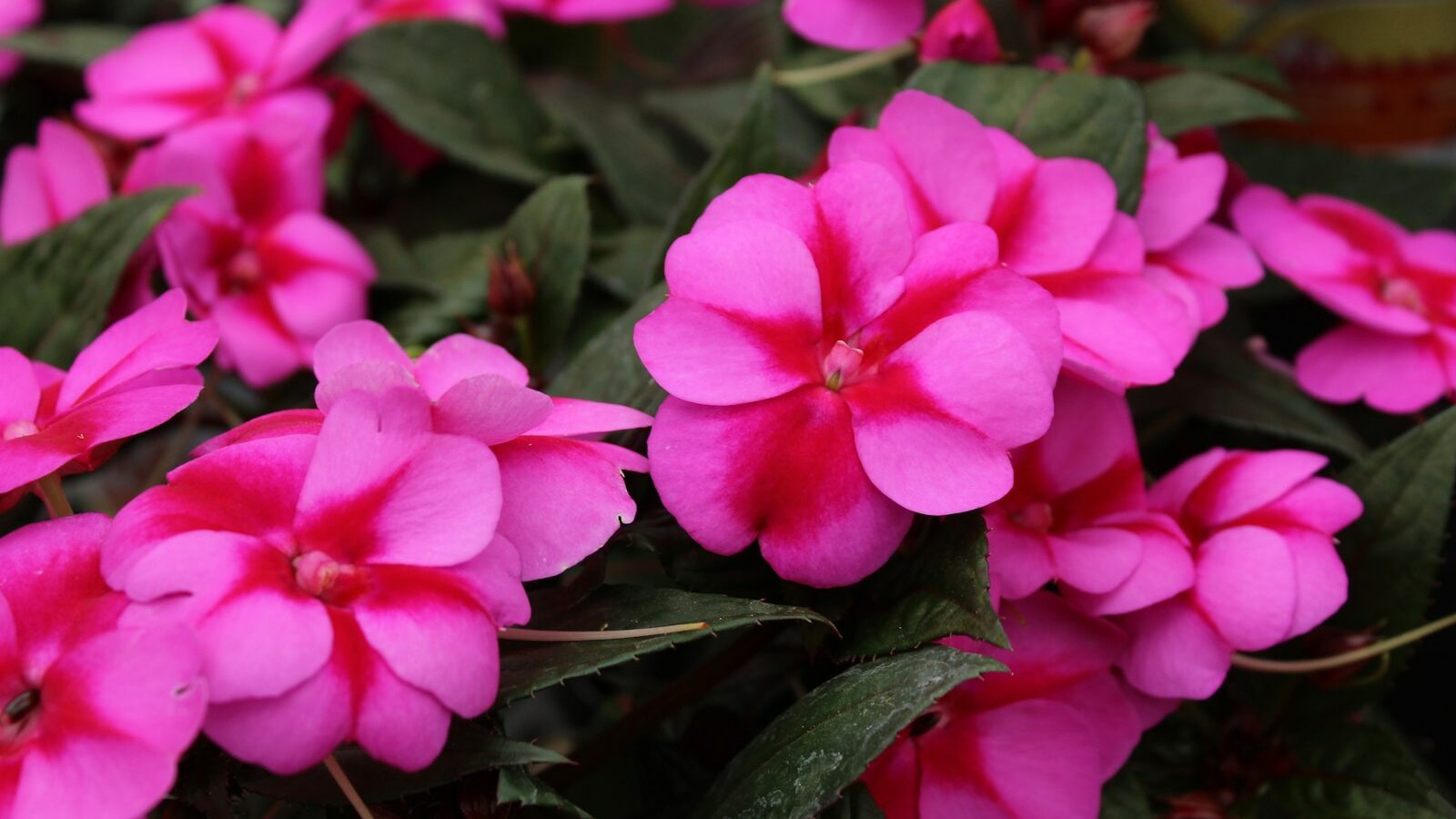
Few annuals light up a shady corner like impatiens. These dependable, low-fuss bloomers cover themselves in flowers from spring until frost, thriving in the very spots where most flowers sulk. Whether you want a carpet of color under a tree, a tumbling hanging basket, or a tidy container by a north-facing door, impatiens deliver season-long color with very little effort.
Impatiens quick facts
- Top shade annual; New Guinea types take more sun
- Rich, moist soil — they wilt quickly when dry
- Self-cleaning: no deadheading needed
- Watch downy mildew on standard impatiens
- Great in beds, pots & hanging baskets
As an Amazon Associate we earn from qualifying purchases.
Know your impatiens: types and where they grow
“Impatiens” covers several plants with very different sun tolerance, so picking the right type for your spot is the first step to success. Buying a sun-loving SunPatiens for deep shade — or a shade-loving walleriana for a hot, exposed bed — is the most common reason these easy plants underperform.
The main types
- Standard impatiens (Impatiens walleriana): The classic “busy Lizzie.” Compact, smooth-leaved, and the most shade-tolerant of all. Best in part to full shade. Susceptible to downy mildew (more on that below).
- New Guinea impatiens (Impatiens hawkeri): Larger plants with bigger flowers and often bronze or variegated foliage. They take more sun — part shade to a few hours of morning sun — and resist downy mildew.
- SunPatiens: A vigorous hybrid bred for full sun to part shade and heat tolerance. Big, robust plants that fill space fast and shrug off downy mildew. Ideal for sunnier beds and large containers.
For a shady bed, standard or New Guinea types are perfect. For sun or a transitional spot that gets a few hours of bright light, reach for New Guinea or SunPatiens. You can find a wide range of impatiens plants as starter plugs and quart pots in spring.
All impatiens are warm-season annuals in most of the US and global temperate zones, meaning they grow, flower, and die within a single season once frost arrives. In frost-free climates (roughly USDA zones 10–11) they can persist as short-lived perennials, but most gardeners simply replant each spring or root cuttings to carry favorites over the winter indoors. Colors span white, pink, salmon, coral, red, orange, lavender, and violet, with bicolors and “rose” double-flowered forms that look like tiny camellias — so there’s a shade to suit any garden palette.
Light: part to full shade (mostly)
Standard impatiens are the gold standard for shade. They flower beautifully in dappled light, on the north or east side of a house, and beneath trees where grass struggles. Two to four hours of soft morning sun is fine, but harsh afternoon sun scorches the leaves and causes constant wilting.
- Full to part shade: Standard walleriana — bright, indirect light keeps them lush.
- Part shade to morning sun: New Guinea impatiens.
- Part sun to full sun: SunPatiens, provided you keep them well watered.
If your standard impatiens look leggy and bloom poorly, they likely need more light; if they wilt and bleach in midday, they need less. Impatiens pair beautifully with other shade lovers — see our shade garden ideas for combinations with coleus, ferns, and begonias.
Soil, planting, and watering
Impatiens want rich, moisture-retentive but well-drained soil. Work in plenty of compost before planting beds, and use a quality peat- or coir-based potting mix in containers. Soggy, waterlogged soil invites rot, but soil that dries out causes the dramatic, sudden wilting these plants are famous for.
Planting tips
- Wait until all danger of frost has passed and soil has warmed — impatiens hate cold.
- Space standard impatiens 8–12 inches apart; New Guinea and SunPatiens need 12–18 inches as they grow much larger.
- Plant at the same depth they sat in their nursery pots and water in well.
- A 1–2 inch layer of mulch in beds keeps roots cool and moisture even.
Watering — their one demand
Consistent moisture is the single most important factor. Impatiens wilt fast and dramatically when dry, but they usually recover within hours of a good soak. Check beds every couple of days in warm weather and containers daily — pots and especially hanging baskets dry out quickly. Aim to keep the soil evenly moist, never bone-dry and never standing in water.
Water deeply and at the base of the plant rather than splashing the foliage, which helps keep leaves dry and discourages disease. Morning is the ideal time, giving any stray moisture a chance to evaporate before evening. During heat waves, a thicker layer of mulch and a daily check make all the difference — repeated severe wilting stresses plants and can shorten their season even if they perk back up each time. If you travel often, a self-watering container or a simple drip line on a timer takes the guesswork out of keeping impatiens happy.
Feeding and self-cleaning blooms
Impatiens are steady feeders that reward regular nutrition with nonstop flowers. Mix a slow-release fertilizer into beds and containers at planting, then supplement with a dilute liquid feed every two to three weeks through summer. Container and basket plants benefit most, since frequent watering flushes nutrients out of the mix.
- Use a balanced or bloom-boosting flower fertilizer at half strength to avoid lush leaves at the expense of flowers.
- Ease off feeding if growth becomes leafy and bloom-light — that signals too much nitrogen.
The best news: impatiens are self-cleaning. Spent flowers drop on their own, so there’s no deadheading required to keep them blooming. This is a big part of why they’re such a favorite for low-maintenance shade plantings — you get continuous color without the daily pinching that many other annuals demand. If plants get tall and leggy by midsummer, simply shear them back by a third — they’ll rebound bushier and fuller within a week or two. A midseason trim plus a fresh dose of liquid feed is the classic trick for keeping a tired planting looking fresh into early fall.
Beds, containers, and hanging baskets
Impatiens are wonderfully versatile, performing equally well massed in shady beds or spilling over the edge of a pot.
- Beds: Plant in drifts for a solid carpet of color. Their mounding habit knits together to suppress weeds beneath trees and along shaded foundations.
- Containers: Pair with coleus for foliage contrast or tuck around the base of taller shade plants.
- Hanging baskets: Standard impatiens cascade beautifully and bloom all over. Choose generous hanging baskets with good moisture retention, since smaller baskets dry out too fast.
For shaded pots, impatiens combine perfectly with begonias, fuchsia, and trailing ivy. Choose containers with drainage holes and don’t overcrowd — a little space promotes airflow and reduces disease.
Downy mildew, pests, and easy cuttings
Downy mildew on standard impatiens
The biggest concern with standard Impatiens walleriana is impatiens downy mildew, a disease that swept through gardens in the 2010s. Symptoms include yellowing or stippled leaves, white fuzzy growth on leaf undersides, and sudden leaf and flower drop that can collapse a whole planting. The spores persist in soil, so once a bed is affected, avoid replanting standard impatiens there for a few years.
- Resistant alternatives: New Guinea impatiens, SunPatiens, and newer mildew-resistant walleriana series (such as Beacon and Imara XDR) all resist the disease.
- Prevention: Space plants for airflow, water at the base in the morning, and avoid overcrowding. Remove and bag any infected plants — don’t compost them.
Common pests
- Spider mites: Most common in hot, dry conditions — look for fine webbing and stippled leaves. Rinse foliage and treat with insecticidal soap.
- Aphids: Cluster on new growth; blast off with water or use insecticidal soap.
- Slugs and snails: Chew ragged holes in shady, damp beds. Hand-pick or use a pet-safe slug bait.
Free plants from cuttings
Impatiens root almost effortlessly. Snip a healthy 3–4 inch stem tip, strip the lower leaves, and place it in a glass of water on a bright windowsill. Roots appear within a week or two; pot up once they’re an inch long. You can even overwinter favorite plants indoors this way to start next year’s display for free.
For more on shade plantings and seasonal color, return to our complete plant & flower care guide.
Frequently asked questions
Can impatiens grow in full sun?
Standard impatiens (walleriana) prefer part to full shade and scorch in hot afternoon sun. For sunny spots, choose SunPatiens or New Guinea impatiens, both bred for sun and heat — just keep them well watered.
Why do my impatiens keep wilting?
Wilting almost always means the soil has dried out. Impatiens collapse quickly when thirsty but usually bounce back within hours of a deep watering. Keep soil consistently moist; check containers and hanging baskets daily in warm weather.
Do I need to deadhead impatiens?
No. Impatiens are self-cleaning — spent blooms drop on their own and the plant keeps flowering without deadheading. If plants get leggy, shear them back by a third to encourage bushier regrowth.
What is impatiens downy mildew and how do I avoid it?
It’s a disease that yellows leaves, coats their undersides in white growth, and causes sudden collapse of standard impatiens. Avoid it by planting resistant types (New Guinea, SunPatiens, or Beacon/Imara series), spacing for airflow, and not replanting standard impatiens in affected soil.
Can I grow new impatiens from cuttings?
Yes, very easily. Take a 3–4 inch stem tip, remove the lower leaves, and root it in a glass of water on a bright windowsill. Roots form in one to two weeks, then pot it up. It’s a great way to multiply plants for free.