

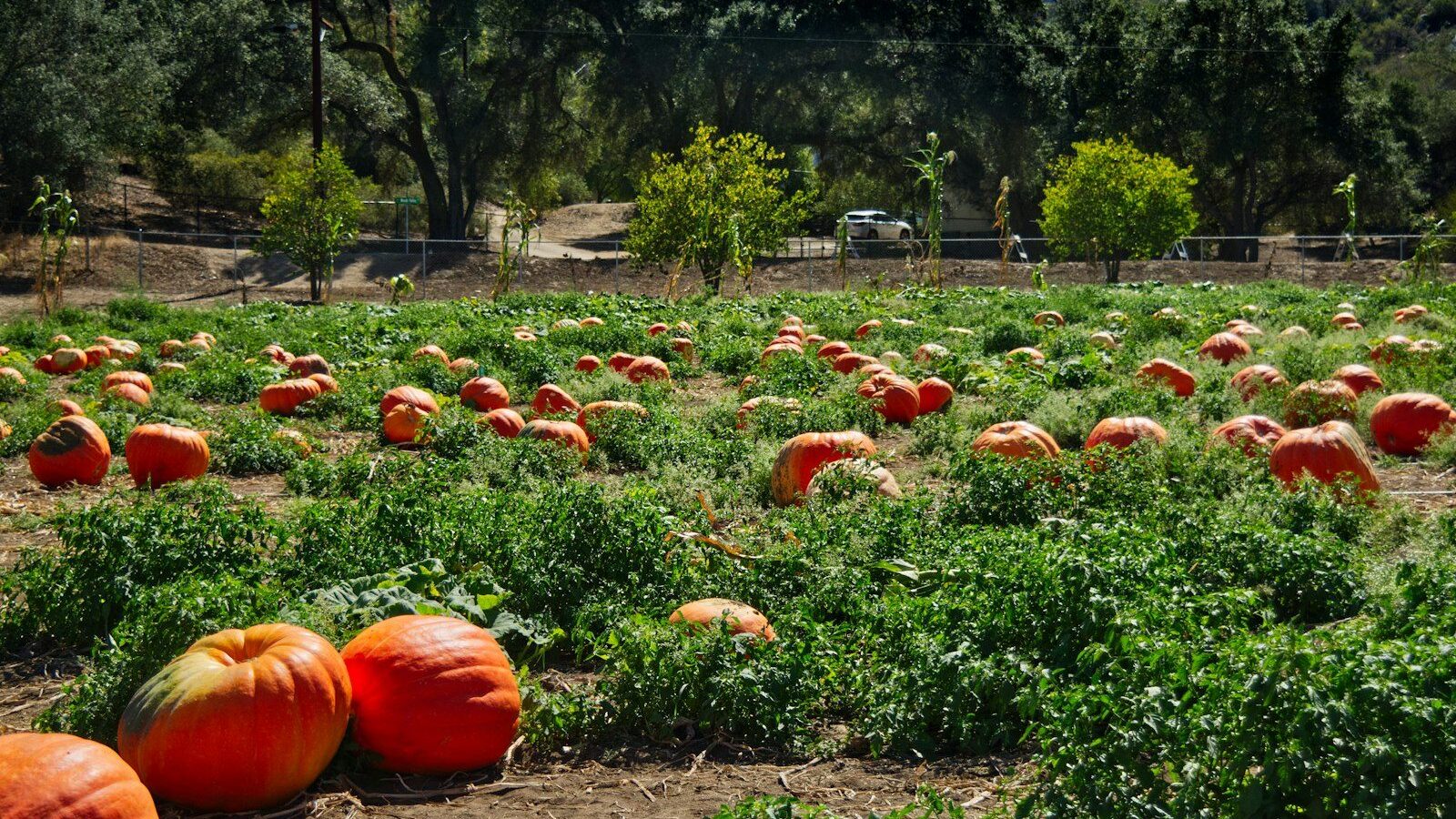
To grow a giant pumpkin at home, start with Atlantic Giant seed, ideally from a known heavy-pumpkin lineage, sow it indoors in late April or early May, and plant one seedling in a sunny patch of rich, well-drained soil at least 20 by 20 feet, with more space if you can spare it. Then hand-pollinate a female flower roughly 10 to 15 feet out on the main vine, keep only one pumpkin per plant, prune the vines into a flat, branching pattern, bury the vines so they root along their length, and water and feed steadily through the summer. With a season of about 120 to 130 days and attentive care, home growers commonly reach several hundred pounds in their first serious attempt. Here is the full process step by step.
Part of our Vegetable Gardening & Raised Beds guide →
In this guide
Key Takeaways
- Genetics matter most: grow Atlantic Giant, preferably seed with a documented parent pumpkin.
- Give one plant at least 400 square feet; competitive growers often use 600 to 1,000 or more.
- Get a soil test and aim for a pH around 6.5 to 6.8 with plenty of organic matter.
- Hand-pollinate on the main vine and keep only one pumpkin per plant.
- Consistent water, buried vines and shade for the fruit drive growth through July and August.
Start With the Right Seed
Almost every giant pumpkin grown for weight descends from Atlantic Giant (Cucurbita maxima), developed by Nova Scotia grower Howard Dill. Packets labeled simply “Atlantic Giant” from garden centers will produce big pumpkins, often in the 100 to 300 pound range with good care. Serious growers buy or trade seeds identified by the parent pumpkin’s grower, weight and year, because those lines carry the genetics for much larger fruit. Many giant pumpkin clubs hold seed auctions and swaps each winter, which is a good place to start.
Ordinary jack-o’-lantern varieties are a different species and will not get anywhere near giant size. If you just want a good crop of carving and pie pumpkins, see our general guide on how to grow pumpkins.
Prepare the Patch
Space and sun
Giant pumpkin vines cover an astonishing area. Plan for one plant per patch of at least 20 by 20 feet, about 400 square feet. Top growers commonly give each plant 600 to 1,000 or more. The site needs full sun, at least 8 hours, and some wind protection: big leaves tear and vines can be flipped in strong gusts. A windbreak of snow fence or shade cloth on the windward side helps.
Soil
- Test in fall or early spring. A lab soil test tells you pH and nutrient levels so you can adjust before planting. Aim for a pH of roughly 6.5 to 6.8.
- Add organic matter generously. Several inches of well-rotted manure or compost tilled into the patch in fall gives roots a loose, fertile bed.
- Ensure drainage. Giant pumpkins need a lot of water but not waterlogged roots. Avoid low spots that puddle.
- Plant a cover crop such as winter rye the fall before, then turn it under in spring, if you have time to plan ahead.
For help reading lab results, see how to read a soil test.
Starting Seeds Indoors
Most growers in the northern half of the US start seeds indoors in late April or early May, about two to three weeks before the last frost, and transplant young plants with one or two true leaves. In the South, adjust earlier.
- File the seed edges. Lightly sand the rounded edges of the seed coat with a nail file or fine sandpaper, avoiding the pointed tip. This helps water get in.
- Soak in warm water for one to four hours.
- Sow pointed end down, about 1 inch deep, in a 4- to 6-inch peat or plastic pot of moist seed-starting mix.
- Keep warm. Germination is fastest at soil temperatures around 80 to 85°F; a seedling heat mat makes a big difference. Seeds often sprout in three to five days.
- Give bright light as soon as they emerge to prevent stretching.
- Transplant early. Pumpkins dislike root disturbance. Move them out within about 10 to 14 days, before roots fill the pot.
Transplanting and Early Protection
Plant out when nights stay above about 50°F. Warm the soil ahead of time with black plastic for a week. Set the seedling with the first true leaf pointing the direction you want the main vine to run. Most growers protect young plants with a mini greenhouse or cold frame made from plastic sheeting over a simple frame for the first few weeks, opening it on warm days so it does not overheat. This protects from cold nights, wind and early pests like cucumber beetles.
Vine Training and Pruning
Pruning concentrates the plant’s energy and keeps the patch manageable. The common approach is the “Christmas tree” pattern:
- Main vine: run it in a straight line through the center of the patch.
- Secondary vines: allow them to grow out at right angles from the main vine, spaced evenly on both sides. Pinch secondaries near the stump that cross the main vine path.
- Tertiary vines: remove the small shoots that grow off secondary vines, so the plant puts energy into leaves along a clean, flat framework.
- Terminate vine tips when they reach the edge of the patch by pinching off the growing point.
- Bury vines. Cover the main and secondary vines with a few inches of soil at each leaf node. Roots grow at the nodes, adding water and nutrient uptake and anchoring the vine.
Pollination: Picking the Pumpkin
Male flowers appear first on long, thin stems. Female flowers have a small, round swelling, the future pumpkin, at the base. Aim to pollinate a female flower on the main vine about 10 to 15 feet from the stump, which gives the plant enough leaves before the fruit to feed it and leaves room for the fruit to grow without stressing the stem.
- The evening before a female flower opens, cover it, and a few nearby male flowers, with a light bag or cloth to keep bees from cross-pollinating.
- Early the next morning, pick two or three freshly opened male flowers, peel back the petals and brush their pollen onto every part of the female stigma.
- Re-cover the female flower for a day, then label it with the date and the pollen source.
- Pollinate two or three female flowers on different vines as backups. Once one is growing well, about a week to ten days later, remove the others.
Keeping only one pumpkin per plant is the single biggest factor in final size after genetics.
Watering and Feeding
A giant pumpkin is mostly water, and the plant drinks heavily in midsummer. Water deeply and consistently so the root zone never dries out, but avoid saturating it. Drip lines or soaker hoses across the patch are ideal, often run daily in hot weather; check soil moisture a few inches down rather than following a fixed schedule. Sudden heavy watering after a dry spell can split a growing fruit.
- Before fruit set: moderate, balanced feeding to build leaves and vines, guided by your soil test.
- After fruit set: shift toward potassium for fruit growth, with calcium and magnesium as your soil test suggests.
- Organic supplements: many growers apply compost tea, fish emulsion and seaweed through the season, and mycorrhizal inoculant at planting.
- Avoid excess nitrogen late in the season, which encourages leafy growth and soft fruit.
Protecting the Fruit
- Position the stem. As the young fruit grows, gently move the vine so the stem sits at a right angle to the main vine. A stem bent at a sharp angle can crack as the pumpkin swells.
- Create a bed. Set the young fruit on a layer of sand or on a sheet of foam or plywood to keep it dry and level.
- Shade it. Erect a simple shade over the pumpkin. Shade keeps the skin flexible and reduces the risk of cracking, which ends a giant’s run.
- Watch growth. Peak growth usually happens in late July and August, when a healthy fruit can put on many pounds a day. Many growers estimate weight with tape measurements over the fruit.
Pests and Diseases
- Squash vine borer: causes sudden wilting of a vine. Wrap the lower stem, inspect for entry holes and frass, and bury vines so the plant roots beyond damage. Our guide on why squash vines wilt covers diagnosis.
- Squash bugs and cucumber beetles: check leaf undersides and crush egg clusters. See how to get rid of squash bugs.
- Powdery mildew: nearly inevitable by late summer. Space for airflow, water at the base and treat early with labeled fungicides or biofungicides.
- Fruit rot: keep the fruit dry and off bare soil. If you see soft spots, our guide on why pumpkins rot explains causes and fixes.
Harvest and Weigh-Off
Most giant pumpkins are harvested in late September or early October, either for a local weigh-off or before the first hard frost. Cut the vine a foot or two on each side of the stem, leaving it attached to the fruit. Lifting a big pumpkin takes planning: growers use a lifting ring or harness with a tractor, engine hoist or several strong helpers, and pallets for transport. Never lift by the stem. Contact your regional giant pumpkin club early in the season for weigh-off dates and rules.
For more crops, timing and bed planning, explore our vegetable gardening guide.
Frequently Asked Questions
How long does it take to grow a giant pumpkin?
About 120 to 130 days from planting to harvest for Atlantic Giant, with most weight gained in the 60 to 90 days after pollination.
How much space do giant pumpkins need?
At least 400 square feet per plant, about 20 by 20 feet. Competitive growers often allow 600 to 1,000 square feet or more.
What are the best giant pumpkin seeds?
Atlantic Giant is the variety behind nearly all record pumpkins. Seeds from documented heavy parent pumpkins, available through grower clubs, offer the best potential.
Should I remove extra pumpkins from the vine?
Yes. Keep only one pumpkin per plant once a well-placed fruit is growing steadily, so all the plant’s energy goes into it.
Why did my giant pumpkin split?
Splits usually come from uneven watering, rapid growth spurts after rain, or a stem under stress. Water consistently, shade the fruit and keep the stem at a natural angle.