

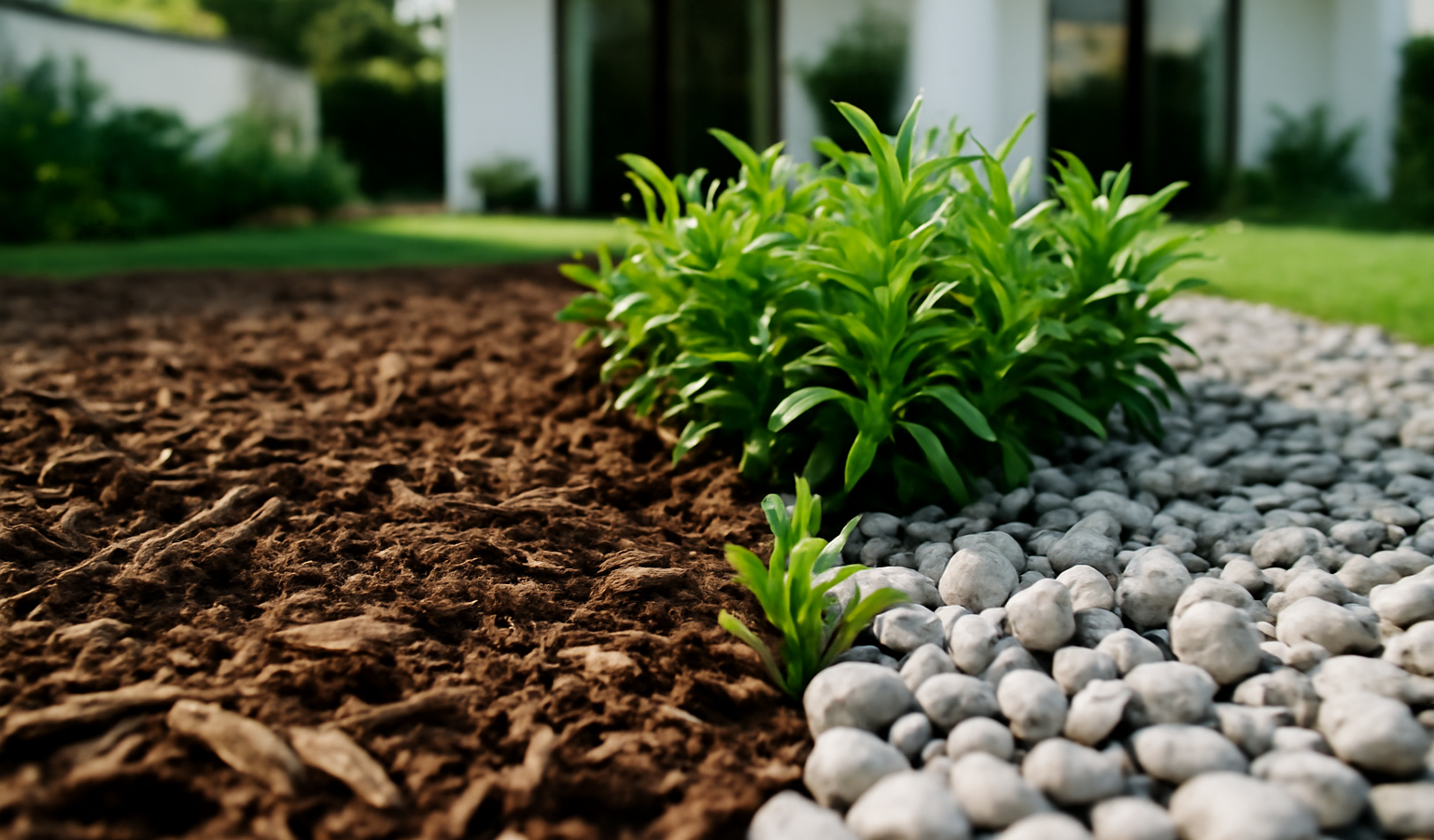
Standing in the garden center staring at bags of shredded bark next to pallets of river rock, the choice feels simple until you realize it shapes how your beds behave for the next decade. Mulch and rock both blanket bare soil, smother weeds, and tidy up a planting, but they do it in opposite ways. Organic mulch breaks down and feeds the soil; rock sits there permanently and reflects heat. The right answer depends on what you are planting, how much sun the bed gets, your climate, and how much weekend maintenance you are willing to sign up for. This guide compares the two head to head so you can match the ground cover to the bed instead of regretting a truckload of stone you can never remove.
Key Takeaways
- Mulch wins for plant health: organic mulch decomposes into the soil, improving structure, moisture retention, and microbial life around roots.
- Rock wins for permanence: it never breaks down, so it suits paths, drainage zones, dry beds, and areas you do not want to re-do every year.
- Cost flips over time: mulch is cheaper up front (roughly $3–$6 per 2-cubic-foot bag) but must be topped up yearly; rock costs far more initially yet lasts decades.
- Heat matters: rock radiates and stores heat, baking nearby roots in hot climates; mulch keeps soil 8–13°F cooler in summer.
- Match it to the bed: use mulch around perennials, vegetables, and shrubs; use rock for succulents, slopes, drainage, and low-maintenance accents.
Mulch vs Rock at a Glance
| Factor | Organic Mulch (bark, wood chips) | Rock (gravel, river rock, lava) |
|---|---|---|
| Upfront cost | Low: ~$3–$6 per 2 cu ft bag, ~$30–$50/yd bulk | High: ~$50–$150+ per ton plus delivery |
| Lifespan | 1–3 years before it breaks down | Decades; effectively permanent |
| Long-term cost | Recurring; re-mulch every 1–2 years | One-time; minimal replacement |
| Soil health | Improves it as it decomposes | No benefit; can compact soil over time |
| Weed control | Good at 2–3 in; weeds pull easily | Good with fabric; weeds root hard once seeds settle |
| Moisture retention | Excellent; reduces evaporation | Poor to fair; sheds and stores heat |
| Soil temperature | Insulates; keeps roots cooler/warmer | Absorbs and radiates heat |
| Best use | Perennials, veg beds, shrubs, trees | Paths, slopes, drainage, succulents, xeriscape |
| Maintenance | Annual top-up; occasional turning | Low; blow off debris, weed occasionally |
Mulch: The Living Ground Cover
Mulch usually means organic material — shredded hardwood, pine bark nuggets, arborist wood chips, straw, or cocoa hulls — spread 2 to 3 inches deep over the soil. Its defining trait is that it is alive in the sense that it decomposes. As fungi and microbes break it down, it slowly turns into a thin layer of compost-like material that feeds earthworms and improves the tilth of the soil beneath. Over a few seasons, a mulched bed develops darker, looser, more sponge-like soil that holds water and drains well at the same time.
That decomposition is also the catch: mulch disappears. A 3-inch layer of hardwood mulch typically thins to 1 inch within a year, which is why you re-mulch every spring or every other spring. Fine-textured mulches like double-shredded bark break down fastest but knit together and stay put on slopes. Coarser materials like pine bark nuggets last longer — sometimes two to three years — but float in heavy rain and roll off slopes. For most beds, you want roughly 2 to 3 inches of depth: less than 2 inches lets weeds and light through, and more than 3 to 4 inches can suffocate roots and create a water-shedding crust.
Where mulch shines
Mulch is the default choice anywhere plant health is the priority. Vegetable gardens love straw or leaf mulch because it keeps soil moisture even, which prevents problems like blossom-end rot in tomatoes and cracking in carrots. Perennial borders, foundation shrubs, and young trees all benefit from the cool, moist, weed-suppressed root zone mulch creates. For trees, keep mulch pulled back a few inches from the trunk in a flat ring — never piled into a “mulch volcano,” which rots bark and invites pests. If you are planning new beds, pairing the right mulch with healthy soil is one of the cheapest upgrades you can make; see our guide on compost vs fertilizer for how to feed those beds underneath the mulch.
The downsides of mulch
Beyond the yearly cost and labor of topping it up, mulch has a few quirks. Fresh wood chips can temporarily tie up nitrogen at the soil surface as they decompose, though this rarely affects established plants whose roots are deeper. Cheap dyed mulch sometimes comes from ground-up pallets or construction debris and can contain contaminants, so buy from a reputable source. In damp, shady spots, certain mulches grow harmless but unsightly fungi like “dog vomit” slime mold or artillery fungus, the latter of which shoots sticky spores onto siding and cars. And because mulch holds moisture, piling it against stems or in poorly drained beds can encourage rot.
Rock: The Permanent Ground Cover
Rock mulch covers everything from pea gravel and crushed granite to river rock, lava rock, and decorative marble chips. Its single biggest selling point is that it does not break down. Spread it once over a weed barrier and it can stay put for decades with almost no replacement, only occasional cleanup. That permanence is exactly why rock dominates in spots where you do not want to redo the work: gravel paths, dry creek beds, drainage swales, the strip between a driveway and a fence, and modern low-water landscapes built around succulents and ornamental grasses.
Rock is also heavy and stable, so it resists wind, foot traffic, and washouts far better than mulch. On a slope where bark would float away in the first downpour, a layer of 3/4-inch crushed rock holds the line. Around downspouts and at the base of grading, rock lets water percolate through instead of eroding bare soil. For these functional, structural jobs, nothing organic competes.
The hidden costs of rock
Rock’s permanence cuts both ways. Because it stores solar heat, a rock bed can run 10 to 20°F hotter than mulch on a sunny afternoon, radiating that heat into nearby plants and the side of your house. In hot, dry climates this stresses anything that is not a desert-adapted plant, scorching foliage and drying roots. Rock also offers zero soil improvement — over years, soil under rock tends to compact, lose organic matter, and grow hard, which is fine for gravel-loving plants but hostile to most others.
Weeds are the other surprise. Rock itself does not feed weeds, but wind-blown dust, leaf litter, and organic debris settle into the gaps between stones and create a thin growing medium right on top. Within a couple of years, weeds and even tree seedlings root into that layer and into the landscape fabric below, and pulling them from rock is far more miserable than from soft mulch. The fabric eventually degrades, weeds punch through, and you are left with a rock bed that is nearly impossible to weed and even harder to remove. Picking out leaves and pine needles from river rock every fall is its own chore. If you are landscaping a tricky area like a hillside, weigh these trade-offs alongside our sloped front yard landscaping ideas.
Cost Over Time: The Real Comparison
On day one, mulch is dramatically cheaper. Bulk hardwood mulch runs roughly $30 to $50 per cubic yard, and a yard covers about 100 square feet at 3 inches deep. Rock, depending on type, runs $50 to over $150 per ton delivered, plus the cost of landscape fabric and edging to contain it — and it is heavy, so delivery and installation labor add up fast. A rock project commonly costs three to five times the upfront price of mulch for the same area.
But mulch is a subscription, not a purchase. Re-mulching a bed every one to two years means that over a 10-year span, the cumulative cost of mulch can equal or exceed a one-time rock installation. If you genuinely never want to touch the area again and the plants tolerate it, rock can be the cheaper long-game choice. The honest math: choose mulch when soil health and flexibility matter, and choose rock when permanence and a one-and-done budget matter more than what is growing there.
Which Should You Choose?
There is no universal winner — the better choice is the one that matches the specific bed and your climate. Use these scenarios to decide.
Choose mulch if…
- You are mulching vegetable beds, perennials, shrubs, or trees where root health and moisture matter.
- You garden in a hot climate and need to keep roots cool and soil moist.
- You want to improve poor soil over time without amending it manually.
- You like to change your plantings and want the freedom to dig and redesign.
- Your upfront budget is tight and you do not mind a yearly top-up.
Choose rock if…
- You are covering paths, drainage areas, dry creek beds, or slopes prone to washout.
- You grow succulents, cacti, or xeriscape plants that thrive in lean, hot, dry conditions.
- You want a permanent, low-maintenance surface you will not re-do every year.
- You are filling a narrow, hard-to-access strip like a side yard or fence line.
- Fire-resistance near the home is a concern (non-combustible rock beats flammable bark).
Many of the best yards use both: rock for the functional bones — paths, drainage, the hot strip by the driveway — and mulch for the living beds where plants need cool, healthy soil. You do not have to pick one for the whole property, only for each bed. If you are reworking your whole layout, our outdoor living guides cover edging, design, and combining materials cleanly.
Frequently Asked Questions
Is rock or mulch better for weed control?
Both suppress weeds when installed correctly, but mulch is easier to maintain. At 2–3 inches deep, mulch blocks light and the few weeds that appear pull out easily from soft material. Rock blocks weeds initially, but over a couple of years debris collects between stones, weeds root into that layer and the fabric below, and they become very hard to remove. For long-term, low-effort weed control, mulch usually wins.
Can I put rock over an old mulch bed?
Not directly. Remove or fully decompose the old mulch first, because organic material under rock keeps breaking down, settles unevenly, and feeds weeds. Level the soil, lay quality landscape fabric, add edging to contain the stone, then spread the rock 2–3 inches deep. Skipping the cleanup leads to a sinking, weedy rock bed within a year or two.
Does rock really make the soil hotter?
Yes. Rock absorbs and stores solar heat, then radiates it, so a rock bed in full sun can run 10–20°F hotter than mulched soil on a summer afternoon. This benefits heat-loving desert plants but stresses or scorches most ornamentals and vegetables. In hot climates, keep rock away from the root zones of anything that is not drought- and heat-adapted.
How often do I need to replace mulch?
Plan to top up organic mulch every 1–2 years. Fine shredded bark breaks down in a single season and may need yearly refreshing, while coarse pine bark nuggets can last 2–3 years. Rather than piling on a full new layer each time, fluff the existing mulch and add just enough to restore 2–3 inches of depth so you do not smother roots.
Which is cheaper, mulch or rock?
Mulch is far cheaper upfront — often a third to a fifth of rock’s installed cost — but it is recurring, so you re-buy it every year or two. Rock costs much more initially but lasts decades with little replacement. Over a 10-year horizon the total costs can converge, so base the decision on the bed’s needs and your tolerance for annual maintenance rather than price alone.