

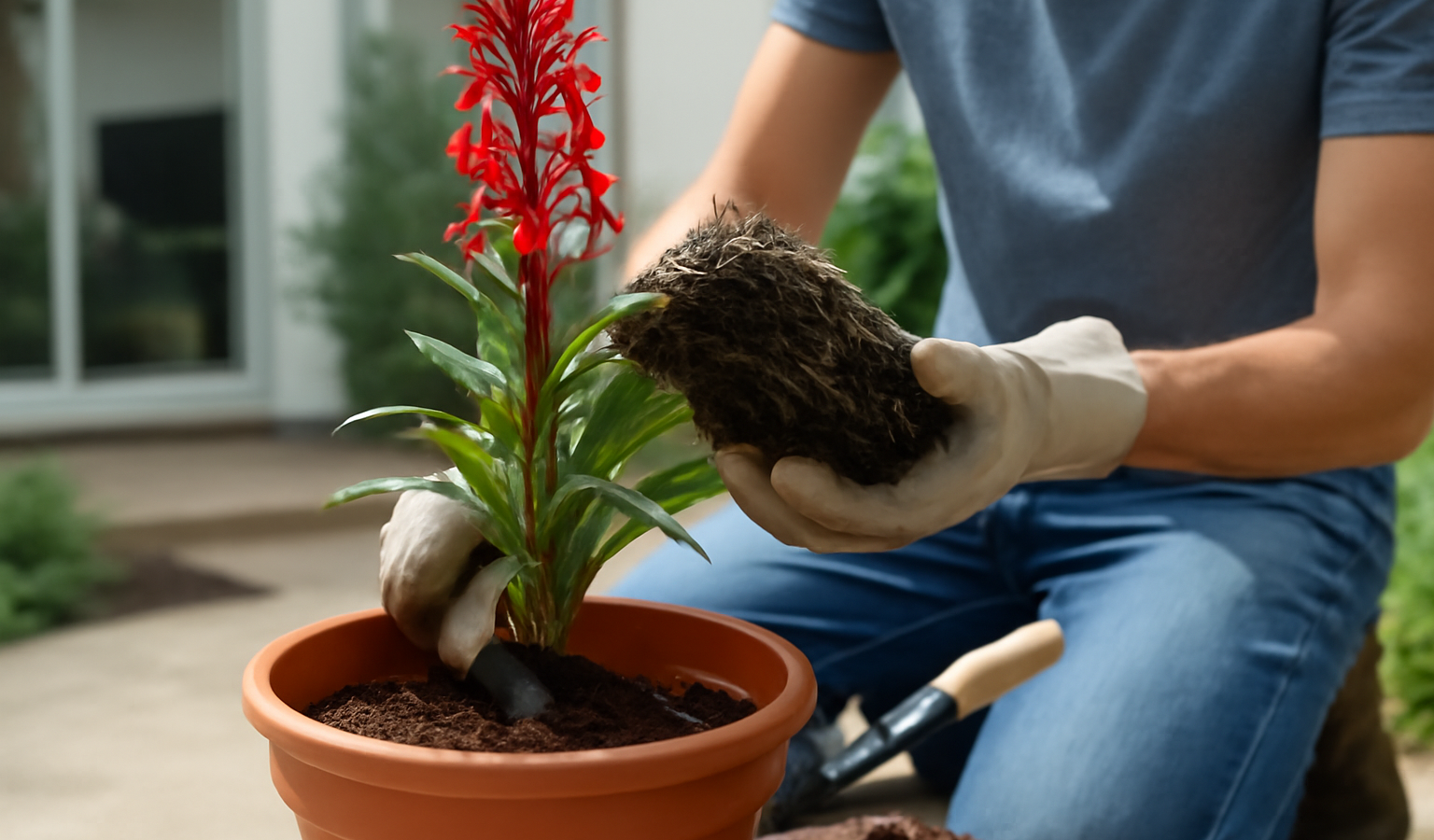
Few native perennials make a statement like cardinal flower (Lobelia cardinalis). In mid- to late summer it throws up tall spikes packed with intensely scarlet-red, tubular blooms — a red so saturated it almost glows against green foliage. That color is no accident: cardinal flower evolved to be pollinated by hummingbirds, and a stand of it in bloom is a guaranteed hummingbird magnet. Native to wet meadows, stream banks, and the margins of ponds across much of North America, it brings vivid, vertical color to the moist, shady spots where many other perennials struggle. This guide covers exactly how to grow it — zones, where to plant, the all-important moisture, planting and spacing, season-long care, dividing, and the wildlife it supports.
Key Takeaways
- Zones: Hardy native perennial in USDA zones 3–9.
- Light: Full sun to part shade — part shade is best in hot climates, full sun where soil stays wet.
- Moisture: The key to success. Cardinal flower wants consistently moist to wet soil and never tolerates drying out.
- Bloom: Spikes of brilliant scarlet-red tubular flowers in mid- to late summer, often 2–4 feet tall.
- Wildlife: A premier hummingbird plant; also visited by butterflies and specialist bees. Deer tend to avoid it.
- Lifespan: Short-lived perennial — keep it going by letting it self-seed or dividing every couple of years.
Zones, Light, and Site Selection
Cardinal flower is a hardy native perennial across USDA zones 3 to 9, thriving from cold northern gardens to the warm Southeast. Light needs flex with your climate and how wet the soil is. In cooler regions and anywhere the soil stays reliably moist, it takes full sun and rewards you with the strongest stems and most flowers. In hot-summer climates, give it part shade — especially afternoon shade — to prevent stress and keep the soil from baking dry. Dappled shade at a woodland edge or pond margin is close to its natural habitat and suits it perfectly.
The single most important thing about siting cardinal flower is moisture. This is a plant of wet places — stream banks, ditches, marshy meadows, and pondsides. Choose a low spot that stays damp, a rain garden, a bog garden, or the edge of a water feature. It is one of the best perennials for that troublesome wet corner where most plants rot. It also makes a superb addition to the margins of a pond or water garden; for more on planting around water, see our Water Gardens & Ponds guides.
Soil and the All-Important Moisture
Cardinal flower wants rich, consistently moist to wet soil high in organic matter. Work plenty of compost into the planting area to improve both fertility and moisture retention. Unlike most perennials, it actively tolerates poorly drained, boggy ground and even shallow standing water at the edge of a pond — conditions that would kill ordinary border plants.
What it will not tolerate is drying out. If the soil dries during a hot spell, the plant wilts fast and can be lost entirely. In an average garden bed you will need to water regularly and deeply, especially in summer and during its bloom period. A two- to three-inch layer of mulch around the base helps lock in moisture and keeps the roots cool. If you cannot provide reliably damp soil, this is not the plant for that spot — match it to a naturally moist location and it becomes nearly carefree.
Planting Cardinal Flower
Plant in spring after the last frost, or in early fall in mild regions, from nursery transplants. Dig a hole as wide as and no deeper than the root ball, set the plant at the same depth it grew in its pot (the crown should sit right at soil level), backfill with compost-enriched soil, and water in thoroughly. Space plants about 12 to 18 inches apart; they look best planted in groups or drifts, which also makes them easier for hummingbirds to find and creates a bolder show of red.
You can also grow cardinal flower from seed. The tiny seeds need light to germinate, so press them onto the surface of moist soil without covering them, and give them a period of cold, moist stratification — sow outdoors in fall, or chill seed in the refrigerator for several weeks before spring sowing. Keep the seedling mix constantly damp. Seed-grown plants typically bloom in their second year. Whichever way you start, keep new plants consistently moist as they establish.
Season-Long Care
Beyond keeping the soil moist, cardinal flower asks for little. Feeding is rarely necessary in rich, compost-amended soil; a spring topdressing of compost is plenty. Avoid heavy fertilizer, which encourages weak, floppy growth.
To prolong the show, deadhead spent flower spikes — removing them as the lower flowers fade can encourage side shoots and a second flush of bloom. However, if you want the plant to self-sow and persist in the garden (more on that below), leave some of the late spikes to set seed. The tall stems are usually self-supporting, but in very rich soil or windy sites a discreet stake may help.
An important winter tip: cardinal flower overwinters as a basal rosette of leaves hugging the ground. Do not bury that rosette under heavy mulch or fallen leaves, which can smother and rot it. Keep winter mulch light and pulled back from the crown so the rosette gets air and light. In cold zones, a thin protective mulch over the roots (but not the crown) helps it through hard winters.
Wildlife Value
Cardinal flower is one of the finest native plants for attracting hummingbirds. The brilliant red, tubular flowers are perfectly shaped for a hummingbird’s bill and tongue, and the timing — mid- to late summer — coincides with peak hummingbird activity and the start of fall migration. Plant a drift near a window or patio and you will have front-row seats to the show.
While hummingbirds are the headline visitors, certain butterflies and specialist long-tongued bees also work the blooms, and the plant adds valuable native habitat to wet areas that are often ecological dead zones in conventional gardens. As a bonus, deer and rabbits tend to leave it alone, deterred by compounds in the foliage. (Those same compounds make the plant toxic if eaten, so site it thoughtfully around very young children and pets.) Pairing cardinal flower with other moisture-loving natives extends the habitat value — see our Plants & Flowers guides for companions.
Keeping It Going: Self-Seeding and Division
Here is the one catch with cardinal flower: it is a short-lived perennial, often persisting strongly for only two or three years before the original crown declines. The good news is that it is easy to keep a colony going indefinitely with two simple strategies.
Let It Self-Seed
Leave some spent flower spikes to mature and drop seed in fall. In consistently moist soil, cardinal flower self-sows readily, and fresh young seedlings replace the aging parent plants year after year. This is exactly how it persists in the wild. Resist the urge to mulch heavily or cultivate the soil where seedlings might sprout, and don’t deadhead every single spike if you want volunteers.
Divide Every Couple of Years
Dividing also rejuvenates plants and multiplies your stock. In spring, lift the clump as new growth begins, separate the basal rosettes (each often comes with its own roots), and replant them in moist, enriched soil at the same depth. You can also peg down the basal offshoots to root them. Dividing every two to three years keeps the planting vigorous and gives you free plants to spread around the garden or share.
Common Problems
Most failures with cardinal flower trace back to one thing: the soil dried out. Wilting and crisping in summer almost always mean it needs more water — increase irrigation and mulch. Rotting or sudden collapse over winter usually means the basal rosette was smothered by heavy mulch or wet, packed leaves; keep the crown exposed. Slugs and snails may chew the lush foliage in damp conditions; hand-pick them or use organic slug controls. Otherwise this is a healthy, pest-resistant native that, given the moisture it craves, is one of the most rewarding perennials you can grow.
Frequently Asked Questions
Where should I plant cardinal flower?
In consistently moist to wet soil — a low damp spot, rain garden, bog garden, or the margin of a pond. Give it full sun where soil stays wet, or part shade in hot climates. It is hardy in USDA zones 3–9.
How much water does cardinal flower need?
A lot. It must have consistently moist soil and will wilt and die if it dries out, especially in summer. Water deeply and regularly in an average bed, and mulch to retain moisture. It even tolerates boggy ground and shallow standing water.
Does cardinal flower attract hummingbirds?
Yes — it is one of the best hummingbird plants you can grow. Its brilliant red, tubular summer flowers are shaped specifically for hummingbird pollination, and a drift of them is a reliable hummingbird magnet.
Why did my cardinal flower die after a couple of years?
It is naturally a short-lived perennial. Keep a colony going by letting some spikes set seed so it self-sows, and by dividing the basal rosettes every two to three years in spring. Also make sure winter mulch never smothers the overwintering rosette.
Is cardinal flower deer resistant?
Generally yes. Deer and rabbits tend to avoid it because of compounds in the foliage. Those same compounds make the plant toxic if eaten, so keep that in mind around small children and pets.
Cardinal flower asks for one thing above all — moisture — and gives back spectacularly: spikes of glowing scarlet that pull hummingbirds right into the garden in the heart of summer. Plant it in a damp, partly shaded spot, keep the soil from ever drying out, protect the winter rosette, and let it self-seed or divide it every couple of years. Do that, and this short-lived native will renew itself and light up your wettest, most difficult corner year after year.