

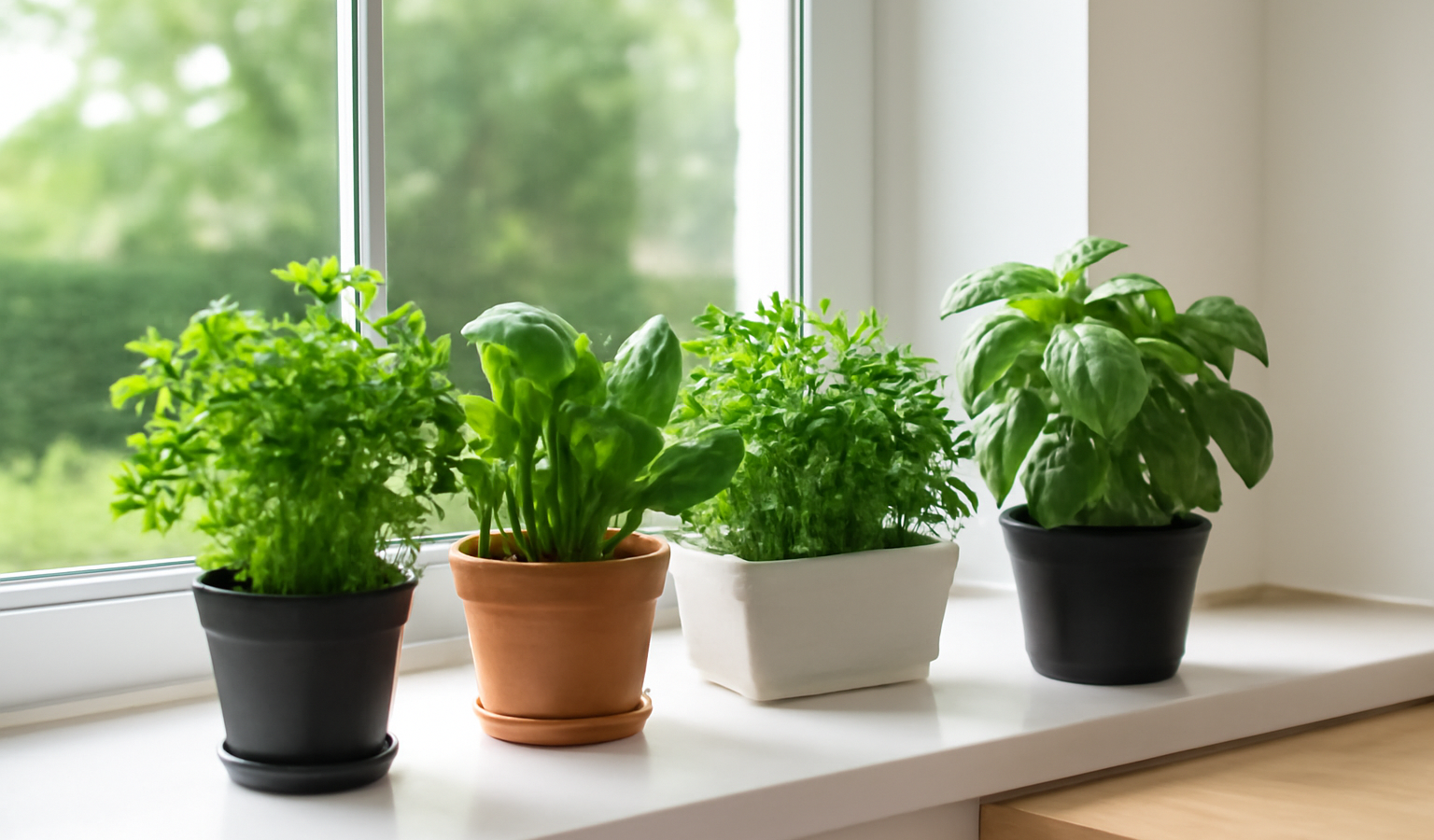
A windowsill kitchen garden gives you fresh herbs and tender greens within arm’s reach of the stove, and it needs nothing more than a sunny window, a few pots, and the right crops for the light you actually have. The whole project hinges on matching plants to your window’s direction, because a south-facing sill that gets six-plus hours of sun grows very different things than a dim north window. Once you read your light honestly, pick crops that thrive in it, and learn to water and harvest correctly, a single windowsill can keep your kitchen in basil, chives, lettuce, and microgreens almost year-round. This guide covers the best crops, how to judge light by window direction, container and soil choices, watering, and the cut-and-come-again harvesting that keeps plants producing for months. See also our urban gardening hub and how to make a living wall.
Key Takeaways
- Light determines everything: south windows (6+ hours) grow sun-loving herbs and fruiting crops; east/west (3-5 hours) suit leafy greens and most herbs; north windows need shade-tolerant crops or a grow light.
- The easiest, most rewarding starters are basil, chives, mint, parsley, leaf lettuce, microgreens, and green onions regrown from kitchen scraps.
- Use containers with drainage holes and a saucer; 4 to 6 inches deep is enough for herbs and cut greens, and a soilless potting mix beats garden soil indoors.
- Water when the top inch of mix is dry rather than on a fixed schedule; small indoor pots dry fast in winter heat but rot if kept soggy.
- Harvest little and often with the cut-and-come-again method, taking no more than a third of a plant at a time to keep it producing for months.
Read Your Light: Window Direction Matters Most
Before you buy a single seed, figure out how much direct sun your window gets, because that single factor decides what will grow. In the Northern Hemisphere, window orientation maps roughly to daily direct light, though buildings, trees, and overhangs can cut it down, so watch the actual window over a day before committing.
South-facing windows (6+ hours)
A clear south window is the brightest spot in the house and the only one strong enough for sun-loving herbs and even small fruiting crops. Grow basil, rosemary, thyme, oregano, sage, and dwarf chili or cherry tomatoes here. The catch is summer intensity: a south sill can scorch tender seedlings and dry pots out by midday, so you may need a sheer curtain in peak summer and more frequent watering. In winter, when the sun sits low, a south window is exactly where your heat-lovers want to be.
East and west windows (3 to 5 hours)
East and west windows are the workhorses of a windowsill garden. East gets gentle morning sun and stays cool, which suits leafy greens like lettuce, spinach, and arugula along with parsley, cilantro, chives, and mint. West gets stronger, hotter afternoon light, good for basil and most Mediterranean herbs but tough on cool-season greens that bolt in heat. Both directions grow the broadest range of crops with the least fuss.
North-facing windows (under 3 hours)
North windows get bright indirect light but little or no direct sun, so most herbs will stretch and weaken there. Your realistic options are mint, chives, parsley, and microgreens, which tolerate lower light, plus anything you regrow short-term from scraps. For a true north window, the honest fix is a small full-spectrum LED grow light on a timer for 12 to 14 hours a day, which lets you grow almost anything regardless of orientation.
Best Herbs and Greens to Grow
Start with crops that grow fast, forgive mistakes, and earn their space by being things you actually cook with. The following are the most reliable windowsill performers.
- Basil — the classic windowsill herb; wants warmth and a bright south or west window. Pinch the tops constantly to keep it bushy and stop it flowering.
- Chives — almost indestructible, tolerate lower light, and regrow endlessly after you snip them with scissors near the base.
- Mint — vigorous and shade-tolerant; keep it in its own pot because it would swamp neighbors.
- Parsley — slow from seed but long-lived and happy in east or even north light.
- Leaf lettuce and arugula — fast cut-and-come-again greens; sow a fresh pot every two to three weeks for a steady supply and harvest the outer leaves.
- Microgreens — radish, pea, broccoli, and sunflower sprouts go from seed to harvest in 7 to 21 days in a shallow tray, even in modest light.
- Green onions — the easiest win of all: stand store-bought scallion roots in water or pot them and they regrow within days.
- Cilantro and dill — quick but short-lived; sow successionally and expect to replace them as they bolt.
Rosemary, thyme, oregano, and sage are all doable but slower and need the brightest light you have; they reward patience with a long, productive life. If you want a deeper dive on keeping cut herbs for the pantry, our guide on harvesting and drying herbs explains how to preserve any surplus.
Containers and Soil
Any container works as long as it has drainage holes and a saucer to protect the sill. Herbs and cut greens are shallow-rooted, so 4 to 6 inches of depth is plenty; a 6-inch pot per herb, or a long window box for several greens, fits a standard sill. Terracotta breathes and dries fast (good for Mediterranean herbs that hate wet feet), while glazed or plastic pots hold moisture longer (better for mint, parsley, and lettuce). Self-watering window boxes with a reservoir take the guesswork out for thirstier greens.
Skip garden soil indoors, because it compacts, drains poorly in pots, and can carry pests and fungus gnats. Use a light, soilless potting mix; blending in a handful of perlite improves drainage further for herbs. Microgreens need almost nothing, just a shallow tray of moist mix or even a damp paper-towel-and-tray setup, since you harvest them before they need real root nutrition. Measure your sill width and the depth available with the window open before buying, so the pots actually fit and the sash still closes.
Watering and Feeding Indoors
Overwatering kills more windowsill plants than anything else, so water by feel, not by calendar. Stick a finger an inch into the mix; water only when that top inch feels dry, then water until it runs from the drainage holes and tip out whatever collects in the saucer so roots never sit in water. Small pots on a warm, sunny sill may need water daily in summer, while the same pots might go several days in winter. Beware the winter trap: indoor heating dries the air and the soil surface fast, but cool roots and low light mean the plant uses little water, so it is easy to overwater even as the surface looks parched.
Potting mix carries only a few weeks of nutrients, so feed lightly once your plants are growing strongly. A balanced liquid fertilizer at half the label strength every two to three weeks keeps leafy herbs and greens productive; microgreens and quick lettuce crops finish before they need feeding at all. Rotate the pots a quarter turn every few days so plants grow evenly toward the light instead of leaning into the glass, and wipe dust off broad leaves occasionally so they capture more light.
Harvesting for a Continuous Supply
The secret to a windowsill garden that lasts months rather than weeks is how you harvest. The cut-and-come-again method takes a little from each plant often, which signals it to push new growth rather than going to seed. The general rule is never to remove more than a third of a plant at one time.
- Leafy herbs (basil, mint): pinch or snip just above a pair of leaves; the plant branches into two new stems below the cut, so regular harvesting makes it bushier.
- Chives and green onions: snip with scissors an inch above the soil and they regrow from the base again and again.
- Lettuce and other loose greens: pick the outer leaves and leave the central growing point intact so the plant keeps producing from the middle.
- Microgreens: harvest in one go by cutting at soil level with scissors once the first true leaves appear, then resow the tray.
- Slower woody herbs (rosemary, thyme): take small sprigs from the tips so the plant stays compact and keeps branching.
Harvest in the morning when leaves are freshest and most flavorful, and pinch off any flower buds on herbs the moment they appear, since flowering turns leaves bitter and signals the plant to wind down. Stagger your sowings, starting a new pot of lettuce or microgreens every couple of weeks, so something is always ready to cut. If you want to expand beyond the sill, our small-space and balcony gardening ideas show how to scale these same crops into containers and railing planters.
Common Problems and Fixes
Leggy, pale, stretched stems mean too little light; move the pot to a brighter window or add a grow light. Yellowing lower leaves and a sour-smelling, soggy mix point to overwatering, so let it dry out and improve drainage. Tiny flies hovering around the soil are fungus gnats, usually from staying too wet; let the surface dry between waterings and top the mix with a thin layer of sand. Crisp brown leaf edges in winter usually mean dry heated air, so group pots together or set them on a pebble tray to raise humidity. Bolting (sudden flower stalks on cilantro, lettuce, and basil) is triggered by heat and long light, so harvest hard, keep plants cool, and resow.
Frequently Asked Questions
Which window is best for growing herbs indoors?
A south-facing window with six or more hours of direct sun is best and supports the widest range, including sun-loving basil and rosemary. East and west windows grow most herbs and greens well, while north windows usually need a grow light.
What are the easiest herbs for a beginner windowsill?
Chives, mint, green onions (regrown from scraps), and basil are the most forgiving. Microgreens and leaf lettuce are also nearly foolproof and give you a harvest within one to three weeks.
How often should I water windowsill plants?
Water by feel, not on a schedule. Check the top inch of mix and water only when it is dry, then drain the saucer. Small sunny pots may need daily water in summer but far less in winter, when overwatering is the biggest risk.
Do I need a grow light?
Only if your window is north-facing or gets fewer than about four hours of direct sun. A small full-spectrum LED on a timer for 12 to 14 hours a day lets you grow almost any herb or green regardless of window direction.
How do I keep herbs producing for months?
Harvest little and often using cut-and-come-again: never take more than a third of a plant, pinch leafy herbs above a leaf pair to make them branch, pick lettuce outer leaves, and remove flower buds promptly so plants do not bolt.