

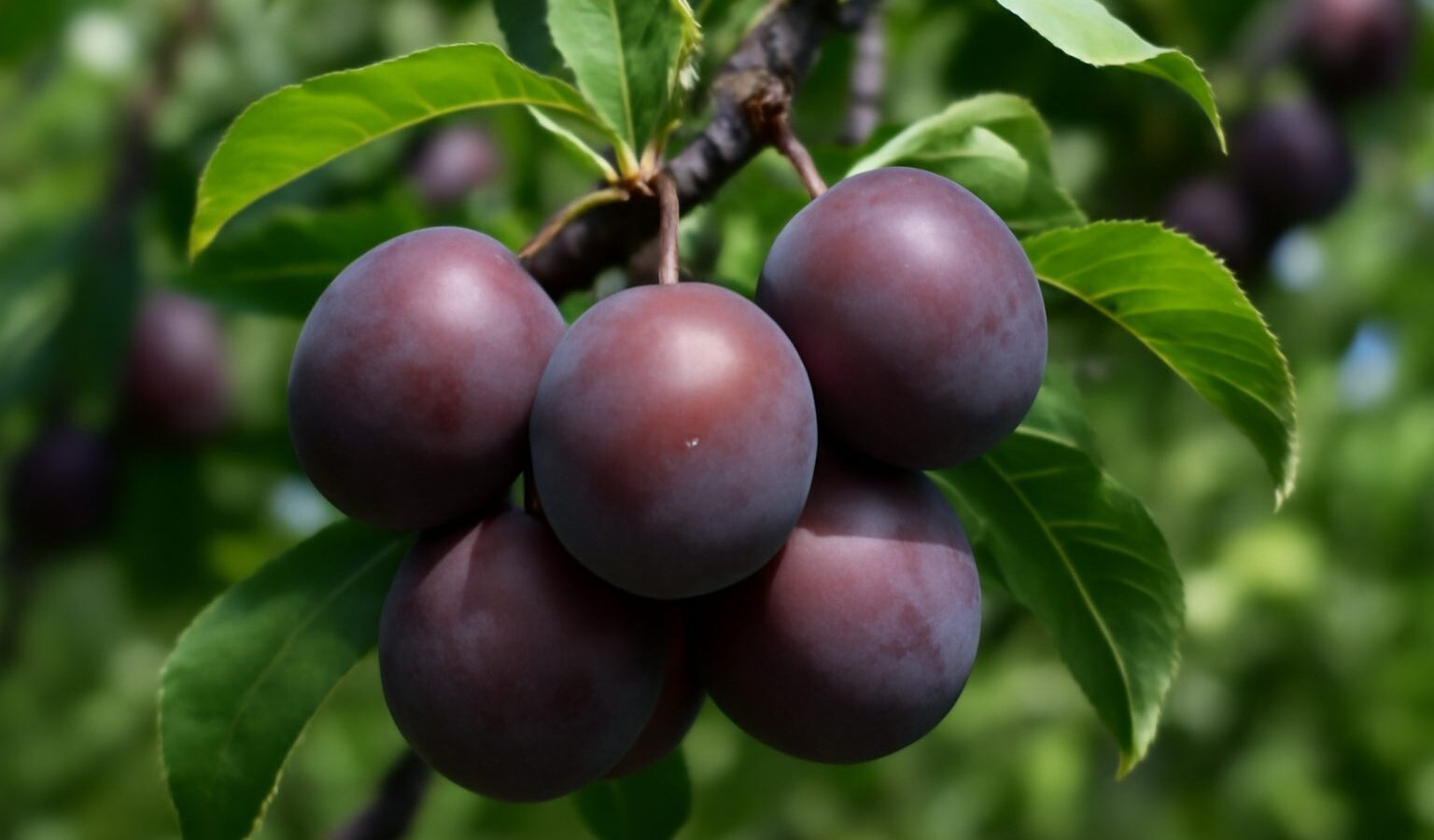
A well-placed plum tree is one of the most rewarding fruit trees a home gardener can grow — it bears young, often within three to four years, fits into modest yards, and in a good year drops more sweet, sun-warmed fruit than you can eat fresh. The keys to success are choosing the right type for your climate, understanding chill hours and pollination, and getting the pruning and fruit thinning right. Plums fall into two broad camps — European plums (the firm, sweet, prune-type fruit) and Japanese plums (the larger, juicy, eat-out-of-hand kind) — and the differences between them shape nearly every decision, from whether you need a second tree to when you’ll harvest. This guide walks through the whole arc from planting to that first ripe plum.
Key Takeaways
- Hardiness: European plums in USDA zones 4–9; Japanese plums in warmer zones 5–9 (more frost-tender flowers).
- Pollination: Most plums fruit far better with a second compatible variety nearby; plant Japanese with Japanese, European with European.
- Chill hours: European types need ~700–1,000 hours below 45°F; Japanese ~500–900; pick a variety matched to your winter.
- Spacing: Standard 18–22 ft, semi-dwarf 12–18 ft, dwarf 8–12 ft apart; full sun and well-drained soil.
- Harvest: Mid- to late summer; pick when fully colored, slightly soft, and easily detached — plums don’t sweeten much after picking.
European vs. Japanese Plums
Decide which type you want first, because it determines pollination, hardiness, and harvest. European plums (Prunus domestica) — including ‘Stanley’, ‘Italian Prune’, ‘Green Gage’, and ‘Damson’ — are cold-hardy to zone 4, bloom later (so they dodge spring frosts better), and ripen late summer to early fall. Many are freestone and good for drying, baking, and canning. Some, like ‘Stanley’, are self-fertile. Japanese plums (Prunus salicina) — ‘Santa Rosa’, ‘Methley’, ‘Shiro’, ‘Burbank’ — produce the large, round, juicy dessert plums sold in stores. They bloom earlier (more frost risk), are best in zones 5–9, and ripen earlier in summer. Most Japanese plums need a pollination partner. Don’t try to cross-pollinate the two groups; they generally bloom at different times and aren’t reliably compatible.
Pollination: Do You Need Two Trees?
This is the question that makes or breaks your harvest. Most plum trees are at least partially self-unfruitful, meaning a lone tree sets little or no fruit even when it flowers heavily. To get a full crop you generally need a second, different variety of the same type that blooms at the same time, planted within about 50 feet so bees can carry pollen between them.
A few practical rules: pair Japanese with Japanese and European with European, matching bloom times. Some self-fertile varieties — ‘Stanley’ and ‘Methley’ among them — will set a crop alone, but even these fruit more heavily with a partner. ‘Santa Rosa’ is partly self-fertile and is also a strong pollenizer for other Japanese plums. If you only have room for one tree, choose a confirmed self-fertile variety, or plant a “multi-graft” tree that carries two or more compatible varieties on a single trunk. When in doubt, ask the nursery exactly which pollenizer pairs with the tree you’re buying — this single detail is the most common reason home plum trees flower beautifully but never fruit.
Chill Hours and Climate
Plum trees need a period of winter cold — measured in “chill hours,” the cumulative hours between roughly 32°F and 45°F — to break dormancy and flower properly in spring. Plant a variety whose chill requirement matches your area or it will either fail to bloom (too few chill hours in a mild-winter region) or bloom too early and lose flowers to frost. European plums typically need about 700–1,000 chill hours, while Japanese plums need roughly 500–900, and there are low-chill Japanese selections (around 250–400 hours) bred for the Deep South and warm West. Check your region’s average chill hours through your local cooperative extension office and choose accordingly. Because Japanese plums bloom early, late spring frosts are their main threat — siting the tree on a gentle slope or away from frost pockets helps protect the blossoms.
When and Where to Plant
Plant bare-root plum trees in late winter or early spring while dormant, as soon as the soil can be worked; container-grown trees can go in spring through early fall. Choose a site with full sun — at least six to eight hours — for the best flowering and fruit sugar. Plums demand well-drained soil; they will not tolerate “wet feet,” and soggy ground invites root rot. Aim for a loamy, fertile soil with a pH around 6.0–6.5. Avoid low frost pockets, and give the tree an open spot with good air circulation to reduce disease.
Step-by-Step Planting
- For bare-root trees, soak the roots in water for a few hours before planting.
- Dig a hole as deep as the roots and twice as wide; loosen the sides so roots can penetrate.
- Keep the graft union (the swollen knob low on the trunk) 2–3 inches above the soil line.
- Spread the roots, backfill with native soil, and firm gently to remove air pockets.
- Water deeply, mulch 2–3 inches over the root zone (kept off the trunk), and stake only if the site is windy.
Spacing
Spacing depends on rootstock. Standard plum trees need 18–22 ft between trees; semi-dwarf trees 12–18 ft; and dwarf or container trees 8–12 ft. Give each tree room for sun and airflow on all sides — crowded plums develop more disease and bear less. If you’re planting two trees for pollination, keep them within 50 feet but at their proper spacing so both get full sun.
Watering and Feeding
Water young trees deeply once or twice a week through the first two growing seasons — roughly an inch or two at a time — to build a strong root system. Established trees need consistent moisture especially while fruit is sizing in early summer; deep, infrequent watering beats frequent shallow sprinkles. Mulch helps hold soil moisture and suppress weeds.
Go easy on fertilizer. Plums need only modest feeding; too much nitrogen produces lush growth, weak fruiting, and more disease. A light application of balanced fertilizer in early spring, scaled to the tree’s age, is usually enough — and if the tree puts on more than 12–18 inches of new shoot growth a year, skip feeding entirely. A yearly inch of compost spread under the canopy is a good low-input alternative.
Pruning Plum Trees
Unlike spring-flowering shrubs, plum trees are best pruned to a particular shape and at a careful time. European plums are typically trained to a central-leader form (a Christmas-tree shape with one dominant trunk), while Japanese plums, which grow more vigorously and spreading, suit an open-center or “vase” form with three to five main scaffold branches and an open middle for light and air.
Timing matters because plums are prone to silver leaf and bacterial canker, fungal and bacterial diseases that infect fresh cuts in cool, wet weather. For that reason, prune plums in late spring or summer, in dry weather, rather than in the dormant winter season favored for apples and pears. Each year remove dead, diseased, and crossing branches, thin out crowded growth to let light into the canopy, and keep the tree to a manageable height for easy picking and spraying. Make clean cuts and avoid pruning when rain is forecast.
Thinning Fruit for Better Plums
Plum trees, especially Japanese types, routinely set far more fruit than they can ripen well. Thinning is the step home growers most often skip — and the one that most improves the harvest. About four to six weeks after bloom, when fruits are marble-sized, thin them to roughly 3–4 inches apart along the branch, removing the smallest and any damaged ones. Thinning produces larger, sweeter plums, prevents branches from breaking under the weight of an overloaded crop, and reduces the “biennial bearing” habit where a tree exhausts itself with a huge crop one year and bears nothing the next. It feels wasteful to drop young fruit, but the remaining plums will be far better for it.
Pests and Diseases
- Plum curculio: A weevil that scars and drops young fruit, leaving crescent-shaped marks. Hang traps and apply approved sprays at petal fall.
- Brown rot: The most common disease — fruit turns brown and mummifies. Remove and destroy mummies, improve airflow, and apply fungicide at bloom and pre-harvest in wet climates.
- Black knot: Hard black galls on branches; prune them out 4–6 inches below the gall in dry weather and destroy the cuttings.
- Silver leaf & canker: Prune in dry summer weather and keep tools clean to minimize infection.
- Aphids and Japanese beetles: Manage with water blasts, insecticidal soap, or hand-picking.
- Birds: Netting protects ripening fruit on smaller trees.
Harvesting and Storing Plums
Plums ripen from mid- to late summer depending on variety, with Japanese types generally earlier than European. Pick when the fruit is fully colored for its variety, feels slightly soft at the stem end, and detaches easily with a gentle twist — a ripe plum releases without a fight. Unlike pears, plums develop little additional sugar after picking, so flavor depends on letting them ripen on the tree as long as birds and splitting allow. For fresh eating, harvest at peak softness; for canning or shipping, pick a touch firmer. Ripe plums keep only a few days at room temperature but will hold up to two to four weeks refrigerated. European prune plums are ideal for drying, while the juicy Japanese types are best fresh or in jams and sauces. Browse more growing guides on the Plants & Flowers hub, and if you’re short on space, see our guide to growing fruit trees in containers and how to grow blueberries in pots for the rest of a backyard orchard.
Frequently Asked Questions
Do I need two plum trees to get fruit?
Usually yes. Most plums are partially self-unfruitful and crop much better with a second, different variety of the same type (Japanese with Japanese, European with European) that blooms at the same time, planted within about 50 feet. Some varieties like ‘Stanley’ and ‘Methley’ are self-fertile but still fruit more with a partner.
How many chill hours does a plum tree need?
European plums need roughly 700–1,000 hours below 45°F; Japanese plums about 500–900, with low-chill selections around 250–400 for mild-winter regions. Match the variety to your area’s average chill hours, available from your local extension office.
When should I prune a plum tree?
Prune in late spring or summer during dry weather, not in winter. Plums are susceptible to silver leaf and bacterial canker, which infect fresh cuts in cool, wet conditions, so dry-season pruning greatly reduces disease risk.
When are plums ready to harvest?
From mid- to late summer, depending on variety. Pick when the fruit is fully colored, slightly soft at the stem end, and detaches with a gentle twist. Plums don’t sweeten much after picking, so leave them on the tree until ripe when possible.
Why does my plum tree have flowers but no fruit?
The most common cause is lack of cross-pollination — a lone tree of a self-unfruitful variety won’t set fruit. Other causes include late spring frost killing the blossoms (common with early-blooming Japanese plums) and insufficient chill hours. Plant a compatible pollenizer and choose a variety suited to your climate.
Match the plum type to your climate and chill hours, plant a compatible pollination partner unless your variety is self-fertile, give it full sun and well-drained soil, prune in dry summer weather, and thin the young fruit. Do that and within a few seasons you’ll be picking baskets of sweet, tree-ripened plums every summer — among the easiest and most generous fruit trees a home garden can offer.