

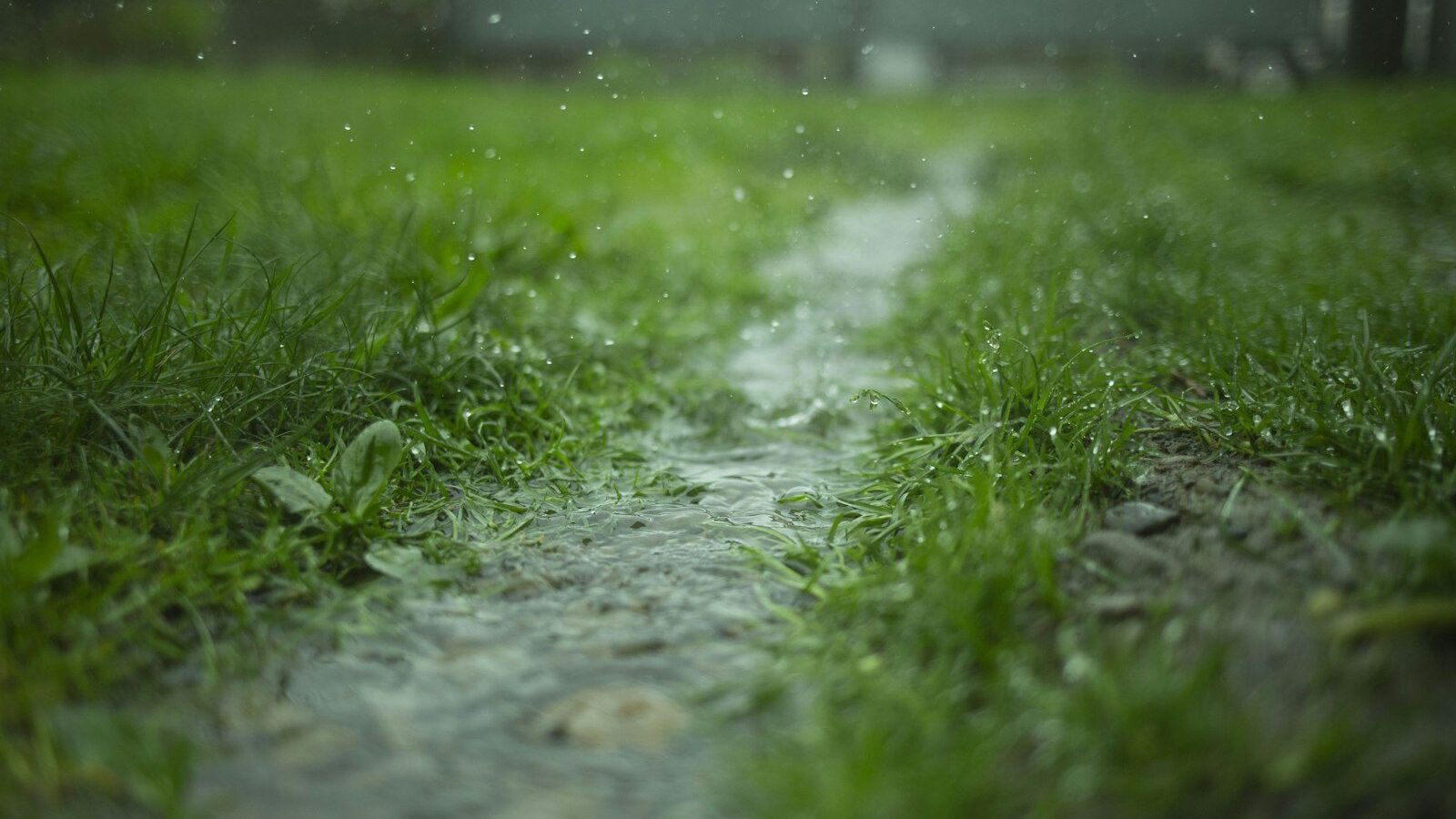
A lawn that squelches underfoot days after the rain stops is more than an annoyance. Standing water drowns grass roots, invites moss, fungus, and mosquitoes, compacts the soil further every time you walk on it, and eventually turns the turf thin and patchy. The good news is that a soggy lawn is almost always a solvable drainage problem, and most of the fixes are within reach of a determined homeowner with a shovel and a free weekend. The trick is to correctly diagnose why water is sitting there before you start digging, because the right fix for a low spot is very different from the right fix for compacted clay or a high water table. This guide walks through that diagnosis and then through the full range of solutions, from the simple to the serious.
Key Takeaways
- Diagnose the cause first: compacted soil, heavy clay, a low spot, poor grading toward the house, or a high water table each need a different fix.
- For compaction and mild sogginess, core aeration plus topdressing with compost is the cheapest, most effective starting point.
- Regrade so the ground slopes away from the house at about 2% (roughly 2 inches of fall per 10 feet).
- For persistent wet spots, a French drain or dry well moves water to a lower outlet or a buried gravel reservoir.
- Long term, build organic matter, mow high, redirect downspouts, and consider rain-garden plants in the wettest zone.
First, Diagnose Why It’s Soggy
Spend an afternoon watching your yard before you spend a weekend digging in it. Walk the lawn after a soaking rain and map exactly where water pools, how long it lingers, and where it seems to be coming from. The pattern tells you the cause.
- Compacted soil: water sits in a broad sheet across high-traffic areas and drains very slowly. A screwdriver is hard to push into the ground. Common in new builds where construction traffic crushed the soil.
- Heavy clay: the soil feels slick and sticky when wet, holds a ribbon when you roll it between your fingers, and stays wet for days because clay particles hold water tightly.
- Low spot / poor grading: water collects in a defined depression or runs toward the house instead of away. Look for the slope of the land.
- High water table or spring: the spot is wet even without recent rain, or the lowest part of the yard never fully dries. This is the hardest case and may need a drainage outlet.
- Downspouts and runoff: wet zones radiate from gutter outlets, the driveway, or a neighbor’s higher yard.
Do a simple percolation test to confirm drainage capacity. Dig a hole about 12 inches deep and a foot wide, fill it with water, let it drain, then fill it again and time how fast it falls. If the second fill drops less than an inch per hour, you have a real drainage problem rather than a one-off heavy rain. Knowing the cause keeps you from, say, building a French drain when the real issue was 6 inches of compaction that aeration would have fixed.
Fix 1: Core Aeration and Topdressing
If the diagnosis points to compaction or generally tired soil, start here, because it is cheap and surprisingly powerful. Rent a hollow-tine core aerator (not a spike aerator, which compacts soil further) and run it over the lawn when the soil is moist but not saturated. The machine pulls thousands of soil plugs, opening channels for water and air to penetrate and relieving the compaction that was perching water at the surface.
Immediately after aerating, topdress with a quarter to half inch of compost or a compost-sand blend and drag it into the holes with the back of a rake. This works organic matter down into the root zone, where it improves both drainage and the soil’s structure over time. For cool-season lawns, early fall is the ideal time; for warm-season grasses, late spring into early summer. Repeat annually on problem soils — it is the single best long-term habit for keeping a lawn from staying soggy, and it pairs well with overseeding to thicken thin turf.
Fix 2: Regrade Low Spots and Slope Away From the House
Water obeys gravity, so the surface has to send it somewhere. The ground next to your foundation should fall away at roughly 2% — about 2 inches of drop over the first 10 feet — so runoff heads toward the lawn and beyond rather than pooling against the house. Check this with a long straight board and a level, or simply watch where the rain goes.
For a shallow low spot, the simplest cure is to fill it. Cut an “H” or cross pattern through the turf, peel the sod back, add a soil-and-compost mix to build the depression up to grade with a gentle slope, then lay the sod back down and water it in. For larger depressions or a yard that tilts the wrong way, you may need to bring in screened topsoil and reshape a broad, almost-invisible swale that channels water toward a drain or a lower part of the property. Always grade so water moves away from structures, and never bury the bottom of siding or the top of the foundation in new soil.
Fix 3: Install a French Drain
When water has nowhere to go on the surface and the soil drains too slowly to absorb it, a French drain gives it a fast underground path to a lower outlet. It is the workhorse solution for a persistently wet stretch of lawn.
- Plan the run from the wet area to a suitable outlet — a lower spot on the property, a storm drain (where permitted), a dry well, or a daylight exit on a slope. Call 811 to locate buried utilities before you dig.
- Dig a trench about 6 inches wide and 18–24 inches deep, sloping continuously toward the outlet at a minimum of 1% (about 1 inch of fall per 8 feet). Consistent slope is what makes it work.
- Line the trench with permeable landscape fabric, leaving extra to fold over the top later.
- Add 2–3 inches of washed gravel, lay perforated drainpipe (holes facing down) on the gravel, then surround and cover the pipe with more gravel to within a few inches of the surface.
- Fold the fabric over the gravel to keep soil out, then cap with a few inches of soil and sod, or leave a decorative gravel strip on the surface for faster intake.
The fabric wrap is essential — it keeps fine soil from silting up the gravel and clogging the pipe, which is the most common reason a French drain stops working after a few years.
Fix 4: Dry Wells and Redirected Downspouts
If much of your problem traces back to roof runoff, the cheapest win is to manage the downspouts. Extend each downspout at least 4–6 feet away from the foundation so it discharges onto a slope that carries water off, not back toward the house. Even a simple roll-out extension or a buried solid pipe to a pop-up emitter in the lawn can dry out a chronic wet zone.
Where there is no good place to send the water on the surface, a dry well stores it underground until the soil can absorb it. Dig a pit (commonly 3–4 feet deep and wide, sized to your runoff volume), set a perforated dry-well barrel or fill the hole with washed gravel, wrap it in landscape fabric, and pipe your downspout or French drain into it. Water collects in the reservoir and percolates slowly into the surrounding soil instead of flooding the lawn. Dry wells work best where the soil below the wet layer actually drains — confirm that with your percolation test before committing to the dig.
Fix 5: Improve the Soil and Plant for Wet Conditions
Some of the best long-term fixes are biological rather than mechanical. Heavy clay holds water because it lacks structure, and the cure is organic matter. Over several seasons, regular compost topdressing, leaf mulch, and earthworm activity gradually open clay into a crumbly, better-draining loam. Be patient — this is a multi-year improvement, not a weekend one — but it permanently raises the soil’s capacity to handle rain.
If one corner of the yard simply will not dry out and regrading is impractical, stop fighting it and design around it. A rain garden — a shallow planted depression filled with water-loving species — turns the wettest spot into a feature that absorbs and filters runoff. Plants such as swamp milkweed, Joe-Pye weed, blue flag iris, sedges, and red-twig dogwood thrive in soggy ground and pull water out of the soil through transpiration. Replacing thirsty turf with these in the worst zone is often easier and more attractive than forcing grass to survive where it never will.
Ongoing Lawn Care That Keeps It Dry
Once you have addressed the drainage, a few habits keep the lawn from sliding back into sogginess. Mow high — 3 to 3.5 inches for cool-season grass — to encourage deep roots that open the soil and use more water. Avoid walking on or mowing saturated turf, since that re-compacts everything you just fixed. Dethatch if a thick spongy thatch layer is repelling water and perching it at the surface. And reseed bare or thin patches promptly, because dense turf transpires more water and resists the moss and weeds that move into wet, open ground. For tackling the moss and creeping weeds that often follow a wet lawn, see our guides to getting rid of creeping Charlie and getting rid of quackgrass, and find more yard projects on the Outdoor Living hub.
Frequently Asked Questions
Why does my lawn stay wet for days after rain?
Usually compacted soil or heavy clay that can’t absorb water fast enough, a low spot or poor grade that lets water pool, or a high water table. Do a percolation test — fill a 12-inch hole with water twice and time the second drain. Less than an inch per hour confirms a real drainage problem.
Will aerating fix a soggy lawn?
It helps a lot if compaction is the cause, which it often is. Core aeration pulls plugs that open channels for water and air, and topdressing with compost afterward improves drainage in the root zone. It won’t fix a true low spot or a high water table, which need regrading or a drain.
How much should a lawn slope away from the house?
About 2% — roughly 2 inches of fall over the first 10 feet from the foundation. That moves runoff away from the structure without being steep enough to erode or look unnatural. Never raise soil up against siding or the top of the foundation.
French drain or dry well — which do I need?
Use a French drain when you can route water to a lower outlet or daylight exit and just need to move it there. Use a dry well when there’s nowhere to send the water on the surface but the soil below the wet layer drains, so the water can be stored underground and soak away slowly.
What can I plant in a spot that’s always wet?
Water-loving natives turn a chronic wet spot into a rain garden: swamp milkweed, Joe-Pye weed, blue flag iris, sedges, and red-twig dogwood all thrive in soggy soil and pull moisture out through transpiration. It’s often easier than forcing grass to grow where it keeps drowning.