

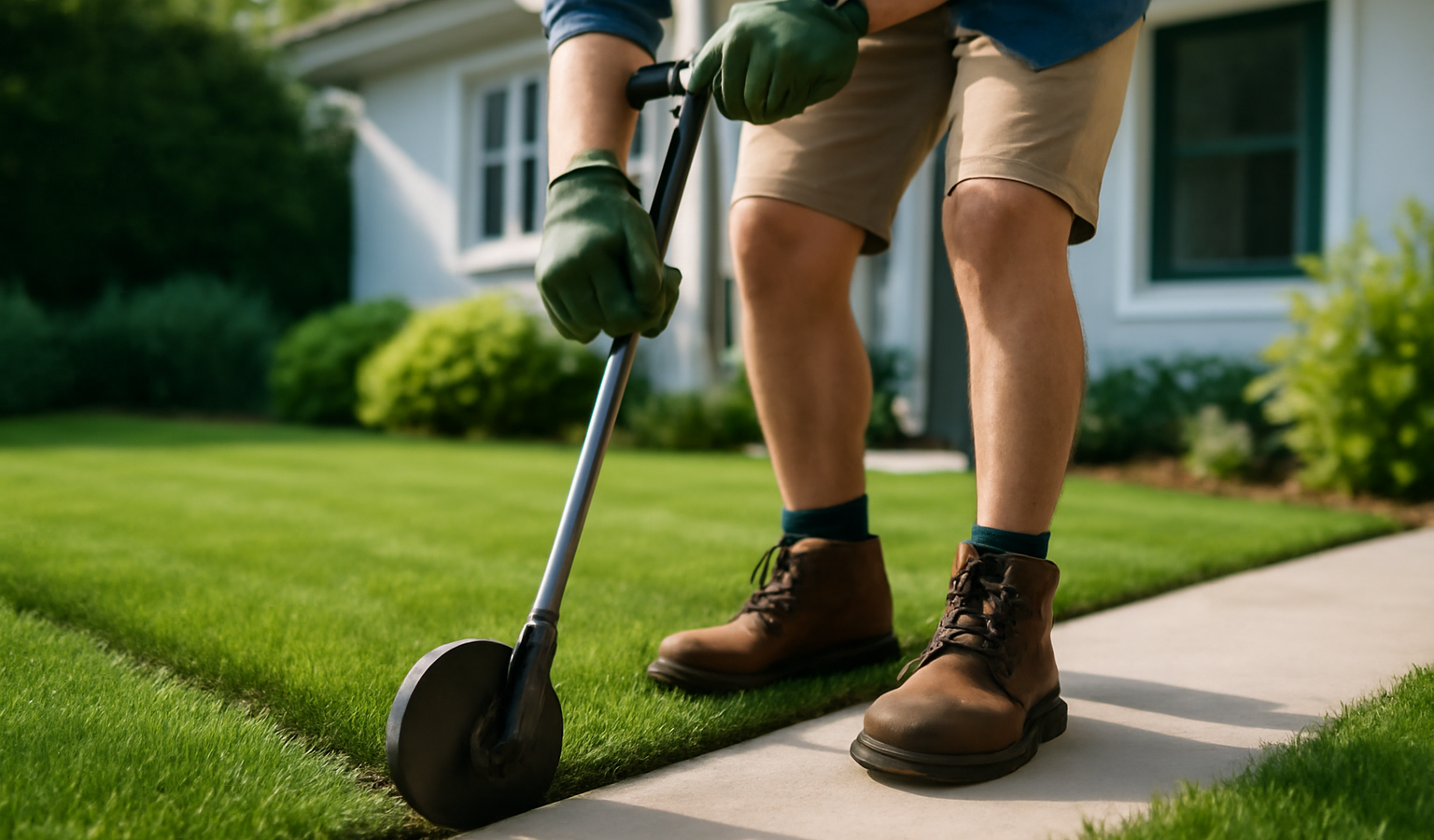
A crisp edge is the single fastest way to make an ordinary lawn look professionally maintained. The grass can be the same length and color it was yesterday, but cut a clean line where the turf meets the bed, driveway, or path and the whole yard reads as cared-for. Edging is the dark line around a coloring-book drawing: it defines everything inside it. The good news is that edging is one of the most learnable lawn skills there is. With the right tool, a consistent depth, and a sense of where your lines should run, you can put a showpiece border around a yard in an afternoon and keep it that way with ten minutes of touch-up every couple of weeks.
Key Takeaways
- Edging cuts a vertical line where turf meets a bed or hardscape; trimming just shortens grass the mower missed. You need both.
- Cut 2–3 inches deep and aim for a vertical wall on the lawn side and a shallow trench on the bed side.
- A half-moon edger creates the cleanest natural-edge trench; a string trimmer turned vertical or a powered stick edger maintains hard edges along concrete fast.
- Edge when soil is lightly moist — not soaked, not bone-dry — for clean cuts that don’t crumble.
- Establish the deep edge once or twice a season; touch it up every 2–3 weeks so roots never re-bridge the gap.
Edging vs. Trimming: Know the Difference
People use these words interchangeably, but they are two different jobs. Trimming is cutting grass that the mower deck can’t reach to the same height as the rest of the lawn — around fence posts, along walls, under low branches. The cut is horizontal. Edging is cutting a clean vertical line that defines the boundary of the lawn: along the driveway, sidewalk, patio, or the front of a planting bed. The cut is vertical, and it goes down into the soil, not just across the grass blades.
The distinction matters because the two tasks call for different motions and often different tools. A perfectly trimmed lawn with no edge still looks shaggy at the boundaries; a well-edged lawn that hasn’t been trimmed looks tidy but has tall tufts in the corners. For a finished look you do both — typically edge first to set the line, then trim and mow, so clippings fall onto the lawn rather than into your fresh trench.
The Two Kinds of Edges
Before you pick up a tool, decide what kind of edge each section of your yard needs, because the technique differs.
Hard edges (against concrete, brick, or pavers)
Where the lawn meets a driveway, sidewalk, or paver patio, the goal is a sharp line right at the hardscape with the grass cut straight down so no blades flop over the surface. Grass loves to creep over concrete on stolons or rhizomes, so this edge has to be re-cut regularly. The fastest tools here are a powered stick edger (gas or battery) with a steel blade, or a string trimmer rotated 90 degrees so the line spins vertically.
Soft or “natural” edges (between lawn and planting beds)
Where lawn meets mulch or soil, the classic look is a trench edge: a small V-shaped or moat-like channel about 2–4 inches deep with a clean vertical wall on the lawn side and a gentle slope down into the bed. The trench physically separates turf roots from the bed and gives mulch a place to sit without spilling onto the grass. This is the edge a half-moon (or “crescent”) edger was made for.
Tools You’ll Need
- Half-moon edger — a flat, crescent-shaped steel blade on a long handle, sometimes with a foot tread. The best tool for cutting a fresh natural edge along beds. Sharpen the blade with a flat file before the season.
- Powered edger or string trimmer — a gas/battery stick edger with a steel blade for hard edges, or a standard string trimmer you can turn vertical. A trimmer is more forgiving but throws debris, so wear eye protection.
- Spade or flat shovel — for cleaning out the trench and removing the cut sod strip.
- Garden hose, rope, or marking paint — to lay out curves before you cut. A hose flexes into smooth arcs better than anything.
- Hand shears or a grass whip — for touch-ups in tight spots.
- Stiff broom and a tarp/bucket — for cleanup of soil and clippings off the hardscape.
- Gloves, safety glasses, and closed shoes — non-negotiable with any powered blade.
Step 1: Plan and Mark Your Lines
A clean cut along a wandering line still looks sloppy, so layout comes first. For straight runs along a driveway or walk, the hardscape itself is your guide — you just follow it. For bed edges, lay a garden hose on the ground and shape it into the curve you want, then step back and view it from the house, the street, and the spots where people actually walk. Aim for long, lazy sweeps rather than fussy little wiggles; gentle curves mow and maintain far more easily than tight ones. When you’re happy, either follow the hose directly as you cut or spray a light line of marking paint and remove the hose.
Mow the lawn first if it’s tall — it’s much easier to see and cut a clean edge into short grass. If you’re refreshing an existing edge that has blurred, mow, then re-mark only where the line has drifted.
Step 2: Cut the Edge
With a half-moon edger (natural bed edge)
Hold the edger vertically over your line. Place one foot on the blade’s tread and press straight down, sinking the blade 2–3 inches into the soil. Rock it slightly to free it, lift, move forward about three-quarters of a blade-width so cuts overlap, and repeat. Keep the blade vertical on the lawn side every time — that vertical wall is what makes the edge look architectural. Don’t tilt the handle toward the bed or you’ll get a sloppy bevel. Work in a steady rhythm down the whole line before going back to clean out the trench.
With a powered edger or string trimmer (hard edge)
For a stick edger, set the blade depth to about 1–2 inches, line the guide wheel up on the hardscape, and walk at a slow, even pace so the blade carves a consistent groove right at the concrete’s edge. For a string trimmer, rotate the head so the line spins in a vertical plane, then walk the seam between turf and concrete, letting the tip of the line do the cutting. Move slowly — rushing leaves a scalloped, uneven line. Always work so debris throws away from you and from windows or cars.
Step 3: Shape the Trench and Remove the Spoil
For a natural bed edge, your vertical cut is only half the job. Come back with a flat spade or the edger and slice a shallow angled cut from the bed side down to meet the bottom of your vertical wall, lifting out a thin wedge of sod and soil. The finished cross-section looks like a checkmark: a clean vertical face on the lawn side and a slope rising into the bed. A 3–4 inch wide, 2–3 inch deep trench is plenty. Toss the removed sod into the compost or use it to patch bare spots, roots-down, elsewhere in the lawn.
Sweep all soil and clippings off the hardscape immediately — wet soil left on concrete stains and grows moss. A trench full of loose dirt looks unfinished, so scrape the channel clean so the vertical wall stands crisp.
Step 4: Mulch, Mow, and Clean Up
If you’re edging a bed, top the bed up with mulch after edging, keeping the mulch level an inch or so below the trench rim so it doesn’t spill back onto the lawn. A fresh edge against dark mulch is the look magazine yards are built on. Then mow and trim so clippings land on the turf, and do a final blow or sweep of the hardscape. For more on keeping that turf dense enough to hold a sharp line, see our guide on how to make your lawn greener and thicker.
How Deep and at What Angle?
Depth and angle are where most DIY edges go wrong. Go too shallow — under an inch — and grass roots bridge the gap within two weeks, blurring your work. Go much deeper than 3–4 inches and you’re just making extra work and exposing more soil to dry out. For the lawn-side wall, keep it as close to vertical (90 degrees) as you can; a vertical face holds its shape and casts a clean shadow line. On the bed side, a 30–45 degree slope is ideal. Against concrete, you want the cut right at the surface so no grass overhangs, with the groove a touch below the slab so the mower wheel can ride the edge.
When to Edge: Timing and Frequency
Cut your deep, defining edge once in spring as the lawn starts actively growing, and again in midsummer if the line has filled in. Edge when the soil is lightly moist — a day or two after rain or watering. Bone-dry soil crumbles and won’t hold a clean wall; saturated soil smears and your blade drags. After the deep edge is set, maintain it every 2–3 weeks through the growing season by running the string trimmer or stick edger along the established line. That quick pass takes minutes because you’re only severing the new runners trying to cross the gap, not re-digging the trench.
Aggressive spreaders like Bermuda and some fine fescues bridge an edge faster than clumping types, so warm-season lawns generally need more frequent touch-ups than cool-season ones. In late fall, do one last edge so the borders look sharp through the dormant months when the lawn isn’t hiding anything.
Keeping the Edge: Maintenance and Barriers
If you’re tired of re-cutting the same bed edge, you can install a physical barrier after you cut: steel, aluminum, or thick poly edging set so its top sits flush with or just below the soil line. A buried barrier slows root creep and gives you a guide to trim against, though a well-kept trench edge arguably looks more refined and costs nothing. Whichever you choose, the maintenance habit is the same — a brief, regular touch-up beats a once-a-year marathon. Pair tidy edges with healthy beds and you’ve got the bones of a polished yard; if you’re rethinking the planting side of those borders, our outdoor living guides and design ideas can help you plan what goes inside the line.
Frequently Asked Questions
How deep should I edge my lawn?
Cut 2–3 inches deep for a natural bed edge and about 1–2 inches for a hard edge against concrete. Anything shallower than an inch lets grass roots re-bridge the gap within a couple of weeks, so don’t skimp on depth.
Can I use a string trimmer to edge?
Yes. Rotate the trimmer head 90 degrees so the line spins vertically, then walk slowly along the seam between turf and hardscape. It’s the fastest way to maintain hard edges, though a half-moon edger or stick edger gives a cleaner, more consistent line for bed borders.
How often do I need to edge?
Cut a deep defining edge once in spring and again midsummer, then touch up every 2–3 weeks during the growing season. Aggressive spreaders like Bermuda need more frequent passes than clumping cool-season grasses.
Should I edge or mow first?
Edge first to set the line, then mow and trim so the clippings fall onto the lawn instead of into your fresh trench. Finish with a sweep or blow to clear soil and clippings off the hardscape.
Is soil moisture important when edging?
Very. Edge when soil is lightly moist — a day or two after rain or watering. Bone-dry soil crumbles and won’t hold a clean vertical wall, while saturated soil smears and drags on the blade.