

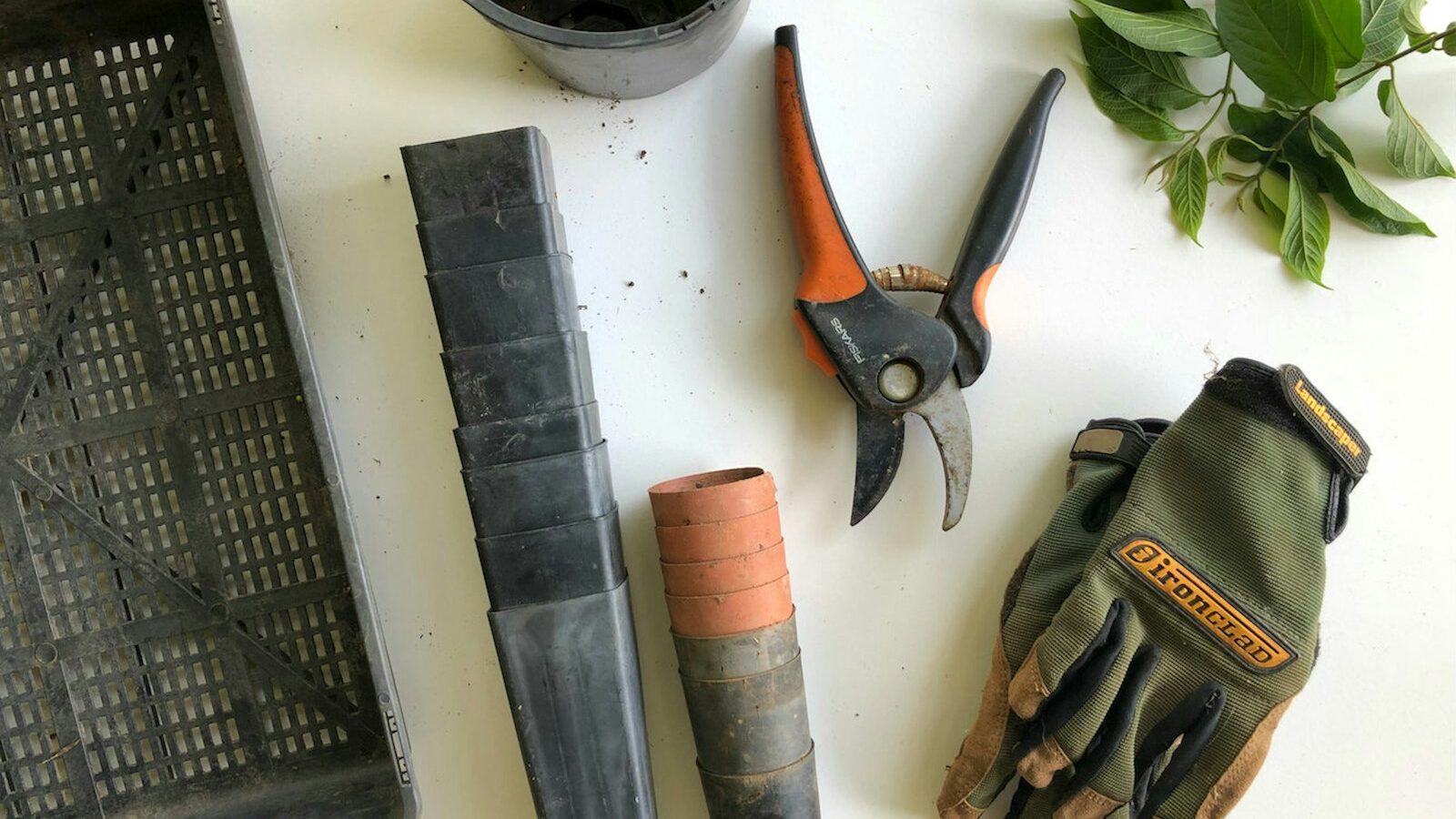
A clean, sharp tool cuts cleanly, works less of your muscle, and—just as importantly—won’t spread disease from one plant to the next. Dull pruners crush stems instead of slicing them, leaving ragged wounds that invite rot, and a rusty, sap-caked blade is a disease courier moving through your whole garden. Bringing a season’s worth of neglected tools back to life is a one-evening job that needs only a wire brush, a file or stone, some disinfectant, and a rag of oil. Here’s how to strip rust, disinfect properly, and put a real edge back on every cutting tool you own.
Key Takeaways
- Clean and disinfect first, sharpen second—you can’t put a clean edge on a rusty, sappy blade.
- Remove rust with a wire brush, steel wool, or a vinegar soak for heavy cases; dry immediately.
- Disinfect blades between diseased plants with 70% isopropyl alcohol or a 10% bleach solution.
- Sharpen most pruners and knives at 20–30 degrees; digging tools (shovels, hoes) at a blunter 45 degrees.
- Sharpen only the existing factory bevel, work in one direction, and finish with a wipe of oil to prevent rust.
Step 1: Clean Off Sap, Soil, and Grime
Start by knocking off dried soil and plant residue. For digging tools, a stiff brush and a putty knife handle caked dirt; rinse and dry them well. Cutting tools collect sticky sap and pitch that gum up the action and hold moisture against the steel. Wipe blades with a rag dampened in mineral spirits, rubbing alcohol, or a citrus-based solvent to dissolve sap, then scrub stubborn spots with fine steel wool. Open pruners fully so you can reach the pivot and the back of the blade where gunk hides.
Step 2: Remove Rust
Surface rust comes off with a wire brush, steel wool, or fine sandpaper (start around 120 grit and work to 220). Scrub along the length of the blade until the metal shows clean and gray. For heavily rusted tools, soak the metal heads in undiluted white vinegar for several hours up to overnight; the mild acid dissolves rust so it scrubs away easily. Pull them out, scour with steel wool, and—this is critical—rinse, then dry the steel completely right away. Vinegar-soaked metal flash-rusts within minutes if left damp, so dry it and move straight to oiling.
Don’t forget wooden handles. Sand off splinters and rough spots, then rub in boiled linseed oil to seal and protect the wood. Tighten any loose screws or rivets at the head while you have the tool apart.
Step 3: Disinfect
Disinfecting is the step most gardeners skip and the one that actually protects your plants. Fungal and bacterial diseases—fire blight, canker, black spot, verticillium—ride from plant to plant on contaminated blades. The reliable options are 70% isopropyl alcohol (wipe or dip the blade, no rinse needed) or a freshly mixed 10% bleach solution (one part bleach to nine parts water). Bleach disinfects well but is corrosive, so rinse and dry the blade afterward and oil it, or you’ll trade disease for rust. Household disinfectant sprays and undiluted hydrogen peroxide also work in a pinch.
The habit that matters most is disinfecting between plants while you work, not just at season’s end. When you’re pruning out diseased wood, wipe the blade with alcohol after every cut, or at minimum before moving to a healthy plant. It’s tedious, but it’s the single most effective way to stop a problem from spreading down the row.
Step 4: Sharpen to the Right Angle
Sharpening is simply restoring the factory bevel—the angled cutting surface—not creating a new one. The golden rule is to match the existing angle and only sharpen the beveled side. Different tools want different angles:
- Bypass pruners and loppers: 20–30 degrees, sharpened only on the outer beveled blade (the curved cutting blade), never the flat inner anvil-side blade.
- Hori-hori and garden knives: around 20 degrees for a fine slicing edge.
- Shears and grass clippers: follow the existing bevel, usually about 30 degrees.
- Shovels, spades, hoes, and edgers: a blunter 45-degree edge that bites soil without folding over.
- Axes and mattocks: roughly 30 degrees, thick enough to survive impact.
Files vs. stones
Use a mill bastard file or a coarse diamond file for thick, hard-working steel like shovels, hoes, and axes—it removes metal fast. Use a sharpening stone (whetstone), a fine diamond plate, or a carbide sharpener for the finer edges on pruners and knives. A small folding diamond hand sharpener is the most convenient all-rounder for cutting tools.
The technique
Secure the tool in a vise or brace it firmly. Set the file or stone flat against the existing bevel and push it in one direction only—away from your body, following the curve of the edge—lifting and repeating rather than sawing back and forth. A handful of consistent strokes is usually enough; you’re refreshing an edge, not reshaping the blade. Sharpening creates a thin curl of metal on the back called a burr. Once you feel that burr along the whole edge, flip the blade and make one or two light flat passes on the opposite side to knock it off. Test on a sheet of paper or a green twig—a sharp blade slices, a dull one tears.
Tool-by-Tool Notes
The general method is the same, but a few tools have quirks worth knowing.
- Bypass pruners and loppers cut like scissors, with a sharp curved blade passing a thicker hooked one. Only sharpen the outer beveled blade; the inner blade stays flat. If the cut is ragged even after sharpening, check the pivot tension and look for a nick in the edge.
- Anvil pruners have a single blade that closes onto a flat anvil. Sharpen both faces of the blade lightly so it meets the anvil squarely, and keep the anvil clean—sap buildup there causes crushing.
- Hedge shears have long blades that must stay aligned; sharpen the full length of each beveled face evenly and keep the pivot snug so they shear rather than fold leaves.
- Shovels and spades cut soil and roots with the leading edge. File a 45-degree bevel on the front (convex) side only, following the existing shape. A sharpened spade slices through turf and roots with a fraction of the effort.
- Hoes want a sharp edge too—most gardeners forget this. A few file strokes on the beveled side turns a hoe from a soil-pusher into a weed-slicer that glides just under the surface.
- Loppers and saws: bypass loppers sharpen like big pruners; pruning saws have hardened, often impulse-hardened teeth that you generally can’t resharpen at home—replace the blade instead.
How Often Should You Do This?
Match the frequency to the work. Disinfecting happens constantly during disease-prone pruning—between plants, sometimes between cuts. A quick wipe-down to remove sap and soil should happen at the end of every working session; it takes seconds and prevents the buildup that’s so tedious to remove later. Sharpening is occasional: touch up pruners and knives a few times during the growing season whenever they start tearing rather than slicing, and give digging tools an edge once or twice a year. The big deep-clean, rust-strip, sharpen, and oil routine is a once-a-year job, best done in late fall as you put tools away for winter so they come out of storage in working order. A tool that’s wiped after each use and touched up when it dulls almost never needs the full overhaul.
Step 5: Oil and Store
Finish every tool with a light coat of oil to lock out moisture. Wipe blades and metal heads with machine oil, mineral oil, or even WD-40 on a rag, and put a drop in the pruner pivot so it swings freely. For tools you store all winter, this coat is what keeps fresh rust from forming. Store everything dry and off the ground—hang them on a wall rack or stand them handle-down so blades aren’t sitting in floor moisture. Tackle this cleanup as part of winterizing your vegetable garden and your tools will be ready to go in spring. For more seasonal maintenance projects, browse the Outdoor Living hub.
Frequently Asked Questions
What angle should I sharpen garden tools to?
Match the existing factory bevel. As a guide, pruners and knives take a 20–30 degree edge, while digging tools like shovels and hoes want a blunter 45 degrees so the edge bites soil without folding. Sharper isn’t always better—a thin edge on a shovel just chips and rolls.
How do I remove heavy rust from old tools?
Soak the metal heads in undiluted white vinegar for a few hours to overnight, then scour with steel wool—the acid loosens the rust. Rinse and dry immediately, because vinegar-treated steel flash-rusts in minutes, then coat with oil to protect it.
What’s the best disinfectant for pruners?
70% isopropyl alcohol is the easiest—wipe the blade and it’s ready, no rinse needed. A 10% bleach solution works too but corrodes steel, so rinse, dry, and oil afterward. Disinfect between plants when pruning disease, not just once a season.
Should I use a file or a sharpening stone?
Use a mill file for thick, tough steel like shovels, hoes, and axes where you need to remove metal quickly. Use a sharpening stone or fine diamond plate for the finer edges on pruners and knives. A folding diamond hand sharpener handles most cutting tools well.
Why do my pruners crush stems instead of cutting?
They’re dull, sticky with sap, or the blades are misaligned. Clean off sap, sharpen the beveled cutting blade only, and check that the pivot bolt is snug—too loose and the blades pass with a gap, too tight and they bind. A sharp, aligned bypass pruner slices cleanly every time.