

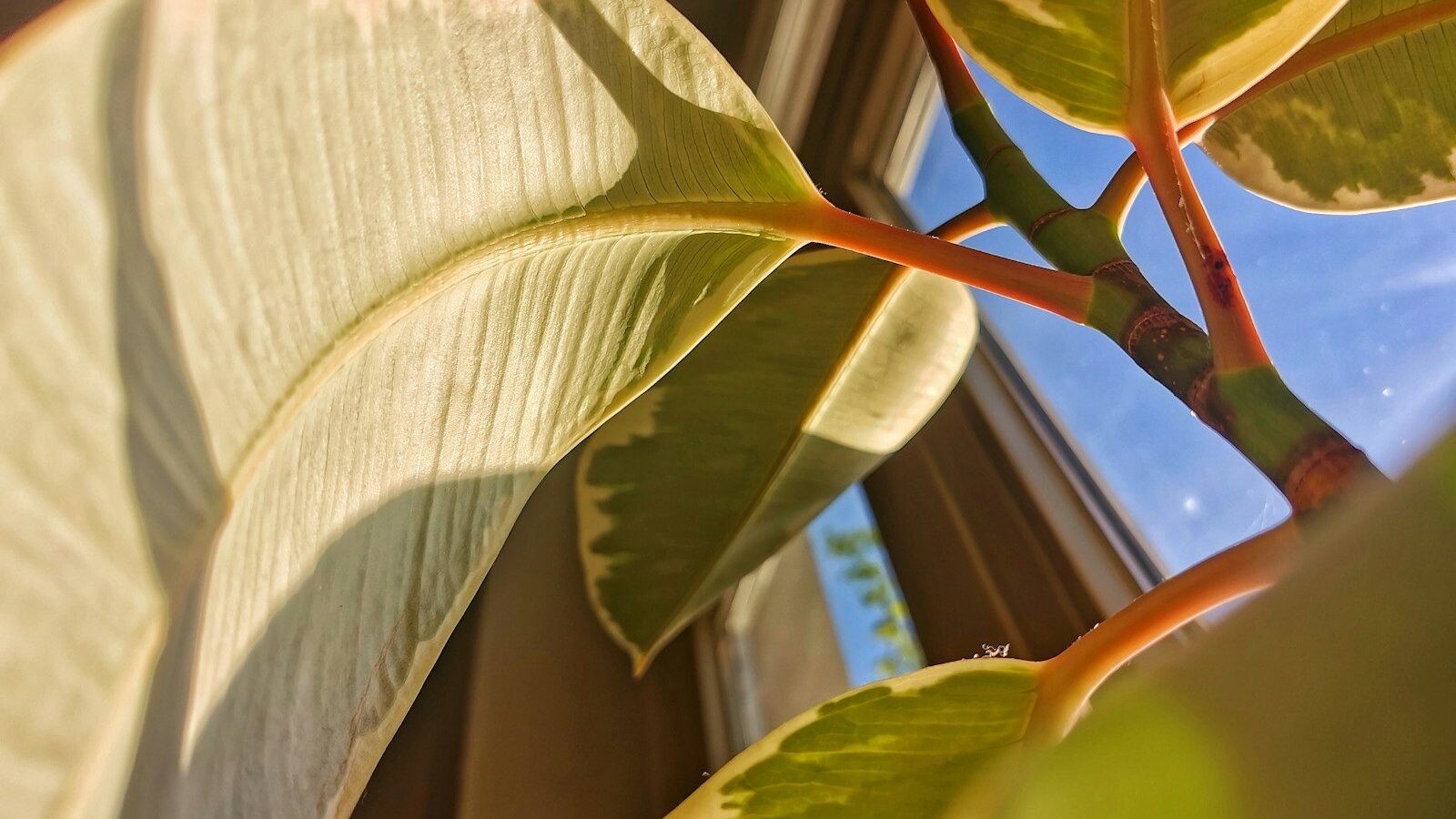
The rubber plant (Ficus elastica) is the houseplant that turns a corner into a statement. Those big, glossy, leathery leaves — deep burgundy in ‘Ruby’, near-black in ‘Burgundy’, creamy splashed in ‘Tineke’ — read as a small indoor tree, and a happy one will climb from a tabletop specimen to six feet or more indoors. It has a reputation for being temperamental, but almost all of that comes down to two things: it hates wet feet and it sulks when you move it. Get the light right, water on a let-it-dry rhythm, and leave it in one spot, and it’s far easier than its diva reputation suggests. Here’s the full care routine, from soil mix to leaf drop to propagation.
Key Takeaways
- Light: Bright, indirect light. Variegated types need more light to hold color; green types tolerate a bit less. No harsh direct sun.
- Water: Water when the top 1–2 inches dry out — roughly weekly in summer, every 10–14 days in winter. Drains must be free.
- Soil: Rich but fast-draining — potting soil with perlite and a little bark; pot with drainage holes.
- Humidity & temp: 40–60% humidity, 60–80°F. Keep above 55°F and away from drafts and vents.
- Leaves: Wipe dust off the big leaves regularly so they can breathe and photosynthesize.
- Pet safety: Mildly toxic to cats and dogs; the milky sap also irritates skin.
Light: bright indirect is the sweet spot
Rubber plants want plenty of light, but filtered rather than blasting. The ideal location is right beside an east-facing window that gets gentle morning sun, or a few feet back from a bright south or west window where the harsh afternoon rays are softened by a sheer curtain. In that kind of light the leaves stay large, glossy, and densely spaced, and variegated cultivars hold their pink and cream markings.
Variegation is the key variable. The creamy and pink parts of a ‘Tineke’ or ‘Ruby’ leaf contain little or no chlorophyll, so the plant needs more total light to power itself — give variegated types your brightest spot short of direct sun. Solid green and dark burgundy forms get by with a touch less. Too little light for any of them shows up as stretched, widely spaced leaves and a thin, leaning plant. Too much direct sun scorches the leaves with bleached or brown patches. Rotate the pot a quarter turn every week or two so it grows evenly rather than leaning toward the window.
Watering: consistent, but never soggy
Rubber plants are sensitive to both extremes, so consistency matters more than volume. Water when the top 1 to 2 inches of soil feel dry to the touch. In a warm, bright spot during the growing season that usually means about once a week; in winter, when growth slows, it can stretch to every 10 to 14 days. Use the finger test every time rather than a fixed schedule — pot size, light, and the season all change the pace.
When you water, soak the soil until water runs out the drainage holes, then let it drain completely. Never let the pot stand in water. Overwatering is the number-one killer of rubber plants: chronically wet soil drowns the roots and triggers root rot, which the plant signals by dropping leaves — often the lower ones first — and yellowing. Underwatering, by contrast, shows as drooping, curling leaves and dry, crispy edges. If you’re unsure, err slightly dry; this plant recovers from thirst far more readily than from rot. Room-temperature water is gentler than cold straight from the tap.
Soil, potting, and feeding
Rubber plants want a rich but fast-draining medium. A good recipe is standard houseplant potting soil amended with about one-third perlite and a handful of orchid bark or coarse sand to keep it open and airy. Pure potting soil compacts and stays wet too long. The pot must have drainage holes — a glazed ceramic or plastic pot retains moisture well, while terracotta dries faster and forgives heavy-handed watering.
Feed during spring and summer with a balanced liquid fertilizer (such as 10-10-10) diluted to half strength, roughly every two to four weeks. Rubber plants are moderately hungry when growing actively and produce those large leaves on the back of good nutrition, but more is not better — overfeeding burns roots and browns leaf margins. Stop feeding in fall and winter while growth is dormant.
Humidity, temperature, and leaf care
As a tropical native, the rubber plant appreciates moderate humidity of 40 to 60 percent but tolerates average household air well. If winter heating pushes your home below 30 percent and you see crispy edges, group plants together or run a humidifier. Keep temperatures between 60 and 80°F and never below 55°F. The biggest temperature pitfall is drafts: cold air from a door, an air-conditioning vent, or a hot blast from a furnace register all stress the plant and cause sudden leaf drop, so site it away from any source of moving air.
Because the leaves are so large and broad, they collect dust quickly, and a dusty leaf can’t photosynthesize efficiently. Wipe both sides of each leaf with a soft, damp cloth every couple of weeks. This keeps them glossy, helps the plant make energy, and gives you a chance to spot pests early. Skip commercial leaf-shine sprays — they can clog the pores; a damp cloth does a better job.
Repotting
Rubber plants grow fast in good conditions and generally need repotting every one to two years while young, slowing as they mature. Signs it’s time: roots circling the surface or escaping the drainage holes, water running straight through, or the plant drying out within a day or two of watering. Repot in spring or early summer for the fastest recovery, and step up only one pot size at a time — an oversized pot holds too much wet soil and invites rot.
Slide the plant out, loosen any tightly wound roots, set it at the same depth in fresh mix, and water it in. Be prepared for it to drop a leaf or two from the disturbance — that’s normal and it bounces back. If you’d rather keep a large plant at its current size, you can root-prune lightly and return it to the same pot with fresh soil instead of upsizing.
Pruning and propagation
Rubber plants tend to grow as a single tall stem unless you intervene. Pinching or cutting the top growing tip encourages the plant to branch and grow bushier, and spring is the time to do it. Wear gloves: cut stems and leaves bleed a sticky white latex sap that irritates skin and can stain. Blot the cut end with a tissue.
Those prunings become new plants. Take a tip cutting with two or three leaves, let the cut end stop weeping and dry for an hour, then dip it in rooting hormone and plant it in moist, well-draining mix. Cover loosely with a clear bag to hold humidity, keep it warm and in bright indirect light, and roots form over four to eight weeks. You can also root cuttings in water, though soil tends to give sturdier roots for this species. Air layering is the most reliable method for thicker, woody stems if you want a guaranteed result on a prized plant.
Common problems
Dropping leaves
The classic rubber-plant complaint, and almost always a reaction to change or stress: a new location, a draft, sudden temperature swings, or inconsistent watering. Settle it in one stable spot, keep watering even, and it usually stabilizes. Lower leaf drop combined with soggy soil points to overwatering and possible root rot.
Yellowing leaves
Typically overwatering. Check the soil; if wet, let it dry and confirm the pot drains freely.
Brown leaf edges
Underwatering, very dry air, or fertilizer salt buildup. Adjust watering, raise humidity, and flush the soil.
Pests
Watch for scale (small brown bumps on stems and leaf undersides), mealybugs, and spider mites. Wipe them off and treat with neem oil or insecticidal soap weekly until clear. The leaf-wiping habit makes early detection easy.
Is the rubber plant toxic to pets?
Yes, mildly. The milky latex sap of Ficus elastica is irritating to cats and dogs, causing mouth irritation, drooling, vomiting, and skin irritation on contact. It’s generally not life-threatening but unpleasant, so keep it away from pets that like to chew and wear gloves when pruning. If your pet ingests a leaf or gets sap on its skin, rinse and call your vet. Pothos and many other glossy-leaved plants carry similar cautions, so households with curious animals should plan placement carefully.
Treat the rubber plant as a creature of habit — stable light, steady watering, no drafts — and it will reward you with a glossy, architectural indoor tree for years. If you’re filling out a collection of bold foliage plants, see our guide on caring for a pothos for an easier trailing companion, our orchid care guide for flowering interest, or browse all of our Plants & Flowers guides.
Frequently Asked Questions
Why is my rubber plant dropping leaves?
Leaf drop is usually a stress response to change — a new spot, a cold draft, a temperature swing, or erratic watering. Keep it in one stable location with even watering and steady temperatures. If the soil is soggy and lower leaves are dropping and yellowing, suspect overwatering and root rot.
How often should I water a rubber plant?
Water when the top 1 to 2 inches of soil are dry — about weekly in summer and every 10 to 14 days in winter. Soak until it drains, then empty the saucer. Always check the soil first instead of watering on a fixed day.
How much light does a rubber plant need?
Bright, indirect light. Variegated cultivars like ‘Tineke’ need the brightest spot you have short of direct sun to keep their color; solid green forms tolerate slightly less. Stretched, widely spaced leaves mean it needs more light.
Can I propagate a rubber plant from a cutting?
Yes. Take a tip cutting with a couple of leaves, let the weeping latex sap dry, dip it in rooting hormone, and plant it in moist, well-draining mix under a loose humidity cover. Roots form in four to eight weeks. Air layering works best for thick, woody stems.
Are rubber plants toxic to cats and dogs?
Yes, mildly. The milky sap irritates the mouth, stomach, and skin, causing drooling, vomiting, and skin irritation. It’s rarely serious but uncomfortable, so keep it away from chewers and wear gloves when pruning.