

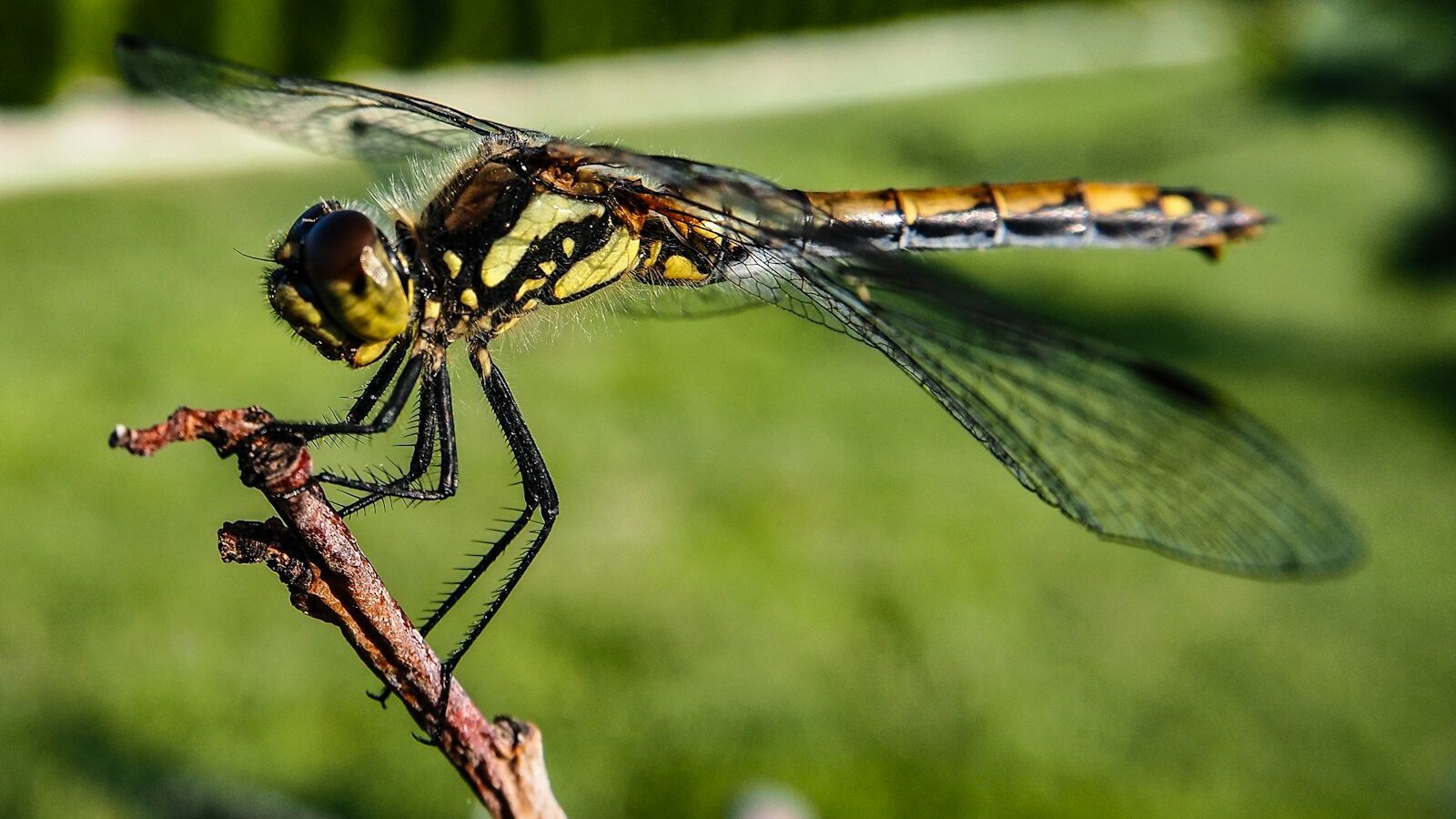
To attract dragonflies, give them what their two life stages need: a patch of still, sunlit water with submerged and emergent plants where the larvae live and hunt for up to several years, and open, sunny perches around the water where the winged adults bask, patrol, and breed. Dragonflies are not drawn by flowers or feeders — they are predators, and they follow water. A small, fish-free pond placed in full sun, fringed with reeds and rushes and edged with tall stems and a few bare perch points, will pull in darners, skimmers, and damselflies within a season, and may host them breeding for years.
The payoff is worth it. Adult dragonflies are among the most effective mosquito predators in the garden, taking hundreds of small flying insects a day, and their aquatic larvae devour mosquito wrigglers, midge larvae, and other pests in the water itself. This guide covers exactly how to build and plant a dragonfly-friendly water feature, what perches and sun exposure they need, and how to keep the larvae habitat healthy across the seasons.
Key Takeaways
- Still water is essential. Dragonflies breed in calm ponds, not moving streams or fountains — leave the surface undisturbed for egg-laying and larvae.
- Emergent plants do double duty. Reeds, rushes, and irises let larvae climb out to emerge as adults and give adults perches and egg-laying sites.
- Provide sunny perches. Place tall stakes, bare stems, and rocks around the pond in full sun so adults can bask, hunt, and defend territory.
- Site it in full sun. Dragonflies are sun-driven; a pond that gets six or more hours of direct light warms the water and activates the adults.
- Protect the larvae habitat. Skip fish, avoid chemicals, and keep submerged plants and leaf litter so larvae have cover, prey, and somewhere to overwinter.
Understanding the Dragonfly Life Cycle
You cannot design a good dragonfly habitat without understanding that dragonflies live most of their lives underwater. After eggs are laid in or near still water, they hatch into aquatic larvae (called nymphs or naiads) that live submerged for anywhere from a few months to several years depending on the species. The larvae are voracious underwater predators, hunting mosquito larvae, tadpoles, water fleas, and even small fish. When mature, a larva climbs up an emergent plant stem out of the water, splits its skin, and emerges as a winged adult. The adults — the brilliant flyers we recognize — live only a few weeks to a few months, during which they hunt flying insects, defend territory, and breed.
This split life cycle drives every design decision. The pond must support the larvae for the long underwater phase, and the surrounding area must support the short, intense adult phase. Get both right and dragonflies will not just visit — they will complete their entire life cycle in your garden, returning generation after generation.
Step 1: Provide Still Water
Most garden dragonflies and damselflies breed in still or very slow-moving water — ponds, not streams. Moving water from a fountain, waterfall, or strong filter outflow disturbs the surface, makes egg-laying difficult, and disrupts the calm conditions larvae prefer. If you are building a feature specifically to attract dragonflies, design it as a still pond with no fountain. If you want some water movement for aeration, confine it to the deep end and leave the margins and shallows perfectly calm.
Size and depth
Dragonflies will use ponds from a few square feet up to large ponds, but more surface area attracts more species and more territorial males. A pond of 30 to 100-plus square feet is a strong target for a garden. Build a varied depth profile: shallow shelves of 2 to 9 inches where most larvae hunt and where emergent plants root, grading down to a deeper zone of 18 to 24 inches that stays cool in summer and resists freezing solid in winter. The shallow, sun-warmed margins are the heart of the larvae habitat, so make them generous.
Edges and substrate
Include gently sloping edges rather than vertical walls — larvae need to climb out on plant stems and along shallow shelves to emerge, and gradual margins also let other wildlife in and out. Use an EPDM liner with a thin layer of washed gravel over the shelves so plants can root and larvae have crevices and silt to hide in. A natural, slightly silty bottom with leaf litter gives larvae cover and prey; a sterile, scrubbed liner gives them nothing.
Water source
Fill with collected rainwater if possible — it is free of chlorine and low in nutrients. If you use tap water, let it stand for several days or dechlorinate it before planting. Once established, top up with rainwater during dry spells. Like a frog pond, a dragonfly pond benefits from being self-sustaining; many of the same principles apply, and our guide on attracting frogs to a pond covers the still-water, chemical-free approach in more depth.
Step 2: Plant Emergent and Submerged Vegetation
Plants are the structural backbone of dragonfly habitat. They serve three distinct functions across the life cycle, so include all three plant types.
Emergent plants — the emergence ladders
This is the most important category for dragonflies. Emergent plants grow up out of the water with stems standing above the surface — rushes, reeds, cattails (use sparingly, as they spread), pickerelweed, blue flag iris, sedges, and horsetail. Larvae climb these stems to leave the water and transform into adults, and the vertical stems are also where females lay eggs and where adults perch. Plant emergents densely along the shallow shelves and margins so there is always a stem within reach of an emerging larva.
Submerged plants — larvae cover and oxygen
Submerged oxygenators such as hornwort, water starwort, and native waterweed give larvae cover to ambush prey and hide from predators, while oxygenating the water they breathe. They also support the invertebrate food web — water fleas, mayfly nymphs, mosquito larvae — that dragonfly larvae eat. Add several bunches across the shallow zones.
Floating plants — partial shade
A modest amount of floating cover such as water lilies provides surface shade and resting spots, and damselflies in particular perch and lay eggs on lily pads. Keep floating plants to no more than a third to a half of the surface, though — dragonflies need plenty of open, sunlit water for the adults to patrol and for the water to warm. Too much surface cover shades out the sun the whole habitat depends on.
Step 3: Add Sunny Perches
Adult dragonflies are perching predators and sun-baskers. Many species, especially skimmers and chasers, hunt from a fixed perch — they sit on a prominent stem or stake, dart out to grab passing insects, and return. Males also use high perches to watch over and defend their breeding territory. Give them what they want: place several tall, slender perches around and over the water, in full sun. Bamboo canes or thin stakes pushed into the pond margins at varying heights (1 to 4 feet) are ideal, as are naturally tall plant stems, the tips of emergent reeds, and a few rocks or logs at the water’s edge for the ground-perching species.
Position perches where they catch morning and midday sun, since dragonflies need to warm their flight muscles before they can hunt effectively and will often spend the early hours basking. A variety of perch heights and positions accommodates different species and lets multiple territorial males coexist. These same sunny structures double as basking points, so think of perches and basking sites as one feature. Pairing the pond with nearby nectar plants and a layered border also helps, as covered in our guide to attracting pollinators to your garden — the small flying insects those flowers bring become dragonfly prey.
Step 4: Choose a Sunny Site
Dragonflies are creatures of the sun. They are most active in warm, bright conditions and largely disappear on cool, overcast days. Site the pond in the sunniest spot you have — ideally six or more hours of direct sun a day. Sunlight warms the water, which speeds larval development and triggers emergence; it activates the adults’ flight muscles; and it makes the open water attractive for patrolling and breeding. A pond tucked in deep shade will struggle to attract dragonflies no matter how well it is planted.
Open the area around the pond as well. Dragonflies need clear flight paths to patrol and hunt, so avoid crowding the water with overhanging trees and tall dense shrubs on all sides. A little shelter from strong prevailing wind on one side is helpful — wind makes flying and hunting hard — but keep at least the sunny southern and eastern exposures open. Avoid siting under deciduous trees that drop heavy leaf fall, which fouls the water and can deplete oxygen the larvae need.
Step 5: Protect the Larvae Habitat
Because larvae live in the pond for months or years, the health of the underwater habitat determines whether dragonflies breed successfully. Three rules protect it.
Keep fish out
Fish and dragonfly larvae are mutual enemies — fish eat the larvae, and larger larvae will eat small fish. A fish-free pond lets larvae survive in numbers and keeps the invertebrate food web they depend on intact. If your aim is breeding dragonflies, do not stock the pond with goldfish or koi. A wildlife pond and a fish pond should be separate features.
Avoid all chemicals
Pesticides, herbicides, and especially mosquito-control products are lethal to dragonfly larvae and to the aquatic insects they eat. Ironically, mosquito sprays and larvicides destroy the very predators that would control mosquitoes for free. Keep the whole yard chemical-free and let the larvae do the pest control. Manage algae by hand-netting and by balancing the pond with submerged plants rather than algaecides.
Leave cover and silt
Resist the urge to scrub the pond clean. A layer of leaf litter, some silt, and dense submerged plants give larvae places to hide, hunt, and overwinter. If you must clean out debris, do it in late autumn, remove only part of the material at a time, and leave the pile beside the pond for a day or two so any larvae can crawl back in. Sudden, total clean-outs wipe out a year’s worth of larvae.
Putting It Together and Being Patient
A complete dragonfly habitat is really just a still, sunny, fish-free pond fringed with reeds and rushes, edged with bare perches, and left chemically alone. Build that and the adults will find it — they range widely and detect new water quickly, often arriving the first summer to hunt and patrol. Breeding follows once females lay eggs in the emergent plants, and the first home-grown adults may emerge the next year or two later, depending on species. The exuviae — the empty larval skins left clinging to reed stems after emergence — are your proof that dragonflies are breeding, not just visiting.
Maintenance is light: top up with rainwater in droughts, thin overgrown emergents and floating plants in late summer or autumn, net out excess algae, and leave the larvae habitat undisturbed through the seasons. The less you tidy, the more the pond holds together as a living system. For help selecting the aquatic and marginal plants that make all this work, see our broader guide to planting a water garden and pond.
Frequently Asked Questions
How quickly will dragonflies find a new pond?
Often within the first summer. Adult dragonflies range widely and detect new still water fast, so a sunny, planted, fish-free pond can attract patrolling and hunting adults almost immediately. Breeding and home-grown emergents follow over the next year or two as larvae develop underwater.
Do dragonflies really help control mosquitoes?
Yes, at both life stages. Adult dragonflies catch large numbers of flying insects including mosquitoes, and the aquatic larvae are major predators of mosquito larvae in the water. A dragonfly pond is one of the best natural mosquito controls — which is why mosquito sprays are counterproductive.
Can I have fish and dragonflies in the same pond?
Not ideally. Fish eat dragonfly larvae and disrupt the invertebrate food web the larvae rely on, so a stocked pond rarely supports good dragonfly breeding. Keep the dragonfly pond fish-free, and build a separate feature if you also want fish.
Why do dragonflies need perches?
Many species hunt from a fixed perch, darting out to catch insects and returning, and males use high perches to watch and defend breeding territory. Tall stakes, reed stems, and rocks in full sun let adults bask, hunt, and patrol, making the pond far more attractive.
What plants are best for attracting dragonflies?
Emergent plants are most important — rushes, reeds, irises, pickerelweed, and sedges give larvae stems to climb out on and adults places to perch and lay eggs. Pair them with submerged oxygenators like hornwort for larvae cover and a little floating cover such as water lilies for shade.