

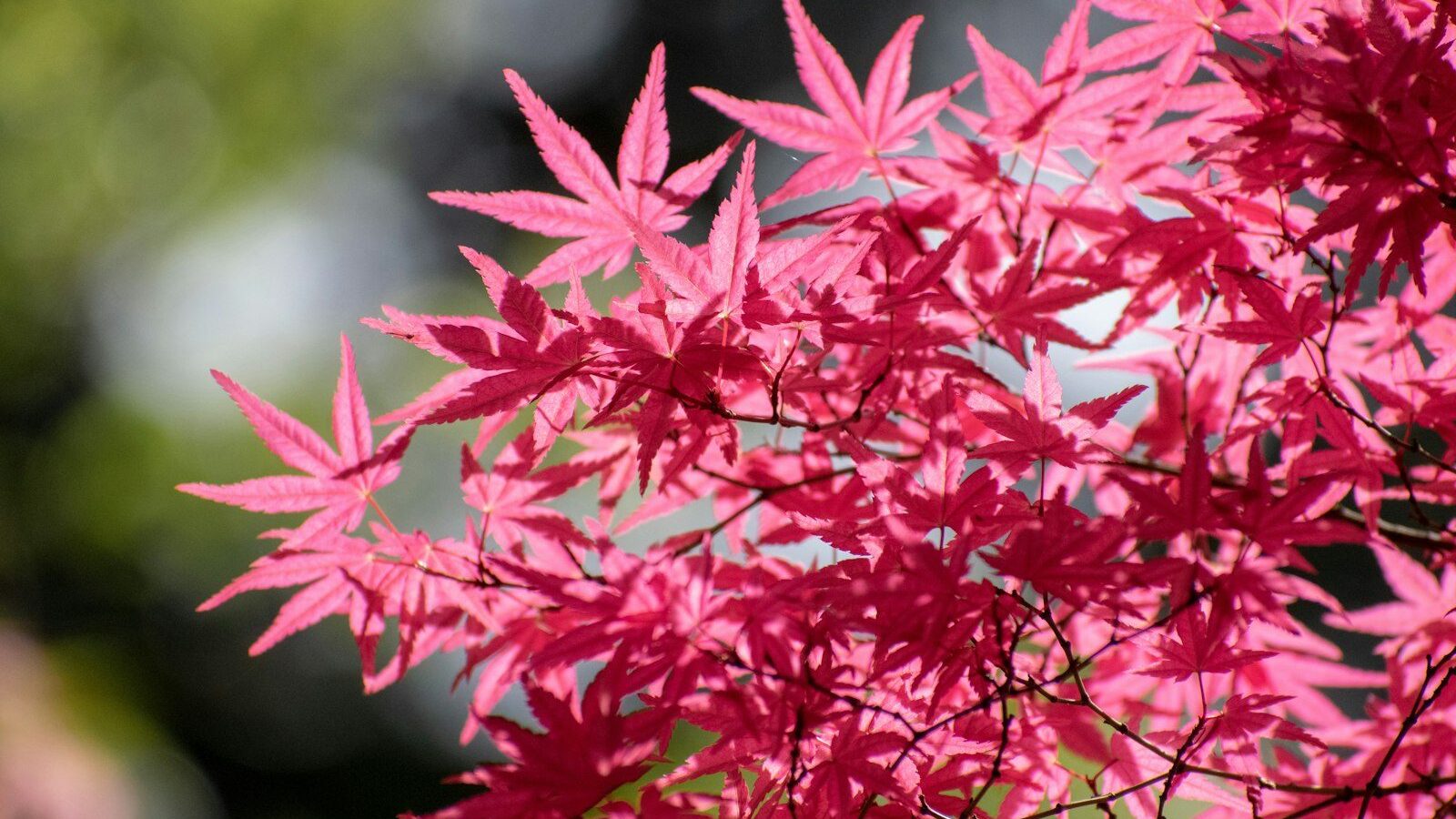
A dwarf Japanese maple gives a small yard, patio or balcony the same layered leaves and fall fire as a full-size tree, without outgrowing its spot in ten years. The best choices for tight spaces are true dwarf cultivars such as Mikawa Yatsubusa, Shaina, Kiyohime and Sharp’s Pygmy, which stay in the shrub range for many years, plus slow laceleaf types like Red Dragon and Inaba Shidare that mound rather than climb. Grow them in USDA zones 5 to 8 (many tolerate zone 9 with afternoon shade), give them morning sun, steady moisture and well-drained soil, and most will happily live in a large pot for years.
In this guide
Key Takeaways
- “Dwarf” on a nursery tag is relative; check the expected height at 10 years and at maturity before you buy.
- Witches’-broom dwarfs like Mikawa Yatsubusa and Kiyohime are the smallest and grow only a few inches a year.
- Laceleaf (dissectum) types weep into wide mounds that suit pots and the front of a bed.
- Container maples need a pot about twice the width of the root ball, fast-draining mix and root protection below zone 7 in winter.
- Afternoon shade prevents leaf scorch in hot, dry and southern gardens.
What Makes a Japanese Maple “Dwarf”?
Standard Acer palmatum seedlings and upright cultivars like Bloodgood can reach 15 to 25 feet. Nurseries label anything well below that as dwarf, small or compact, but the terms are not standardized. Three groups fit small spaces:
- True dwarfs and miniatures. Often selected from witches’ brooms, the dense, congested shoots that sometimes appear on normal trees. They grow slowly, with short internodes and small leaves, and usually stay in the 2 to 6 foot range for many years.
- Laceleaf or dissectum types. Finely cut leaves on cascading branches. They grow wider than tall, commonly reaching around 4 to 8 feet high over decades unless staked up when young.
- Compact uprights. Upright forms that grow slowly, top out around 6 to 10 feet and can be kept smaller with light pruning.
Heights quoted by growers vary with climate, soil and whether the tree is in the ground or a pot. Treat every size in this guide as a typical range, and expect smaller numbers in containers and colder zones.
The Best Dwarf and Miniature Japanese Maples
Mikawa Yatsubusa
The classic miniature Japanese maple. Bright green leaves overlap in tight, shingled layers on short stems, creating a dense, mounding shrub that typically reaches only about 3 to 5 feet after many years. Fall color is yellow, orange and red. It is one of the best choices for a container, a rock garden or a bonsai-style pot, and its tidy habit needs almost no pruning.
Shaina
A dense, bushy red-leaved dwarf that originated as a witches’ broom on the popular Bloodgood. New growth is bright red, maturing to deep maroon, and the plant forms a rounded shape that usually stays around 4 to 6 feet. If you want the burgundy look of a full-size red maple on a patio, Shaina is a strong first pick.
Kiyohime
A low, broad dwarf with small green leaves and a flat-topped, spreading shape. It grows wider than tall, often only around 3 feet high, and the spring leaves may show an orange-red edge. Kiyohime suits the front of a border or a wide, shallow pot.
Sharp’s Pygmy
A tiny green dwarf with small, deeply lobed leaves on a compact, rounded plant that typically stays in the 2 to 4 foot range. It turns orange and red in fall. Good for troughs, small containers and miniature gardens.
Beni Hime and other tiny-leaf dwarfs
Beni Hime has some of the smallest leaves of any palmatum, opening red in spring and fading toward green, on a twiggy plant that stays very small. It is less vigorous and more sensitive to heat and hot sun than the dwarfs above, so it suits experienced growers or sheltered spots.
Wilson’s Pink Dwarf and Beni Maiko
Both grow as small, upright shrubs that are prized for their spring color. Wilson’s Pink Dwarf flushes pink before turning green, and Beni Maiko opens fiery red. Expect roughly 4 to 6 feet over many years. Both look best in bright morning light, which brings out the spring color.
Red Dragon, Inaba Shidare and other laceleafs
For the finely cut, weeping look, choose a slow dissectum. Red Dragon holds deep burgundy color well into summer and typically forms a mound around 4 to 6 feet tall. Inaba Shidare is a vigorous red laceleaf with good color retention that is often grown as a broad mound. Crimson Queen and Tamukeyama are also widely sold; they eventually get larger, often 8 to 10 feet over decades, but grow slowly enough to suit a pot for years. For green laceleaf, Viridis and Seiryu are the usual choices; Seiryu is unusual in growing upright rather than weeping. Our weeping Japanese maple care guide covers how to stake and shape laceleafs when young.
| Cultivar | Leaf color | Habit | Typical size | Best use |
|---|---|---|---|---|
| Mikawa Yatsubusa | Green, layered | Dense mound | 3–5 ft | Pots, rock gardens |
| Shaina | Red to maroon | Rounded, bushy | 4–6 ft | Patio pots, small beds |
| Kiyohime | Green | Low, flat-topped | Around 3 ft | Front of border |
| Sharp’s Pygmy | Green | Compact, rounded | 2–4 ft | Troughs, small pots |
| Red Dragon | Burgundy laceleaf | Weeping mound | 4–6 ft | Containers, edges |
| Crimson Queen | Red laceleaf | Weeping mound | 8–10 ft over decades | Large pots, focal beds |
| Wilson’s Pink Dwarf | Pink spring, green summer | Small upright | 4–6 ft | Spring color accent |
If you are still weighing size against color and leaf form, our broader Japanese maple varieties guide includes full-size uprights and specialty types.
Where to Plant a Dwarf Japanese Maple
Japanese maples are understory trees in nature, so they want gentle light and protection from drying wind. In zones 5 to 7 most cultivars handle sun until early afternoon. In zones 8 and 9, and anywhere with hot, dry summers, give them morning sun and afternoon shade or bright filtered light. Red-leaved types develop their best color with a few hours of direct sun; green and variegated types and tiny-leaf dwarfs scorch more easily.
Soil should drain well but hold some moisture, with slightly acidic to neutral pH. Avoid low spots where water sits after rain, because wet roots lead to root rot and verticillium wilt is more damaging on stressed trees. In heavy clay, plant slightly high, with the top of the root ball an inch or two above grade, and mulch 2 to 3 inches deep, keeping mulch off the trunk. Plant in early spring or fall when temperatures are mild. Space dwarfs at least their expected mature width from walls and other shrubs so air moves around them.
Dwarf maples fit naturally into mixed shrub borders, foundation plantings and courtyard gardens. For pairing ideas with other compact shrubs and small trees, browse our trees and shrubs guide.
Growing Dwarf Japanese Maples in Containers
Pot size and material
Choose a pot roughly twice the diameter of the nursery root ball and at least as deep, with large drainage holes. A 3-gallon plant typically starts well in a container around 16 to 20 inches wide; a mature miniature eventually wants something in the 20 to 24 inch range. Wide, low pots suit weeping laceleafs; taller pots suit uprights. Glazed ceramic, fiberglass and thick resin hold moisture better than thin plastic or unglazed terracotta, which dry out fast in summer wind. In cold zones, pick frost-resistant materials, because cheap terracotta and some ceramics crack when wet soil freezes.
Potting mix
Use a quality bark-based potting mix rather than garden soil, which compacts in a pot. Many growers blend roughly two parts potting mix with one part fine pine bark fines or pumice to improve drainage. Do not put gravel in the bottom of the pot; it raises the water table in the soil instead of improving drainage. Set the root ball at the same depth it grew in the nursery.
Watering and feeding
Water when the top inch of mix is dry, soaking until water runs from the drainage holes. In midsummer that can mean daily watering for small pots in sun. Crispy brown leaf edges in July usually signal drought or hot wind, not disease. Feed lightly: a slow-release balanced fertilizer at half the label rate in early spring is plenty. Heavy nitrogen pushes soft, leggy growth that defeats the purpose of a dwarf and scorches easily. Stop feeding by midsummer so growth hardens off before winter.
Winter protection
Roots in a pot are exposed to air temperature on all sides, so they are less cold-hardy than the same tree in the ground. A common rule of thumb is that container plants act as if they are one to two zones colder. In zones 7 and warmer, most potted dwarfs overwinter outdoors against a sheltered wall. In zones 5 and 6, move pots into an unheated garage or shed after leaf drop, or group them and wrap the pots with burlap and insulation, or sink them into the ground or a mulch pile. Water once a month in winter if the mix dries out. Do not bring them into a heated house; they need winter dormancy.
Repotting and root pruning
Every 2 to 3 years, in late winter or very early spring before buds break, slide the maple out of its pot. If roots circle the outside, tease them loose and trim back about the outer inch of roots, then repot into the same container with fresh mix or into a pot one size larger. This keeps a dwarf healthy in the same container for many years.
Pruning Dwarf Maples
True dwarfs need little more than removing dead twigs and the occasional crossing branch. Laceleafs benefit from thinning the interior so you can see the branch structure and so air moves through the mound, which reduces fungal problems. Do structural pruning in late winter while dormant, and light shaping cuts in early summer once leaves have hardened. Avoid heavy pruning in spring when sap flows heavily. Watch for vigorous straight shoots growing from below the graft on grafted plants and cut them off at the base, because they come from the rootstock and can outgrow the cultivar. Our guide on how to prune a Japanese maple walks through cuts step by step.
Common Problems
- Leaf scorch. Brown, crispy edges in summer from heat, sun, wind or dry roots. Move pots to afternoon shade, water deeply and mulch.
- Late frost damage. Tender new leaves blacken after a cold snap. Cover small plants or wheel pots into shelter when frost is forecast after bud break; the plant usually releafs.
- Root rot and wet feet. Wilting despite wet soil. Improve drainage, repot into fresh mix and water less often.
- Verticillium wilt. Sudden dieback of one branch or side, often with streaking in the wood. There is no cure; prune out affected wood with sterilized tools and keep the tree unstressed.
- Aphids and scale. Sticky leaves or bumps on stems. Hose off aphids; treat scale with horticultural oil in the dormant season.
If a maple declines despite good care, our troubleshooting guide on why a Japanese maple is dying covers diagnosis in more depth.
Buying Tips
- Buy named, grafted cultivars from a reputable nursery. Unnamed “red Japanese maple” seedlings can grow far larger than a dwarf.
- Look for a straight, healthy graft union and evenly spaced branches, with no cracks or sunken areas on the trunk.
- Small dwarfs grow slowly, so larger specimens cost more; a small plant will still fill in, just over several years.
- Check the tag for size at 10 years as well as at maturity, and pick the cultivar that fits the space you actually have.
Frequently Asked Questions
What is the smallest Japanese maple?
Witches’-broom dwarfs such as Mikawa Yatsubusa, Kiyohime, Sharp’s Pygmy and Beni Hime are among the smallest commonly sold. They usually stay in the 2 to 5 foot range for many years and grow only a few inches annually.
How fast does Mikawa Yatsubusa grow?
Slowly, often just a few inches a year. Its short stems and overlapping leaves create a dense mound that typically takes many years to reach 3 to 5 feet, which is why it is a favorite for containers.
Can a dwarf Japanese maple live in a pot permanently?
Yes. With a large enough container, fast-draining bark-based mix, regular watering, light feeding and root pruning every 2 to 3 years, dwarf and laceleaf maples can thrive in pots for many years.
Do dwarf Japanese maples need full sun?
No. Morning sun with afternoon shade is ideal in most of the US, and essential in hot or dry regions. Red-leaved types color best with some direct sun, while green and tiny-leaf types scorch more easily.
How do I protect a potted Japanese maple in winter?
In zones 7 and warmer, move it against a sheltered wall. In colder zones, store it in an unheated garage or shed after leaf drop, or insulate and wrap the pot, and water monthly if the mix dries out.