

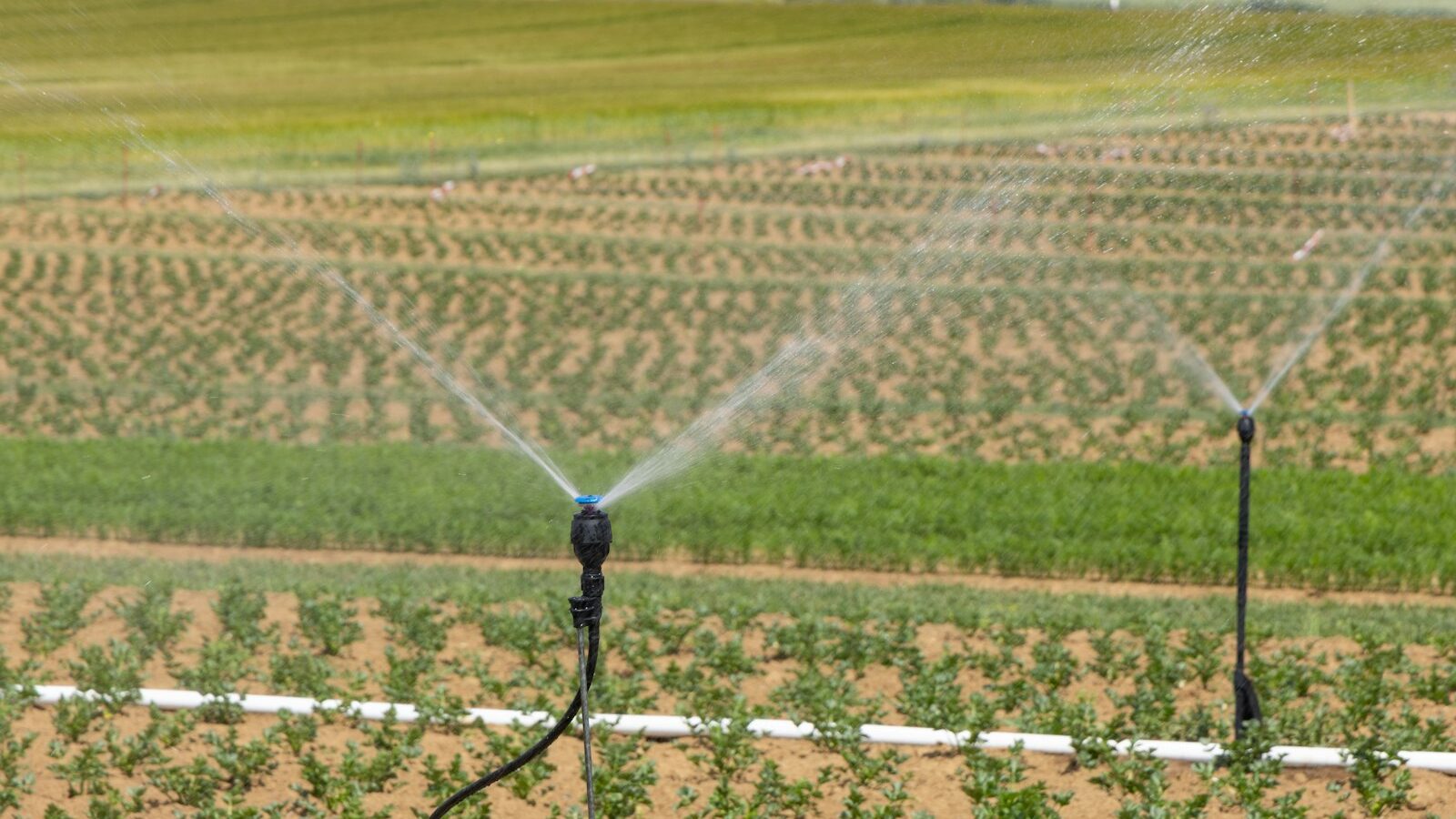
Drip irrigation and sprinklers are both ways to deliver water, but they are built for opposite situations. Drip irrigation drips water slowly at the soil surface, right at the root zone, wasting almost nothing — it is up to 90% efficient and ideal for garden beds, rows of vegetables, shrubs, and containers. Sprinklers spray water through the air over a wide area, which is the only practical way to water a lawn or a large field of densely planted ground cover, but they lose 25 to 50% of that water to evaporation, wind, and runoff. If you are watering plants you can count, drip wins on efficiency and plant health. If you are watering turf or broad areas, sprinklers are the realistic choice. Most well-designed landscapes use both, zoned separately.
Key Takeaways
- Drip irrigation delivers water to roots at up to 90% efficiency — best for beds, rows, shrubs, and containers.
- Sprinklers cover wide areas through the air but lose 25–50% to evaporation and wind — best for lawns and large plantings.
- Drip keeps foliage dry, which reduces fungal disease and weeds; sprinklers wet leaves and the whole bed, encouraging both.
- Drip costs more per zone to design but saves water and money over time; sprinklers are simpler for turf but pricier to run.
- Water in early morning, match the method to the plant type, and use a timer for both systems.
Drip vs Sprinkler at a Glance
| Factor | Drip Irrigation | Sprinkler |
|---|---|---|
| Water efficiency | Up to 90% | 50–75% |
| Where water goes | Root zone, at soil surface | Sprayed over a wide area |
| Foliage wetting | Stays dry (less disease) | Wets leaves (more disease) |
| Weed growth | Lower (only roots watered) | Higher (whole bed watered) |
| Best for | Beds, rows, shrubs, containers | Lawns, large plantings, seeding |
| Coverage of large areas | Impractical for big turf | Excellent |
| Upfront design effort | Higher (emitters, tubing layout) | Moderate to high (heads, piping) |
| Maintenance | Check for clogged emitters | Adjust/clear heads, fix breaks |
| Pressure needs | Low (often with regulator) | Higher |
Drip Irrigation: Precision and Efficiency
Drip irrigation uses a network of tubing fitted with emitters that release water slowly — often measured in gallons per hour (GPH) rather than gallons per minute — directly onto the soil at each plant’s base. Because the water goes exactly where roots are and almost none is sprayed into the air, drip systems reach efficiencies of 80 to 90%. In a region with watering restrictions or a high water bill, that efficiency translates directly into lower costs and healthier plants that are never drought-stressed between waterings.
The efficiency is only half the story. Because drip keeps foliage dry, it dramatically reduces the fungal diseases — powdery mildew, blights, black spot — that thrive on wet leaves. It also waters only the root zones you target, so the bare soil between plants stays dry and grows far fewer weeds. For vegetable gardens, perennial borders, foundation shrubs, and especially containers and raised beds, drip is the gold standard. Emitters can be tuned plant by plant: a thirsty tomato gets a 2 GPH emitter, a drought-tolerant lavender gets 0.5 GPH, all on the same line.
Drip’s Trade-offs
Drip systems take more thought to design. You plan tubing runs, choose emitter flow rates, and usually add a pressure regulator and a filter (emitters clog easily on unfiltered or hard water). Emitters can plug with mineral deposits or debris, so you inspect the line periodically and flush it seasonally. Drip is also poorly suited to lawns and large, uniformly planted areas — running enough emitters to cover turf is impractical. And the thin tubing is vulnerable to damage from string trimmers, shovels, and curious dogs. None of this is hard, but it is more involved than dropping a hose-end sprinkler on the grass. If you are weighing drip against another low-flow surface method, our comparison of soaker hose vs drip irrigation is worth a look.
Sprinklers: Coverage and Simplicity
Sprinklers spray water through the air to cover broad areas, and for some jobs there is simply no better tool. Lawns are the obvious example: turf is a dense, uniform planting that needs even overhead coverage, and no drip layout can match a properly designed sprinkler zone for that. Sprinklers also excel at germinating newly seeded lawns or wildflower areas, where you need to keep a large surface evenly moist, and at cooling and watering large ornamental plantings.
Sprinklers range from cheap hose-end oscillators to in-ground pop-up systems with rotors and spray heads on dedicated zones. In-ground systems can be automated, zoned, and tuned for spray pattern and radius, and they disappear when not running. For anyone managing a real lawn, an in-ground sprinkler system is usually the practical backbone of the irrigation plan. The technology is mature, parts are everywhere, and most homeowners already understand it intuitively.
Where Sprinklers Fall Short
The core weakness is waste. Spraying water through the air means 25 to 50% can evaporate, drift on the wind, or run off before it soaks in — worse in heat, wind, and on slopes or compacted soil. Sprinklers also wet the entire area, including plant foliage (inviting fungal disease) and bare soil (feeding weeds). They water indiscriminately, so a bed with both thirsty and drought-tolerant plants gets a single uniform dose that suits neither. And overhead water on flowers and fruit can cause spotting, splitting, or rot. For garden beds, these are real costs; for lawns, they are simply the price of covering a large uniform area.
How to Choose: Match the Method to the Planting
The decision is rarely “one or the other” for a whole property. It is “which method for which zone.”
Choose Drip Irrigation When…
- You are watering vegetable beds, rows, perennials, shrubs, or containers — anything you can count.
- Water efficiency matters due to cost, drought, or restrictions.
- You want to reduce fungal disease and weeds by keeping foliage and bare soil dry.
- Plants have different water needs you want to tune emitter by emitter.
Choose Sprinklers When…
- You are watering a lawn or large, uniformly planted area.
- You are germinating seed across a broad surface and need even moisture.
- You want a simple, familiar setup for turf without designing emitter layouts.
- The area is too large for practical drip coverage.
The smartest landscapes zone the two separately: drip on the beds, sprinklers on the lawn, each on its own timer schedule because their run times differ enormously (drip runs longer at low flow; sprinklers run shorter at high flow). If you are planning the whole bed layout, our guide on raised bed vs in-ground garden pairs naturally with choosing the right irrigation for each style.
Getting the Most From Either System
Good watering habits matter as much as the hardware. Whichever method you run, follow these fundamentals.
- Water in early morning. Before 9 a.m. minimizes evaporation, lets foliage dry quickly (cutting disease for sprinklers), and gives plants moisture for the heat of the day.
- Water deeply and less often. Both systems should soak the root zone thoroughly, then let the top inch or two dry before the next cycle. Frequent shallow watering grows weak, shallow roots.
- Use a timer or controller. Consistent scheduling prevents both over- and under-watering, and smart controllers can skip cycles after rain.
- Add mulch. A 2 to 3 inch mulch layer over drip lines slows evaporation even further and protects the tubing from sun and trimmers.
- Maintain seasonally. Flush drip lines and check emitters; clear and adjust sprinkler heads and watch for broken lines or misdirected spray.
A useful rule of thumb: most garden plants want about an inch of water per week, adjusted up in heat and down in cool, wet weather. Put an empty tuna can under a sprinkler to measure output, or track drip GPH against run time, so you actually know how much you are applying.
The Verdict
For garden beds, vegetables, shrubs, and containers, drip irrigation is the clear winner: it slashes water waste, keeps foliage dry to fight disease, starves weeds, and lets you tune water plant by plant. The extra design effort pays for itself in lower bills and healthier plants. For lawns and large, uniformly planted areas, sprinklers remain the only practical choice — accept the evaporation losses as the cost of covering broad turf, and offset them by watering at dawn. The best answer for most properties is not to pick one but to run both, zoned and scheduled separately. Drip where you grow, sprinklers where you mow.
Frequently Asked Questions
Is drip irrigation better than sprinklers?
For garden beds, vegetables, shrubs, and containers, yes — drip is up to 90% efficient, keeps foliage dry to reduce disease, and waters only the root zone. For lawns and large uniform areas, sprinklers are better because drip cannot cover broad turf practically.
Does drip irrigation save water?
Yes, significantly. Drip delivers water directly to roots with little evaporation or runoff, reaching 80 to 90% efficiency versus 50 to 75% for sprinklers. In drought-prone areas or under watering restrictions, drip can cut outdoor water use substantially.
Can I use drip irrigation on my lawn?
It is generally impractical. Lawns are dense, uniform plantings that need even overhead coverage, which would require an unworkable density of emitters. Use sprinklers for turf and reserve drip for beds, rows, and containers.
Why do sprinklers cause more plant disease?
Sprinklers wet plant foliage, and prolonged leaf wetness encourages fungal diseases like powdery mildew, blight, and black spot. Drip keeps leaves dry by watering at the soil surface. If you must use sprinklers near plants, water at dawn so foliage dries quickly.
How often should I run drip irrigation?
Aim for deep, infrequent cycles that deliver roughly an inch of water per week, adjusted for heat and rainfall. Because emitters flow slowly (measured in GPH), drip zones often run longer than sprinklers — sometimes 30 to 60 minutes — but only a few times per week.