

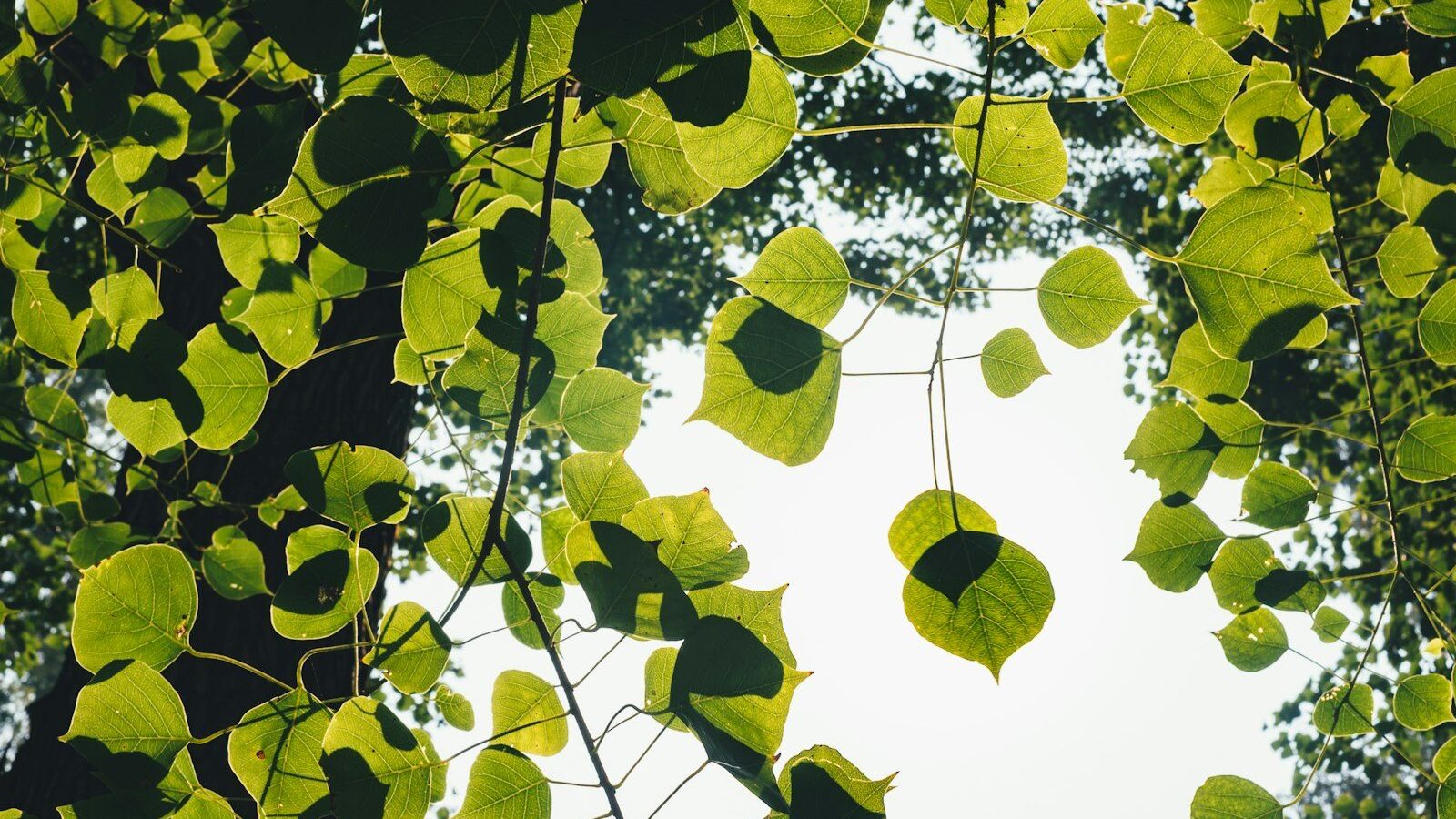
A shady wall or fence does not have to stay bare. Several vines grow happily with only a few hours of sun, and a handful will cover a north-facing wall with almost none. The most dependable climbing plants for shade across most of the US are climbing hydrangea and Japanese hydrangea vine for flowers, Boston ivy and Virginia creeper for fast coverage and fall color, and native coral honeysuckle and crossvine for part shade in warmer zones. The key is matching three things: how much light the spot really gets, how the vine climbs, and what support you can give it. This guide lists 14 good choices with their hardiness zones and sizes, then covers planting at the base of a shady wall and the common mistakes that keep shade vines from thriving.
In this guide
Key Takeaways
- Full shade (under 3 hours of sun): climbing hydrangea, Japanese hydrangea vine, Boston ivy, Virginia creeper and climbing fig in warm zones.
- Part shade (3 to 6 hours, ideally morning sun): clematis, coral honeysuckle, crossvine, Carolina jessamine, star jasmine, golden hops and kolomikta kiwi.
- Self-clinging vines stick directly to masonry; twining vines need a trellis, wires or a fence to wrap around.
- Plant 12 to 18 inches out from a wall to escape the dry rain shadow, then lean the vine in toward its support.
- Shade vines grow slower and flower less than in sun; expect two to three years before strong coverage.
How Much Shade Do You Really Have?
Before choosing a vine, watch the spot on a sunny day in early summer and count the hours of direct sun. Full shade usually means less than three hours, often with bright indirect light. Part shade means three to six hours, and morning sun is much easier on plants than hot afternoon sun. Dense shade under evergreen trees or between houses, with little indirect light, limits you to the toughest foliage vines. North walls in the northern half of the country tend to be full shade; east walls get part shade with gentle morning sun, which suits the widest range of climbers. Our flowers and perennials guide explains light levels and siting in more detail.
How Vines Climb and What Support They Need
| Climbing method | How it works | Support needed | Examples |
|---|---|---|---|
| Aerial rootlets | Short roots grip rough surfaces | Brick, stone, wood fence; no trellis | Climbing hydrangea, Japanese hydrangea vine, climbing fig |
| Adhesive pads | Tendrils end in sticky discs | Masonry or wood; no trellis | Boston ivy, Virginia creeper |
| Twining stems | Stems spiral around supports | Posts, wires, lattice, arbor | Honeysuckle, jessamine, hops, kiwi, star jasmine |
| Leaf-stalk twining | Leaf stems wrap around thin supports | Thin wire, netting, mesh | Clematis |
| Tendrils | Coiling tendrils grab thin supports | Wire, netting or lattice | Crossvine (tendrils with adhesive tips) |
Self-clinging vines are the easiest on a blank wall but hard to remove later and can damage soft mortar, wood siding and paint. On a painted or sided house, choose a twining vine on a trellis set 2 to 3 inches out from the wall, which leaves room for air and maintenance.
Best Vines for Full Shade
1. Climbing hydrangea (Hydrangea anomala subsp. petiolaris)
The classic shade climber. It clings with aerial rootlets, eventually reaching 30 to 50 feet, and carries flat, lacy white flower clusters in early summer against glossy dark leaves. Peeling cinnamon bark adds winter interest. Zones 4 to 8. It is notoriously slow for the first two or three years, then takes off. See our full guide to growing climbing hydrangea.
2. Japanese hydrangea vine (Schizophragma hydrangeoides)
Similar to climbing hydrangea but with showier, heart-shaped bracts and selections such as ‘Moonlight’, which has silvery leaves, and ‘Rosea’, with pink-tinged bracts. It flowers well in part shade and tolerates full shade with fewer blooms. Zones 5 to 8, climbing 20 to 30 feet by aerial rootlets.
3. Boston ivy (Parthenocissus tricuspidata)
Fast, tough and self-clinging by adhesive pads, Boston ivy covers brick and stone in full sun to deep shade and turns scarlet to burgundy in fall. It is deciduous, so walls show in winter. Zones 4 to 8, reaching 30 to 50 feet. Keep it trimmed away from windows, gutters and roof edges. Our guide on how to grow Boston ivy covers training and pruning.
4. Virginia creeper (Parthenocissus quinquefolia)
A native relative of Boston ivy with five-part leaves, brilliant red fall color and blue berries that birds eat. It grows in full sun to deep shade in zones 3 to 9 and can climb 30 to 50 feet or sprawl as a ground cover. It is vigorous, so give it a large wall or fence and cut it back yearly. Note that the berries are toxic to people and pets if eaten.
5. Climbing fig (Ficus pumila)
In zones 8 to 11, climbing fig forms a flat, fine-textured evergreen mat on shady masonry walls. Young leaves are small and neat; mature growth becomes larger and woodier, so shear it once or twice a year to keep the juvenile look. It clings strongly and is very hard to remove from stucco.
Best Vines for Part Shade
6. Clematis
Clematis likes its roots cool and shaded, and many large-flowered varieties actually hold their color better out of hot afternoon sun. Pale and striped types such as ‘Nelly Moser’ and ‘Henryi’ fade in strong sun and look best in part shade. Sweet autumn clematis and C. montana also handle part shade. Most grow 8 to 15 feet on a trellis in zones 4 to 9. See our clematis care guide for pruning groups.
7. Coral honeysuckle (Lonicera sempervirens)
A native, non-invasive honeysuckle with tubular red, orange or yellow flowers that hummingbirds love. It flowers most in sun but performs well with four to six hours. Zones 4 to 9, twining 10 to 20 feet. Choose it over Japanese honeysuckle, which is invasive across much of the East.
8. Crossvine (Bignonia capreolata)
A native evergreen to semi-evergreen vine with orange-red trumpet flowers in spring. It climbs by tendrils with adhesive tips, so it can scale a wall or a trellis. It flowers best with some sun but tolerates considerable shade. Zones 6 to 9, reaching 30 feet or more.
9. Carolina jessamine (Gelsemium sempervirens)
Bright yellow, fragrant spring flowers on an evergreen twining vine, native to the Southeast. It tolerates part shade, with fewer flowers in deeper shade. Zones 7 to 10, 10 to 20 feet. All parts are toxic if eaten, so avoid it where children or pets might chew it.
10. Star jasmine (Trachelospermum jasminoides)
Glossy evergreen leaves and intensely fragrant white flowers in late spring. It does well in part shade and handles fairly shady courtyards in hot climates. Zones 8 to 10, twining 10 to 20 feet. In zone 7, try hardier Asian jasmine-type relatives or grow it in a sheltered spot.
11. Golden hops (Humulus lupulus ‘Aureus’)
A herbaceous perennial that dies to the ground each winter and regrows 15 to 20 feet each summer. The chartreuse leaves brighten shady corners and actually scorch in hot afternoon sun. Zones 3 to 8. It needs strong twine, posts or an arbor, and the bristly stems can irritate skin.
12. Kolomikta kiwi (Actinidia kolomikta)
Grown for leaves splashed with white and pink, which develop best with some morning sun. It is very cold hardy, zones 4 to 8, and twines 10 to 20 feet. Males tend to have the strongest leaf color. Cats are attracted to young plants, so protect the base the first year.
13. Climbing roses for part shade
Roses need sun to flower, but a few climbers bloom reasonably with four to five hours, such as ‘New Dawn’ and the thornless ‘Zephirine Drouhin’. They will not match their full-sun performance; give them the brightest part of a shady wall. See how to grow climbing roses for training tips.
14. Chocolate vine (Akebia quinata), with a caution
Akebia grows quickly in part to full shade, with five-part leaves and small purple, spice-scented flowers in spring. It is hardy in zones 4 to 8. However, it has escaped and become invasive in parts of the eastern US. Check your state’s invasive plant list before planting, and choose a native option if it is listed.
Shade Vines at a Glance
| Vine | Zones | Light | Height | Climbs by | Evergreen? |
|---|---|---|---|---|---|
| Climbing hydrangea | 4 to 8 | Part to full shade | 30 to 50 ft | Rootlets | No |
| Japanese hydrangea vine | 5 to 8 | Part to full shade | 20 to 30 ft | Rootlets | No |
| Boston ivy | 4 to 8 | Sun to full shade | 30 to 50 ft | Adhesive pads | No |
| Virginia creeper | 3 to 9 | Sun to full shade | 30 to 50 ft | Adhesive pads | No |
| Climbing fig | 8 to 11 | Part to full shade | 15 to 30 ft | Rootlets | Yes |
| Clematis | 4 to 9 | Part shade | 8 to 15 ft | Leaf stalks | Mostly no |
| Coral honeysuckle | 4 to 9 | Sun to part shade | 10 to 20 ft | Twining | Semi in South |
| Crossvine | 6 to 9 | Sun to part shade | 30 ft or more | Tendrils | Semi |
| Carolina jessamine | 7 to 10 | Sun to part shade | 10 to 20 ft | Twining | Yes |
| Star jasmine | 8 to 10 | Sun to part shade | 10 to 20 ft | Twining | Yes |
| Golden hops | 3 to 8 | Part shade | 15 to 20 ft | Twining | No |
| Kolomikta kiwi | 4 to 8 | Part shade | 10 to 20 ft | Twining | No |
Planting a Vine at the Base of a Shady Wall
- Move out of the rain shadow. Soil right against a wall stays dry because eaves and the wall block rain. Dig the hole 12 to 18 inches out.
- Improve the soil. Foundation soil is often compacted and full of construction debris. Loosen a hole twice the width of the root ball and mix in compost.
- Lean it in. Plant at the same depth as in the pot, angled toward the wall, and guide stems to the support with a cane or string. Clematis is the exception: plant it 2 to 3 inches deeper than the pot level to protect against wilt.
- Attach the first stems. Even self-clingers benefit from being tied to the wall with tape or soft ties until rootlets grip.
- Mulch and water. Mulch 2 to 3 inches deep and water weekly through the first summer; shade does not mean the soil stays moist, especially under trees.
Care Tips for Vines in Shade
- Be patient. Most shade vines spend the first year or two building roots before they climb fast.
- Feed lightly. A spring top-dressing of compost is enough; heavy nitrogen produces leaves at the expense of flowers.
- Prune for shape. Cut back self-clingers from windows, gutters and roofs each year; prune flowering vines right after bloom unless their pruning group says otherwise.
- Watch for mildew. Shady, still air encourages powdery mildew on honeysuckle and clematis. Thin crowded growth to improve airflow.
- Avoid invasive vines. English ivy, Japanese honeysuckle, Chinese and Japanese wisteria, porcelain berry and wintercreeper all tolerate shade but are invasive across large parts of the US.
To fill the bed below a shady vine, pair it with low plants from our guides to shade-loving flowers and ground cover for shade.
Frequently Asked Questions
What is the best flowering vine for full shade?
Climbing hydrangea is the most reliable flowering vine for full shade in zones 4 to 8, followed by Japanese hydrangea vine. Both flower less in deep shade but still bloom better than most climbers.
What evergreen vine grows in shade?
In warm zones, climbing fig, star jasmine and Carolina jessamine stay evergreen and tolerate part to full shade. In colder zones, few non-invasive evergreen vines handle shade well, so most gardeners use deciduous climbers there.
Will self-clinging vines damage my house?
They can damage soft or crumbling mortar, wood siding and paint, and leave residue when removed. On sound brick or stone they are generally fine. On painted or sided walls, use a twining vine on a trellis instead.
What fast-growing vine covers a shady fence?
Virginia creeper and Boston ivy cover shady fences quickly. Golden hops regrows 15 to 20 feet each summer for seasonal cover. Avoid invasive fast growers such as English ivy and Japanese honeysuckle.
Can clematis grow in shade?
Many clematis do well in part shade with four to six hours of sun, especially morning sun. Pale varieties like ‘Nelly Moser’ hold their color better out of strong afternoon sun. In full shade they flower poorly.