

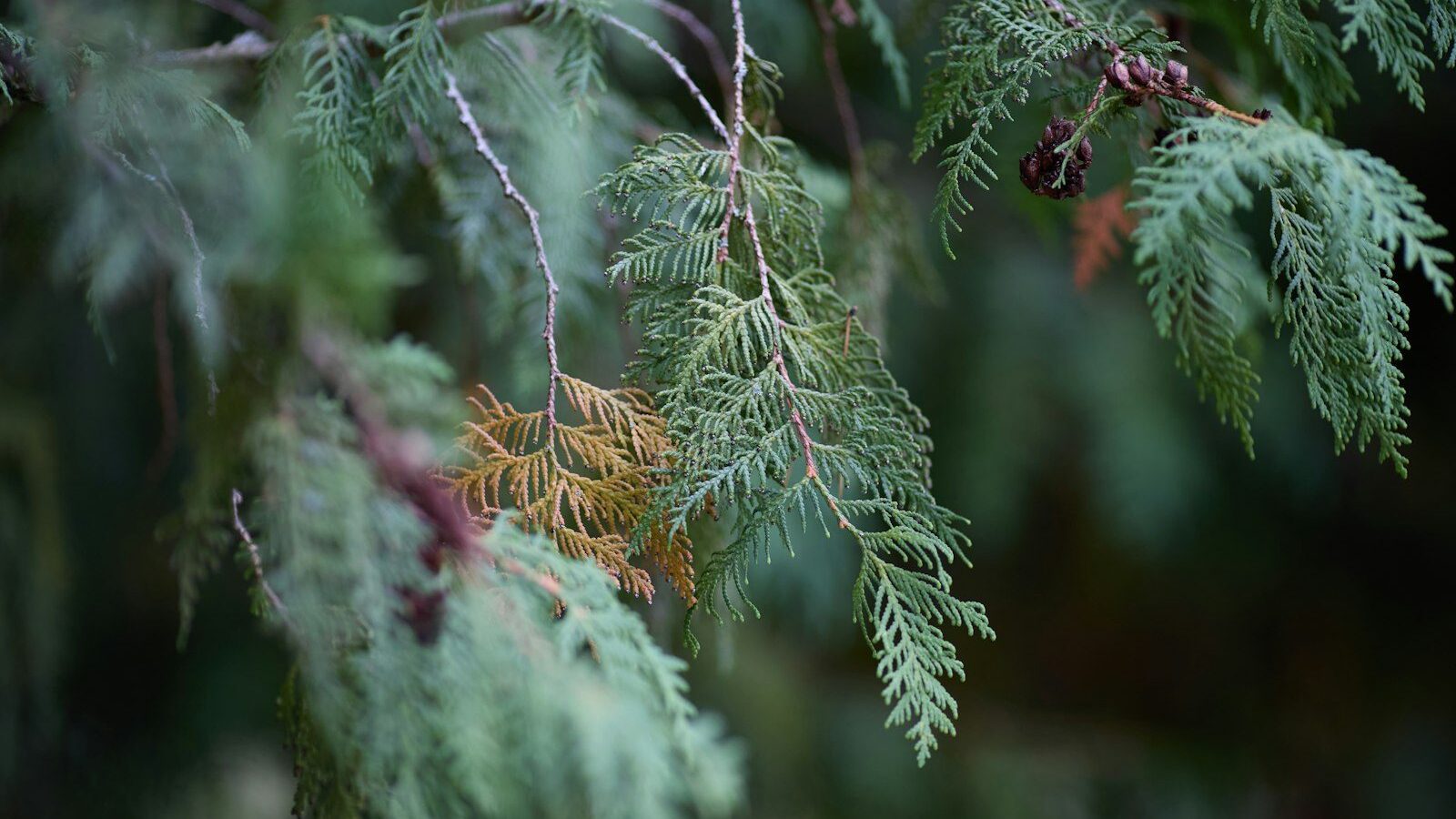
Cedar apple rust is a fungal disease that needs two hosts to complete its life cycle: an eastern red cedar or other juniper, and an apple or crabapple. On the juniper it forms brown galls that sprout bright orange, jelly-like horns in wet spring weather; on the apple it causes yellow-orange leaf spots that can defoliate susceptible trees by late summer. Homeowners control it with three tools: planting resistant apple varieties, pruning galls off nearby junipers, and spraying a labeled fungicide on apples from pink bud through about a month after petal fall. Understanding the timing is what makes control work, so here is how the cycle runs and where you can break it.
In this guide
Key Takeaways
- The fungus alternates between junipers and apples; neither host can reinfect itself.
- Apple infections happen in spring, from about pink bud to roughly 30 days after petal fall, during rainy periods.
- Resistant apples such as Liberty, Enterprise, Freedom, Redfree and Williams’ Pride are the easiest long-term fix.
- Spraying after spots appear does not cure them; fungicides only protect new growth.
- Removing galls from your own junipers helps, but spores can blow in from cedars a mile or more away.
What Causes Cedar Apple Rust
The disease is caused by the fungus Gymnosporangium juniperi-virginianae. It is common anywhere eastern red cedar (Juniperus virginiana) grows near apples, which covers most of the eastern half of the US, from the Northeast and Mid-Atlantic through the Southeast and across the Midwest and Plains. Related rusts, hawthorn rust and quince rust, follow similar two-host cycles and are managed the same way.
Rust rarely kills an apple tree outright, but repeated defoliation weakens it, reduces fruit size and quality, and lowers next year’s bloom. On fruit, infections cause raised, sunken or deformed spots that make apples unattractive, though they are still safe to eat. Ornamental crabapples suffer the same leaf drop, which can leave a tree half bare by August.
The Life Cycle, Season by Season
Spring on the juniper
Galls on junipers start as small, brown, woody knobs, often called cedar apples, from pea-size up to about 2 inches across. A gall that formed the previous year matures through the winter. When warm spring rains arrive, usually from April into May depending on your zone, it swells and pushes out orange, gelatinous tendrils that can reach an inch or more. These horns release basidiospores, which travel on the wind to nearby apple trees. A single gall can produce spores during several rain events over a few weeks.
Spring and early summer on the apple
Spores land on young apple leaves, blossoms and tiny fruit, and infect when the tissue stays wet for several hours at mild temperatures. The vulnerable window runs from about pink bud, just before bloom, until new leaves mature, roughly 30 days after petal fall. Within one to three weeks, small pale yellow spots appear on the upper leaf surface. They enlarge into bright yellow-orange lesions, often with a red border, and tiny black dots form in the center.
Late summer back to the juniper
By mid to late summer, small tube-like or fringed structures develop on the undersides of infected apple leaves, directly beneath the spots. These release a second spore type, aeciospores, from about July into September. Those spores cannot infect apples; they only infect junipers, where they start new galls that take about 18 months to mature and produce horns the spring after next. That two-year rhythm is why a heavy rust year is often followed by another.
| Timing | On junipers | On apples and crabapples | What to do |
|---|---|---|---|
| Late winter | Mature galls visible as brown knobs | Dormant | Prune galls from your junipers |
| Pink bud to petal fall | Orange horns release spores in rain | New leaves and blossoms infected | Begin fungicide program on susceptible trees |
| Petal fall to about 30 days after | Horns dry and collapse | Leaves still vulnerable; first spots appear | Continue sprays during wet weather |
| Midsummer | New infections not visible yet | Bright orange spots; possible leaf drop | Rake fallen leaves; note which trees are worst |
| Late summer to fall | New galls begin forming | Spore tubes on leaf undersides | Plan resistant replacements |
How to Identify It
On apples, the bright yellow-orange color is distinctive. Apple scab spots, by contrast, are olive-green to black and velvety, while frogeye leaf spot has purple-edged brown rings. If your apple leaves have several kinds of marks, our guide to why apple leaves get spotted helps sort them out. On junipers, look for round brown galls along twigs in winter and the unmistakable orange horns after a spring rain.
Resistant Apple and Crabapple Varieties
Planting resistant trees is the most effective and lowest-effort control, especially if you live near native cedars you cannot remove. Resistance ratings vary somewhat by region and source, so check your state extension list, but the following are widely reported as resistant or highly resistant:
- Liberty: also resistant to apple scab; a good all-round disease-resistant choice.
- Enterprise: late-season keeper with multiple disease resistance.
- Freedom: scab-resistant and rust-resistant, vigorous.
- Redfree: early-season apple bred for disease resistance.
- Williams’ Pride: early summer apple with scab and rust resistance.
- Priscilla and Nova Easygro: older disease-resistant releases still sold by specialty nurseries.
Several popular varieties are known to be quite susceptible, including Golden Delicious, Jonathan, Rome Beauty, York Imperial and Wealthy. If you grow those near cedars, plan on a spray program. For ornamental crabapples, extension trials have identified many resistant selections; Prairifire, Adirondack and Sugar Tyme are among those commonly recommended. Before you buy, compare notes with our guides on how to grow an apple tree and how to grow a crabapple tree.
Managing the Juniper Side
Galls do little harm to the juniper itself, so the reason to deal with them is to cut the spore load near your apples. In late winter, before buds break, walk your junipers and clip out every gall you can reach, cutting a few inches below it. Bag and remove them; they can still release spores if left on the ground. Repeat each year, because new galls from last summer’s infections will keep appearing.
Older advice called for removing all red cedars within a mile or two of an orchard. That is rarely practical for homeowners, and it only works if neighbors do the same, since spores travel on the wind. A more realistic plan is to remove galls from junipers on your property, avoid planting susceptible juniper species right beside apple trees, and rely on resistant apples or sprays for the rest. Some juniper cultivars show more resistance to gall formation than others; ask a local nursery which ones perform well in your area. Our guide on how to grow juniper covers siting and pruning.
Spray Timing for Susceptible Apples
Fungicides only protect leaves that have not yet been infected, so timing matters more than product choice. Start at pink bud, when flower buds show color but have not opened, and continue through bloom and petal fall into the first cover spray, roughly 30 days after petal fall. In a wet spring that typically means four to six applications at 7 to 10 day intervals, or as the label directs. Reapply after heavy rain if the label allows, and do not spray insecticides during bloom to protect pollinators; most homeowner fungicides can be applied in bloom, but read the label.
Products homeowners can use
- Myclobutanil: a systemic fungicide sold in several homeowner fruit tree products; one of the more effective options for rust.
- Mancozeb: a protectant labeled for rust on apples; observe the label’s pre-harvest interval.
- Sulfur: an organic option with modest activity against rust; works best as a protectant applied before rain and should not be used in high heat or near oil sprays.
Captan, a common orchard fungicide for scab, is weak against rust, so a combination product or rotation is often used where both diseases occur. Always confirm that apples and the specific disease appear on the label, follow the rate and interval exactly, and note the days-to-harvest restriction. For large trees you cannot cover well with a pump sprayer, a certified arborist or tree care company can apply sprays.
Cleanup and Tree Health
Unlike apple scab, cedar apple rust does not overwinter on fallen apple leaves; it needs the juniper. Still, raking and removing fallen leaves helps with scab and other leaf diseases, so it is worth doing. Keep trees vigorous with good pruning for airflow, mulch over the root zone, and steady watering in dry spells. Pruning an apple in late winter to open the canopy lets leaves dry faster after rain, which shortens the infection window. See our guide to pruning an apple tree for cuts and timing.
A tree that lost many leaves to rust will usually leaf out normally the following spring. If it happens every year, though, the tree gradually loses vigor, so either commit to a spray program or replace it with a resistant variety. For a broader look at caring for fruit and landscape trees, see our trees and shrubs guide.
Weather drives how bad any given year will be. A dry April and May can mean almost no rust even on susceptible trees, while a week of warm, drizzly days during bloom can produce heavy spotting. Keeping a simple note each year of bloom date, spring rainfall and how much rust appeared helps you decide whether a full spray program is worth it for a particular tree.
A Simple Homeowner Plan
- Identify which of your apples or crabapples showed orange spots last year and how bad they were.
- In February or March, prune galls from junipers on your property.
- For susceptible trees, buy a labeled fungicide before buds swell and mark pink bud on your calendar.
- Spray from pink bud through about 30 days after petal fall, more often in rainy springs.
- When adding or replacing trees, choose rust-resistant apples and crabapples.
- Avoid planting new junipers right beside apples, and vice versa.
Frequently Asked Questions
Can you get rid of cedar apple rust once leaves are spotted?
No. Fungicides do not cure existing spots; they only protect new tissue. Once spots appear, focus on protecting the rest of the spring flush and planning next year’s spray timing or resistant replacements.
Is it safe to eat apples with cedar apple rust?
Yes. Rust spots on fruit are cosmetic. Cut away blemished areas if you like; the rest of the apple is fine to eat.
Do I need to cut down my cedar trees?
Usually not. Spores can travel a mile or more, so removing your own cedars may not help if neighbors have them. Pruning galls, growing resistant apples and timing sprays correctly are more practical.
Does cedar apple rust hurt the juniper?
Very little. Galls can cause minor twig dieback, but junipers generally tolerate infection well. Removing galls is mainly done to protect nearby apples.
When should I spray for cedar apple rust?
Begin at pink bud, before flowers open, and continue every 7 to 10 days or per the label through about 30 days after petal fall, especially during rainy weather when orange horns are visible on nearby junipers.