

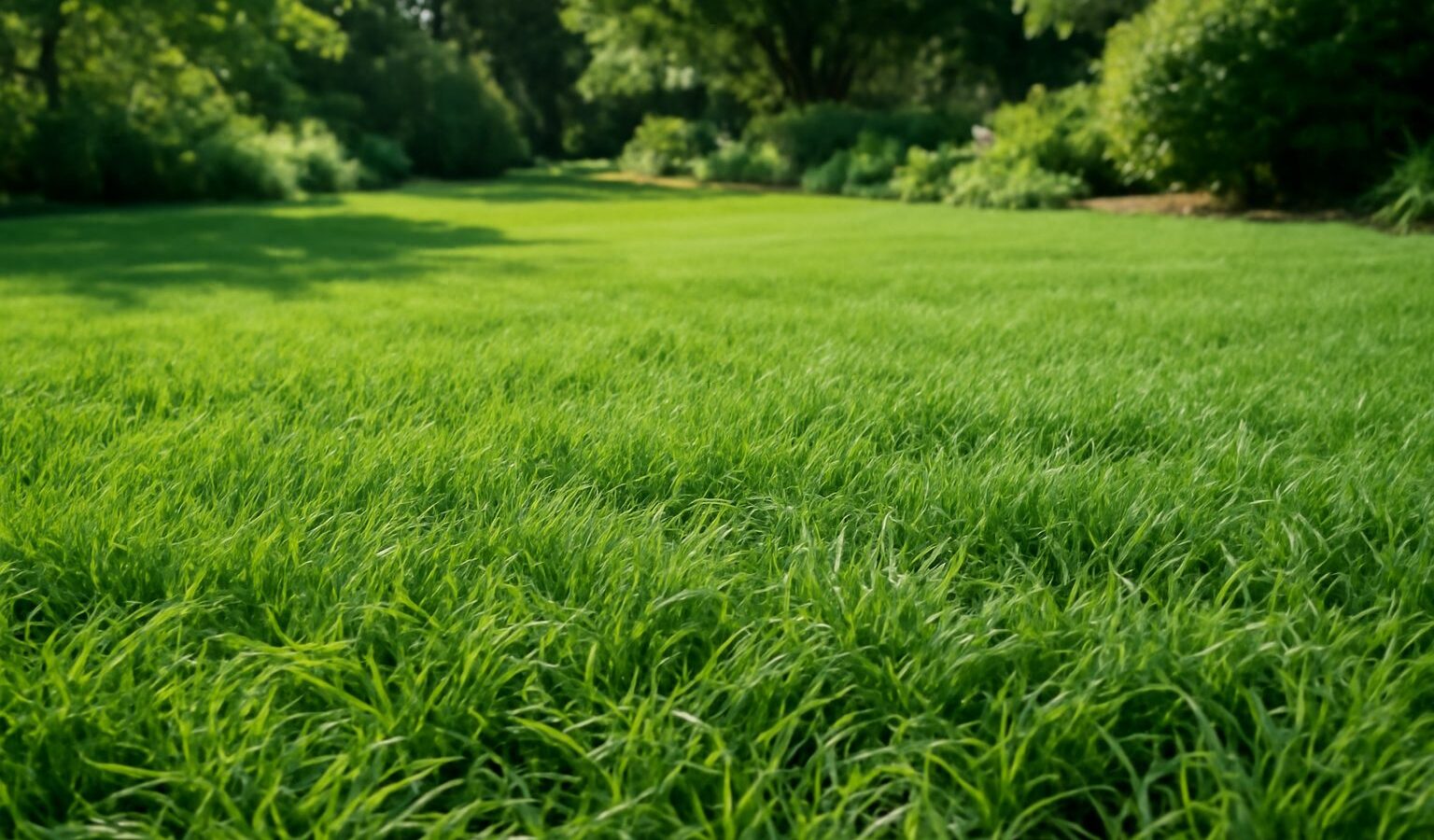
If you want a lawn that practically thrives on neglect, buffalo grass deserves a serious look. It is one of the only true North American native turf grasses — the same shortgrass that once carpeted the Great Plains and fed the bison herds it’s named for. That heritage shows in its character: buffalo grass is extraordinarily drought-tolerant, needs almost no fertilizer, grows slowly enough to cut mowing to a handful of times a year, and forms a soft, fine-textured, blue-green sod. For homeowners in the central and western U.S. fighting water bills and watering restrictions, it can be a genuinely low-input lawn. The trade-offs are real, though: it goes dormant and tan outside its short growing season, it doesn’t tolerate shade or heavy traffic, and it greens up late in spring. This guide covers where buffalo grass belongs, how little you actually need to mow, water, and feed it, the problems to watch, and how to establish or thicken it.
Key Takeaways
- Zones: warm-season native for USDA 4–8, best in the central and western Plains; needs full sun.
- Mowing height: 2 to 4 inches, or leave it unmowed for a meadow look — only a few cuts a season.
- Water: the lowest of any common lawn grass — often just 0.5 to 1 inch every 2 to 4 weeks once established.
- Fertilizer: very light — 0.5 to 2 pounds of nitrogen per 1,000 sq ft per year; overfeeding invites weeds.
- Limits: poor in shade, dislikes high traffic, dormant/tan outside the warm season, slow spring green-up.
- Establishment: seed (treated burr) in late spring at 70°F+ soil, or plug/sod for faster cover.
Climate and Where Buffalo Grass Grows
Buffalo grass (Bouteloua dactyloides, formerly Buchloe dactyloides) is a warm-season grass native to the Great Plains, from Texas up through the Dakotas and out across the dry interior West. It is well adapted to USDA hardiness zones 4 through 8, and unlike most warm-season grasses it has good cold tolerance, which lets it survive Plains winters. Its true home is the semi-arid central and western states — Texas, Oklahoma, Kansas, Nebraska, the Dakotas, eastern Colorado — where low rainfall, hot summers, and full sun match its needs exactly.
Two conditions are non-negotiable. First, full sun: buffalo grass evolved on the open prairie and thins badly in shade, so it is a poor choice under trees or on the north side of a house. Second, it actually prefers its native heavy clay and loam soils and modest rainfall; in high-rainfall, humid regions like the Southeast, it struggles to compete with weeds and other grasses and is rarely the right pick. It is happiest where annual rainfall runs roughly 15 to 30 inches.
Buffalo grass spreads by surface stolons to form a low, fine sod, but it does so slowly and never gets aggressive. It greens up later in spring than other warm-season grasses and goes dormant and straw-tan early in fall and through any prolonged drought — its green season is genuinely short. Owners who embrace that natural rhythm love it; those expecting an emerald lawn from March to November are usually disappointed. It also does not handle heavy foot traffic or play well, so it suits low-use lawns, large acreages, and water-wise landscapes more than a busy family backyard.
Mowing Buffalo Grass
This is where buffalo grass shines for the time-pressed. Because it grows slowly and naturally stays low — it tops out around 4 to 8 inches if left entirely alone — you have real flexibility. For a conventional, tidy lawn, mow at 2 to 3 inches every couple of weeks during the growing season, which might mean only a handful of mowings all year. For a relaxed, water-wise look, you can let it grow to 3 or 4 inches and mow just a few times a season, or skip mowing altogether and let it form a soft, billowy native meadow that you cut once or twice a year. There is no single “right” height — buffalo grass tolerates everything from a 2-inch lawn to an unmowed prairie.
Whatever height you choose, follow the one-third rule and keep the mower blade sharp. Because buffalo grass is so low-growing and slow, scalping is less of a concern than with most grasses, but cutting it below about 2 inches repeatedly can weaken the stand and open it to weed invasion. Female plants produce small seed burrs at the base; mowing keeps those tidy. Mulch clippings back in — this grass needs so little fertility that the recycled nitrogen from clippings covers much of its annual requirement.
Watering: The Low-Water Payoff
Water is the headline reason people plant buffalo grass. Once established, it has the lowest water requirement of any common lawn grass — in much of its range, natural rainfall alone keeps it alive, and even in dry spells it often needs only about 0.5 to 1 inch of supplemental water every two to four weeks to stay green. Compared with a thirsty cool-season lawn drinking an inch-plus every week, that is a dramatic reduction in water use and cost.
The key word is “established.” During its first season, while roots are developing, buffalo grass needs regular watering to get going — treat a new stand like any new lawn and keep it moist. Once it is rooted in (usually by its second season), back off hard. Overwatering is one of the most common mistakes: too much water keeps the soil constantly moist, which encourages cool-season weeds and other grasses to invade and outcompete the buffalo grass, undermining the very low-maintenance lawn you were after. When you do water, water deeply and infrequently to push roots down, and water in the morning. Accept that buffalo grass will go dormant and tan under serious drought; that dormancy is a survival strategy, not death, and it greens back up when moisture and warmth return. Letting it go tan in a hot, dry August is normal and healthy for this grass.
Fertilizing Schedule
Buffalo grass is a low feeder — another way it saves you money and effort. It needs only about 0.5 to 2 pounds of actual nitrogen per 1,000 square feet per year, and many low-maintenance buffalo lawns get by on the lower end or on nothing but recycled clippings. As with watering, more is not better: excess nitrogen pushes lush growth that requires more mowing and, critically, gives weeds and competing grasses a foothold in what should be a lean, prairie-adapted lawn.
A simple program
- Late spring / early summer: Wait until the lawn is fully greened up (buffalo grass is a late riser), usually June, then apply about 0.5 to 1 lb of nitrogen per 1,000 sq ft. This single feeding is enough for many lawns.
- Midsummer (optional): A second light application of about 0.5 lb nitrogen per 1,000 sq ft only if you want a slightly greener, denser look. Skip it for a true low-input lawn.
- Fall: No nitrogen. The grass is heading toward dormancy and late feeding is wasted and can encourage weeds.
Use a slow-release nitrogen source applied to a dry lawn and watered in. A soil test every few years is still worthwhile; buffalo grass does fine across a fairly wide pH range (roughly 6.0 to 8.5), tolerating the alkaline soils common in its native territory better than acid-loving grasses do.
Common Problems and How to Fix Them
Weed invasion
The number-one challenge with buffalo grass. Its thin, slow, low canopy and late spring green-up leave gaps that cool-season weeds and aggressive grasses exploit, especially if the lawn is overwatered or overfed. The defenses are counterintuitive: water and fertilize less, not more, so you don’t favor the weeds, and use a pre-emergent herbicide in early spring (before buffalo grass greens up) to stop weed seeds. Hand-pull or spot-treat broadleaf weeds, checking the label for buffalo grass tolerance.
Shade thinning
Buffalo grass will not hold a stand in shade. If areas under trees keep thinning, don’t fight it — switch those spots to a shade-tolerant grass, groundcover, or mulch, and reserve buffalo grass for the full-sun areas where it excels.
Dormancy and slow green-up
Not a disease, but a frequent disappointment. Buffalo grass is tan in winter, slow to wake in spring, and goes dormant under drought. This is normal. If you can’t accept the tan season, buffalo grass may not be your grass — but for water-wise lawns the dormancy is part of the deal and not a sign of trouble.
Traffic wear
It recovers slowly from heavy use and compaction. Keep play and pet traffic on tougher grasses or hardscape, and use buffalo grass for lower-use lawn areas, parking strips, and naturalized zones.
Establishing and Overseeding Buffalo Grass
You can start buffalo grass from seed, plugs, or sod. Seed is economical for large areas: buy treated (primed) burr seed for better, more even germination, and sow in late spring once soil temperatures are reliably 70°F or higher — this warm-season native will not germinate in cold soil. Sow at about 2 to 3 pounds of treated seed per 1,000 square feet, rake lightly to cover, and keep the seedbed consistently moist until seedlings establish, which can take two to three weeks. Be patient: it knits slowly and a seeded lawn may take a full season or two to fill in. Plugs spaced 6 to 12 inches apart, or sod, give faster, more weed-resistant coverage and are worth the extra cost on smaller lawns and slopes.
To thicken thin or bare areas, the approach is repair rather than the winter overseeding done on Southern lawns — you generally don’t oversow buffalo grass with ryegrass, because cool-season grass competes with its slow spring green-up and defeats the low-water purpose. Instead, in late spring, lightly rake the thin spot, sow treated burr seed or set in plugs, keep it moist until established, and let the stolons slowly fill the gap. Keeping the overall lawn lean (low water, low fertilizer) is itself the best way to maintain a dense buffalo stand, because it denies competing grasses the conditions they need.
For broader low-water and native-planting strategy, see our companion Outdoor Living guides and the timing principles in how to divide perennials. If you’re pairing buffalo grass with drought-tolerant plantings, our Plants & Flowers guides cover native perennials that share its water-wise temperament.
Frequently Asked Questions
How much water does buffalo grass really need?
Less than any common lawn grass. Once established, it often survives on rainfall alone, needing only about 0.5 to 1 inch every two to four weeks in dry spells. Overwatering is harmful — it invites weeds and competing grasses to crowd it out.
How often do I have to mow buffalo grass?
Rarely. It grows slowly and stays low, so a tidy lawn may need only a handful of mowings a season at 2 to 3 inches, and you can skip mowing entirely for a native-meadow look, cutting just once or twice a year.
Why is my buffalo grass turning brown?
Usually normal dormancy — it goes tan in winter, greens up late in spring, and goes dormant under summer drought. That straw color is a survival strategy, not death; it greens back up when warmth and moisture return.
Will buffalo grass grow in shade?
No. It evolved on the open prairie and needs full sun, thinning badly under trees or on shaded sides of a house. Use a shade-tolerant grass, groundcover, or mulch in those spots and reserve buffalo grass for full-sun areas.
When should I plant buffalo grass seed?
Late spring, once soil temperatures are reliably 70°F or warmer — this warm-season native won’t germinate in cold soil. Use treated (primed) burr seed for better germination, and keep the seedbed moist for the two-to-three weeks it takes to establish.