

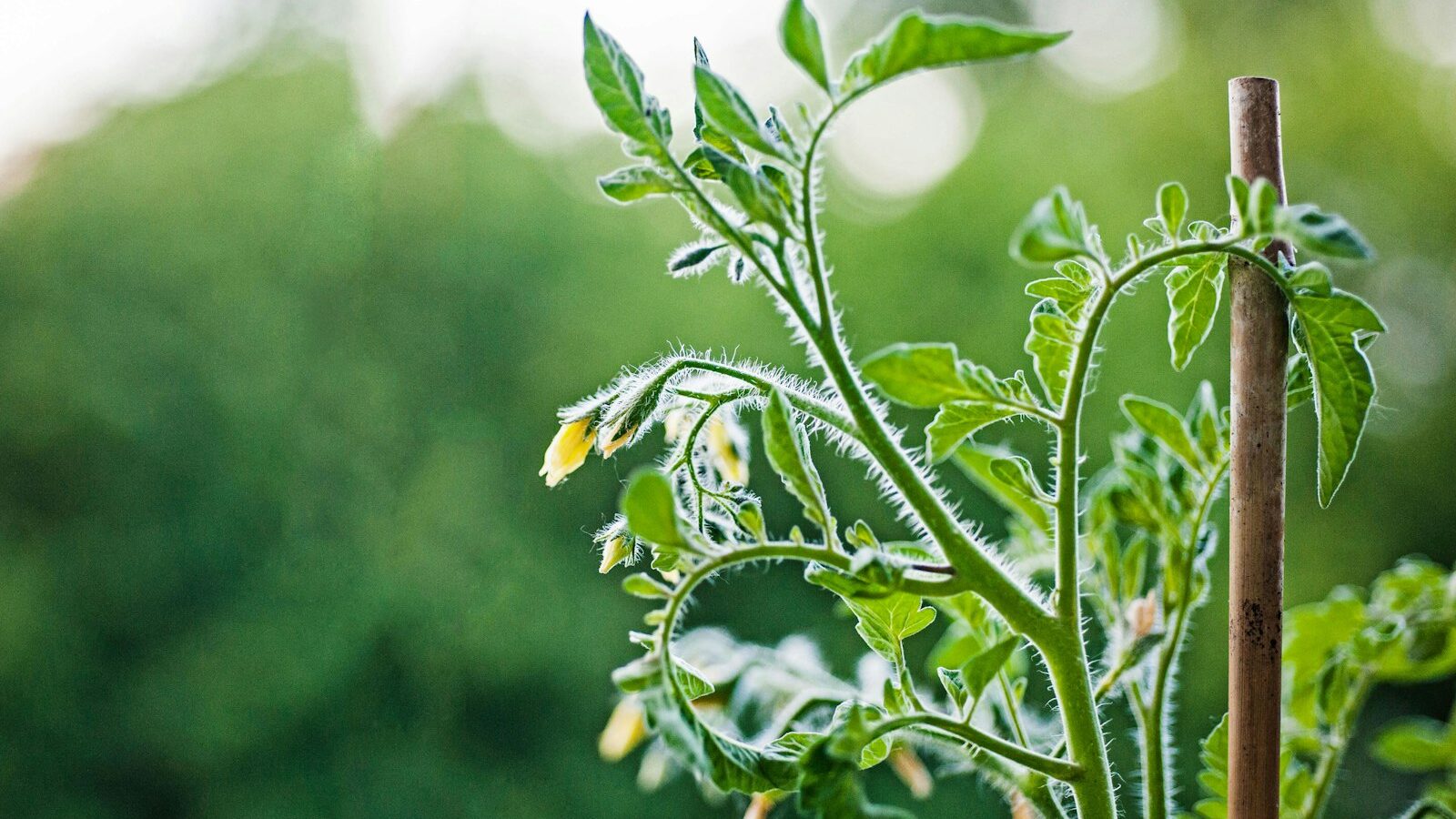
A loaded tomato plant in July can weigh more than a gallon of milk, and the flimsy wire cone you grabbed at the hardware store is exactly why it’s now lying in the dirt with split stems and rotting fruit. Good tomato support isn’t an accessory — it’s the difference between clean, disease-free fruit at picking height and a tangled, blight-prone mess sprawled across the bed. The catch is that the right support depends almost entirely on whether you’re growing compact determinate varieties or towering indeterminate ones.
Determinate tomatoes (think Roma, Celebrity, most paste types) grow to a fixed size of 3 to 4 feet and set their fruit in a concentrated flush — a sturdy cage or a single stake usually does the job. Indeterminate varieties (most heirlooms, Sungold, Better Boy, Big Beef) keep growing and fruiting until frost and can hit 6 to 10 feet, demanding tall stakes, a Florida weave, or a real trellis. Below are seven supports we’d actually buy, with honest pros and cons, plus a buyer’s guide to help you match the support to your plants.
As an Amazon Associate we earn from qualifying purchases. This page contains affiliate links at no extra cost to you.
Key Takeaways
- Variety drives the choice. Determinate tomatoes need a cage or single stake; indeterminate vines need 6 ft+ of support and ongoing tying.
- Skip the cheap wire cones. The flimsy folding cones sold everywhere buckle under a full plant — heavy-gauge or square cages are worth the upcharge.
- Steel beats plastic for the long haul. Galvanized or powder-coated steel lasts a decade-plus; plastic-coated stakes and PVC degrade in UV.
- Drive supports deep — 10 to 18 inches. A stake or post that isn’t anchored a third of its length into the soil will lean under fruit and wind.
- Set the support at transplant time. Adding it later spears roots and stresses the plant; cage or stake on planting day.
| Product | Best For | Key Spec |
|---|---|---|
| Gardener’s Supply Titan Tomato Cage | Big indeterminate heirlooms | Steel, ~5 ft tall, folding panels |
| K-Brands Tomato Cage (square, stackable) | Determinate & raised beds | Coated steel, stackable squares |
| Bond Spiral Tomato Stake | Single-stem staking | Galvanized steel spiral, ~5 ft |
| FarmTek / Pro Steel T-Post | Florida weave rows | Studded steel T-post, 6 ft |
| Bamboo Garden Stakes (6 ft) | Budget single staking | Natural bamboo, ~3/4 in dia. |
| EZ-Grow Expandable Trellis Netting | Vertical indeterminate rows | Nylon mesh, 6 in squares |
| VELCRO Plant Ties / soft tie tape | Tying any support | Reusable, gentle on stems |
1. Gardener’s Supply Titan Tomato Cage — Best for Big Indeterminate Plants
If you grow towering indeterminate heirlooms and you’re tired of cages collapsing in August, the Gardener’s Supply Titan cage is the upgrade. It’s a heavy steel cage roughly 5 feet tall and unusually wide — wide enough to contain a sprawling Brandywine or Cherokee Purple without constant pruning. The panels fold flat for winter storage, which solves the biggest gripe about rigid cages: where to put them in the off-season.
The Titan’s strength is also its price tag — these cost several times what a wire cone does. But spread over a decade of use, a cage that doesn’t buckle, doesn’t need replacing, and keeps a 7-foot plant upright through summer storms is cheap insurance for your harvest. For serious indeterminate growers, it’s the cage we’d buy and never think about again.
Pros
- Heavy steel holds the biggest indeterminate plants without buckling
- Tall and wide enough to skip aggressive pruning
- Folds flat for compact off-season storage
- Will easily outlast a decade of seasons
Cons
- Expensive — several times the cost of a basic cage
- Heavy and bulky to move once loaded
- Overkill for compact determinate varieties
2. K-Brands Square Stackable Tomato Cage — Best for Determinates & Raised Beds
The square, stackable tomato cage from K-Brands is the practical middle ground most home gardeners actually need. Made from coated steel with a square footprint, it’s far sturdier than a round wire cone and the flat sides sit neatly in raised beds and rows where round cages waste space. Each cage stacks onto another to add height, so you can run them short for determinates or doubled up for taller plants.
This is the cage we recommend for Romas, Celebrity, and other determinate varieties, and for anyone gardening in raised beds where geometry matters. They break down flat for storage and the powder coating resists rust for years. The honest limitation: even stacked, they’re not as bombproof as a dedicated heavy cage for the largest indeterminate monsters, and the connection points can flex if you stack three or four high.
Pros
- Square shape fits raised beds and rows efficiently
- Stackable to adjust height for different varieties
- Coated steel resists rust and folds flat to store
- Much sturdier than cheap round wire cones
Cons
- Stacked sections can flex under very heavy plants
- Not as rigid as a dedicated heavy-duty cage
- Assembly and stacking take a few minutes per plant
3. Bond Spiral Tomato Stake — Best Single-Stem Stake
For gardeners who prune to a single leader, the Bond galvanized spiral stake is an elegant solution. Roughly 5 feet of twisted steel, it lets you weave the growing stem through the spiral as it climbs — no tying required for most of the season. It’s a tidy, space-saving way to grow staked tomatoes, and the galvanized finish shrugs off rust for many years.
Spiral stakes work best with determinate plants or carefully pruned indeterminates kept to one or two stems. They’re not strong enough on their own for an unpruned, multi-stem indeterminate plant, which will quickly outgrow the spiral and need a tie or two regardless. Drive them at least 10 to 12 inches deep, because a stake carrying a top-heavy plant in wind will lean if it’s barely anchored.
Pros
- Stem weaves through the spiral — little or no tying needed
- Galvanized steel resists rust for many seasons
- Slim profile saves space in tight beds
- Quick to install and reuse year after year
Cons
- Best for single-stem plants — struggles with bushy indeterminates
- Must be driven deep or it leans under load
- One stake per plant adds up for a big patch
4. Steel T-Post (6 ft) — Best for the Florida Weave
Anyone growing tomatoes by the row should learn the Florida weave, and a row of 6-foot studded steel T-posts is what makes it work. You drive a post every two or three plants, then weave twine down one side of the row and back the other at rising heights as the plants grow, sandwiching the stems between the strings. It’s the fastest, cheapest way to support a long row of indeterminate plants, used by market growers everywhere.
Studded T-posts hammer in easily, hold twine without slipping thanks to the studs, and last essentially forever. The trade-off is labor: the weave needs new string courses every week or two during peak growth, and it’s a row system, not a per-plant solution, so it makes less sense for a handful of scattered plants. Drive these 18 inches or more into firm soil — a fully loaded weave row puts real lateral force on the end posts.
Pros
- Cheapest support per plant for long rows
- Studs grip twine so the weave courses don’t slide
- Steel posts last for decades and reuse endlessly
- Scales to as many plants as you can plant
Cons
- Requires re-stringing new courses every week or two
- A row system — inefficient for a few scattered plants
- End posts need deep, firm anchoring against lateral pull
5. Bamboo Garden Stakes (6 ft) — Best Budget Single Stake
The humble 6-foot bamboo stake is still one of the best values in the garden. A bundle costs a few dollars, each stake is light, strong for its weight, and biodegradable when it finally gives out. For determinate plants or a quick single-stem stake on a young indeterminate, drive one in 10 to 12 inches and tie the stem loosely with soft tape as it grows — simple, cheap, and it works.
Bamboo’s weakness is durability: exposed to soil moisture and a full season of weather, stakes split and rot, usually lasting two or three seasons rather than a decade. A single 3/4-inch bamboo stake also isn’t enough for a big, multi-stem indeterminate plant on its own — it’ll bow under a full fruit load. But as a low-cost, low-commitment support for the average backyard tomato, it’s tough to beat.
Pros
- Extremely cheap — pennies per stake in a bundle
- Light, easy to drive, and biodegradable
- Strong for its weight on determinate plants
- No storage headache — replace as needed
Cons
- Splits and rots after two or three seasons
- A single stake can’t hold a large indeterminate plant
- Needs tying — no self-supporting structure
6. Expandable Trellis Netting — Best for Vertical Indeterminate Rows
When you want maximum yield from a small footprint, growing indeterminate tomatoes vertically up trellis netting is the answer. Strung between two end posts or a frame, nylon mesh netting with roughly 6-inch squares gives the plants a wall to climb, and you simply tuck or tie the leaders into the mesh as they rise. It opens up airflow around the plants — a real advantage for reducing fungal disease — and keeps fruit visible and easy to pick.
Netting shines for pruned, single- or double-leader indeterminate plants grown in a tidy row, the same vertical approach that works for cucumbers and pole beans. It does require a sturdy frame or posts to carry the load, and the soft nylon can sag under a heavy crop if the supports aren’t tensioned well. At season’s end, netting full of dried vines is fiddly to clean up — many growers cut it free and compost the whole tangle rather than untangle it.
Pros
- Maximizes yield in a small footprint by growing up
- Excellent airflow lowers fungal disease pressure
- Keeps fruit visible and at easy picking height
- Inexpensive per plant compared with individual cages
Cons
- Needs a strong, well-tensioned frame or posts
- Soft nylon sags under a heavy crop if under-supported
- Hard to clean and reuse — often cut and composted
7. VELCRO Plant Ties / Soft Tie Tape — Best Accessory for Any Support
No support system is complete without the right ties, and this is where people quietly damage their plants. Thin wire or zip ties bite into swelling stems and girdle them; the fix is reusable VELCRO plant ties or stretchy soft tie tape. Both are wide and gentle, cradling the stem without cutting in, and they release easily when you need to reposition a vine — far better than tearing off a knotted bit of twine.
VELCRO ties are reusable for years and adjust in seconds, which is handy on fast-growing indeterminates that need re-tying weekly. Soft tie tape is cheaper per plant and you simply cut a length as needed. Neither is a structural support on its own — they only do their job paired with a stake, cage, or trellis — but the right tie is what keeps that support from doing more harm than good.
Pros
- Wide, soft hold won’t girdle or cut swelling stems
- Reusable VELCRO adjusts in seconds for fast growers
- Releases easily to reposition or remove vines
- Cheap insurance against stem damage on any support
Cons
- Not a support by itself — pairs with a stake or cage
- VELCRO loses grip if it gets caked with mud
- Tie tape is single-use and adds up over a big garden
How to Choose a Tomato Support
Start with your variety. Determinate tomatoes top out around 3 to 4 feet and set fruit in one concentrated flush, so a sturdy square cage or a single stake carries them comfortably. Indeterminate varieties keep growing all season and can reach 6 to 10 feet, which means a tall heavy cage, a Florida weave, or trellis netting — anything shorter just gets overwhelmed by midsummer. If you’re unsure, check the seed packet; this one fact decides nearly everything else.
Match the support to your layout. A few plants scattered in mixed beds favor individual cages or stakes. A long, dedicated row of indeterminates is far cheaper and faster to support with a Florida weave on T-posts or with trellis netting. Raised beds reward square cages that use the rectangular space efficiently. There’s no single best support — there’s the best one for how you plant.
Buy for durability where it counts. Galvanized or powder-coated steel cages and posts last well over a decade and never need replacing; plastic-coated wire and bamboo are cheaper upfront but degrade in UV and soil within a few seasons. For a permanent garden, steel is the better value over time. Whatever you choose, drive stakes and posts a third of their length into the soil — roughly 10 to 18 inches — so they don’t lean under a loaded, wind-rocked plant.
Install at planting time and pair with good technique. Set the cage or stake on transplant day so you don’t spear the roots later. Support pairs naturally with pruning — if you’re staking single-stem plants, our guide to pruning tomato suckers shows how to keep them to one or two leaders, and our overview of how to stake tomatoes walks through the methods in detail. Good support plus smart pruning is what gives you clean, disease-free fruit at picking height.
Frequently Asked Questions
Do determinate tomatoes need staking?
They benefit from it even though they’re shorter. A sturdy cage or single stake keeps a determinate plant’s heavy fruit flush off the ground, which prevents rot and soil-borne disease and makes picking easier. A square stackable cage set short is usually all a determinate variety needs.
What’s the best support for tall indeterminate heirlooms?
For a few plants, a tall heavy-duty steel cage like the Titan keeps an unpruned heirloom upright all season. For a row, a Florida weave on 6-foot T-posts or vertical trellis netting is cheaper and easier to manage. The key is having at least 6 feet of support height, because these plants will use all of it.
How deep should I drive a tomato stake?
Aim for about a third of the stake’s length in the ground — roughly 10 to 12 inches for a light stake and 18 inches or more for a T-post in a Florida weave. A fully loaded tomato plant catches the wind like a sail, and a shallow stake will lean or topple just as the fruit ripens.
Why shouldn’t I use the cheap folding wire cones?
The thin, cone-shaped wire cages sold cheaply almost everywhere are sized and built for nothing bigger than a pepper plant. A mature tomato — even a determinate — quickly outgrows and overpowers them, and they fold or tip under the weight. A heavy square cage or a real stake costs more but actually does the job for years.
When should I put the support in place?
At transplant time, on the same day you set the seedling in the ground. Adding a cage or driving a stake later in the season risks spearing the established root system, which stresses the plant. Install it early and tie the stem loosely as it grows.
The best tomato support is the one matched to your variety and your garden layout — a sturdy square cage for determinates, a tall steel cage or weave for indeterminates, netting for vertical rows, and soft ties to hold it all without harming the stems. Skip the flimsy cones, buy steel where you can, drive supports deep, and set them at planting time. Do that and your plants will reward you with clean fruit you can actually reach.